

UKPSC PCS (Upper) · Module 29 · Mains depth · 15 min
Major crops and where they grow
What UKPSC PCS (Upper) asks from this chapter
Syllabus lines this chapter covers:
- Prelims Paper I: General Studies · Geography of world: earth and solar system, lithosphere, latitudes and longitudes, rotation and revolution, landforms, hydrosphere, atmosphere, oceans, agriculture, resources, industries, population, transport, world trade and geographical glossary.
- Prelims Paper I: General Studies · Geography of India: relief and structure, climate, drainage, vegetation, soils, water resources, irrigation, agriculture, minerals, industries, population and urbanisation, transport, foreign trade, Scheduled Castes/Tribes and pollution.
- Prelims Paper I: General Studies · Indian agriculture (productivity, livestock, Green Revolution, food security, buffer stock, crop insurance), financial and capital markets, insurance, tax structure, public finance and fiscal policy, economic concepts.
- Mains Paper 3: General Studies I (heritage, culture, history, geography, society) · Distribution of key natural resources across the world (including South Asia and the Indian sub- continent); factors responsible for the location of primary, secondary, and tertiary sector industries in various parts of the world (including India).
- Mains Paper 5: General Studies III (technology, economy, environment, security, disasters) · Major crops-cropping patterns in various parts of the country, - different types of irrigation and irrigation systems storage, transport and marketing of agricultural produce and issue and related constraints; e – technology in the aid of farmers.
- Mains Paper 5: General Studies III (technology, economy, environment, security, disasters) · Issue related to direct and indirect farm subsidies and minimum support prices; public Distribution System – objectives, functioning, limitations, improvement; issues of buffer stocks and food security; Technology missions; economics of animal – rearing.
3 UKPSC PCS (Upper) questions in our bank come from this module (India: resources and economic geography).
Read at full depth: basics, the standard layer and the Mains analysis.
Start from zero: why each crop has its home
Rice fields sit in standing water in Bengal, wheat ripens under the dry spring sun of Punjab, cotton grows on the black soils of Gujarat and tea covers the misty hills of Assam. These are not accidents. Each crop has its own needs for temperature, rainfall, soil and slope, and it grows best where geography meets those needs.
People and markets change the picture too. Irrigation has carried rice into dry Punjab, government prices have favoured rice and wheat, and factories and ports have pulled cash crops towards certain regions. So the map of crops is a mix of nature and human choice.
India grows an astonishing range of crops because it stretches from the tropics to the Himalaya and from deserts to rainforests. It is among the world's top producers of rice, wheat, pulses, sugarcane, cotton, tea and many fruits and vegetables.
Why it matters. Knowing where and why crops grow explains food supply, rural incomes, water stress and the location of agro-based industries. It is also a favourite theme for map-based Prelims questions.
Rice and wheat: the two great cereals
Rice is the staple food of most Indians and the crop with the largest area. It is a tropical crop that needs high temperatures, above about 25 °C, high humidity and plenty of water, either more than about 100 cm of rain or assured irrigation. Its traditional homeland is the eastern and southern states and the coastal deltas, where it can be grown two or three times a year.
Since the Green Revolution, canal and tube-well irrigation have also made Punjab and Haryana major rice growers, with some of the highest yields in the country, even though they are naturally too dry for it. In the Himalayan states rice is grown only in the kharif season, often on terraced slopes. India is the world's second-largest producer of rice after China and a leading exporter.
Wheat is the second most important cereal. It is a rabi crop that needs a cool, moist growing season and bright, warm sunshine at ripening, with about 50–75 cm of rain spread over the growing season, or irrigation. It is grown mainly in the north and north-west: Uttar Pradesh, Punjab, Haryana, Madhya Pradesh and Rajasthan.
Wheat was the first crop transformed by the Green Revolution, and almost all of its area is now irrigated. Punjab and Haryana have the highest yields, while yields in eastern and central India are lower. A sudden heatwave in March, when grain is filling, can cut wheat yields sharply, a growing risk with climate change.
Why it matters. Rice and wheat underpin India's public food system and procurement. Their spread into dry regions also explains the falling water tables of north-west India.
Millets and maize: the hardy grains
Coarse grains or millets include jowar (sorghum), bajra (pearl millet) and ragi (finger millet), along with several small millets. They grow on poor, light soils with little rain and need far less water than rice or wheat. For centuries they fed people in the dry lands of the Deccan, Rajasthan and Gujarat.
Jowar is grown in both kharif and rabi seasons, mainly on the semi-arid Deccan plateau in Maharashtra and Karnataka. Bajra is the hardiest of all, growing on the sandy soils of Rajasthan, Gujarat and Haryana with very little rain, and Rajasthan is by far the largest grower. Ragi is grown on red, dry soils, mainly in Karnataka.
Over the past sixty years, the area under jowar and bajra has fallen as farmers switched to rice, wheat and cash crops, helped by irrigation and support prices for the fine grains. Maize, by contrast, has spread widely, because it is used as poultry feed and in starch and ethanol industries, as well as for food. It is grown across peninsular and northern India, with Karnataka, Madhya Pradesh and Maharashtra among the leading states.
Millets are now making a comeback. They are rich in fibre, iron and calcium, they tolerate heat and drought, and they use little water. On India's proposal, the United Nations declared 2023 the International Year of Millets, and the government has promoted them as "Shree Anna".
Why it matters. Millets link nutrition, water saving and climate adaptation. Bringing them back into diets and public food schemes is a key strategy for dryland farmers.
Pulses and oilseeds: protein and cooking oil
Pulses such as gram (chana), tur (arhar), moong, urad and lentil (masoor) are the main source of protein for most Indians, especially vegetarians. As legumes, they also fix nitrogen in the soil through bacteria in their roots, so they improve fertility for the next crop. India is the world's largest producer and consumer of pulses, yet it still imports some to meet demand.
Pulses are mostly grown on rain-fed dry lands of the Deccan, central India and the north-west, with only a small share irrigated. Gram is the main rabi pulse, grown mostly in Madhya Pradesh, Maharashtra and Rajasthan, while tur is the main kharif pulse of the dry Deccan. Because they get little irrigation and less attention than rice and wheat, their yields have stayed low and fluctuating.
Oilseeds supply cooking oil, animal feed (oil cake) and industrial raw material. The main ones are groundnut, grown mostly as a rain-fed kharif crop with Gujarat the leading state; rapeseed-mustard, a rabi crop led by Rajasthan; and soybean, which has grown from almost nothing in the 1960s into a major kharif crop of Madhya Pradesh and Maharashtra. Sesame, sunflower, castor and linseed are smaller crops.
Despite this, domestic oilseeds do not meet demand, and India imports a large share of its edible oil, mostly palm and soybean oil. Missions to raise oilseed and oil-palm output aim to cut this import bill.
Why it matters. Pulses and oilseeds affect nutrition, soil health and the import bill. They show why crop diversification away from rice and wheat matters for both farmers and the economy.
Cotton, jute and sugarcane: crops for industry
Cotton is India's most important fibre crop and the raw material of its large textile industry. It needs high temperatures (about 21–30 °C), light to moderate rain of about 50–100 cm, around 210 frost-free days and bright sunshine at picking. It grows best on the moisture-holding black (regur) soils of the Deccan lava plateau.
Gujarat and Maharashtra are the leading cotton states, followed by Telangana, with smaller areas in Punjab, Haryana and Rajasthan where it is irrigated. India is one of the world's two largest cotton producers, alongside China. Most of the crop is now Bt cotton, a genetically modified variety that resists the bollworm pest.
Jute, called the "golden fibre", is used for sacks, bags, mats and carpets. It needs hot, humid weather, heavy rain of about 150–250 cm and fresh alluvial soil renewed each year by floods, and it needs plenty of water for retting the stalks. It is concentrated in the Ganga–Brahmaputra delta region: West Bengal, Bihar and Assam. After Partition, most jute fields went to East Pakistan while the mills stayed near Kolkata, which pushed India to expand jute growing.
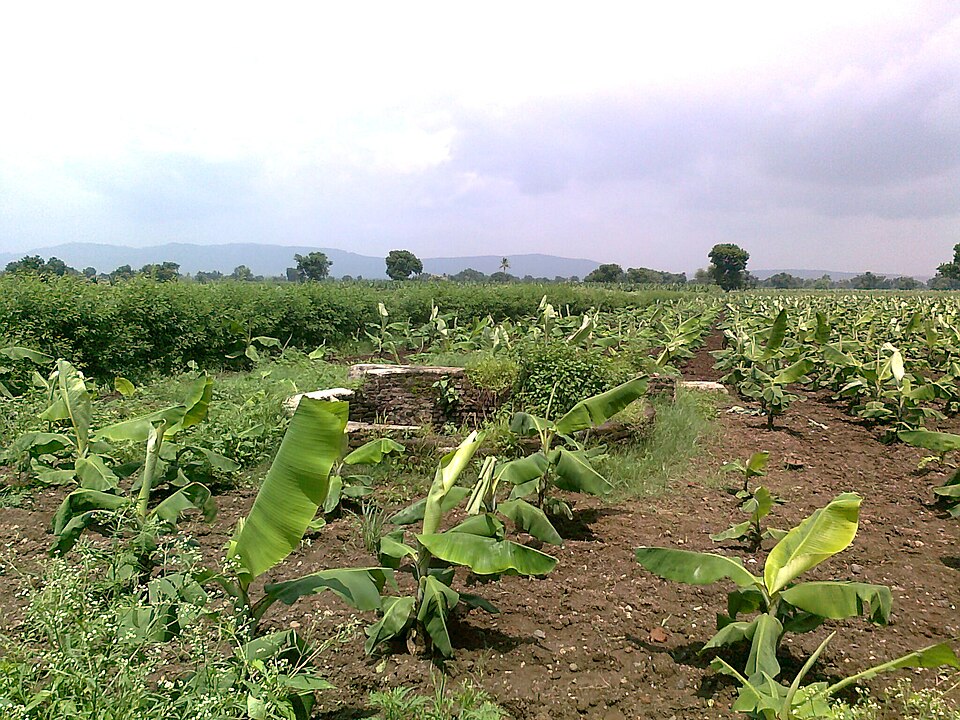
Sugarcane is a tropical crop needing a hot, humid climate (about 21–27 °C), 75–150 cm of rain or irrigation, and a long growing season of about a year. India is the second-largest producer after Brazil. Uttar Pradesh grows the most cane, followed by Maharashtra and Karnataka, but yields and sugar content are higher in the peninsular states such as Tamil Nadu and Maharashtra, thanks to the warmer climate and longer crushing season.
Why it matters. These crops feed India's textile, jute and sugar industries, which employ millions. But cane is very water-thirsty, and its spread in dry Maharashtra and Karnataka worsens water stress.
Plantation crops and horticulture
Plantation agriculture grows a single cash crop on large estates, using much labour and capital, and processes it on site. It was introduced by the British in the nineteenth century, and its main crops in India are tea, coffee, rubber and spices.
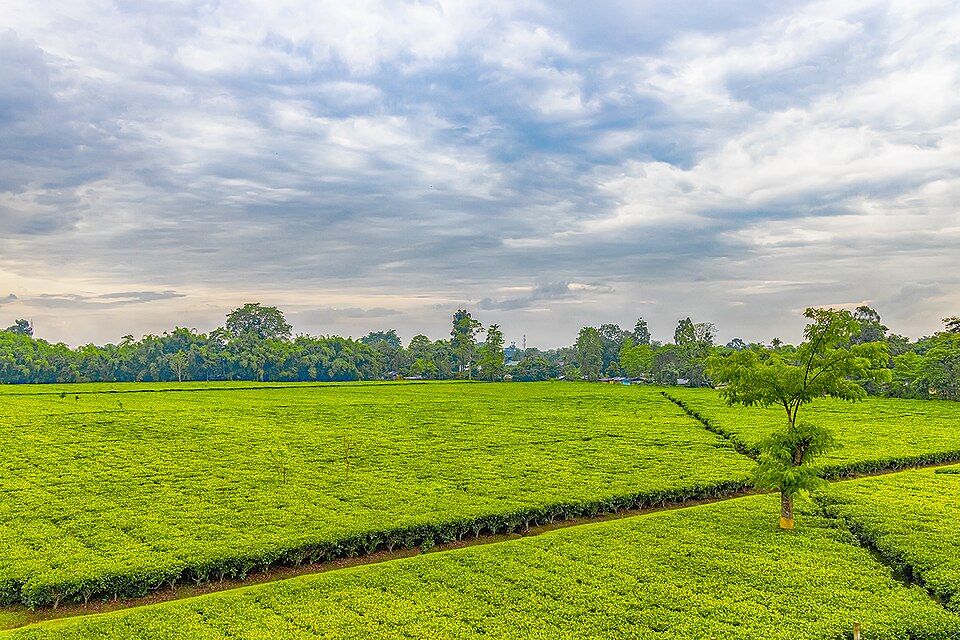
Tea needs a warm, humid climate (about 20–30 °C), heavy and well-distributed rain of about 150–300 cm, and well-drained, gently sloping hill land with deep, slightly acidic soil, because waterlogging kills the roots. The British began commercial tea gardens in Assam in the 1840s. Assam is still the largest producer, followed by West Bengal (Darjeeling and the Dooars) and Tamil Nadu (the Nilgiris), and India is the world's second-largest tea producer after China.
Coffee is grown under the shade of taller trees on the hill slopes of the Western Ghats. India grows two varieties, Arabica and Robusta. Karnataka produces most of India's coffee, followed by Kerala and Tamil Nadu, and coffee growing has spread to the hills of Andhra Pradesh and Odisha.
Natural rubber needs high temperature and heavy rain throughout the year, and it is grown mainly in Kerala and neighbouring areas, with newer plantations in the North-East, especially Tripura. India is also famous for spices, such as black pepper and cardamom from the Western Ghats.
Beyond plantations, India is the world's second-largest producer of fruits and vegetables after China. Horticulture, including mango, banana, citrus, apple in the Himalayan states and coconut along the coasts, earns more per hectare than grains and is growing fast.
Why it matters. Plantation crops and horticulture earn export income and support hill and tribal economies. But they also face price swings, labour issues and climate risks, making them strong examples in Mains answers.
Mains lens: what, why, where and so what
This chapter supports GS Paper I (distribution of key resources and cropping patterns) and links to agriculture, food security and the economy in GS Paper III. Here are four angles.
1. Geographical requirements. Answers on any crop should start with temperature, rainfall, soil and terrain, and then show how irrigation and markets modify the natural pattern.
2. Water and crop choice. Rice in Punjab and sugarcane in dry Maharashtra show how crop patterns can clash with water availability.
3. Diversification and nutrition. Millets, pulses and oilseeds support nutrition, soil health and lower imports, which links geography to policy.
4. Agro-industry links. Cotton, jute, sugarcane and tea explain the location of textile, jute, sugar and plantation industries.
Mains lens: practice questions and answer plans
Now turn this understanding into written answers. The four questions below are written in the UPSC style, but they are our own practice questions, not previous-year questions. The real previous-year questions of your exam appear in the "Previous year questions" box once we have matched them with the official papers.
Q1. "Discuss the geographical conditions required for the cultivation of rice and wheat, and explain their present distribution in India." (250 words)
- Introduction: Their importance in food security.
- Body: Climate, soil and water needs; traditional and irrigated areas; yield differences.
- Conclusion: Water stress and diversification.
Q2. "Why have millets lost area in India, and why are they being promoted again?" (150 words)
- Explain the shift to rice and wheat.
- Cover nutrition, water saving and climate resilience.
Q3. "Explain the factors responsible for the concentration of cotton cultivation on the Deccan plateau." (150 words)
- Cover black soils, climate and frost-free days.
- Mention textile links and Bt cotton.
Q4. "Plantation agriculture in India: its origin, distribution and challenges." (150 words)
- Cover tea, coffee and rubber with their regions.
- End with price, labour and climate challenges.
Useful keywords: staple, kharif, rabi, irrigation, yield gap, terminal heat stress, millets, Shree Anna, nitrogen fixation, pulses import, edible oil dependence, black soil, frost-free days, Bt cotton, golden fibre, retting, crushing season, plantation agriculture, Arabica, Robusta, horticulture.
Quick revision
- India: 2nd in rice and wheat (after China), 1st in pulses.
- Rice: hot, humid, over about 100 cm rain or irrigation; east and south, deltas; now irrigated Punjab–Haryana.
- Wheat: rabi; cool growing, sunny ripening; 50–75 cm or irrigation; north and north-west; highest yields Punjab–Haryana; March heat risk.
- Millets: jowar (Deccan), bajra (Rajasthan, sandy), ragi (Karnataka); maize expanding; 2023 International Year of Millets.
- Pulses: gram (rabi; MP, Maharashtra, Rajasthan), tur (kharif); rain-fed, low yields; fix nitrogen.
- Oilseeds: groundnut (Gujarat), mustard (Rajasthan), soybean (MP, Maharashtra); edible oil imported.
- Cotton: black soil, 210 frost-free days; Gujarat, Maharashtra. Jute: delta alluvium, 150–250 cm; West Bengal.
- Sugarcane: UP largest; higher yields in Tamil Nadu and Maharashtra; India 2nd after Brazil.
- Tea: Assam > West Bengal > Tamil Nadu; well-drained slopes. Coffee: Karnataka, Western Ghats, shade. Rubber: Kerala.