

UKPSC PCS (Upper) · Module 7 · Mains depth · 22 min
A colonial economy: trade, cash crops, railways and the drain of wealth
What UKPSC PCS (Upper) asks from this chapter
Syllabus lines this chapter covers:
- Prelims Paper I: General Studies · Indian History, Culture and National Movement: pre-historic period, Harappa, Vedic and Sangam age, Mahajanapadas, religious movements, Mauryan and Gupta empires, post-Gupta kingdoms (650–1200 A.D.).
- Prelims Paper I: General Studies · Delhi Sultanate, Vijayanagar Empire, Sufism and Bhakti movement; Mughal Empire, its administration, society, economy, literature, art and architecture; Maratha, Sikh and Jat.
- Prelims Paper I: General Studies · Advent of Europeans, British administration (1758–1857), economic impact of British rule, socio-religious reform movements of the 19th century, Viceroys of India (1858–1947).
- Mains Paper 3: General Studies I (heritage, culture, history, geography, society) · Modern Indian history from about the middle of the eighteenth century until the present – significant events, personalities, issues.
1 UKPSC PCS (Upper) questions in our bank come from this module (The British conquest).
Read at full depth: basics, the standard layer and the Mains analysis.
Start from zero: the trade that turned upside down
Picture a shop in London around the year 1700. On its shelves are fine cotton and silk from India, and customers pay for them in silver. Europe wants Indian cloth, but India wants very little from Europe, so silver flows into India.
Now picture the same shop around 1850. Its shelves are full of cheap cloth made by machines in British factories, and much of it is shipped to India. India now sends Britain raw cotton, and it buys back the finished cloth.
How did India go from selling cloth to the world to buying cloth from Britain? This chapter answers that question. It follows how British rule reshaped India's trade, farming, industry and transport to serve Britain's needs.
As you read, keep one idea in mind. Under colonial rule, the Indian economy was organised for the benefit of the ruling country, even at India's cost. That single idea explains most of what follows.
Three phases at a glance
Historians often divide British economic exploitation of India into three phases. The dates are rough, and the phases overlap, but they help us see how the purpose of colonial rule changed.
| Phase | Years | What Britain wanted from India | How it was done |
|---|---|---|---|
| Mercantilism (plunder) | 1757-1813 | Indian goods and wealth | Indian revenue was used to buy Indian goods for export to England. |
| Free trade | 1813-1858 | Raw materials and a market for British goods | India was opened to British machine goods, and its own crafts were shut out of Britain. |
| Finance imperialism | From 1858 | A place to invest British capital | British banks, trading firms and managing agencies controlled investment. |
Notice how the goal shifted. First Britain wanted India's goods, then India's market and raw materials, and finally a safe place for its capital. At every stage, the gains flowed mainly to Britain.
Phase one: the plunder of Bengal (1757-1813)
An old problem solved. Before Plassey, the Company had a problem. It bought spices, cotton and silk in India but had few British goods that Indians wanted, so it had to pay in silver and gold. Britain disliked this steady outflow of bullion.
How the diwani changed the game. After Buxar, the Company received the diwani of Bengal. Now it could use Indian revenue to buy Indian goods and ship them to England. India was, in effect, paying for its own exports.
Where did the wealth go? Large wealth flowed to Britain, including the illegal income of Company officials. Officials who went home rich were mockingly called nabobs. Much of this money helped fuel the Industrial Revolution in Britain.
Trade in India's favour. In the 17th century Indian cotton cloth overtook spices as Asia's most important export to the West. By 1664 the English Company was importing more than 750,000 pieces of Indian cotton goods, 73 per cent of its trade, and within two decades this rose to 1.5 million pieces and 83 per cent. Before 1757, 80 to 90 per cent of the Company's exports from India had to be paid for with imported silver and gold.
Squeezing the weaver. From 1753 the Company replaced independent dadni merchants, who had given advances to weavers, with gomastas paid on commission, then moved to a contract system in 1775 and to direct agency in 1789. Under the khatbandi system of the 1780s weavers were bound to sell only to the Company, and a 1789 regulation fined a weaver 35 per cent of his advance if he failed to deliver. The trader William Bolts wrote in 1772 that the Company's agents fixed prices 15 to 40 per cent below the bazaar rate.
What did Bengal lose? Bengal used to receive gold and silver in return for its exports, but after the Company took its revenues, that inflow stopped. Soon after the conquest, the Bengal famine of 1770 killed about one-third of the population. The greed for revenue also pushed the Company into more wars of expansion.
Phase two: free trade and the ruin of Indian crafts (1813-1858)
Why did Britain turn against the Company's monopoly? Industry was changing Britain. New factory owners wanted to sell their goods freely in India, and Adam Smith's Wealth of Nations gave them an argument against company monopolies. Between 1793 and 1813, British manufacturers campaigned hard, and the Charter Act of 1813 ended the Company's monopoly of Indian trade.
What did "free trade" mean for India? It was free in one direction only. Cheap machine-made British goods entered India with little or no duty. But Indian hand-made textiles were kept out of Britain by heavy, protective tariffs.
The great reversal. Within a few years, India changed from an exporter of cloth to an exporter of raw cotton and an importer of British cloth. This reversed India's earlier favourable balance of trade. Other crafts, such as metalwork, glass and paper, also lost their markets.
What happened to the weavers? Indian handloom weaving virtually collapsed. Weavers lost their work, and many moved to villages to become agricultural labourers. Indian nationalist leaders later called this process de-industrialisation.
Britain shut its own door first. As early as 1720 British manufacturers got a ban on importing Indian silks and printed calicoes into Britain, and in 1813 Parliament raised the duty on calicoes and muslins again. Cotton piece goods exported from Bengal on Company account fell from about Rs 61.7 lakh in 1792 to Rs 3.4 lakh in 1823. In 1840 the Company itself told a parliamentary committee that it had succeeded in converting India from a manufacturing country into a country exporting raw produce.
The numbers of the reversal. In 1758-61 cotton cloth was about 81 per cent of the Company's exports from India. By 1850-51 the main exports were opium (about 30 per cent), raw cotton (19), indigo (11) and sugar (10), and cotton cloth was only 3.7 per cent. In the same twenty years, imports of British cotton yarn and cloth from Manchester's mills roughly tripled.
A second blow. Craftspeople also lost their old buyers. As British control spread, the local courts and nobles who had bought fine goods disappeared, so urban luxury crafts were hit hardest, while part-time crafts like basket weaving and coir and village potters, smiths and carpenters suffered least. Old cities such as Agra, Delhi, Murshidabad, Patna and Seringapatam declined, and the new colonial towns grew around trade and administration, not factories.
Why does this matter? De-industrialisation increased pressure on land, because people who lost craft work had nowhere to go but farming. India became more rural and more dependent on agriculture just as Britain was becoming industrial. This was the basis of a classic colonial economy.
Commercialisation of agriculture: growing for a distant market
What does "commercialisation" mean? It means farmers growing crops to sell, often for export, instead of mainly for their own food. From the 1860s, overseas demand decided what many Indian farmers grew. In the early 19th century the main exports were indigo, opium, cotton and silk, and later raw jute, food grains, oilseeds and tea joined them.
A myth worth questioning. It is often believed that cash crops made peasants richer. In fact, commercialisation was forced and artificial and produced only limited growth. Farmers often grew cash crops because they needed cash to pay revenue, rent and debts, not because it was profitable.
Who took the profits? Most export profits went to British firms that controlled shipping, insurance, banking and trade. In India, the gainers were mainly big farmers, traders and moneylenders. The ordinary cultivator carried the risk of selling to a distant market whose prices rose and fell without warning.
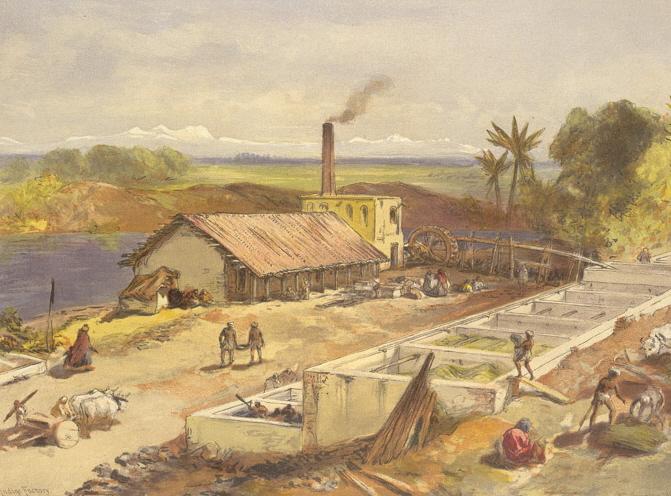
Indigo: a crop grown under force. White planters forced farmers to grow indigo, which paid little, disrupted the harvest cycle and left land infertile for years. This coercion led to the indigo revolt of 1859-60. Indigo was shipped to Britain to dye cloth made in British towns.
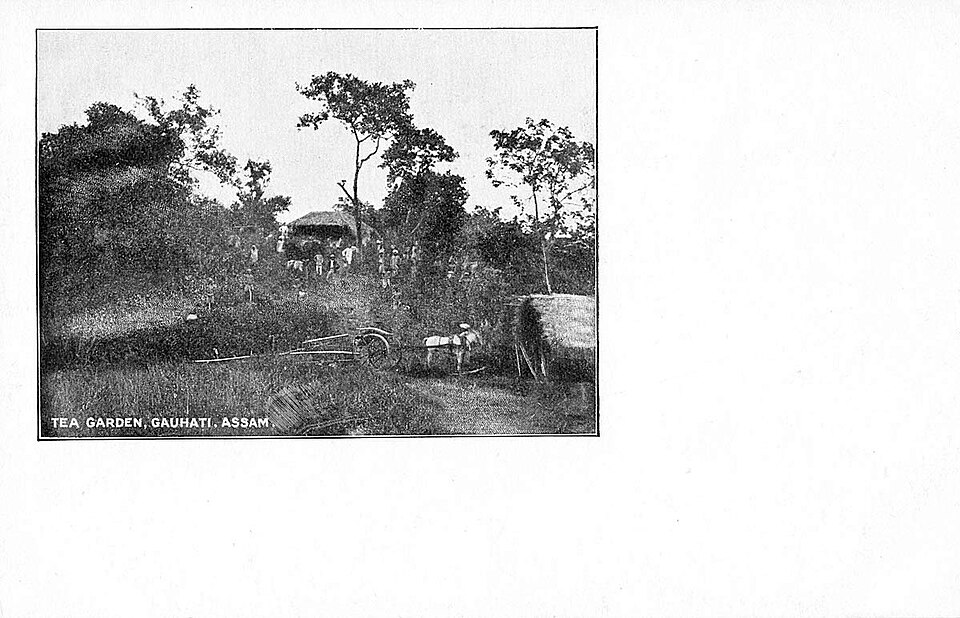
Tea and opium. Tea was grown on white-owned plantations in Assam using indentured labour, which was almost like slavery. Opium was grown to balance Britain's tea trade with China in Britain's favour. Its market was tightly controlled by British traders, so Indian growers earned little.
The triangular trade. Britain bought huge amounts of Chinese tea but had little the Chinese wanted, so it paid through a triangular trade of Calcutta, Canton and London, selling Indian raw cotton and opium in China. In 1773 Warren Hastings placed opium under government control: growers could plant it only under contract and had to sell at a low fixed price, while independent Malwa opium was hit with a heavy export duty. Opium thus earned revenue in India and moved that revenue to London.
Booms built on coercion. Indigo output rose from under 5,000 maunds in 1788-89 to 133,000 maunds in 1829-30, almost all under the ryoti system, in which peasants grew it on their own land at a fixed low price and were kept in debt by doctored accounts. In the 1830s sugar planters in eastern Uttar Pradesh used the same method of advances and fixed prices. Tea gardens in Assam were started by the Company and handed to the private Assam Company, with indentured workers brought in from Chota Nagpur.
Boom and bust. Distant markets added a new danger to farming. Bundelkhand grew cotton for China after 1816, but when prices fell in the 1830s the land tax was not reduced, and the Bundela rising of 1842 followed. Between 1830 and 1853 almost all the big export firms of Bengal, Bihar and the North-Western Provinces went bankrupt, and the peasants drawn into these crops suffered most.
From cash crops to famine. Many farmers shifted from food crops like jowar, bajra and pulses to cash crops. In bad years they had no grain, and the results were disastrous. When world demand for Indian cotton fell, the Deccan cotton belt saw debt, famine and riots in the 1870s, and the Bengal famine of 1943 was among the worst disasters of the colonial period.
Railways: built for whom?
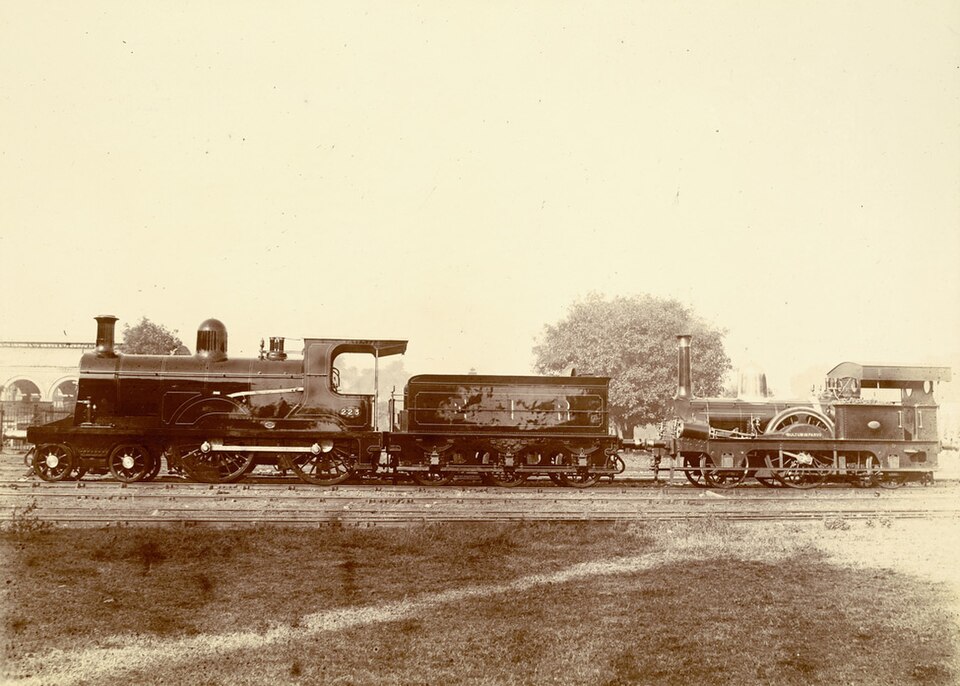
The beginning. Lord Dalhousie decided to build railways in India in 1853. In the same year, the first passenger train ran from Bombay to Thane, and Dalhousie also opened the first telegraph line and introduced a modern postal service. Railways are often seen as a sign of modernisation, but we must ask whom they were built for.
Who paid, and who profited? Railways were built with British capital. Investors were guaranteed 5 per cent interest, and this was paid from Indian revenue even when a line made a loss. Most of the machinery, rails, engines and expertise came from Britain, so the benefits of building them went to British industry rather than Indian.
Where did the lines go? The network linked the interior to the port cities, not inland markets to each other. It was designed to carry raw materials to the ports and British goods inland. Some lines on the frontier helped move the army, and a few "famine lines" served scarcity areas.
What did the railways do to Indian crafts? By reaching deep into the interior, railways carried cheap British goods to every town. This helped ruin Indian handicrafts, which had already lost their foreign markets. The railways thus strengthened the colonial character of the economy.
The hidden costs of the guarantee. The guaranteed interest was paid in sterling in England, so it swelled the Home Charges, and since profit or loss made no difference to investors, it encouraged extravagance. The companies imported engines, rails, machinery and for some years even coal, so India missed the backward linkage industries, such as engineering, iron and steel and mining, that railways created elsewhere. Dalhousie also valued railways for moving troops quickly and guarding the frontier against Russia.
An unintended result. Yet the railways also brought people and ideas closer. People from different regions could now travel, meet and share news. Along with modern education, the railways helped create the national awakening that later challenged British rule.
Phase three: British capital and the slow rise of Indian industry
Why did Britain invest in India? By the late 19th century, other industrial powers such as Germany, the USA and Japan were competing with Britain. Britain needed safe places to invest its capital and secure supplies of raw materials. India, a captive colony, served both needs.
Who controlled industry? British capital went first into railways, jute, tea plantations and mining. It was invested through a closed network of British banks, export-import firms and managing agencies. Before the First World War, British managing agencies controlled 75 per cent of industrial capital, and most profits went to Britain.
Why was Indian enterprise held back? Despite its talk of free trade, the colonial state followed discriminatory policies. European banks dominated the money market, and British chambers of commerce influenced the state to deny Indian entrepreneurs capital. Indian traders had to rely on their own family or caste networks for funds.
Indian capital finds its chance. Indian industry grew when Britain was in difficulty. During the First World War, Indian businessmen such as G.D. Birla invested in jute, and Indian capital had its greatest success in western India's cotton mills. The Tata Iron and Steel Company led the young iron and steel industry.
The Depression and the Second World War. During the Depression (1929-33) foreign trade fell, so the home market opened up for Indian industry. During the Second World War Indian entrepreneurs made huge profits. The Indian capitalist class then linked itself to the nationalist movement and demanded state-owned heavy industry after freedom.
The drain of wealth and the nationalist critique
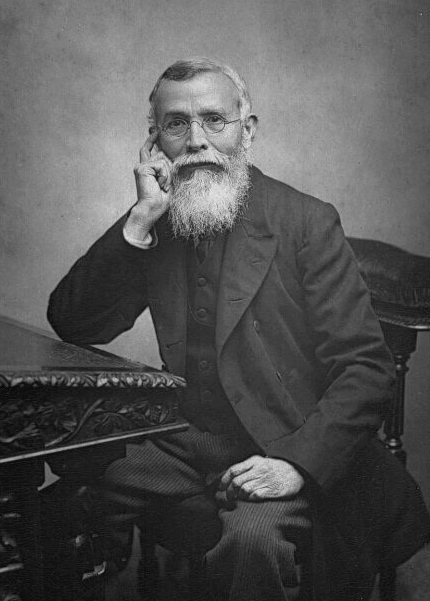
Early hopes. Early nationalists such as Dadabhai Naoroji, M.G. Ranade and R.C. Dutt at first hoped that British rule would bring modern industry to India. Over time they were disillusioned. In the late 19th century they built a strong economic critique of colonialism.
What was the drain theory? Dadabhai Naoroji argued that India's poverty came from a steady drain of Indian wealth to Britain, caused by colonial policy. India sent money to Britain every year without getting anything equal in return. This loss, year after year, kept India poor.
Through which channels did the wealth drain? The drain took several forms:
- Home charges, paid to the Secretary of State in Britain.
- Interest on the Company's and the government's foreign debts.
- Military costs and the guaranteed returns on railways.
- The salaries, pensions and training of British civil and military officials, and even the import of all stationery from England.
How the tribute began. The Company called its surplus land revenue "territorial revenue" and used it to buy export goods and pay for wars, so India got nothing in return; historians call this a political tribute. Private remittances from Bengal alone came to about Rs 1.08 crore a year in 1813-20, by G.A. Prinsep's estimate, and payments to British shipping, banks and insurers to about Rs 57 lakh a year. The Company's own remittances, later called Home Charges, ranged from Rs 1 to 3 crore.
Why did it matter so much? Even if the drain was a small share of India's exports, it was money that could have been invested inside India. Invested at home, it could have built industry and created jobs. Instead it strengthened Britain's economy.
Why is the drain theory important for history? It gave the national movement its economic argument. It showed that British rule was not just foreign but harmful to India's wealth. This idea turned many educated Indians from admirers of British rule into its critics.
The historians' debate. Did colonial rule bring development? Some writers argue that the British partly modernised India but were held back by traditional structures. Others hold that British modernisation was half-hearted and served mainly Britain, and the evidence of de-industrialisation, forced crops and the drain supports this second view.
Mains practice: the colonial economy
These are practice questions written by us, not past papers. Past questions from your exam appear in the PYQ panel.
| Angle | Question | Key points to cover |
|---|---|---|
| Phases | Trace the changing nature of British economic exploitation of India. | Explain plunder, free trade and finance capital with one feature each. Then show how Britain's needs drove each change. |
| Debate | "De-industrialisation was the result of policy, not only of technology." Discuss. | Explain cheap machine goods and the loss of court patronage. Then show the one-way tariffs and the Charter Act of 1813. |
| Evaluation | Did the railways modernise India or deepen colonial dependence? | Cover guaranteed returns, imported inputs and lines to ports. Then balance this with the role of railways in national awakening. |
| Concept | Explain Dadabhai Naoroji's drain theory and its significance for the national movement. | Name the channels of the drain and the lost chance to invest at home. Then show how it gave nationalism an economic argument. |
| Impact | "Commercialisation of agriculture under colonial rule was forced, not natural." Examine. | Use indigo, tea and opium as examples, and show the need for cash to pay revenue. Then link this to famine and debt. |
How to use this table: each answer should explain the what, then the why, and end with what it led to.
Quick revision
- The three phases were plunder (1757-1813), free trade (1813-1858) and finance imperialism (from 1858).
- After the diwani, Indian revenue paid for Indian exports, and much of the wealth helped Britain's Industrial Revolution.
- The Charter Act of 1813 ended the Company's monopoly of Indian trade.
- One-way free trade turned India from a cloth exporter into a raw cotton exporter and cloth importer, which nationalists called de-industrialisation.
- Indigo was forced on farmers and led to the indigo revolt of 1859-60, while tea in Assam used indentured labour.
- Dalhousie began railways in 1853, the first train ran Bombay to Thane, and investors got a guaranteed 5 per cent.
- Before the First World War, British managing agencies held 75 per cent of industrial capital.
- Dadabhai Naoroji put forward the drain of wealth theory.
- Weavers were tied down by gomastas (from 1753), the khatbandi system and a 35 per cent default fine (1789).
- Britain banned Indian silks and printed calicoes in 1720; by 1850-51 cotton cloth was only 3.7 per cent of exports and opium led at about 30 per cent.
- Warren Hastings put opium under state control in 1773; it paid for China tea through the Calcutta-Canton-London triangle.
- Railway guarantees were paid in sterling, swelling the Home Charges, and imported engines and rails left India without backward linkages.