

UKPSC PCS (Upper) · Module 63 · Mains depth · 20 min
India and Pakistan: Kashmir, wars, terrorism and the search for peace
What UKPSC PCS (Upper) asks from this chapter
Syllabus lines this chapter covers:
- Prelims Paper I: General Studies · Current events of State, National and International importance, plus general knowledge: nations, space events, books and authors, scientists, awards, defence, national symbols, protocol, dances, music, languages, world heritage, important days and sports.
- Mains Paper 4: General Studies II (governance, constitution, polity, social justice, IR) · India and its neighborhood – relations.
UKPSC PCS (Upper) has asked 1 question from this chapter (2024); 3 from its whole module.
Read at full depth: basics, the standard layer and the Mains analysis.
Start from zero: two brothers who split the house
Imagine two brothers who divide their family house in a hurry, with a violent quarrel at the gate. One room, the most beautiful, is claimed by both. Years later they still share a wall, a water tank and many relatives, yet they cannot sit down to talk for long without a fight.
That is a rough picture of India and Pakistan. Both were born from the partition of British India in August 1947, which uprooted millions of people. Within weeks, they were fighting over Jammu and Kashmir, and the dispute has shaped their ties ever since.
Over the years, a second problem grew on top of the first: terrorism launched from Pakistani territory against India. Today India's whole approach can be summed up in one line from its official position: issues should be settled bilaterally and peacefully, in an atmosphere free of terror and violence.
This chapter walks through the main turning points, from 1947 to Operation Sindoor in 2025. At each step it asks why things happened and what they mean for India's policy now.
The roots: Kashmir from 1947 to 1949
Accession. Soon after partition, raiders backed by Pakistan attacked Jammu and Kashmir. The Maharaja signed the Instrument of Accession on 26 October 1947. This was the same instrument that over 560 princely states signed, so legally the state joined India in the normal way.
The UN step. India wanted to stop the fighting from becoming a full war. On 1 January 1948, it referred the matter to the UN Security Council under Article 35 of the Charter, asking it to end Pakistan's help to the invaders. The UN commission's resolution of 13 August 1948 called for a ceasefire, with Pakistan to withdraw its troops first.
The line. The cease-fire line was fixed by the Karachi Agreement of 1949. Pakistan never carried out the withdrawal it was asked to make first, and the issue stayed frozen in Cold War politics at the UN.
Why it matters. India's view that the accession was legal and final comes from this period. So does its wariness of outside mediation, which later shaped the Simla Agreement. The story of these years is told in more detail in the chapter on foreign policy from 1947 to 1991.
Wars and Simla: 1965 to 1972
1965. Pakistan launched a war in 1965 that violated the 1949 cease-fire line. India pushed back, and the war ended without changing the basic map. It showed that force would not settle the Kashmir question in Pakistan's favour.
1971. The next war was about East Pakistan, where a political crisis turned violent and spilled into India. The 1971 India-Pakistan war led to the creation of Bangladesh, which changed the map of South Asia.
Simla, 1972. On 2 July 1972, the two countries signed the Simla Agreement. Both undertook to resolve all differences bilaterally and peacefully, which meant Pakistan accepted that the Kashmir issue had moved from the UN to the bilateral plane.
Why it matters. Simla is still the base of India's policy that no third party has a role in India-Pakistan disputes. Whenever outsiders offer to mediate, India points back to this agreement.
Tashkent, 1966: winning the war, losing the peace?
How 1965 began. In early 1965, Indian and Pakistani forces clashed in the Rann of Kutch in Gujarat. Later that year Pakistan sent armed infiltrators into Jammu and Kashmir, hoping for a local uprising that never came. When fighting widened, India opened a second front in Punjab and moved towards Lahore.
The outside powers. The United States, busy in Vietnam, stopped arms supplies to both sides. The Soviet Union stepped in as peacemaker. Premier Alexei Kosygin invited Prime Minister Lal Bahadur Shastri and President Ayub Khan to Tashkent, in Soviet Central Asia.
The agreement. In January 1966, the two leaders signed the Tashkent agreement. Both sides agreed to pull their forces back to the positions they held before the war. This meant India returned territory its army had captured, which opposition parties at home criticised.
A sad ending. Shastri died in Tashkent soon after signing the agreement. He is remembered for leading India firmly through the war, while the peace terms remain debated.
Why it matters. Tashkent is the only India-Pakistan settlement made with a third country's help. India's later insistence on bilateral talks, written into the Simla Agreement, partly grew from the feeling that outside mediation had cost it gains won in battle.
Lahore and Kargil: peace bus to war on the heights
The peace move. In February 1999, the Indian Prime Minister travelled to Lahore on 20-21 February to open a new chapter, and the two sides issued the Lahore Declaration. It was a bold gesture, made soon after both countries had tested nuclear weapons in 1998.
The betrayal. Within weeks, in May 1999, Pakistan launched a military operation across the LOC at Kargil, occupying heights along a 140 km stretch of the Srinagar-Leh highway. India's response forced Pakistan to retreat, but the episode left deep distrust.
The lesson India drew. Kargil convinced India that peace talks with Pakistan could be used as cover for attack. From then on, India insisted that Pakistan must keep its commitment not to allow its territory to be used against India and respect the International Boundary and the LOC.
Why it matters. The Lahore Declaration and the Simla Agreement together are the two documents India cites as the frame for ties. The pattern seen in 1999, a peace move followed by an attack, repeated itself in later years.
Agra 2001 and the attack on Parliament
After the coup. In October 1999, months after Kargil, General Pervez Musharraf seized power in Pakistan in a military coup. Pakistan was suspended from the Commonwealth's councils. India had to decide whether to talk to the general who had planned Kargil.
The Agra summit. In 2001, Prime Minister Vajpayee invited Musharraf to Agra. The talks collapsed because Pakistan insisted on first settling Kashmir as the 'core issue', while India wanted to discuss cross-border terrorism and the full range of ties. No joint declaration came out.
13 December 2001. Months later, terrorists attacked India's Parliament in New Delhi. India blamed groups based in Pakistan and moved troops to the border, and relations froze. Along with the later 26/11 attacks on Mumbai in 2008, the Parliament attack made the world see that groups like Lashkar-e-Taiba (LeT) and Jaish-e-Mohammed (JeM) had to be confronted.
Why it matters. The years from Lahore to the Parliament attack show the same cycle again and again: India offers talks, and a terror attack derails them. This is the root of India's present line that talks and terror cannot go together.
Terror and response: Uri, Pulwama and trade
Uri, 2016. On 18 September 2016, terrorists struck at Uri in Jammu and Kashmir. India responded with surgical strikes across the LOC on terrorist launch pads. This was a break from the past, because India openly announced a cross-border response.
Pulwama and Balakot, 2019. On 14 February 2019, a terror attack at Pulwama killed 40 security personnel. On 26 February 2019, India carried out the Balakot air strike across the border. Using air power across the border showed that India was ready to raise the cost of terror.
Economic steps. India had granted Pakistan Most Favoured Nation (MFN) status in 1996, meaning no worse trade terms than any other country. After Pulwama, India withdrew it on 15 February 2019 and raised customs duty on Pakistani goods to 200%. Pakistan then suspended bilateral trade on 7 August 2019.
Why it matters. These years marked a shift from patience to calibrated retaliation. India kept saying that talks and terror cannot go together, and it began to use military, economic and diplomatic tools together to make that point.
2025: Pahalgam, Operation Sindoor and the Indus Waters Treaty
The attack. On 22 April 2025, terrorists attacked tourists at Pahalgam in Jammu and Kashmir, killing 25 Indians and one Nepali citizen. The attackers asked people their religion before killing them, which made the aim of dividing India from within plain.
Operation Sindoor. On 7 May 2025, the Indian Armed Forces launched Operation Sindoor, hitting nine sites of terrorist infrastructure in Pakistan and Pakistan-occupied Jammu and Kashmir. India called the action focused, measured and non-escalatory, and stressed that no Pakistani military facilities were targeted at first. When Pakistan attacked with drones and shelling, India struck back at military targets, and firing stopped from 1700 hours IST on 10 May 2025 after Pakistan's DGMO called his Indian counterpart.
Non-military steps. India placed the Indus Waters Treaty of 1960 in abeyance with immediate effect, until Pakistan credibly and irrevocably gives up its support for cross-border terrorism. It also closed the Attari Integrated Check Post, suspended bilateral trade and revoked visas of Pakistani nationals. The official message was summed up as "blood and water cannot flow together".
Why the treaty matters. The treaty had restricted India's projects on the western rivers, the Jhelum and Chenab, to run-of-the-river designs. Placing it in abeyance gives India more freedom to build storage and irrigation in Jammu and Kashmir and nearby states, while putting pressure on Pakistan, whose farming depends heavily on these rivers.
Why it matters. 2025 showed the full shape of India's new doctrine: terror attacks will draw military, economic and diplomatic costs together. It also showed restraint, since India hit terrorist targets first and agreed to stop firing once Pakistan asked.
People and faith: Kartarpur and pilgrimages
Why it matters to people. Partition left many holy places on the other side of the border. Sikh, Hindu and Muslim pilgrims still want to visit shrines that are central to their faith.
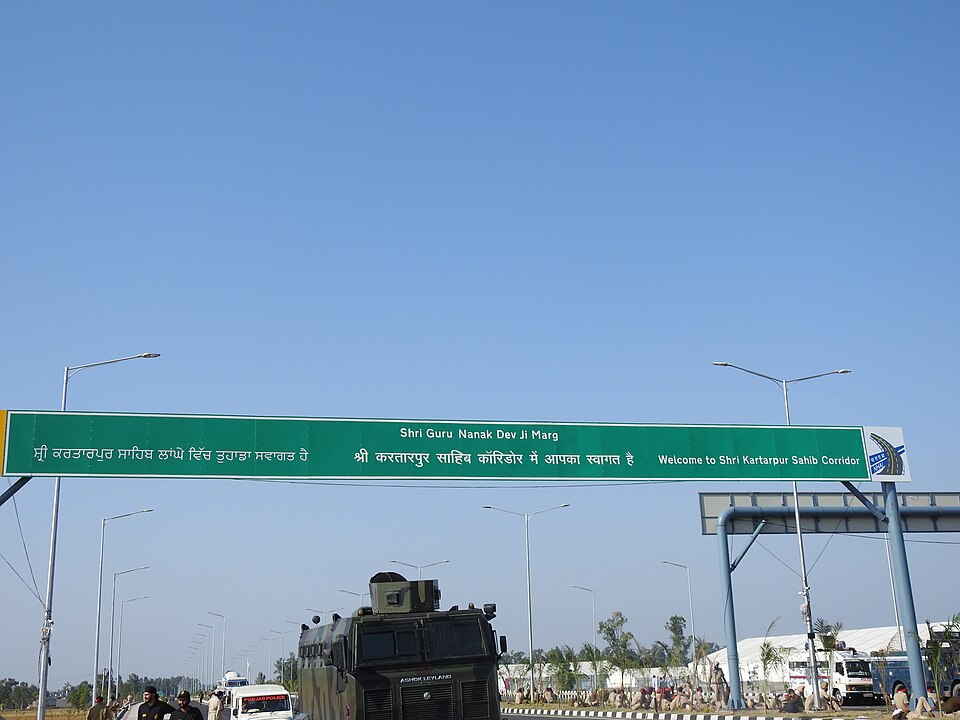
The 1974 Protocol. Pilgrim visits run under the 1974 Protocol on Visits to Religious Shrines, which lets groups of pilgrims cross on agreed dates. It survived wars and crises because both sides saw its human value.
Kartarpur, 2019. The Kartarpur Corridor Agreement was signed on 24 October 2019, and the corridor was inaugurated on 9 November 2019. It lets Indian pilgrims visit the Gurdwara at Kartarpur Sahib in Pakistan, a shrine linked to Guru Nanak Dev.
Why it matters. Even in the worst years, faith and family ties keep a thin bridge open between the two peoples. In Mains, these examples show that India separates its firm line on terror from goodwill towards ordinary people.
When, where and why: the relationship at a glance
The table lines up the main events, so that you can see the cycle of talks and attacks over eight decades.
| When | Where | What | Why it matters |
|---|---|---|---|
| 26 Oct 1947 | Jammu and Kashmir | Instrument of Accession | Legal basis of India's position |
| 1 Jan 1948 | UN Security Council | Reference under Article 35 | Brought outsiders in, a lesson for later |
| 2 Jul 1972 | Simla | Simla Agreement | Made disputes bilateral |
| Feb and May 1999 | Lahore and Kargil | Peace visit, then war | Deepened distrust |
| 18 Sep 2016 | Uri | Attack, then surgical strikes | Open cross-border response |
| 14 and 26 Feb 2019 | Pulwama and Balakot | Attack, then air strike, MFN withdrawn | Military and economic costs together |
| 9 Nov 2019 | Kartarpur | Corridor opened | People-to-people bridge |
| 22 Apr to 10 May 2025 | Pahalgam to the LOC | Attack, Operation Sindoor, treaty in abeyance | Full use of military and non-military tools |
Why it matters. The pattern is clear: every peace move has been followed by an attack, and India's response has grown firmer each time. Yet India has never closed the door on peaceful, bilateral settlement once terror stops.
Mains lens: what should India's Pakistan policy be?
1. The case for firmness. Decades of talks have not stopped terror, and attacks have often followed peace moves, as in 1999. Firm responses since 2016 have raised the cost for Pakistan and shown Indians that the state will act. Economic and water measures add pressure without full-scale war.
2. The case for engagement. Two nuclear-armed neighbours cannot afford a permanent freeze, because a crisis can spiral fast. Trade, pilgrimages and people-to-people links help ordinary citizens on both sides and keep moderate voices alive in Pakistan. Total isolation can also push Pakistan closer to other powers.
3. The global dimension. India works through the UN, financial watchdogs and partners to isolate terror groups, while rejecting outside mediation on Kashmir. Keeping the issue bilateral, under Simla, while making terrorism a global concern, is a careful balance.
4. A balanced conclusion. India's settled line is that talks and terror cannot go together. The best policy combines firm deterrence against terror with an open door for dialogue once Pakistan acts against terror groups, plus humane links like Kartarpur. This keeps India strong without giving up the long-term goal of peace.
Mains practice: five questions, five angles
These are practice questions written by us, not past papers. Past questions from each exam are in the PYQ panel of this module.
| Angle | Question | Key points to cover |
|---|---|---|
| History | Why does India reject third-party mediation on Kashmir? | Explain the 1947 accession, the UN experience of 1948 and the Simla Agreement of 1972. Then link it to India's present position. |
| Security | Trace the evolution of India's response to cross-border terrorism from Kargil to Operation Sindoor. | Use Kargil 1999, Uri 2016, Balakot 2019 and Sindoor 2025. Show the shift from restraint to calibrated retaliation with stated limits. |
| Water | Discuss the implications of placing the Indus Waters Treaty in abeyance. | Explain the condition set by India and the gains for projects on the Jhelum and Chenab. Then weigh pressure on Pakistan against international and humanitarian concerns. |
| Economy | Can trade be a tool of peace between India and Pakistan? | Cover MFN in 1996, its withdrawal in 2019 and trade suspensions. Then argue when trade helps and when it must wait for an end to terror. |
| Way ahead | "Talks and terror cannot go together." Evaluate this principle. | Give the reasons behind it from 1999 onwards. Then discuss risks of a freeze between nuclear neighbours and the role of Kartarpur-type links. |
How to use this table: each answer should give the context with one date, show India's stated position, weigh both sides and end with a firm but open way forward.
Quick revision
- Jammu and Kashmir acceded on 26 October 1947 through the same instrument used by over 560 princely states.
- India went to the UN Security Council on 1 January 1948 under Article 35, and the Karachi Agreement of 1949 set the cease-fire line.
- Pakistan's 1965 war violated the cease-fire line, and the 1971 war led to the creation of Bangladesh.
- The Simla Agreement of 2 July 1972 made India-Pakistan differences a bilateral matter.
- The Lahore visit of 20-21 February 1999 was followed by Pakistan's Kargil operation in May 1999.
- India wants issues settled bilaterally and peacefully in an atmosphere free of terror and violence.
- Surgical strikes followed the Uri attack of 18 September 2016, and the Balakot air strike of 26 February 2019 followed Pulwama.
- India gave Pakistan MFN status in 1996 and withdrew it on 15 February 2019.
- The Kartarpur Corridor was inaugurated on 9 November 2019, and other pilgrimages run under the 1974 Protocol.
- Operation Sindoor began on 7 May 2025 after the Pahalgam attack of 22 April 2025 and struck nine terrorist sites.
- India placed the Indus Waters Treaty of 1960 in abeyance until Pakistan gives up support for cross-border terrorism.
UKPSC PCS (Upper) questions from this chapter
Write a short essay on India's concerns about the Indus Water Treaty, 1960.