

UKPSC RO / ARO · Module 30 · standard depth · 14 min
Taxes: direct and indirect, income tax and corporation tax
What UKPSC RO / ARO asks from this chapter
Syllabus lines this chapter covers:
- Prelims: General Studies (100) and General Aptitude Test (50) · Indian polity and economy: Constitution, Panchayati raj, community development, broad features of Indian economy and planning
- Mains Paper 1: General Studies (objective, 200 questions) · Indian polity and economy: Constitution, Panchayati raj, community development, economy and planning
1 UKPSC RO / ARO questions in our bank come from this module (Public finance).
Cut to standard depth for UKPSC RO / ARO. 7 deeper paragraphs are in the full chapter.
Start from zero: two ways to pay tax
Meena is a teacher. Every month, some income tax is cut from her salary and goes to the government. She pays it herself, and she cannot pass it on to anyone else.
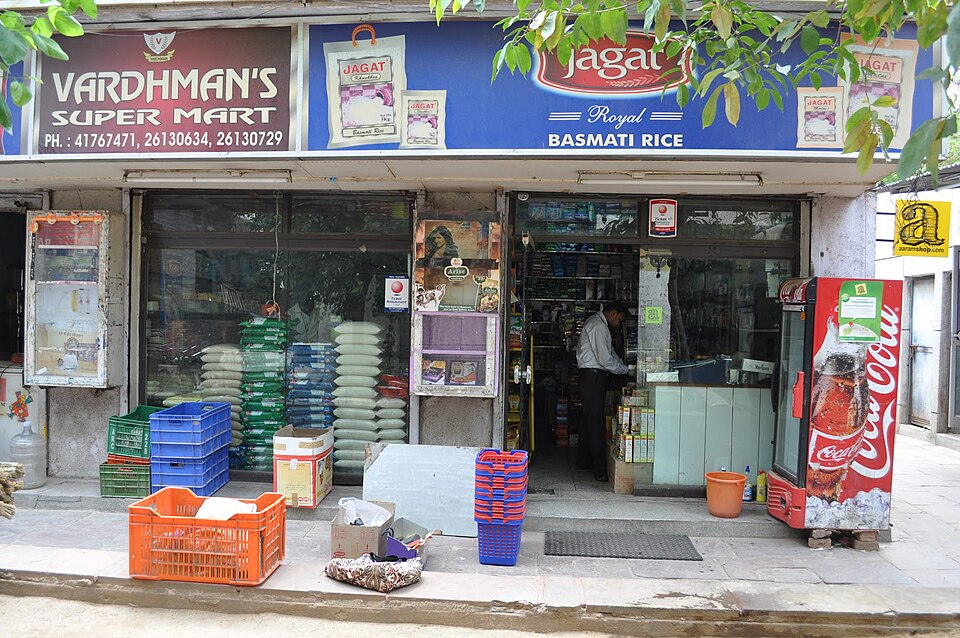
On her way home, Meena buys a bar of soap. The price includes GST. The shopkeeper collects it and pays it to the government, but the money really came from Meena, the buyer.
These are the two main kinds of taxes. A direct tax is paid by the person on whom it is levied, such as income tax and corporation tax. An indirect tax is collected by a seller but passed on to the buyer through prices, such as GST, customs and excise duties.
This chapter explains the difference, India's main taxes, the new income tax slabs, and why the balance between direct and indirect taxes matters for fairness.
India's main taxes
| Tax | Type | Who pays |
|---|---|---|
| Income tax | Direct | Individuals and others on their income |
| Corporation tax | Direct | Companies on their profits |
| GST | Indirect | Buyers of goods and services, through prices |
| Customs duty | Indirect | Importers, passed on to buyers |
| Union excise duty | Indirect | Producers of certain goods, passed on to buyers |
The numbers for 2026-27. Gross tax revenue is estimated at ₹44.04 lakh crore, or 11.2% of GDP. Direct taxes bring in ₹26.97 lakh crore, which is 61.2% of gross tax revenue. Within this, taxes on income are ₹14.66 lakh crore and corporation tax is ₹12.31 lakh crore.
A note on "gross". Gross tax revenue is not all the Centre's to keep. A large part goes to states as their share of taxes (see Fiscal federalism: the Finance Commission, tax devolution and grants), so the Centre's own net tax revenue is smaller.
Income tax: the new regime and the new law
The ₹12 lakh limit. In the Budget Speech 2025-26, the government announced that under the new regime, no income tax is payable up to an income of ₹12 lakh. For salaried taxpayers, with the standard deduction of ₹75,000, the limit is ₹12.75 lakh. This works through a rebate: tax is calculated by slab and then fully rebated up to this income.
The slabs (new regime, from 2025-26):
| Income slab | Tax rate |
|---|---|
| Up to ₹4 lakh | Nil |
| ₹4–8 lakh | 5% |
| ₹8–12 lakh | 10% |
| ₹12–16 lakh | 15% |
| ₹16–20 lakh | 20% |
| ₹20–24 lakh | 25% |
| Above ₹24 lakh | 30% |
Progressive taxation. The rate rises as income rises, so richer people pay a larger share of their income. Only the income within each slab is taxed at that slab's rate.
The new law. The Income-tax Act, 2025, described as a simplified version of the Income-tax Act, 1961, came into effect on 1 April 2026. The aim is simpler language and fewer disputes.
Direct vs indirect: the fairness question
Direct taxes can be progressive. Income tax takes a higher rate from higher incomes, so it can reduce inequality.
Indirect taxes are often regressive. A poor family and a rich family pay the same GST on a bar of soap. But that tax is a larger share of the poor family's income. This is why essentials usually carry lower GST rates (see GST: one tax for one market, the GST Council and the 2025 reform).
India's mix. In 2026-27, direct taxes make up 61.2% of gross tax revenue. A higher share of direct taxes is generally seen as fairer and more efficient.
Why this matters: the question is not just how much tax is collected, but who bears it. A tax system that leans on the rich more than the poor supports equity, while broad indirect taxes provide stable revenue.
Who really pays a tax? Impact, incidence, buoyancy and the Laffer curve
Start with a cup of tea. Suppose the government puts a new tax of ₹2 on every cup of tea, collected from the tea seller. The seller hands the money to the government, so the legal burden falls on the seller. But if the seller raises the price from ₹10 to ₹12, it is the customer who really pays.
Impact and incidence. Economists call the first point of contact the impact of a tax, which is the person who hands over the money. The incidence is where the burden finally rests, after prices and wages adjust. For an indirect tax such as GST, the impact is on the seller but much of the incidence usually falls on the buyer, which is why indirect taxes touch poor and rich alike.
Buoyancy and elasticity. Tax collections should grow as the economy grows, and two ideas measure how well they do. Tax buoyancy compares the growth of tax revenue with the growth of GDP, so a buoyancy above 1 means revenue grows faster than the economy. Tax elasticity measures the same response but leaves out changes caused by new rates or new taxes, so it shows how responsive the existing tax system is by itself.
The Laffer curve. If the tax rate is zero, the government collects nothing, and if it is 100%, nobody has a reason to earn, so it again collects almost nothing. Somewhere in between lies a rate that brings in the most revenue. This idea, drawn as a hump-shaped curve, is called the Laffer curve, and it warns that very high rates can push people towards evasion or less work, so revenue may fall.
Why it matters. These ideas explain many real choices. A government that wants more revenue may do better by widening the base and lowering rates than by raising rates, and a tax that looks progressive on paper may hurt the poor if its incidence falls on them. A good Mains answer uses these terms to judge any tax change: who bears it, how revenue responds and whether rates are already too high.
Three reforms that changed direct tax (2019 to 2021)
The corporate tax cut (2019). In September 2019, with growth slowing, the government cut corporate tax through the Taxation Laws (Amendment) Ordinance, 2019. Domestic companies could choose to pay 22% (an effective 25.17% with surcharge and cess) if they gave up exemptions and incentives. New manufacturing companies incorporated on or after 1 October 2019 could pay 15% (effective 17.01%), and neither group had to pay Minimum Alternate Tax.
Why lower rates with fewer exemptions? The government said the aim was to promote growth and investment. A lower rate with fewer exemptions also makes the system simpler and harder to game, because firms no longer chase special breaks. The cost was a big fall in revenue in the short run, which is one reason the fiscal deficit target was relaxed in the Budget of 2020.
Faceless assessment (2020). Taxpayers often complained of harassment and of discretion in face-to-face scrutiny. On 13 August 2020, under the platform "Transparent Taxation - Honouring the Honest", faceless assessment and a Taxpayers' Charter came into force, and faceless appeals followed from 25 September 2020. Cases are now allotted and handled online, so the taxpayer and the officer do not meet, which aims to cut both harassment and corruption.
Ending retrospective tax (2021). In 2012, the law was changed to tax certain indirect transfers of Indian assets with effect from earlier years, which led to long disputes with foreign investors. The Taxation Laws (Amendment) Act, 2021 ended this: no tax demand will be raised for such transfers made before 28 May 2012, and amounts already collected are refunded without interest once conditions are met. The government said the aim was tax certainty.
Why it matters. Together, these reforms show a shift from high rates and many exemptions towards lower rates, fewer exemptions, technology and predictability. Investors value certainty as much as low rates, because a sudden or retrospective change raises the risk of every project. A good Mains answer weighs these gains against the revenue lost and asks whether the benefits reached investment and jobs.
Why taxes are designed this way: the logic behind India's tax system
Why tax at all? The government provides things markets do not supply well: defence, police, courts, roads, public health and help for the poor. It pays for them mainly through taxes. In Budget 2026-27, gross tax revenue is ₹44.04 lakh crore, about 11.2% of GDP.
Why two kinds of tax? A direct tax (income tax, corporation tax) falls on the person who earns. It can be made progressive, so that higher incomes pay a higher rate, which is fairer. An indirect tax (GST, customs) is paid when people buy things, so the rich and poor pay the same rate on the same item, which makes it regressive in effect. A system that leans more on direct taxes is usually considered fairer; in 2026-27 direct taxes are 61.2% of gross tax revenue.
Why slabs and a rebate? Income tax slabs (from nil to 30%) make the tax progressive. The rebate that makes income up to ₹12 lakh tax-free under the new regime (from 2025-26) leaves more money with middle-income families, who tend to spend it. That supports demand, at a cost in revenue.
Why a new Income-tax Act (2025)? The Income-tax Act, 1961 served for more than six decades, with many amendments along the way. The Income-tax Act, 2025, in force from 1 April 2026, is officially a simplified version of it. Simpler laws mean fewer disputes, lower compliance costs and less room for confusion.
Implications. India's tax-to-GDP ratio is modest for its needs, so the government relies partly on borrowing (see Deficits and debt: fiscal, revenue and primary deficit, and the FRBM Act). Widening the base, rather than raising rates, is the usual advice: bring more incomes into the net, cut exemptions, and use data (such as GST and digital payments) to reduce evasion.
Quick revision
- A direct tax, such as income tax or corporation tax, is paid by the person on whom it is levied, while an indirect tax, such as GST, customs or excise, is passed on through prices.
- In the 2026-27 Budget, gross tax revenue is ₹44.04 lakh crore (11.2% of GDP), and direct taxes bring in ₹26.97 lakh crore, which is 61.2% of it.
- Within direct taxes, taxes on income give ₹14.66 lakh crore and corporation tax gives ₹12.31 lakh crore.
- Under the new regime from 2025-26, a rebate makes income up to ₹12 lakh tax-free (₹12.75 lakh for salaried people with the standard deduction).
- The slabs start at nil up to ₹4 lakh and then rise through 5, 10, 15, 20 and 25% in steps of ₹4 lakh, reaching 30% above ₹24 lakh.
- The Income-tax Act, 2025 came into effect on 1 April 2026 as a simplified version of the 1961 Act.
- The impact of a tax is on whoever pays it to the government, the incidence is on whoever finally bears it, buoyancy compares tax growth with GDP growth, and the Laffer curve warns that very high rates can cut revenue.
- In September 2019, domestic companies got a 22% corporate tax option (effective 25.17%) and new manufacturers 15% (effective 17.01%), without exemptions or MAT.
- Faceless assessment and the Taxpayers' Charter began on 13 August 2020, and the Taxation Laws (Amendment) Act, 2021 ended tax demands on indirect transfers before 28 May 2012.
Common confusions and exam traps:
- The ₹12 lakh limit works through a rebate; the slab starting at ₹4 lakh still exists.
- Progressive = rate rises with income; regressive = burden falls more on the poor.
- Gross tax revenue includes the states' share, so it is more than the Centre keeps.