

UKPSC RO / ARO · Module 33 · standard depth · 17 min
Indian agriculture: land, holdings and land reforms
What UKPSC RO / ARO asks from this chapter
Syllabus lines this chapter covers:
- Prelims: General Studies (100) and General Aptitude Test (50) · Indian polity and economy: Constitution, Panchayati raj, community development, broad features of Indian economy and planning
- Mains Paper 1: General Studies (objective, 200 questions) · Indian polity and economy: Constitution, Panchayati raj, community development, economy and planning
4 UKPSC RO / ARO questions in our bank come from this module (Agriculture).
Cut to standard depth for UKPSC RO / ARO. 7 deeper paragraphs are in the full chapter.
Start from zero: how a farm gets smaller
Imagine a farmer in Bihar who owned 4 hectares of land in 1970. When he grew old, he divided it equally between his two sons, so each got 2 hectares. Each son later divided his share between two children, and now each grandchild has just 1 hectare.
The family has not lost any land, but each farm has become smaller. A 1-hectare farm is hard to run profitably. Buying a tractor makes little sense, and a single bad monsoon can wipe out a year's income.
This is the story of Indian agriculture in one family. The average size of a farm holding in India fell from 2.28 hectares in 1970-71 to 1.08 hectares in 2015-16.
This chapter explains why agriculture still matters so much, how land is distributed, and what land reforms try to fix.
Why agriculture still matters
Jobs. According to government figures of August 2026, agriculture provides livelihoods to about 46.1% of India's workforce. No other sector supports so many people.
Output. Agriculture's share of the economy's output is much smaller than its share of jobs. In 2025-26, by MoSPI's Provisional Estimates, agriculture's real GVA grew 3.0%, slower than manufacturing or services (see Sectors of the economy: primary, secondary and tertiary).
The gap. When nearly half the workers produce a much smaller share of output, income per worker in farming is low. This is the core problem of Indian agriculture: too many people on too little land, earning too little.
Why this matters: raising farm incomes, and creating non-farm jobs for those who want to leave farming, are central to reducing poverty (Module 10).
Small and shrinking holdings
What is a "holding"? An operational holding is all the land used for farming by one person or household as a single unit, whether owned or rented. India counts holdings in the Agriculture Census, held every five years.
The size classes. As per the Agriculture Census 2015-16:
| Class | Size | Holdings (lakh) |
|---|---|---|
| Marginal | Below 1 ha | 1,002.5 |
| Small | 1–2 ha | 258.1 |
| Semi-medium | 2–4 ha | 139.9 |
| Medium | 4–10 ha | 55.6 |
| Large | 10 ha and above | 8.4 |
| Total | 1,464.5 |
Reading the table. By our calculation from these counts, marginal holdings are about 68.5% of all holdings and small holdings about 17.6%. Together, about 86% of India's farms are below 2 hectares.
The shrinking trend. Average holding size fell from 2.28 ha (1970-71) to 1.84 ha (1980-81), 1.41 ha (1995-96) and 1.08 ha (2015-16). Land gets divided as families grow and pass it on.
Land reforms: what they try to fix
The idea. "Land reforms" means changing who owns land, who farms it, and on what terms. After independence, land reform aimed at fairness for tillers and better productivity. Most land laws are made and run by the states.
The main types of land reform:
- Removing intermediaries: ending the role of landlords who collected rent from farmers without farming themselves.
- Tenancy reform: protecting tenants and sharecroppers, fixing fair rents, and giving them secure rights.
- Ceiling on holdings: fixing a maximum area one family can own, and giving surplus land to the landless.
- Consolidation of holdings (chakbandi): joining a farmer's small, scattered plots into one compact block.
Why consolidation matters. Small and scattered holdings are one of the reasons for low agricultural productivity in India. In the northern plain, Rajasthan and Bihar are states where consolidation is yet to be implemented.
Updated land records are another step. Clear, digital records reduce disputes and make it easier for farmers to get loans and insurance.
Clear land records: the quiet reform
Start with a disputed field. Two brothers both claim the same field, because the old paper record was never updated after their father died. The case goes to court and drags on for years, while neither brother can use the land as security for a loan. Unclear land records lock up land, money and time.
Why records matter. A clear record shows who owns a piece of land, its exact boundaries and any loans against it. Without it, banks hesitate to lend, buyers fear fraud and governments cannot target schemes properly. Land disputes also fill a large share of India's court cases.
Digitising the records. The Digital India Land Records Modernization Programme began in 2008-09 and became a fully centrally funded scheme in April 2016. By October 2024, about 95% of rural land records had been computerised and 68.02% of village maps digitised. A new phase, DILRMP 3.0, runs from 2026 to 2031 with an anticipated outlay of ₹565.50 crore.
A number for every plot. Under ULPIN, also called Bhu-Aadhaar, each land parcel gets a 14-digit alphanumeric code based on its geo-coordinates. Just as Aadhaar identifies a person, this code identifies a plot, so that records from different offices can be linked. Registration offices are also being linked with land records, so that a sale updates the record quickly.
Homes in villages. Houses in the inhabited part of villages, the abadi area, often had no formal records at all. The SVAMITVA scheme maps these areas with drones and gives households property cards that serve as a record of rights. With such a card, a family can take a bank loan against its house.
Why it matters. Clear titles make land markets work better, support credit for small farmers and reduce disputes. They are also the base for land leasing and consolidation, which earlier reforms struggled to achieve. A good Mains answer presents land records as the foundation for the next stage of land reform.
Renting land in and out
Start with two neighbours. One family has moved to the city but still owns two acres in the village. A neighbour who stayed behind wants to farm more land but cannot afford to buy it. Renting the land would help both, but the owner fears that a tenant might one day claim it.
Why tenancy went underground. After independence, many states passed laws to protect tenants, give them secure rights and in some cases make them owners. These laws aimed to end exploitation by absentee landlords. But in many places, owners responded by leasing land only through informal, oral deals, so that tenants would not appear on any record.
The cost of hidden tenancy. A tenant without a written lease cannot get a Kisan Credit Card, crop insurance or compensation for crop loss easily, because the schemes ask for proof of land rights. So the person who actually farms the land is often left out of farm support. The owner, meanwhile, may leave land fallow rather than risk renting it.
What a good leasing law does. A modern leasing law tries to give both sides confidence. It protects the owner's title, so that leasing never leads to loss of ownership, and it recognises the tenant as the cultivator, so that they can get credit, insurance and relief. Clear digital land records make such a system easier to run.
Why it matters. With holdings becoming smaller every generation, renting is one of the few ways farmers can reach a viable farm size. Legal and recorded leasing could raise productivity and bring tenant farmers into the formal system. A good Mains answer links small holdings, hidden tenancy, land records and credit into one argument.
Where the problem came from: colonial tenures and zamindari abolition
Start with a question. Why did independent India need land reform at all? The answer lies in how the British collected land revenue. They cared about a steady, fixed flow of tax, not about who actually ploughed the field.
Three colonial systems. Under the Permanent Settlement of 1793, brought in by Lord Cornwallis, zamindars in Bengal, Bihar and Orissa became owners of the land, and the revenue they paid was fixed for ever. Under ryotwari, mainly in the south and west, the state settled directly with the cultivator. Under mahalwari, mainly in the north-west, a village or estate group was jointly responsible for the revenue.
Why this hurt farming. In zamindari areas, the real tiller became a tenant who could be evicted at will. Several layers of middlemen often stood between the zamindar and the farmer, and each took a share. The tiller had no reason to improve land that someone else could take away.
The first step after 1947. The Congress Agrarian Reforms Committee of 1949, chaired by J.C. Kumarappa, said that all intermediaries should go. Uttar Pradesh's Zamindari Abolition and Land Reforms Act, 1950 was among the first such laws. By 1954, almost every state had passed a similar law, and about 2 crore tenants came into direct contact with the state.
Why the courts mattered. Zamindars challenged these laws as a breach of their right to property. Parliament replied with the First Amendment (1951), which added Articles 31A and 31B and created the Ninth Schedule to shield land laws from such challenges. Land reform is mainly a state subject, so the Centre could only give guidelines.
What went wrong. Landlords were allowed to keep land for "personal cultivation" (khudkasht), and many evicted tenants to claim it. Compensation was high, and often only the topmost layer of intermediaries was removed. Even so, abolition of intermediaries is counted as the most successful part of land reform.
Tenancy, ceilings and three roads to reform
Tenancy reform: good law, weak results. The Plans asked states to cap rent at one-fourth to one-fifth of the produce, give tenants secure tenure, and let them become owners. In practice, many tenants were pushed into "voluntary surrenders" of their land. Where leasing was banned, it went underground as concealed tenancy, with no record of the real tiller.
Ceilings: a limit with many holes. The first ceiling laws of the 1960s were weak, because land was split among relatives on paper and many exemptions were allowed. The July 1972 national guidelines set 10 to 18 acres of irrigated land growing two crops, and at most 54 acres of other land, for a family of five. They used a retrospective date of 24 January 1971, so that last-minute paper transfers would not count.
What the numbers say. By September 1998, about 30.4 lakh hectares had been declared surplus, and about 21.5 lakh hectares had been given to about 55.4 lakh beneficiaries. That is a small share of India's farmland. Getting a patta (title) did not always mean getting physical possession, because of court cases and local power.
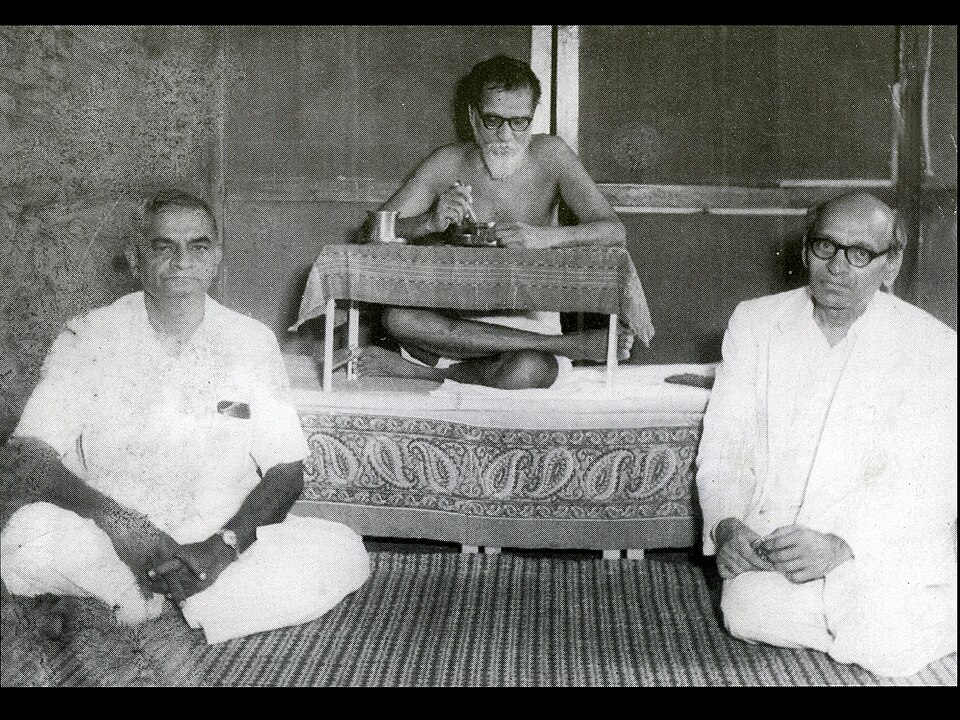
Three roads to reform. The first road was law from above, as with ceiling acts. The second was persuasion from below: in Bhoodan, begun by Vinoba Bhave in Telangana in 1951, landowners were asked to donate land, though much of the donated land was poor or never handed over. The third road joined law with organised tenants, as in Kerala's 1969 amendment, which gave ownership to cultivating tenants, and West Bengal's Operation Barga (1978), which recorded sharecroppers (bargadars) so they could not be evicted.
Why small farms were defended. Amartya Sen (1962) described an inverse relationship: smaller farms often produced more per acre, because families used their own labour intensively. This gave an economic reason for giving land to the landless. After the Green Revolution, the pattern weakened in some regions, so the debate is still open.
Why small farms are India's central farm problem
Many people, little land. About 46.1% of India's workforce depends on agriculture, yet the sector's real GVA grew only 3.0% in 2025-26. When so many people share one sector, each gets a small slice of its income.
Why holdings keep shrinking. The average holding fell from 2.28 hectares in 1970-71 to 1.08 hectares in 2015-16. As land is divided among heirs generation after generation, each farm gets smaller. Of about 14.6 crore holdings in 2015-16, about 10 crore were marginal, below one hectare.
Why it matters. Small and scattered holdings are one of the reasons for low farm productivity. A tiny plot is hard to mechanise, gives little surplus to sell and little security for a loan. That is why policy tries land consolidation, collective farming through FPOs (see Farm credit, crop insurance and markets: KCC, PMFBY, e-NAM, FPOs) and jobs outside farming.
Implications. Raising farm incomes needs both more output per hectare and fewer people depending on each hectare. A Mains answer should link land, credit, markets and non-farm jobs.
Quick revision
- Agriculture supports about 46.1% of India's workforce, and its real GVA grew 3.0% in 2025-26.
- The average holding shrank from 2.28 ha in 1970-71 to 1.84 in 1980-81, 1.41 in 1995-96 and just 1.08 ha in 2015-16.
- The Agriculture Census classes holdings as marginal (under 1 ha), small (1–2), semi-medium (2–4), medium (4–10) and large (10 ha or more).
- In 2015-16 there were about 14.6 crore holdings, and marginal and small holdings together made up about 86% of them by our calculation.
- The Agriculture Census is held every five years, so it shows how holdings change over time.
- Land reforms aimed at removing intermediaries, reforming tenancy, fixing ceilings and consolidating holdings, and most land laws are made by the states.
- DILRMP (2008-09; central sector from April 2016) had computerised about 95% of rural records and 68.02% of maps by Oct 2024; ULPIN (Bhu-Aadhaar) is a 14-digit plot code; SVAMITVA gives drone-based property cards for village homes.
- Strict tenancy laws pushed much leasing into informal, unrecorded deals, so many real cultivators miss credit and insurance; clear leasing laws and records can fix this.
- Colonial roots: Permanent Settlement 1793 (Cornwallis; zamindars), ryotwari (cultivator), mahalwari (village group). Kumarappa Committee 1949, UP Act 1950, First Amendment 1951 (Ninth Schedule); khudkasht loophole.
- 1972 ceiling guidelines: 10-18 acres irrigated, 54 acres other, family of five, cut-off 24 Jan 1971. Roads: law (ceilings), Bhoodan 1951, Kerala 1969 and Operation Barga 1978; Sen's inverse relationship (1962).
Common confusions and exam traps:
- Marginal means below 1 ha; small means 1–2 ha.
- An operational holding includes rented land, not just owned land.