

UKPSC RO / ARO · Module 2 · standard depth · 26 min
Mahajanapadas, cities and the rise of Magadha
What UKPSC RO / ARO asks from this chapter
Syllabus lines this chapter covers:
- Prelims: General Studies (100) and General Aptitude Test (50) · History of India and Indian National Movement
- Mains Paper 1: General Studies (objective, 200 questions) · History and culture of India and Uttarakhand
UKPSC RO / ARO has asked 2 questions from this chapter (2023); 6 from its whole module.
Cut to standard depth for UKPSC RO / ARO. 11 deeper paragraphs are in the full chapter.
Start from zero: from tribes to kingdoms and cities
Think about where you live. The people around you speak much the same language, celebrate the same festivals and cook similar food. Where did such regions of shared culture come from? Historians trace the beginning to the janapadas of ancient India.
In the Later Vedic chapter we saw tribes settling in the Ganga-Yamuna Doab and naming land after themselves. By the sixth century BC this process had gone much further. Large territorial states called Mahajanapadas had appeared, ruled by kings with taxes and armies, or by councils of chiefs.
At the same time, India built cities for the second time, more than a thousand years after the Harappans. Rajagriha, Sravasti, Kausambi, Champa and others were full of kings, merchants, craftsmen, beggars and wandering teachers. The Buddha and Mahavira preached mostly to these new urban audiences.
Why does this period matter? It is the time when India first got states, cities, coins and writing together. And out of the sixteen great states, one, Magadha, steadily swallowed its rivals and laid the base for India's first empire.
The age at a glance
| Theme | What we find (c. 6th-4th century BC) | Key words |
|---|---|---|
| States | Sixteen Mahajanapadas; monarchies and ganasanghas | Anguttara Nikaya, Vajji, Malla, Sakya |
| Kingship | Territory, regular taxes, standing army | raja-praja, bhaga, bhagadugha, rajjugahaka |
| Economy | Wet rice, iron tools, crafts, long-distance trade | gahapati, setthi, guilds |
| Cities | Second urbanisation; six mahanagaras | pura, nigama, nagara |
| Archaeology | NBPW, punch-marked coins, fortifications | karshapana, satamana |
| Society | Rich and poor; untouchability emerging | dasa, karmakara, chandala |
| Winner | Magadha: Bimbisara to the Nandas | Rajagriha, Pataliputra |
One period, three stories. Keep three threads apart as you read: the political story of states, the economic story of rice, iron, coins and cities, and the social story of new rich and new poor. Exams test each thread separately, and Mains answers are strongest when they show how the three are linked.
From janapada to Mahajanapada
The birth of geography. In the Vedic hymns we hardly meet fixed regions, because people were not tied to one area. Once farmers settled, they formed lasting ties with their hills, rivers, birds and plants, and learnt to call a space their own. Each janapada, 'the place where the jana set foot', was close-knit inside and separate from its neighbours, and it became a centre of shared language, customs and beliefs.
Named after rulers, at first. Early janapadas took the name of the dominant kshatriya lineage, like the Kuru and Panchala janapadas around Delhi and upper Uttar Pradesh. War, conquest and farming brought tribes into closer contact with each other and with non-Vedic peoples. The Panchalas, for instance, were a coming together of five smaller tribes.
What the sources are. We learn about this age from Vedic texts like the Brahmanas and Upanishads, from Buddhist texts such as the Vinaya, Sutta and Abhidhamma Pitakas and the Jatakas (stories of the Buddha's past lives), and from Panini's grammar. Excavations at Ahichchhatra, Hastinapur, Kausambi, Ujjain, Sravasti and Vaisali add the material picture. The hallmark pottery is the glossy Northern Black Polished Ware (NBPW).
The gahapati. A gahapati was the master of a land-owning household. One brahmana gahapati is said to have needed five hundred ploughs for his land. Gahapatis had their land worked by slaves (dasa), hired labourers (karmakara) and shudras, so the crop went to the master, not to those who grew it.
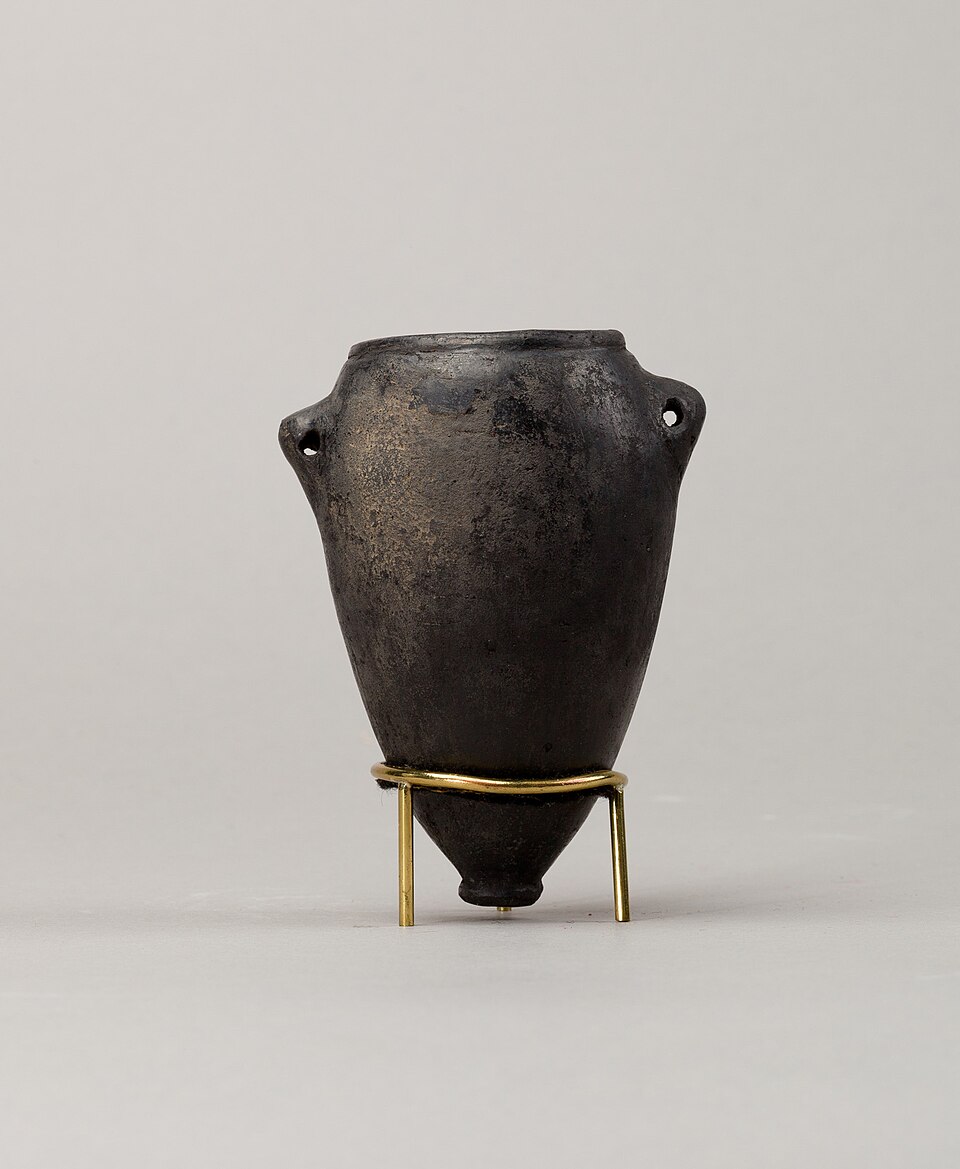
Why the gahapati matters. In Later Vedic times the vis farmed land that the lineage owned jointly. The gahapati shows that joint ownership was breaking up and large private landowners were rising. Gahapatis were found mostly in the monarchies of the middle Ganga valley, where they were the main source of the king's revenue.
The merchant. From the gahapatis came many traders, who turned the sale of produce into capital. Buddhist texts call a rich merchant setthi, 'one who has the best', which shows the prestige of money. Anathapindika, who gave the Jetavana monastery at Sravasti to the Buddha, was such a setthi.
A new kind of king. The earlier raja ruled his kinsmen: Rama is Raghukula-raja, ruler of the Raghu clan, and Yudhishthira is Kuru-raja. Their 'taxes' were mostly voluntary gifts. The sixth-century king ruled a territory, with a regular tax system and a standing army.
Raja and praja. The key divide was now between raja and praja, ruler and subjects, and the peasant (krsaka) who paid taxes was no longer the king's relative. The bhagadugha collected the bhaga, a share of the crop, and the rajjugahaka surveyed fields with a rope. Cattle raids gave way to campaigns that annexed land and forced farmers and traders to pay.
Names tell the story. Most Mahajanapadas, like Kosala, Magadha, Avanti and Vatsa, were not named after a kshatriya lineage. The state had become bigger than any one clan. This is why historians call the change a move from lineage to state.
The sixteen Mahajanapadas
The list. The Buddhist text Anguttara Nikaya names sixteen Mahajanapadas in the Buddha's time: Kashi, Kosala, Anga, Magadha, Vajji, Malla, Chedi, Vatsa, Kuru, Panchala, Matsya (Maccha), Surasena, Assaka, Avanti, Gandhara and Kamboja. They stretched from north-west Pakistan to east Bihar, and from the Himalayan foothills to the Godavari. Seven of them, Anga, Magadha, Vajji, Malla, Kashi, Kosala and Vatsa, lay in the middle Ganga valley.
Why the lists differ. Another Buddhist work, the Mahavastu, drops Gandhara and Kamboja and adds Sibi and Dasarna. The Jaina Bhagavati Sutra gives a very different list, including Vanga and Malaya. The number sixteen was conventional, and each tradition included the regions that mattered to it.
Kashi. Around Varanasi, Kashi seems to have been the most powerful at first. It was famous for cotton cloth and a horse market, and the brown robes of Buddhist monks, kashaya, are linked with it. By the Buddha's time it had been taken by Kosala and was a cause of war between Kosala and Magadha.
Kosala. Kosala lay between the Gomati and the Sadanira, and grew by absorbing smaller lineages like the Sakyas of Kapilavastu. Its great cities were Ayodhya, Saketa and Sravasti, and kings like Prasenajit, a friend of the Buddha, ruled from Sravasti. King Vidudabha later destroyed the Sakyas, ending their autonomy.
Anga. Anga covered the Bhagalpur and Monghyr districts of Bihar, with its capital at Champa, a busy river port. It was one of the six great cities. Anga was annexed by Magadha.
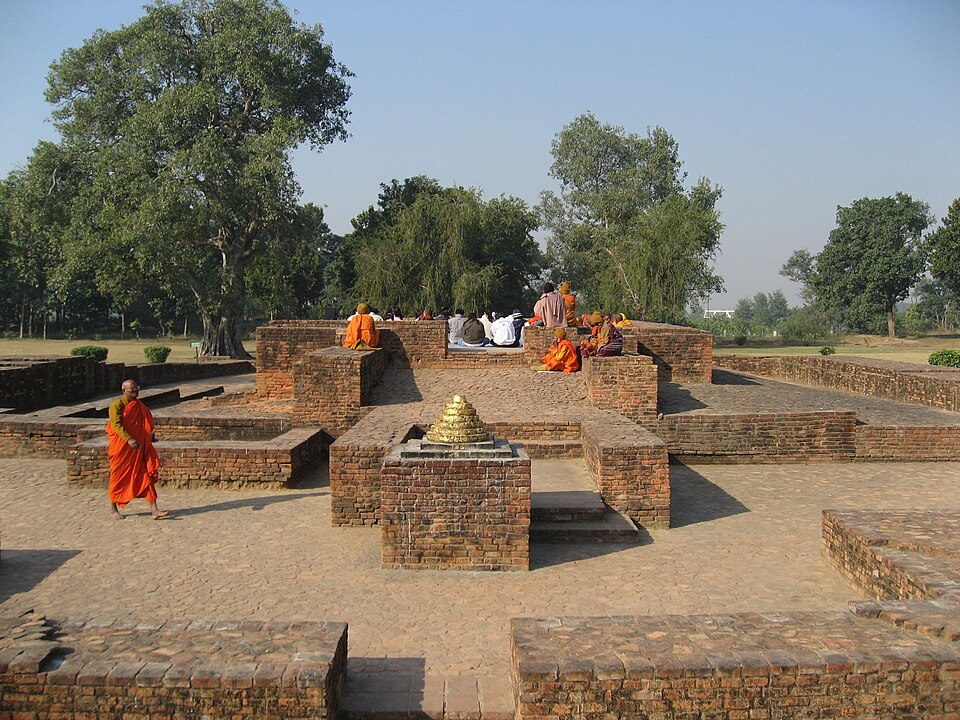
Magadha. Magadha covered the area around Patna and Gaya, protected by the Son and the Ganga. Its first capital, Rajagriha (Girivraja), was ringed by five hills, and its walls are the earliest evidence of fortification in historical India. Brahmanical texts looked down on Magadhans as being of mixed origin, while Buddhist texts gave the region great importance.
Vajji, a confederacy. North of the Ganga around Vaisali, the Vajjis were a confederacy of eight clans, among them the Videhas (capital Mithila), the Licchavis (Vaisali) and the Jnatrikas, the clan of Mahavira. They ran their affairs in an assembly. They were a major power until Ajatasatru of Magadha destroyed them.
Malla. The Mallas, another ganasangha, had two main centres at Kusinagara and Pava. The Buddha died near Kusinagara, and the Mallas performed his last rites. They were said to be ruled by five hundred chiefs.
Chedi and Vatsa. Chedi lay in eastern Bundelkhand with its capital at Sotthivati (Suktimati). Vatsa, with its capital at Kausambi near Allahabad, was among the most powerful states. Its king Udayana and his romance with Vasavadatta of Avanti are immortalised in the plays of Bhasa.
Kuru and Panchala. The Kurus, around Delhi-Meerut, had several centres such as Hastinapura and Indraprastha, suggesting no single absolute ruler. The Panchalas of Rohilkhand and the central Doab were split into northern Panchala (capital Ahichchhatra) and southern Panchala (capital Kampilya). By the sixth century both were declining.
Matsya and Surasena. Matsya, in the Jaipur-Bharatpur-Alwar area, had its capital at Viratnagara and was better suited to cattle than farming. Surasena, with its capital at Mathura, was ruled by Yadava clans. Mathura grew because it stood where the uttarapatha (northern route) and dakshinapatha (southern route) met.
Assaka and Avanti. Assaka lay far to the south, on the banks of the Godavari, with its capital at Pratishthana (Paithan). Avanti, around Ujjain with another city at Mahismati, was one of the strongest states. Its king Pradyota was so powerful that even Ajatasatru feared him.
Gandhara and Kamboja. Gandhara, between Kabul and Rawalpindi, had its capital at Taxila, a famed centre of learning and trade. Its king Pukkusati was friendly with Bimbisara, but Gandhara was conquered by the Persians in the later sixth century BC. Kamboja lay near Gandhara and was called a confederation of farmers, herders, traders and warriors.
Monarchies and ganasanghas. Most Mahajanapadas were monarchies, but some were ganasanghas, ruled jointly by kshatriya chiefs called rajas through an assembly. Think of it as rule by a council of clan heads rather than a single king. The Vajjis, Mallas and Sakyas are the best-known examples.
How the ganasanghas worked. In these states the ruling kshatriya lineages owned land collectively and had it worked by dasas and karmakaras. They paid no land tax, kept no standing army, and in war the whole lineage took up arms. They guarded entry to their assemblies jealously, and Buddhist texts show only a two-fold division of high and low there, without brahmanas and shudras.
Why cities returned: the second urbanisation
What makes a city? Size and population are poor tests, since some villages today are larger than Harappan Kalibangan. The better test is what people do. In a city the most powerful and visible people, rulers, priests and merchants, do not grow food.
City and hinterland. A city works with a large hinterland. Think of Varanasi, famous not for its rice but as a pilgrimage centre drawing gifts from all over India. Cities drew resources from the countryside as taxes, tribute or trade, and they housed craftsmen, rich and poor, and a state to coordinate them.
Iron's moment. By about 1000 BC iron was known, and over the next three or four centuries it came into wider use. Large numbers of iron tools and weapons are found at Ujjain, Sravasti and Hastinapur. From about 600 BC, iron axes and ploughshares helped clear the thick vegetation of the Ganga plains.
The real engine: wet rice. In the middle Ganga valley, between Allahabad and Bhagalpur, farmers began paddy transplantation, moving seedlings into flooded fields. Wet rice gives much higher yields than wheat or millet in traditional farming. Early Buddhist texts repeatedly mention rice varieties and paddy fields, showing a decisive shift.
More food, more people. Larger harvests fed a larger population, seen in the rising number of settlements. A surplus also made room for people who did not grow food: kings, soldiers, monks, merchants and artisans. Buddhists also urged that cattle be protected, since they gave grain and strength.
Why the east, not the west? In the middle Ganga valley, Vedic sacrifice had a weaker hold than in the upper valley. So chiefs did not burn their surplus in rituals; they kept it. The groups who controlled this wealth became the ruling class of the new kingdoms, and on that wealth the cities were built.
Why this time it lasted. Unlike the Harappan cities, this urbanisation endured and came with a literate tradition. Writing, in the Brahmi script, appears towards the end of the period. Buddhism, Jainism and many strands of Hinduism look back on this age as their formative time.
Cities in texts and in the ground
Words for a town. The earliest terms are pura and durga, both meaning fortified seats of a king and his followers. Nigama usually meant a market town; some grew out of villages of potters, carpenters or salt-makers, and later coins carry the word 'nigama'. Nagara, first used in the Taittiriya Aranyaka, is the commonest word and combined political and commercial roles.
The six great cities. Buddhist texts name six mahanagaras, all in the middle Ganga valley: Champa, Rajagriha, Kashi, Sravasti, Saketa and Kausambi. Remember the six together, as they are a favourite exam list. Other words like pattana were also used for towns.
Kings and trade build cities. Brahmanical tradition credits kings with founding cities: Kusamba founded Kausambi, Hastin founded Hastinapura, and Sravasta founded Sravasti. Buddhist texts link names to sages and trees instead, like Kapilavastu to the sage Kapila. Cities on trade routes outshone purely political centres, which is why Kosala's capital moved from Ayodhya to Sravasti.
Can we trust the texts? Not fully. Our manuscripts are less than a thousand years old and were altered over time. The texts also describe every city in the same idealised way, so that Ramayana's Ayodhya and the Buddhist Vaisali sound almost identical.
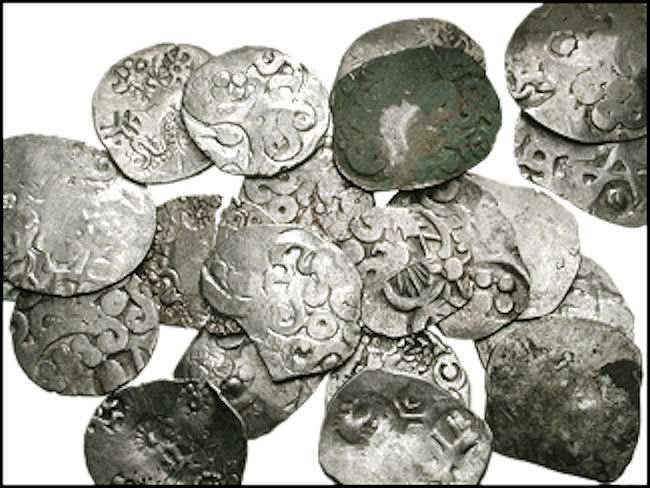
What archaeology shows. By about 700 BC, small settlements existed at Ayodhya, Kausambi and Sravasti. By the sixth century BC, the whole zone used the glossy NBPW, probably made at a few places and traded widely. Punch-marked coins of silver and copper appear for the first time.
Size, corrected. Literature claims cities like Ayodhya and Vaisali covered 30 to 50 sq km. Excavations show that none exceeded about 5 sq km. No city of this period shows a planned layout, and apart from Kausambi no palace-like building has been found.
Signs of growth. Larger settlements used baked bricks, and soak pits of stacked jars or terracotta rings drained dirty water. Some sites have drains and refuse bins. Massive fortifications surround Kausambi, Ujjain, Rajghat (Varanasi) and Rajgir, separating the city from the countryside and showing fear of war.
Where the grand image came from. Taxila existed by the eighth or seventh century BC, but a planned township there came only around the second century BC. Historians now think prosperous cities with large palaces belong to the Mauryan period. Later writers seem to have used Mauryan cities as the model when describing earlier ones.
Money, trade and a divided society
Why coins mattered. Barter needs two people who each want what the other has. A coin carries a standard value and is easier to carry than a cow. Coins made trade organised and gave rise to money-lenders.
The coins of the age. The first coins were punch-marked pieces of silver and copper, with symbols punched on one side and no writing, probably first issued by merchants. The highest value was the silver satamana, followed by the karshapana (kahapana); smaller copper coins were the masa and kakani. There were no banks, so savings were turned into ornaments, buried in jars or left with a friend.
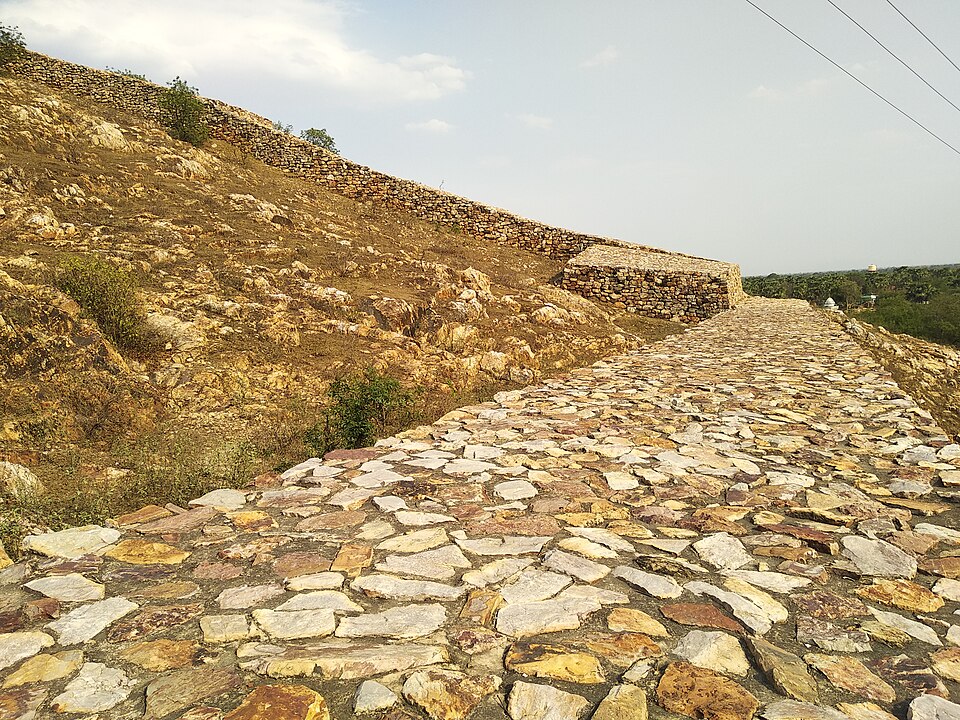
Roads and rivers. One main route ran from Sravasti to Pratishthana, another linked Sravasti and Rajagriha, a third skirted the Himalayan foothills from Taxila to Sravasti, and a fourth joined Kashi to the western ports. Merchants also sailed from Tamluk in the east and Broach in the west to Burma and Sri Lanka. Long-distance trade was centred in towns, which were safer and were the main centres of production.
Guild-like groups. Craftsmen such as carpenters, ivory-carvers, garland-makers and smiths formed professional unions with a head, and the king was expected to respect their rules. Only family members could take up the trade, and each group married within itself. Such hereditary occupational groups already had the character of castes.
The kshatriya in two mirrors. Brahmanical texts see kshatriyas as a warrior caste, second in rank. Buddhist texts place them first, and the Buddha says that even a fallen kshatriya is better than a brahmana. Both the Buddha and Mahavira were kshatriyas, and some kshatriyas were teachers or traders, so it was not a uniform caste.
The brahmana. Brahmanas looked more like a true caste: a man born a brahmana stayed one even if he changed his work. Texts gave them the right to perform sacrifices and immunity from the death sentence. The Dasabrahmana Jataka shows brahmanas working as physicians, traders, farmers, hunters and even tax collectors, while many brahmanas also became the Buddha's early followers.
The new poor. For the first time texts describe the rich in luxury and the destitute with nothing to eat, called dalidda. Dasas, karmakaras and poor peasants (kassaka) worked others' land, and war captives and debtors became slaves. The loss of land and the breakdown of kin ties pushed many into servitude.
Untouchability appears. The chandalas lived in separate villages, wore the clothes of the dead and ate from broken pots. In one story a merchant's daughter washes her eyes after seeing a chandala. Groups such as the Pukkusas, Nishadas and Venas were also despised, and forest peoples pushed off their land became slaves or robbers.
Women. As property passed from father to son, texts grew obsessed with controlling women to ensure 'legitimate' heirs. The ideal wife was meek, and women were kept under the charge of a father, husband or son. Even in the Buddhist sangha, nuns were ranked below monks.
The wandering ascetics. Beside all this were the paribrajakas and sramanas, men who left home to travel and debate the meaning of life. The Buddha and Mahavira came from among them. Their questions, about suffering, rebirth and escape, grew out of this world of new wealth and new misery, and some scholars see early Buddhism as a response to urban misery.
Magadha: from kingdom to near-empire
Where Magadha was. Magadha covered the modern districts of Patna, Gaya, Nalanda and parts of Shahabad in Bihar. Its neighbours were Anga to the east, the Vajji confederacy to the north, Kashi to the west and Kosala beyond. Of the four strongest powers of the age, three, Kosala, Vajji and Magadha, lay in the middle Ganga valley, and the fourth was Avanti in Malwa.
Bimbisara. Bimbisara, a contemporary of the Buddha, is the first important ruler of Magadha. He used marriage alliances, gaining part of Kashi as dowry from the royal house of Kosala, and kept friendly ties with the king of Gandhara. He annexed Anga and its port Champa, giving Magadha control of Ganga trade to the east.
A king of villages. Bimbisara is said to have called an assembly of the headmen (gaminis) of 80,000 villages. The number may be invented, but it shows his rule rested on the village as a unit, run through village chiefs who were not his kinsmen. His power did not depend on the goodwill of relatives, which is the mark of the new state.
Ajatasatru. Tradition says Bimbisara was imprisoned and starved to death by his son Ajatasatru, around 492 BC. Ajatasatru was more aggressive: he took full control of Kashi and attacked his maternal uncle Prasenajit of Kosala. He prepared to invade Avanti, but the attack never happened.
The fall of the Vajjis. Ajatasatru's longest war was against the Vajji confederacy north of the Ganga. Tradition says it lasted sixteen years and was won only by deceit: his minister Vassakara sowed discord among the chiefs. With Kashi and Vaisali added, Magadha became the strongest power in the Ganga valley.
Udayin and after. Ajatasatru's successor Udayin is said to have built a fort at the confluence of the Ganga and the Son, near where the later capital Pataliputra stood. The kings after him were weak, and the last was overthrown by the people. Shishunaga, a viceroy at Banaras, was placed on the throne in 413 BC.
The Nandas. The short-lived Shishunaga dynasty gave way to the Nandas, founded by the usurper Mahapadma Nanda. The Puranas call him the 'exterminator of all kshatriyas', who overthrew the ruling houses of his time. The Nandas are often called India's first empire-builders, though they inherited a large kingdom and pushed it further.
How strong were the Nandas? Greek writers describe an army of 20,000 cavalry, 200,000 infantry, 2,000 chariots and 3,000 elephants. The Hathigumpha inscription of Kharavela suggests they held part of Kalinga, and late inscriptions hint at links with the Deccan. Alexander invaded the north-west in 326 BC during Nanda rule, but he never met Magadha's army.
The end of the Nandas. Nine Nanda kings are said to have ruled, and by the end they were unpopular. Their rule ended by about 321 BC, when Chandragupta Maurya took the throne. Dynasties changed, but Magadha stayed on top, which shows that its strength was deeper than any one family.
Quick revision
- Janapada = where the jana set foot; first named after kshatriya lineages (Kuru, Panchala); Panchala = five tribes.
- Sources: Brahmanas, Upanishads, Pitakas, Jatakas, Panini; NBPW sites.
- Anguttara Nikaya: 16 Mahajanapadas; Mahavastu adds Sibi, Dasarna; Bhagavati Sutra adds Vanga, Malaya.
- Capitals: Kashi-Varanasi, Kosala-Sravasti, Anga-Champa, Magadha-Rajagriha, Vajji-Vaisali, Malla-Kusinagara/Pava, Chedi-Sotthivati, Vatsa-Kausambi, Panchala-Ahichchhatra/Kampilya, Matsya-Viratnagara, Surasena-Mathura, Assaka-Pratishthana, Avanti-Ujjain/Mahismati, Gandhara-Taxila.
- Gahapati (land-owning household; dasa, karmakara); setthi (merchant); Anathapindika (Jetavana).
- Raja-praja; bhaga, bhagadugha, rajjugahaka; standing army.
- Ganasanghas: Vajji (8 clans: Videha, Licchavi, Jnatrika), Malla, Sakya; collective land, no land tax, no standing army.
- Second urbanisation: iron (from c. 600 BC in Ganga plains), wet rice, surplus kept; Brahmi writing.
- Pura, durga, nigama, nagara (Taittiriya Aranyaka); six mahanagaras: Champa, Rajagriha, Kashi, Sravasti, Saketa, Kausambi.
- Archaeology: cities about 5 sq km, not 30-50; no planned layout; palace only at Kausambi; NBPW, soak pits, fortifications.
- Coins: punch-marked, silver satamana, karshapana; copper masa, kakani.
- Routes: Sravasti-Pratishthana, Sravasti-Rajagriha, Taxila-Sravasti, Kashi-west coast; Tamluk, Broach.
- Society: kshatriya first in Buddhist texts; dalidda; dasa; chandalas, untouchability emerging.
- Bimbisara (Anga, Kashi dowry, 80,000 villages) → Ajatasatru (c. 492 BC; Kashi, Vajjis via Vassakara) → Udayin (Ganga-Son fort) → Shishunaga (413 BC) → Nandas (Mahapadma; huge army; Kalinga) → c. 321 BC.
- Why Magadha: rice soil, iron, rivers and trade, five-hill Rajagriha, open society, contiguity, able rulers.
UKPSC RO / ARO questions from this chapter
Which among the following was the first capital of Magadh Kingdom ?
- (a) Vaishali
- (b) Rajgriha
- (c) Champa
- (d) Patliputra
Show answer
(b) Rajgriha · our answer; official key awaited
Which of the following Buddhist text enlists 16 large territorial polities (16 Mahajanapadas) ?
- (a) Dighanikaya
- (b) Majjhimanikaya
- (c) Anguttaranikaya
- (d) Khuddakanikaya
Show answer
(c) Anguttaranikaya · our answer; official key awaited