

UKPSC RO / ARO · Module 4 · standard depth · 21 min
The tripartite struggle and the Rajputs
What UKPSC RO / ARO asks from this chapter
Syllabus lines this chapter covers:
- Prelims: General Studies (100) and General Aptitude Test (50) · History of India and Indian National Movement
- Mains Paper 1: General Studies (objective, 200 questions) · History and culture of India and Uttarakhand
3 UKPSC RO / ARO questions in our bank come from this module (Early medieval India (750-1200)).
Cut to standard depth for UKPSC RO / ARO. 9 deeper paragraphs are in the full chapter.
Start from zero: a contest of three, and new ruling clans
In the last chapter we saw Harsha make Kanauj the most famous royal city of the north. After his death no family held the north for long. Instead, the city itself became a prize that every ambitious king wanted.
From about 750 to 1000 CE, three great powers fought for it. These were the Palas of Bengal and Bihar in the east, the Gurjara-Pratiharas of western India and the Rashtrakutas of the Deccan. Historians call this long contest the tripartite struggle, 'tripartite' meaning 'of three parties'.
At the same time, new ruling families called Rajputs rose in Rajasthan, Gujarat and central India. They claimed descent from ancient heroes, built forts and ruled through networks of kinsmen and subordinate chiefs. Many later kingdoms of medieval India grew out of this world.
Why study this? Exams ask about the three powers, Dharmapala's Kanauj assembly, Rashtrakuta kings like Amoghavarsha I, the Agnikula myth, Vikramashila and the Kaivarta rebellion. Mains asks why Kanauj mattered, how the Rajputs rose and whether early medieval polity was 'feudal'.
The three powers at a glance
| Power | Base | Key rulers | Remember |
|---|---|---|---|
| Palas | Bengal and Bihar | Gopala, Dharmapala, Devapala, Mahipala I, Ramapala | Gopala chosen by chiefs; Vikramashila; Kaivarta rebellion |
| Gurjara-Pratiharas | Rajasthan, Malwa, later Kanauj | Vatsaraja, Nagabhata, Bhoja I | Earliest and most important Rajput dynasty; claimed Lakshmana as ancestor |
| Rashtrakutas | Deccan, Manyakheta | Dantidurga, Dhruva, Govinda III, Amoghavarsha I, Indra III, Krishna III | Lasted longest; sacked Kanauj 915; ended by Taila II |
The key idea. None of the three could hold Kanauj for long. Each won battles in the north but was pulled back by trouble at home, and each depended heavily on feudatories who might switch sides. The result was a balance of power, not a new empire.
The tripartite struggle for Kanauj
Why Kanauj? Kanauj stood on high ground in the fertile Ganga-Yamuna doab, was easy to fortify, had a rich farming hinterland and lay on major routes. After Harsha chose it as his capital and his poet glorified it, the city became a symbol of royal power. Whoever held Kanauj could claim to be the leading king of the north.
Two powers grow towards each other. While the Palas built a strong kingdom in Bengal and pushed westward, the Pratiharas under Vatsaraja ruled much of Rajasthan and central India and pushed eastward. By the time they first clashed, the Palas seem to have reached as far as Prayagraj. Conflict between them was bound to come.
The Deccan enters. The Rashtrakutas, already supreme in the Deccan, wanted influence in the north too. Their king Dhruva crossed the Vindhyas, defeated Vatsaraja, and then defeated the Pala king Dharmapala somewhere in the Ganga-Yamuna doab. With this battle the tripartite struggle began.
Dharmapala's moment. After Dhruva's death, his son Govinda III had to fight an alliance of twelve southern kings. Dharmapala used this pause to capture Kanauj and place his own nominee on its throne. He then held a great imperial assembly at Kanauj, attended by many vassal kings, and proclaimed himself overlord of northern India.
The Pratiharas strike back. The Pratihara Nagabhata, son of Vatsaraja, defeated Dharmapala's nominee at Kanauj and then Dharmapala himself. Dharmapala probably sought help from Govinda III, who marched north and forced Nagabhata to flee. But trouble inside his own empire stopped Govinda from keeping these conquests.
The Pala peak. Dharmapala recovered much of his empire, and at his death around 815 his son Devapala became master of a large part of north India. Devapala's court poet claimed an empire from the Himalayas to the Vindhyas and from sea to sea. Such claims are exaggerated, but they show the Palas at their height.
Later rounds. The contest went on for another century. In 915 the Rashtrakuta Indra III advanced through Lata and Malwa, sacked Kanauj and dethroned the Pratihara Mahipala. For a while he was the most powerful ruler of his time.
Why nobody won. Each power had a secure home base far from Kanauj, so each could raid but none could hold the doab for long. Wars at home, rebellions of feudatories and the sheer distance kept pulling them back. The struggle drained all three and helped smaller powers rise.
The Rashtrakutas: the Deccan's long-lasting empire
Who were they? The word 'Rashtrakuta' means chief of a rashtra (a division). They were probably high officials, perhaps provincial chiefs, under the Chalukyas of Badami. They were of Kannada origin, and the title 'lord of Lattalura' used by their princes points to Latur as their original home.
Founding the empire. Dantidurga founded the imperial line. Taking advantage of disorder in Lata and Malwa after the Arab raids, he seized those lands, attacked Kanchi and married his daughter to the Pallava king Nandivarman. The Samangadh inscription of 754 records that he overthrew Kirtivarman II, the last Chalukya of Badami, and took imperial titles; the capital was fixed at Manyakheta (Malkhed).
Brothers at war. Succession rules were not fixed, and brothers often fought. Dhruva overthrew his elder brother Govinda II and then led the first Rashtrakuta push into the north. He made his ablest son, Govinda III, king during his own lifetime.
Govinda III (793-814). Govinda III defeated Nagabhata of Kanauj, annexed Malwa and other lands, and then turned south. His Sanjan inscription boasts that he 'terrified' the Kerala, Pandya and Chola kings and made the Pallavas wither. Historians see the southern march as a digvijaya, a show of supremacy rather than lasting conquest.
Amoghavarsha I (814-878). His son Amoghavarsha I ruled for 68 years and preferred religion, literature and building to war. His inscriptions count him among the leading followers of Jainism, and Jinasena, author of the Adipurana, was among his teachers. He also supported Brahmanical religion and is praised as the maker of the capital Manyakheta.
Revival and climax. After a weak reign, Indra III revived the empire and in 915 sacked Kanauj. The Arab traveller Al-Masudi, who visited at that time, called the Rashtrakuta king Balhara the greatest king of India, respected by most other rulers. Krishna III, the last great king, defeated the Chola Parantaka I in 949, annexed the northern Chola lands and set up a pillar of victory at Rameshwaram.
The end. After Krishna III's death, his enemies united. The Paramaras sacked Manyakheta in 972, and the Chalukya Taila II defeated Karka II, ending the empire. Taila's line, the Chalukyas of Kalyani, took over the western Deccan.
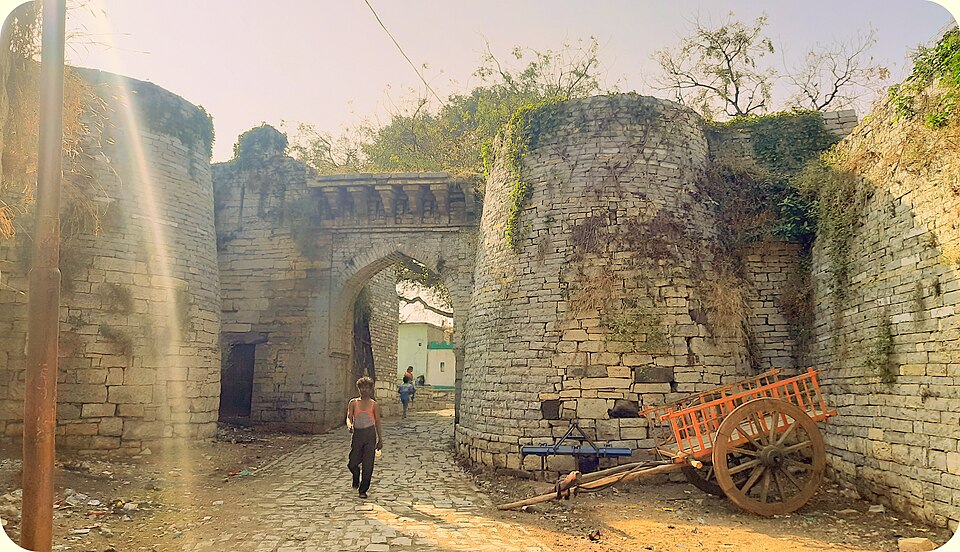
Why were they so strong? Their central position drew them into wars both north and south, letting them expand in all directions. Their land favoured agriculture, and they controlled much of the western seaboard, so trade with the Arabs, including imported horses, funded their armies. They fought the Pratiharas, Eastern Chalukyas, Pallavas, Cholas and Pandyas, often while those powers were weak.
Government. The king was the source of all power, aided by hereditary ministers. Directly ruled lands were divided into rashtra under a rashtrapati, vishaya under a vishayapati, and bhukti, helped by local notables called rashtramahattaras and vishayamahattaras. Officials were paid with rent-free land, and in Karnataka village committees managed schools, tanks, temples and roads.
A feudalising state. Feudatories were essential to Rashtrakuta wars and were rewarded with land. Some, like the Ganga prince Butugga under Krishna III, became almost as powerful as the king. Vassals ran their own internal affairs, paid tribute, sent troops and attended the overlord's court, and in time these mighty vassals helped bring the empire down.
The Palas of Bengal and Bihar
Bengal before the Palas. The first major ruler of Bengal was Sasanka (about 606-637), with his capital at Karnasuvarna near Murshidabad, whom you met as Harsha's rival. After his death Bengal fell into disorder and was attacked by Yasovarman of Kanauj, Lalitaditya of Kashmir and perhaps Kamarupa. Central authority collapsed and local chiefs became independent.
A king chosen by chiefs. To end the anarchy, the chiefs seem to have chosen Gopala as ruler of the whole kingdom. Gopala founded the Pala dynasty in the second half of the eighth century and brought stability. He died around 780 and was succeeded by his son Dharmapala.
Dharmapala. Dharmapala, known mainly from the Khalimpur copper plates, spent his life in campaigns and played a central role in the tripartite struggle. He was also a great patron of Buddhism, founding many monasteries and the famous Vikramashila university. His son Devapala ruled for about forty years and was the last of the great Pala kings.
Decline and revival. After Devapala the Palas became a regional power, facing raids by the Kalachuris, Chandellas and Rashtrakutas. Mahipala I defended the kingdom against the Kalachuris, the Chola Rajendra and a Chalukya king, and recovered lands from the Kambojas. Later, Ramapala restored Pala strength for a time.
How the Palas ruled. Pala kings took titles such as Paramabhattaraka and Maharajadhiraja. They gave permanent land grants to brahmanas, temples and Buddhist monasteries, often with administrative and judicial rights attached. Their charters mention ranakas and mahasamantas, probably feudatories who held land for military service.
Several centres, village units. The Palas ruled from several power centres on the Ganga, such as Pataliputra and Mudgagiri, and tributaries came to their victory camps. Villages were grouped into units of one and ten under the gramapati and dasagramika. Unlike the Pratiharas, there is no evidence of sub-infeudation under the Palas.
The Kaivarta rebellion. In the last quarter of the eleventh century, vassal chiefs rose against Mahipala II. Divya, an official of the Kaivarta caste, killed the king and took Varendra (north Bengal), the Palas' ancestral stronghold. This event is the main theme of Sandhyakaranandin's Ramacharita.
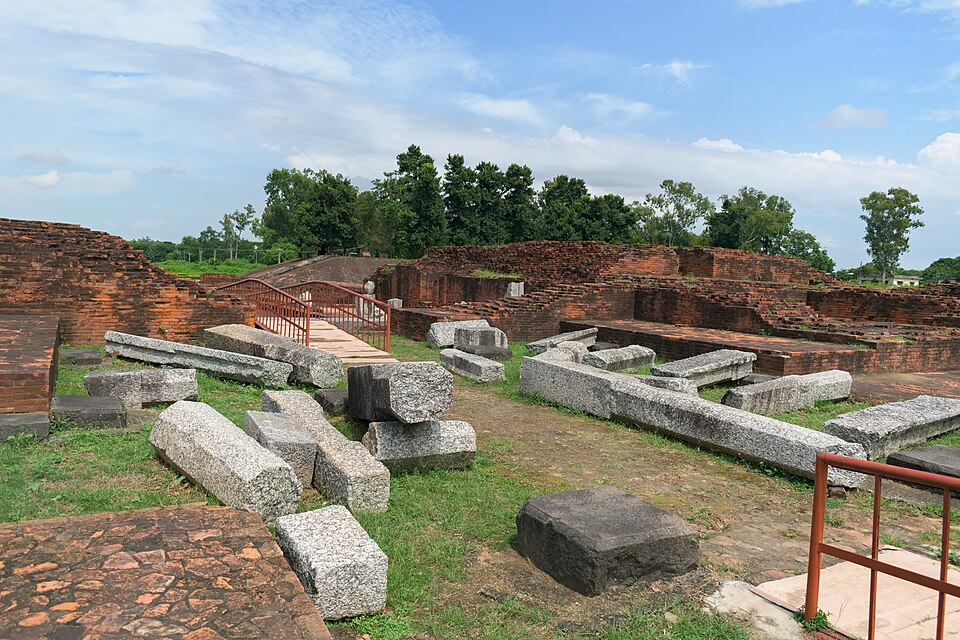
Ramapala strikes back. Mahipala's brother Ramapala won the support of many samantas, defeated Divya's nephew Bhima and recovered Varendra. He also forced east Bengal's ruler to submit. But the Palas now depended so heavily on samantas that their kingdom soon broke up, and the Senas took their place.
What kind of revolt was it? Early historians saw a revolt of samantas exploiting Pala weakness. R. S. Sharma saw a peasant revolt against feudal oppression. Recent research sees a struggle between the Palas and ambitious samantas over royal rights such as control of donated land, which later drew in other groups angered by taxation and by the growing power of brahmana donees.
The rise of the Rajputs
New names on the map. From about the eighth century, clans not heard of before began to rule in Rajasthan, Gujarat and Madhya Pradesh. They included the Gurjara-Pratiharas, Guhilas, Paramaras and Chahamanas (Chauhans), along with the Kalachuris and Chandellas. They dominated western and central India until the thirteenth century.
A shaken region. The Arabs invaded Sindh and Multan in 712-13 and within twenty-five years raided Marwar, Malwa and Broach. These raids changed the political map of western India and the Deccan. Out of this upheaval, the Rashtrakutas and the clans we call Rajputs came to the fore.
Not a sudden rise. Their rise may look accidental, but it happened within the existing system of overlords and subordinates. Many began as subordinate chiefs of bigger powers such as the Pratiharas and Rashtrakutas. Over time some became independent kings.
Stories of origin. Rajput families told several origin stories. Some claimed lunar (Chandravamshi) descent, others solar descent, and the solar myths said they were kshatriyas created to destroy foreign invaders. The best known is the Agnikula or 'fire-born' myth.
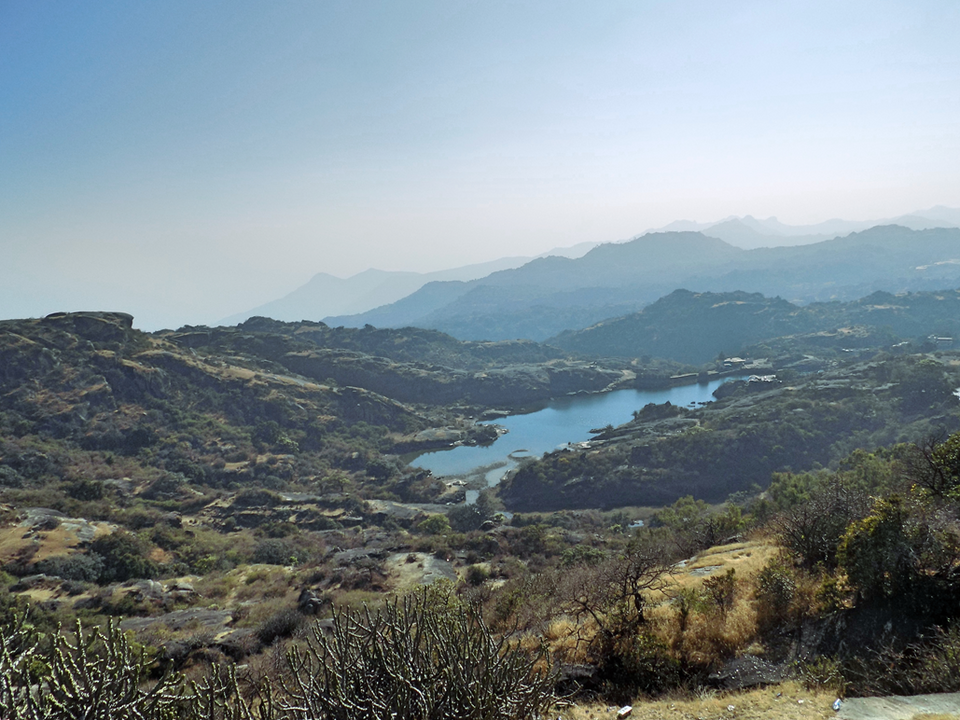
The Agnikula myth. A court poet recorded that the founder of the Paramaras rose from the firepit of sage Vasishtha on Mount Abu, and Paramara inscriptions repeat this. Later bards extended the fire origin to the Pratiharas, the Chalukyas of Gujarat and the Chahamanas. Historians see the myth as poetic imagination, created by bards looking for a fine pedigree for their patrons.
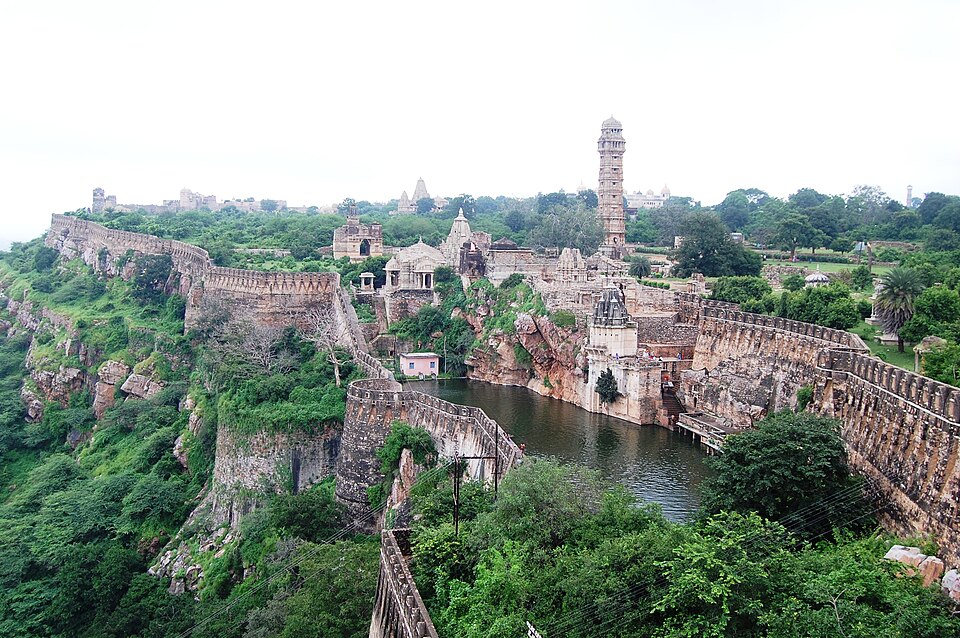
Power first, pedigree later. In this period many new social groups claimed kshatriya status to legitimise newly won power. Rajput clans, a mixed group of petty chiefs holding estates, rose to political eminence gradually, and only then claimed ancient kshatriya descent. The Gurjara-Pratiharas, for example, claimed descent from Lakshmana, brother of Rama, only in an inscription of Bhoja I in the late ninth century, when they were at the height of their power.
Branching clans. Clans multiplied by splitting into branches. Bardic chronicles say a Paramara ruler of Abu divided Marwar among his nine brothers, and there were Paramara lines at Abu, Bhinmal, Jalor and Vagada besides Malwa. The Chahamanas of Shakambhari branched into lines at Nadol, Jalor, Satyapura and Abu, and the Guhilas ruled Udaipur and Mewar.
Taking new land. Clans also grew by colonising new areas, often at the expense of tribal peoples such as the Bhils, Abhiras, Medas, Shabaras and Pulindas. A tenth-century record says the Chahamana prince Lakshmana began with a few followers, protected brahmana villages near Nadol from Meda raiders, built a band of horsemen and became master of the area. Sometimes one lineage simply replaced another, as when a discontented Chahamana prince seized Jalor from the Paramaras.
Holding the land. Clans consolidated power by giving estates (grasa or bhukti) to the king's kinsmen, queens and princes, and by holding units of 84 villages (chaurasi) and multiples of twelve. They built fortresses on a large scale, which served both for defence and as centres of control over the countryside. Marriage networks among ruling clans, such as Guhila marriages with the Chahamanas and Paramaras, tied the elite together.
How Rajput kingdoms were governed
A real bureaucracy. Kingdoms such as those of the Chalukyas of Gujarat, the Paramaras and the Chahamanas needed officials to run them. A text of model documents, the Lekhapaddhati, names government departments called karanas. These included the sri-karana (chief secretariat), vyaya-karana (accounts), vyapara-karana (trade and customs) and mandapika-karana (tax collection), each headed by a mahamatya.
Key officers. The mahasandhivigrahika was the minister of peace and war, who also conveyed land grants. The mahakshapatalika kept the accounts and records and registered land grants under the Paramaras. The mahamantrin or chief minister held the royal seal and supervised all departments, the dandanayaka was the military chief, and the dutaka carried the ruler's sanction of a grant to local officials.
The samanta system. Every major kingdom included lands held by feudatories, known generally as mandalikas but using titles from samanta and mahasamanta up to mahamandalesvara. Under the Chahamanas, much land was held by thakkuras, ranakas and bhoktas who supplied soldiers when required. In time the system grew into a ladder of ranks: ranaka, rauta, thakkura, samanta, mahasamanta.
Duties of a feudatory. A feudatory's main duty was to help his overlord in war, sometimes conquering new land for him. Feudatories paid tribute in cash and kind, swore loyalty to each new king and attended his court. Big feudatories, such as the Paramaras of Abu under the Chalukyas of Gujarat, ran their own administrations.
Sub-infeudation. Feudatories could themselves grant land and its fiscal and administrative rights to their own dependents. This practice is called sub-infeudation. There is good evidence for it under the Pratiharas and under the Chalukyas of Gujarat, but not clearly under the Paramaras.
Built-in instability. Feudatories broke away whenever they could. The Guhilas accepted Paramara overlordship after defeat but tried to recover their position after Bhoja's death, and the Chalukya Kumarapala removed a rebellious Chahamana and put Nadol under a dandanayaka. Personal bonds that held for a generation or two faded, and samantas would even switch to a powerful invader for better privileges.
Lineage state or feudal polity? Some historians stress that power was shared among a lineage of kinsmen, calling these 'lineage states'. Others see a feudal polity, with power spread among landed intermediaries at many levels. The unit argues that landholding lies at the base of both, and that the samanta system's many levels of power support the idea of a feudal polity in western and central India.
Quick revision
- Tripartite struggle (c. 750-1000): Palas (Bengal-Bihar), Gurjara-Pratiharas (western India), Rashtrakutas (Deccan) for Kanauj, the royal symbol since Harsha.
- Phases: Dhruva beat Vatsaraja and Dharmapala; Dharmapala took Kanauj, held an imperial assembly; Nagabhata hit back; Govinda III marched north; Devapala at the Pala peak; Indra III sacked Kanauj 915.
- Rashtrakutas: Chalukya officials, Kannada, Lattalura (Latur); Dantidurga ended Badami Chalukyas (Samangadh 754), capital Manyakheta; Amoghavarsha I 68 years, Jaina, Jinasena (Adipurana).
- Krishna III beat Parantaka I (949), pillar at Rameshwaram; Manyakheta sacked 972; Taila II ended them (Karka II). Al-Masudi: 'Balhara' greatest king.
- Rashtrakuta strengths: central position, agriculture, western seaboard, Arab trade and horses; rashtra-vishaya-bhukti; rent-free land to officials; mighty feudatories (Butugga).
- Palas: Gopala chosen by chiefs; Dharmapala (Khalimpur plates, Vikramashila); Devapala; Mahipala I; Ramapala; gramapati, dasagramika; no sub-infeudation.
- Kaivarta rebellion: Divya killed Mahipala II, took Varendra; Ramacharita (Sandhyakaranandin); samanta vs peasant (R. S. Sharma) vs royal-rights views; Senas followed.
- Rajputs: Pratiharas, Guhilas, Paramaras, Chahamanas, Kalachuris, Chandellas; Arab raids 712-13; rise within the overlord system.
- Origins: lunar, solar, Agnikula (Vasishtha's firepit, Mount Abu); Pratihara Lakshmana claim under Bhoja I; power first, pedigree later; tribal land (Bhils, Medas); chaurasi, forts, marriages.
- Polity: Lekhapaddhati karanas (sri, vyaya, vyapara, mandapika); mahasandhivigrahika, mahakshapatalika, mahamantrin, dandanayaka; ranks ranaka-rauta-thakkura-samanta-mahasamanta; sub-infeudation under Pratiharas.