

UPPSC APO · Module 2 · standard depth · 16 min
Running the Company's India: Parliament, civil service and courts
What UPPSC APO asks from this chapter
Syllabus lines this chapter covers:
- Mains papers · General Knowledge
UPPSC APO questions from this module are being sorted into our bank.
Cut to standard depth for UPPSC APO. 3 deeper paragraphs are in the full chapter.
Start from zero: who controls a company that rules a country?
Imagine a big trading company that, almost by accident, ends up ruling millions of people. Its officers collect taxes, run courts and command armies, far away from home. Who checks whether they are honest, and who makes the rules they must follow?
This was Britain's problem after Plassey (1757). The East India Company was a private business, but it now acted like a government. Some of its officials returned home fabulously rich, and people in Britain began to ask how that money had been made.
This chapter tells how Britain answered that question. It looks at three things: how Parliament took control of the Company, how a professional civil service was built, and how a new system of courts was set up. Together they turned a trading company into a colonial state.
As you read, keep one question in mind. Did these changes serve Indians, or mainly make British rule stronger and more efficient?
Parliament takes charge: the Acts at a glance
Britain passed a series of laws to control the Company. The table gives the main purpose of each one. The detailed provisions of these Acts are covered in the Polity chapter on British-era Acts, so here we focus on why each was passed and what it meant.
| Act | Main purpose |
|---|---|
| Regulating Act, 1773 | It brought the Company under the British government's supervision and made the Governor of Bengal the Governor-General. |
| Pitt's India Act, 1784 | It set up the Board of Control from the British cabinet to increase Parliament's control. |
| Charter Act, 1813 | It ended the Company's monopoly of trade with India. |
| Charter Act, 1833 | It ended the China trade monopoly and gave law-making power to the Governor-General in Council. |
| Government of India Act, 1858 | It dissolved the Company and placed India under the British Crown. |
Read the table from top to bottom and a clear pattern appears. With each Act, the Company lost power and the British state gained it, until in 1858 the Company disappeared altogether.
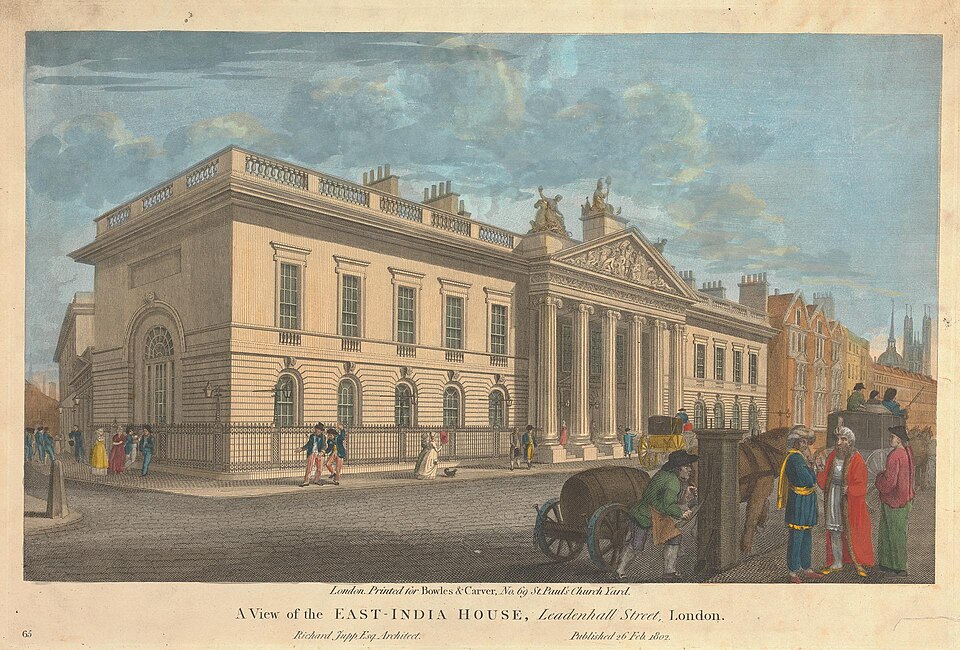
Why did Parliament step in?
Three kinds of pressure. After 1757, three groups in Britain pushed for change. Merchants and manufacturers wanted to end the Company's monopoly so that they could trade too. Public opinion was angry about corruption in Bengal, and the British government felt it could no longer leave a ruling power unsupervised.
The Company takes direct charge (1772). Until then, the Company had collected Bengal's revenue but left daily government to Indian officials under the dual system. In 1772 it set up its capital at Calcutta and became directly involved in governance. Once the Company openly ruled, Parliament could no longer ignore how it ruled.
The Regulating Act of 1773: the first step. The Regulating Act aimed to curb the Company's unrestrained commercial activity and bring order to its territories. It gave the British government supervisory rights over the presidencies of Bengal, Bombay and Madras. It created a unified administration under the Governor of Bengal, who now became the Governor-General.
Who was the first Governor-General? Warren Hastings became the first Governor-General and served from 1773 to 1785. The Act also limited the Company's charter to 20-year periods, so it would be reviewed regularly. And it set up a Supreme Court at Calcutta.
Pitt's India Act of 1784: tightening the grip. The Regulating Act left many gaps, so in 1784 Parliament passed Pitt's India Act. It set up a Board of Control, whose members came from the British cabinet, to supervise the Company's affairs in India. This arrangement is often called the "half-loaf system", because the Company kept its trade while the government took a large share of political control.
What did these Acts mean? For the first time, the British state took responsibility for how India was governed. The Company still ran daily affairs, but the real direction now came from London. This shift laid the foundation of a regular colonial government.
The ideas behind British policy
Policy followed ideas. British policy in India was not made only by officials on the spot. It also followed the ideas popular in Britain at the time, and sometimes the personal views of senior officials in India. Understanding these ideas helps explain why policies changed.
Whig ideas and Cornwallis. Lord Cornwallis, Governor-General from 1786, was influenced by the Whig philosophy of the 18th century. It called for separate executive, legislative and judicial organs, so that no one body held all power. This is why Cornwallis later separated judicial work from revenue work in the districts.
Burke and Francis. Edmund Burke argued that the prosperity of the natives had to be secured before profit was taken from them. Philip Francis, a member of the Supreme Council at Calcutta in the 1770s, drew up a plan for managing landed property in Bengal. That plan influenced the Permanent Settlement of 1793.
Free markets, Liberals and Utilitarians. As Britain industrialised, free-market thinkers argued that the colonies should be open to British trade. After the Charter Act of 1813, Liberals and Utilitarians gained strong positions in making policy for India. They believed in reform through good laws and efficient administration, and their influence shaped the reforms of the 1820s and 1830s.
Hastings: rule them in their own way. Warren Hastings did not want English laws and ways forced on India. He wanted to rule the conquered "in their own way", calm their fears and fit British rule into Indian institutions. His aide N.B. Halhed compiled the "Gentoo Laws" for this purpose, and British Residents at Indian courts often wore Indian dress and followed court manners.
The Evangelicals: "civilise" India. By the early 19th century that compromise was under attack. Charles Grant and other Evangelicals were openly hostile to what they called Indian "barbarism" and wanted to "civilise" India through Christianity and Western ideas.
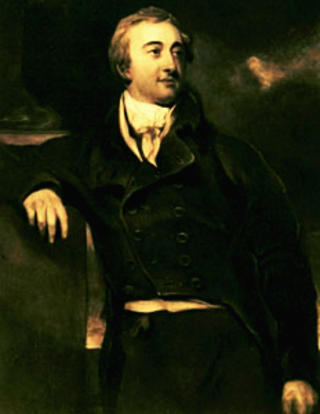
Liberals like Macaulay saw the British task as civilising rather than subduing, and merchants backed them because a "civilised" India would buy British goods. In 1838 C.E. Trevelyan called India "the proudest monument of British benevolence".
Improvement versus preservation. Cornwallis believed that the "magic touch of property" would turn zamindars into improving landlords and men of enterprise. Munro in the south, with Malcolm and Metcalfe, disagreed. They wanted to preserve the village community, keep judicial and executive power together at the local level, and allow diversity in Indian government instead of one alien English model.
The Utilitarians: reform by law. The Utilitarians followed Jeremy Bentham's principle of "the greatest good of the greatest number". James Mill, at the Company's London office, pushed for codified laws and a land tax based on the net produce, but in Bombay under Pringle this demand rose to 50 to 60 per cent of the crop and was quietly given up from the 1840s. Mill also opposed any representative government for India, which shows the authoritarian streak in this reforming creed.
From reform to "efficient" rule. Bentinck saw law as the tool to end sati and female infanticide, and in 1830 he told petitioners that Hindu scriptures did not command widows to die. Dalhousie created all-India departments with single heads, such as Post and Telegraph and the Public Works Department, and even favoured admitting Indians to the legislative council. After this the zeal for reform faded, and efficient rule by the "steel frame" of administration became the goal.
Building the civil service: the "steel frame" begins
The problem Cornwallis faced. Company servants were poorly paid but allowed to trade privately, so many made fortunes through corruption. Lord Cornwallis (Governor-General 1786-1793) set out to fix this. He professionalised, bureaucratised and Europeanised the administration.
What did Cornwallis do? He outlawed private trade by Company employees and separated commercial work from administrative work. He raised salaries, so that officials had less reason to take bribes. From 1785 he built a professional cadre with generous pay, regular promotion and pensions.
Who could join? All high-level posts were reserved for the British, and Indians were excluded. Cornwallis posted British judges, collectors and magistrates in every Bengal district. The new service was honest by the standards of the time, but it was closed to the people it governed.
Training and selection. From 1806 the Company trained its recruits at Haileybury College near London. However, appointments were still made through patronage, that is, by personal recommendation. After 1833, candidates nominated by directors had to pass a competitive examination, and after 1853 selection was entirely on merit and open to any British candidate.
A powerful district officer. In 1829 districts were made small enough for one British official to act as revenue collector, judge and police chief, with almost autocratic power. In the villages, this one man was the government. He was very highly paid, and he held political power that no official in England could ever have.
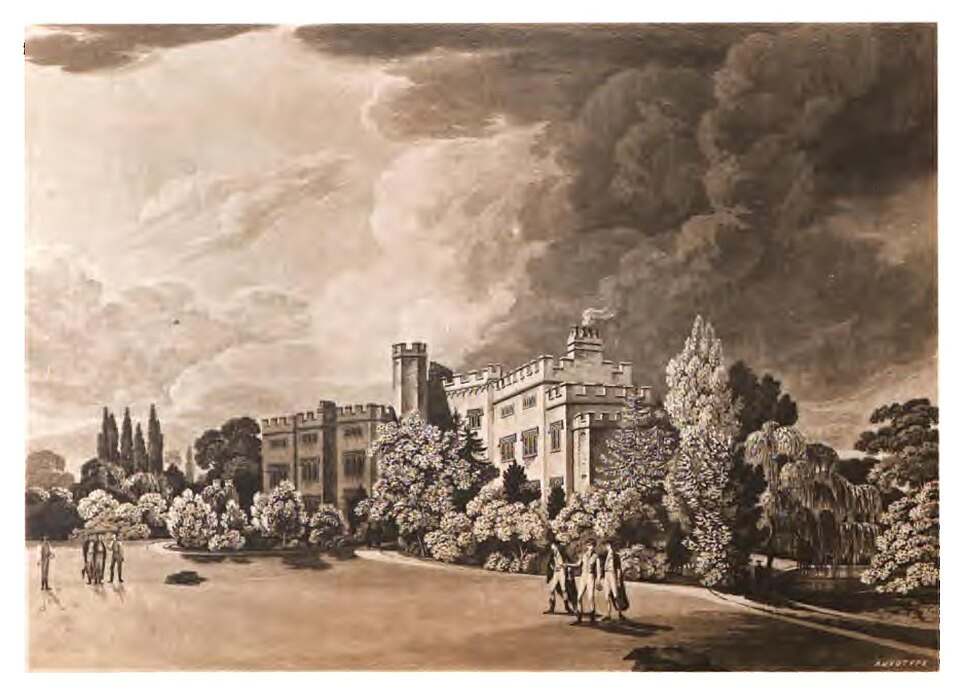
Why does this matter? The civil service gave British rule a strong, efficient backbone that lasted until 1947. But because Indians were shut out of high office, it also created a deep sense of injustice among educated Indians.
A new system of courts
Early courts. By the mid-18th century the British had a political presence in Madras, Bombay and Calcutta, and a British judicial system grew there. A Mayor's Court was set up in 1727 for civil cases in the three towns. In 1772 a fuller adalat system with civil and criminal jurisdiction was set up.
Whose law? Hindu pandits and Muslim qazis were recruited to help judges understand customary law, such as the rules of marriage and inheritance. But in general, British common and statutory law was applied. So Indian custom survived mainly in family matters.
Two new principles. The British system rested on the rule of law and equality before law. Under the rule of law, no one could be arrested or jailed without a written order, and even government servants could be sued for what they did in office. Equality before law was a new idea in a society divided by caste, where punishments had often depended on a person's birth.
The higher courts. The Regulating Act of 1773 created a Supreme Court at Calcutta, with jurisdiction over Bengal, Bihar and Orissa. Appeals could go to the Privy Council in London where the amount in dispute was more than Rs 4,000. Supreme Courts were later set up in Madras (1801) and Bombay (1823).
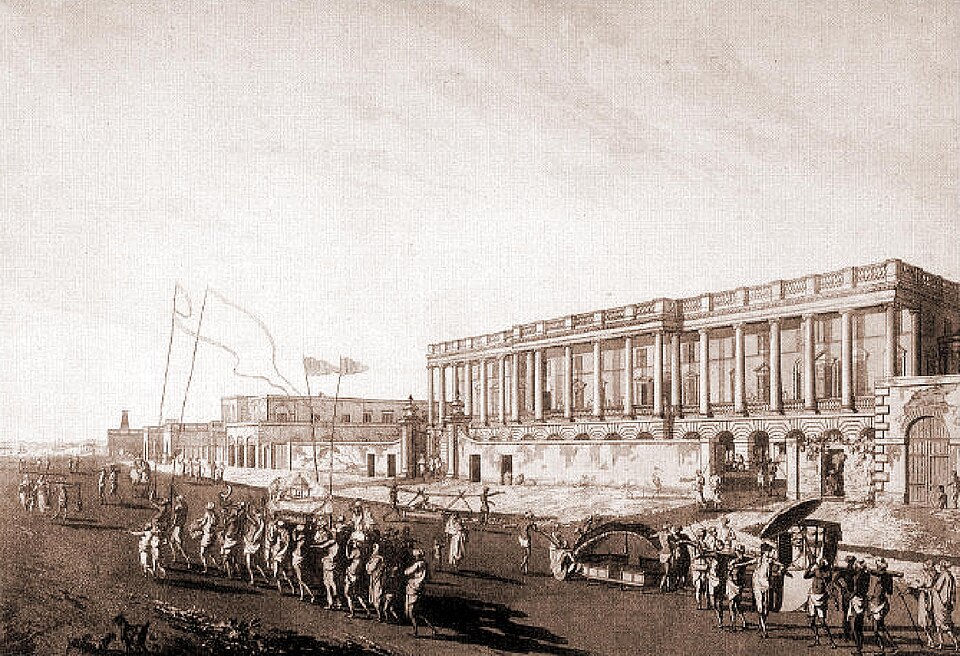
Cornwallis's court ladder. Cornwallis separated executive and judicial duties at the district level. On the civil side, the Sadar Diwani Adalat was the highest appeal court, with four Provincial Courts of Appeal at Calcutta, Dacca, Murshidabad and Patna below it. On the criminal side, magistrates heard cases, and four Courts of Circuit worked under the Sadar Nizamat Adalat at Calcutta.
Bentinck's change. In 1831 William Bentinck abolished the four provincial civil and criminal courts. Their work was handed to Commissioners and District Collectors. This again joined judicial and executive work in the hands of officials.
What did the new courts mean for Indians? The courts introduced written law, fixed procedures and the idea that rulers too were bound by law. But they were run by British judges in an unfamiliar system, and the law often favoured those who could read documents and pay for lawyers. The same courts that promised equality also helped moneylenders take peasants' land.
From Company to Crown
The Charter Acts. The Company's charter came up for renewal every twenty years, and each renewal cut its powers further. The Charter Act of 1813 ended its monopoly of trade with India, though it kept control of revenue, administration and appointments. The Charter Act of 1833 ended its China trade monopoly and took law-making power from the presidencies, giving it to the Governor-General and his council.
What did this leave the Company? After 1833 the Company was no longer really a trading company. It had become an administrative body that governed India on behalf of the British state. Its old reason for existing, trade, had been taken away.
The final step. The revolt of 1857 led directly to the fall of the Company. In 1858 the Company was dissolved, and the Government of India Act 1858 placed India under the direct rule of the British Crown. The long shift from Company to Crown, which began in 1773, was complete.
Quick revision
- The Regulating Act (1773) made the Governor of Bengal the Governor-General, and Warren Hastings was the first.
- Pitt's India Act (1784) set up the Board of Control, called the "half-loaf system".
- The Charter Act of 1813 ended the Indian trade monopoly, and the Charter Act of 1833 ended the China trade monopoly.
- Cornwallis banned private trade, raised salaries and kept all high posts for the British.
- Recruits trained at Haileybury from 1806, and selection became fully merit-based after 1853.
- The key principles of the courts were the rule of law and equality before law.
- The Supreme Court at Calcutta came from the 1773 Act, and Madras (1801) and Bombay (1823) followed.
- The Sadar Diwani Adalat was the top civil appeal court, and the Sadar Nizamat Adalat the top criminal court.
- In 1858 the Company was dissolved and India passed to the Crown.