

UPPSC PCS · Module 3 · Mains depth · 22 min
Persians, Greeks and the rise of the Mauryas
What UPPSC PCS asks from this chapter
Syllabus lines this chapter covers:
- Prelims: General Studies I · History of India and the Indian national movement
UPPSC PCS questions from this module are being sorted into our bank.
Read at full depth: basics, the standard layer and the Mains analysis.
Start from zero: from a kingdom to an empire
In the chapter on the Mahajanapadas we saw Magadha swallow its neighbours under Bimbisara, Ajatasatru and the Nandas. By the late fourth century BC it controlled most of the Ganga valley. But the subcontinent's north-west was a different world, ruled first by the Persians and then invaded by the Greeks.
Then, within a single lifetime, a young man named Chandragupta Maurya overthrew the Nandas, cleared the north-west of Greek rule and pushed his frontier deep into Afghanistan. His son Bindusara extended it into the Deccan. For the first time, one dynasty ruled most of the subcontinent.
This chapter asks three questions. What did the Persians and Greeks do in India, and what did they leave behind? How did Chandragupta rise from an obscure background to the throne? And what kind of empire did the first Mauryas build?
Why study this? The Mauryan empire is the first great all-India state, and almost every later empire measured itself against it. Exams love the dates, treaties, foreign names and sources of this period. Mains asks you to judge the impact of foreign invasions and the nature of the Mauryan state.
The story at a glance
| Date (approx.) | Event |
|---|---|
| 559 BC | Cyrus founds the Achaemenid (Persian) empire |
| 518-515 BC | Darius I makes Hindush (lower Indus) a province; Gandhara also Persian |
| 330 BC | Alexander destroys the Persian empire |
| 326 BC | Alexander invades the north-west; Nandas rule Magadha |
| 323 BC | Alexander dies at Babylon |
| c. 321 BC | Chandragupta Maurya takes the throne of Magadha |
| c. 305-303 BC | War and treaty with Seleucus; Megasthenes at Pataliputra |
| c. 297 BC | Bindusara succeeds |
| c. 269-268 BC | Asoka crowned after a succession struggle |
One thread to hold. Foreign rule weakened the north-west, and Magadha already held the Ganga valley. Chandragupta joined the two. That is the simplest way to explain how the first Indian empire was born.
The Persian connection
A world empire next door. In 559 BC Cyrus founded the Achaemenid empire in Iran. Under Darius I (about 522-486 BC) it became the largest empire of its time, stretching from Egypt and Asia Minor to Central Asia. Its eastern edge touched the Indus.
Hindush and Gandhara. Darius's inscriptions at Persepolis and Hamadan show that Hindush, the lower Indus valley down to its delta, became a Persian province around 518-515 BC. The Gandhara region, around Peshawar and Taxila, was also part of his empire. So the north-west of the subcontinent was under foreign rule from about the sixth to the fourth century BC.
The richest province. The Greek historian Herodotus says 'India', meaning the lower Indus valley, was the twentieth and richest satrapy of the empire. It paid 360 talents of gold dust as tribute. Its value probably lay in its farming wealth and its access to the sea.
Exploring the Indus. Darius sent a Greek sailor, Scylax of Caryanda, to explore the Indus down to the 'southern sea', the Arabian Sea. Scylax then sailed west to the Red Sea. Darius wanted to know whether the Indus delta could serve as an outlet for trade towards the Persian Gulf.
How Persia ruled. Darius made the satrapy, a province under a governor called a satrap, the basic unit of administration. Satraps had wide powers but were watched by officials appointed directly by the king. The word 'satrap' (kshatrapa) would return to India centuries later as a title of the Saka rulers.
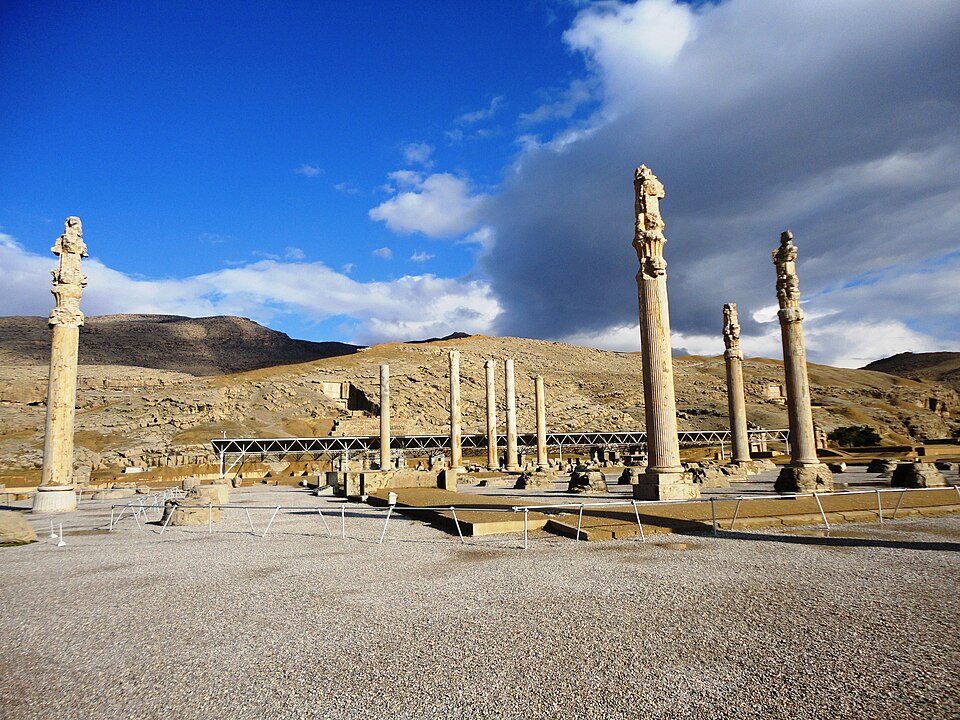
A link language. To hold so many peoples together, Darius promoted Aramaic, a simple alphabetic script and language, for daily imperial business. Old Persian, written in a modified cuneiform, was used for royal inscriptions. Aramaic's long shadow is visible in India: two of Asoka's edicts at Laghman in Afghanistan were written in Aramaic.
What Persia left behind. Persian rule tied the north-west to a vast network of roads, coins and trade stretching to the Mediterranean. Later, Asoka's Aramaic edicts at Laghman would even record a royal road with distances. The idea of a large, province-based empire run by governors was now familiar on India's doorstep.
Alexander in the north-west
The conqueror arrives. Alexander of Macedon set out to destroy Persian power in West Asia. By 330 BC he had defeated the last Achaemenid emperor, Darius III, and taken his empire. His further campaigns brought him to the banks of the Indus.
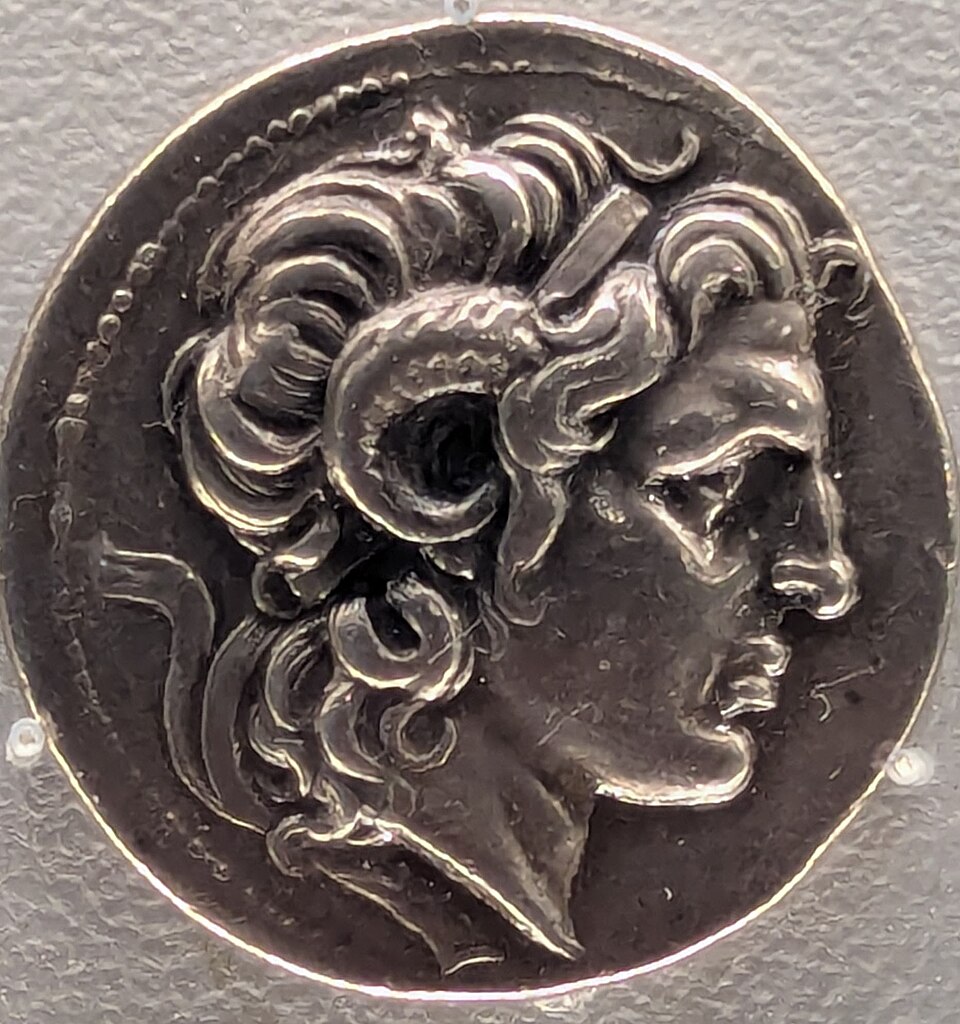
A divided north-west. Alexander invaded the north-west in 326 BC, often treated as the start of firmly dated Indian history. Magadha was then ruled by the Nandas, but Punjab was split among many small chiefdoms and kingdoms. This made it easier for an invader to take them one by one.
Gandhara submits. Ambhi (called Omphis by the Greeks), the ruler of Gandhara, submitted to Alexander. His historians say Ambhi gave the conqueror many silver pieces. At the Bhir mound in Taxila, a hoard of 1,171 silver coins included mint-fresh coins of Alexander and Philip, his governor in Gandhara.
No clash with Magadha. Alexander's campaign stayed in the north-west. There was no encounter between the Greek army and the forces of Magadha. Classical writers claim that the young Chandragupta met Alexander and urged him to attack the unpopular Nandas, but this story cannot be verified.
Retreat and death. Alexander turned back and died at Babylon in 323 BC. His generals divided his empire, and Seleucus Nikator, who had joined his eastern campaigns, came to rule the lands from Syria to the borders of India. Between 325 and 323 BC many of the governors Alexander had left in the north-west were killed or withdrew.
What did the invasion change? The historian D.D. Kosambi argued that its most important, unexpected result was that it 'hastened the Mauryan conquest of the whole country'. Alexander had already broken the tribes of Punjab, so Chandragupta found little resistance there. His retreat left a power vacuum in the north-west.
Contact, not conquest. The invasion did not create lasting Greek rule in India. Its larger legacy was the opening of routes and contacts between India and the Greek world. Within a generation, a Greek ambassador would live at the court of an Indian emperor.
How we know the Mauryas
Why this period is special. The Mauryan age is the first in Indian history for which we have many kinds of sources together: foreign accounts, a political treatise, royal inscriptions, coins and archaeology. Each has its own strengths and limits. A good answer always says which source supports which claim.
Megasthenes. Seleucus's ambassador Megasthenes lived at Chandragupta's court and wrote the Indica. The original is lost. We know it only through quotations in later Greek writers, Strabo and Diodorus (1st century BC) and Arrian (2nd century AD), so his account comes to us filtered.
The Arthasastra. Kautilya's Arthasastra, a treatise on statecraft, was discovered in 1905. Tradition says it was written by Chandragupta's minister, and many scholars use most of it for the Mauryan period. But a statistical study suggests some chapters belong to the first two centuries AD, so it was probably edited and expanded later.
Inscriptions. Asoka's edicts are the most remarkable source: fourteen major rock edicts, seven pillar edicts, minor rock edicts and others. They stand near towns and trade routes across the subcontinent. Their findspots show the reach of the empire, and their words give us the king's own voice.
Coins. Mauryan coins carry no kings' names. They are punch-marked coins, with symbols punched on them separately. Such coins are known from about the fifth century BC, but the Mauryan series has uniform symbols, which suggests issue by a central authority.
Buddhist, Jaina and Brahmanical texts. The Sri Lankan chronicles Dipavamsa and Mahavamsa, and the Divyavadana preserved in Tibetan and Chinese, tell much about Asoka. But they were written later and in the context of Buddhism's spread, so they must be used with caution. The Puranas give dynastic lists, and Jaina texts preserve traditions about Chandragupta.
Archaeology. Excavations show that the Northern Black Polished Ware phase saw towns grow in the Ganga valley. In the Mauryan period, elements of this material culture spread far beyond the Ganga valley. Archaeology thus shows the empire's impact on everyday life, not just on kings.
The rise of Chandragupta Maurya
The Nanda inheritance. The Nandas, founded by the usurper Mahapadma Nanda, had built the largest kingdom India had yet seen. Greek writers credit them with 20,000 cavalry, 200,000 infantry, 2,000 chariots and 3,000 elephants. Kharavela's Hathigumpha inscription suggests they held part of Kalinga, which is why they are often called India's first empire-builders.
An unpopular dynasty. The Puranas call Mahapadma the exterminator of all kshatriyas, an orthodox complaint against a low-born king. Nine Nanda kings ruled, and by the end they had become very unpopular, probably through heavy taxation. This unpopularity gave a rival his opening.
Kautilya, the king-maker. Indian tradition says Chandragupta was guided by a brahmana, Kautilya, also called Chanakya or Vishnugupta. A later Sanskrit play even hints that Chandragupta, who came to the throne at about twenty-five, was at first a weak ruler, with Chanakya holding real power. The Arthasastra, attributed to Kautilya, shows deep knowledge of war, diplomacy and how to keep an empire from collapsing.
Taking the throne. Both Indian and Greek sources agree that Chandragupta overthrew the last Nanda king and occupied Pataliputra. His accession is generally placed around 321 BC, though some scholars say 324 BC. It is not clear whether he first drove out the Greek garrisons in the north-west or first defeated the Nandas, but both were done by about 321 BC.
Who were the Mauryas? The family's origin is one of the most debated questions in exams. One story makes Chandragupta the son of the last Nanda king by a low-born woman, Mura, from whom the name Maurya came. Buddhist tradition makes him a member of the Moriya clan of Pipphalivana, linked to the Buddha's Sakyas, which would make the family old chiefs of kshatriya status.
More views on origin. The Puranas do not link the Nandas and Mauryas but still call the Mauryas shudras, reflecting the orthodox view of Magadha as a land of mixed caste. The Greeks, who called him Sandrakottus, say he was of low origin. Some even suggest a vaishya origin, pointing to the name-ending 'Gupta' and Asoka's marriage to a Vidisa merchant's daughter.
Why the debate matters. Whatever their caste, the Mauryas rose in a society that was not very orthodox. The north-west had long contact with foreigners, Magadha was looked down on by orthodox brahmanas, and the region was full of the ideas of the Buddha and Mahavira. It is telling that the greatest Mauryan rulers turned to heterodox sects later in life.
Chandragupta's conquests and the Greek treaty
Clearing the north-west. After Alexander's retreat, Chandragupta quickly took control of the north-west, where the Greek governors had been killed or had withdrawn. With the Ganga valley already in Magadha's hands, the Indus and Gangetic plains were now under one ruler. This was something no Indian king had done before.
War with Seleucus. Alexander's general Seleucus Nikator now ruled the lands west of the Indus and tried to win back the Indian provinces. Around 305 BC war broke out, and Chandragupta is said to have won. Peace was made around 303 BC.
The terms of peace. In return for 500 elephants, Seleucus gave Chandragupta four satrapies: Arachosia, Paropanisadae, Aria and Gedrosia. These covered eastern Afghanistan, Baluchistan and the land west of the Indus. A marriage alliance was also agreed, and Seleucus sent Megasthenes as his ambassador to Pataliputra.
Why 500 elephants? The exchange tells us what each side valued. Seleucus needed war elephants for his wars against rival Greek generals in the west. Chandragupta gained a secure, mountain-backed north-western frontier, something later Indian rulers would struggle to hold.
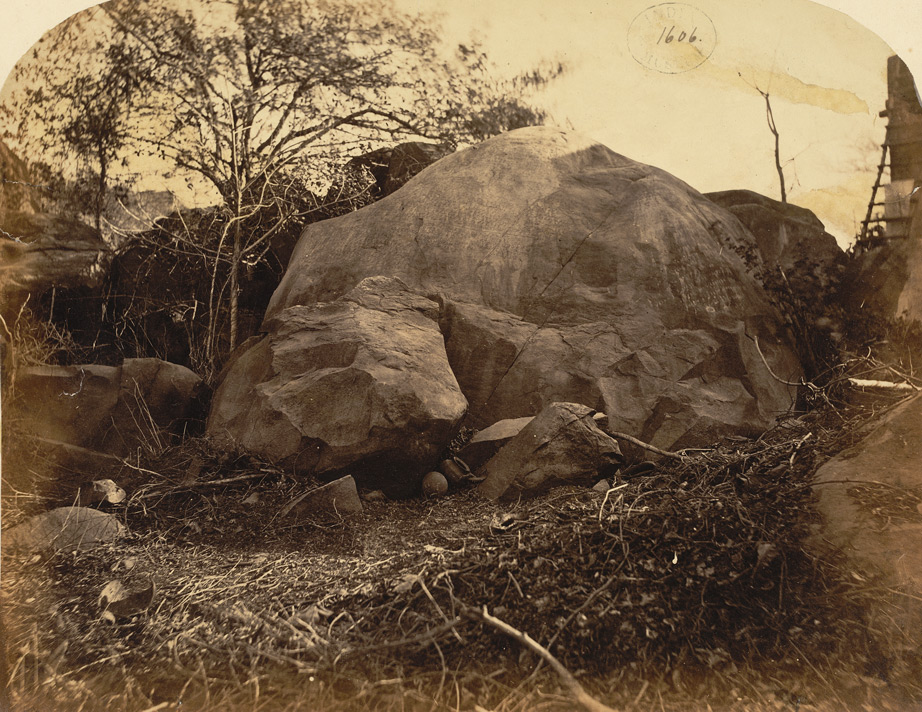
West and south. Greek writers say Chandragupta overran the whole country with an army of 600,000, though details are lacking. The Junagadh rock inscription of the Saka ruler Rudradaman (mid-2nd century AD) names his governor in Saurashtra, Pushyagupta, who built the famous Sudarshana lake. This shows Mauryan control of Gujarat, and so probably of Malwa too.
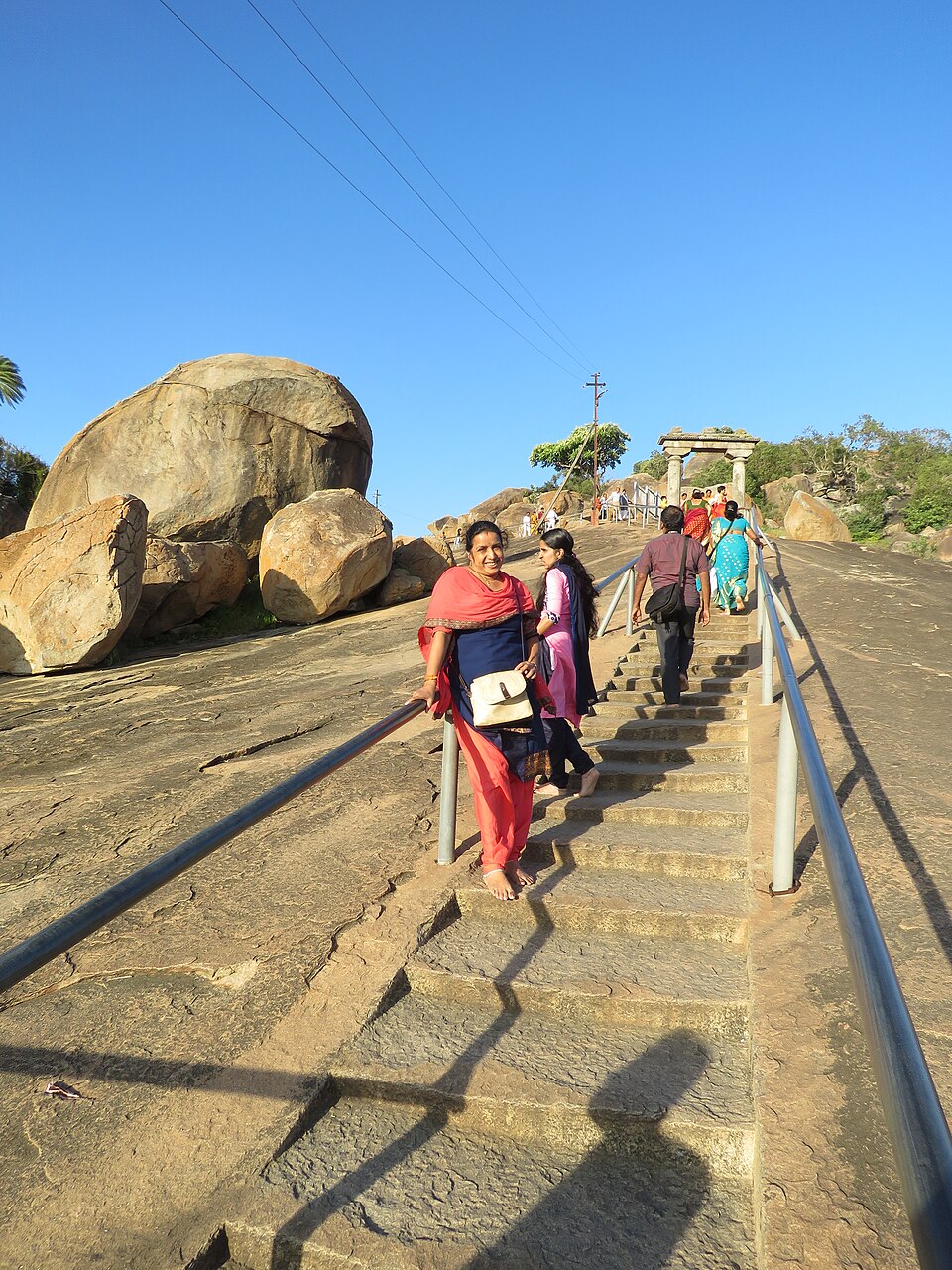
The Deccan. For the Deccan we have only later sources, such as medieval inscriptions saying Chandragupta protected parts of Karnataka. Most scholars think his empire covered the north-west, the Ganga plains, western India and much of the Deccan. Only present-day Kerala, Tamil Nadu and parts of the north-east lay outside.
A Jaina ending. Jaina tradition says Chandragupta became a Jaina, gave up the throne and went south with the saint Bhadrabahu during a long famine. At Sravanabelagola in Karnataka he spent his last years and died in the orthodox Jaina way, by slow fasting. As we saw in the chapter on Jainism, this migration is also linked to the split of the Jaina order.
Bindusara: the quiet conqueror
A little-known king. Chandragupta's son Bindusara came to the throne around 297 BC. Neither Indian nor Greek sources tell us much about him. The Greeks knew him as Amitrochates, from a Sanskrit title meaning 'slayer of foes'.
Letters to Syria. Bindusara kept up the Greek connection. He wrote to the Seleucid king of Syria, Antiochus I, asking for sweet wine, dried figs and a sophist (a philosopher). The story suggests a curious, confident court with wide contacts.
Conquests in the south. The Tibetan monk Taranath, writing in the sixteenth century, says Bindusara destroyed the kings and nobles of about sixteen cities and conquered all the land between the eastern and western seas. Early Tamil poets describe Mauryan chariots thundering across the land, which probably refers to his reign. Since Asoka conquered only Kalinga, the empire's reach beyond the Tungabhadra must have been the work of his predecessors.
Faith and death. Bindusara's religious leanings were towards the Ajivikas, the fatalist sect we met in the chapter on Jainism. Buddhist sources place his death around 273-272 BC. A struggle among his sons followed for about four years.
Asoka's accession. Around 269-268 BC, Asoka was finally crowned. He was probably not the crown prince and had to fight his brothers for the throne. The story of his reign, the Kalinga war and his policy of Dhamma comes in the next chapter.
Mains lens: what kind of empire?
Why Magadha, again. The deeper reasons for Magadha's success lay in its geography, iron and trade routes. Its later capital, Pataliputra, stood near the meeting of the Ganga, Gandak, Son and Punpun, commanding the river traffic and the northern land route, the uttarapatha. Iron from nearby hills helped arm its soldiers and clear land for farming, which produced the surplus that taxes could tap.
The impact of foreign invasions. Persian rule tied the north-west to West Asia through provinces, roads, coins and the Aramaic script. Alexander's invasion brought no lasting Greek rule but weakened the chiefdoms of Punjab and left a vacuum. In Kosambi's words, it hastened the Mauryan unification of the country.
What is an 'empire'? Historians usually mean a large territory under central control, with peoples of different cultures. The Mauryan state is often called a centralised bureaucratic empire, built by conquest in a time of turmoil, relying on allies, taxes and an administrative class. Such empires also tend to favour privileged groups and regions at the expense of others.
The Indian ideal. The Arthasastra describes the sphere of a chakravarti, a universal emperor, as the land from the Himalaya to the seas, a thousand yojanas. It lists the seven limbs (saptanga) of the state: king, ministers, ally, taxes, army, fort and territory, and adds the enemy as an eighth. The king is made the most powerful limb.
Ideal versus reality. The chakravarti ideal was rarely, if ever, achieved, except perhaps by Asoka. Historians once read such ideals as proof of a despotic, fully centralised state. That view is now questioned, since an empire so diverse was hard to control directly, a theme we return to with Mauryan administration.
The larger significance. Whatever its exact nature, the Mauryan rise marked the triumph of monarchy over the gana-sangha form of government. It also showed that a ruler of uncertain caste, backed by a shrewd adviser, could build an all-India state. A strong Mains answer combines geography, foreign contact, leadership and resources, and avoids explaining the empire by one cause alone.
Mains practice: foreign contact and the first empire
| Angle | Question | Key points to cover |
|---|---|---|
| Impact | Assess the impact of the Persian and Macedonian invasions on north-west India. | Hindush and Gandhara; richest satrapy; satrap system; Aramaic, Laghman; Scylax; Alexander 326 BC; Ambhi; Taxila hoard; weakened chiefdoms; vacuum; Kosambi; contacts, Megasthenes. |
| Origins | Discuss the different views on the origin of the Mauryas. Why did a non-orthodox dynasty succeed? | Mura; Moriya clan; Puranas shudra; Greek low origin; vaishya view; Kautilya; unpopular Nandas; north-west vacuum; non-orthodox Magadha; heterodox sects. |
| State | "The Mauryan state was a centralised bureaucratic empire." Critically examine with reference to its sources. | Definition of empire; Arthasastra date debate; saptanga, chakravarti; Megasthenes filtered; uniform punch-marked coins; edicts on trade routes; diverse regions; ideal vs reality. |
These are practice questions written by us, not past papers. Past questions from your exam appear in the PYQ panel.
How to use this table: each answer should explain the what, then the why, and end with what it led to.
Quick revision
- Cyrus founds Achaemenid empire, 559 BC; Darius I (c. 522-486 BC) takes Hindush (lower Indus) c. 518-515 BC; Gandhara also Persian.
- Herodotus: India the 20th and richest satrapy, 360 talents of gold dust. Scylax explores the Indus.
- Satrapies under satraps; Aramaic link script; Asoka's Aramaic edicts at Laghman.
- Alexander: Persian empire falls 330 BC (Darius III); north-west 326 BC; Ambhi of Gandhara submits; no clash with Magadha; dies at Babylon, 323 BC.
- Taxila (Bhir mound) hoard: 1,171 silver coins incl. Alexander's. Kosambi: invasion hastened Mauryan conquest.
- Sources: Megasthenes (via Strabo, Diodorus, Arrian); Arthasastra (found 1905; date debated); uniform punch-marked coins; Asoka's 14 RE, 7 PE; Dipavamsa, Mahavamsa, Divyavadana.
- Nandas: Mahapadma; huge army; part of Kalinga (Hathigumpha); nine kings; end by 321 BC.
- Chandragupta (c. 321 BC; helped by Kautilya/Chanakya/Vishnugupta); Greek name Sandrakottus; origin: Mura, Moriya clan, shudra, low, vaishya views.
- Seleucus: war c. 305 BC, treaty c. 303 BC; 500 elephants for Arachosia, Paropanisadae, Aria, Gedrosia; marriage alliance; Megasthenes.
- Pushyagupta built Sudarshana lake (Junagadh inscription of Rudradaman). Chandragupta dies at Sravanabelagola.
- Bindusara (c. 297 BC; Amitrochates): asks Antiochus I for wine, figs, sophist; Deccan; Ajivika leanings; dies c. 273-272 BC.
- Asoka crowned c. 269-268 BC after a four-year succession struggle.
- Saptanga (king, ministers, ally, taxes, army, fort, territory) + enemy; chakravarti-kshetra: Himalaya to the seas.