

UPSC CAPF AC · Module 16 · standard depth · 12 min
The biosphere and ecosystems
What UPSC CAPF AC asks from this chapter
Syllabus lines this chapter covers:
- Paper I: General Ability and Intelligence · Indian and World Geography: The questions shall cover the physical, social and economic aspects of geography pertaining to India and the World.
UPSC CAPF AC questions from this module are being sorted into our bank.
Cut to standard depth for UPSC CAPF AC. 11 deeper paragraphs are in the full chapter.
Start from zero: the thin layer of life
Picture the Earth as an apple. Its skin is the thin outer layer where rocks, water and air meet. Almost all life on Earth lives in an even thinner zone within this skin, from the deepest ocean trenches to a few kilometres up in the air.
This zone of life is called the biosphere. It includes parts of the three non-living spheres, the lithosphere (land and soil), the hydrosphere (water) and the atmosphere (air), along with every living thing, from bacteria to whales and the tallest trees. Life depends on all three: plants need soil, water and air, and animals depend on plants.
The biosphere is powered by the Sun. Green plants capture sunlight and turn it into food, and this energy supports every other living thing. Without sunlight, liquid water and a protective atmosphere, Earth would be as lifeless as the Moon.
Geography studies the biosphere because living things are spread unevenly across the planet. Forests, grasslands, deserts and tundra form a pattern that closely follows climate and soil.
Why it matters. Food, water, timber, medicines and clean air all come from the biosphere. Understanding how it works is the base for managing resources and protecting the environment.
What is an ecosystem?
An ecosystem is a community of living things interacting with one another and with their non-living surroundings. A pond, a forest, a grassland and even a field are ecosystems. The word ecology, coined by the German scientist Ernst Haeckel, means the study of these interactions.
Every ecosystem has two kinds of components. Abiotic components are non-living, such as sunlight, temperature, rainfall, soil, water and minerals. Biotic components are living things, which play three roles.
Producers are green plants and algae that make their own food from sunlight, water and carbon dioxide through photosynthesis. Consumers eat other organisms: herbivores such as deer eat plants, carnivores such as tigers eat animals, and omnivores such as bears and humans eat both. Decomposers, mainly bacteria and fungi, break down dead plants and animals and return nutrients to the soil.
Ecosystems come in many sizes and types. Terrestrial ecosystems include forests, grasslands, deserts and tundra, while aquatic ecosystems include marine ones such as oceans, estuaries and coral reefs, and freshwater ones such as rivers, lakes and wetlands. Very large land ecosystems defined by climate and vegetation, such as the tropical rainforest or the tundra, are called biomes.
Two more terms help describe life in an ecosystem. A habitat is the place where an organism lives, while its niche is its role there, what it eats, when it is active and how it uses resources. Where two ecosystems meet, such as a forest edge or the mangroves between land and sea, a transition zone called an ecotone forms, often richer in species than either side.
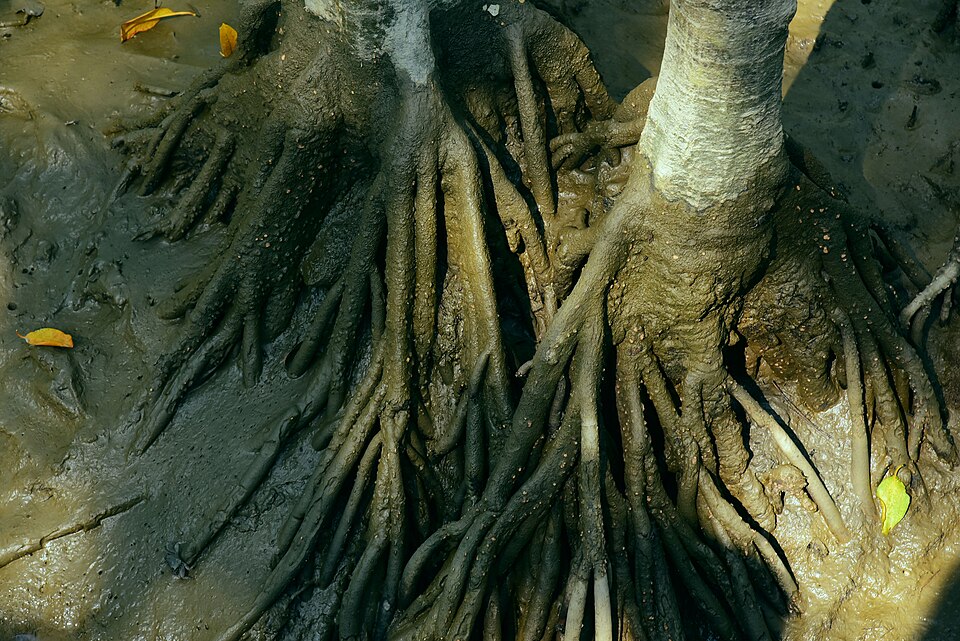
Why it matters. Seeing a place as an ecosystem shows how removing one part, such as forests or predators, affects everything else. It is the basis of sustainable resource use.
Food chains, food webs and the flow of energy
A food chain shows who eats whom. In a grassland, grass is eaten by a grasshopper, the grasshopper by a frog, the frog by a snake and the snake by a hawk. Each step in the chain is called a trophic level: producers form the first level, herbivores the second and carnivores the higher levels.
There are two main types of food chains. The grazing food chain begins with green plants and passes to herbivores and carnivores. The detritus food chain begins with dead organic matter, such as fallen leaves, which is eaten by earthworms, insects, bacteria and fungi.
In nature, food chains are linked, because most animals eat more than one kind of food and are eaten by more than one predator. These interlocking chains form a food web, which makes an ecosystem more stable. If one food source fails, animals can often switch to another.
Energy flows through the chain in one direction only, from the Sun to producers and then to consumers. At each step, much of the energy is used for living and lost as heat, and only about 10 per cent is passed on to the next level. This is why food chains rarely have more than four or five levels, and why there are far fewer tigers than deer in a forest.
Food chains can also carry harmful substances. Some pollutants, such as the pesticide DDT and mercury, are not broken down or excreted easily, so they build up in body fat and become more concentrated at each higher trophic level. This process, called biomagnification, is why fish-eating birds and large predatory fish can carry dangerous levels of poisons even when the water itself has only traces.
Why it matters. The 10 per cent rule explains why eating lower on the food chain feeds more people from the same land. It also explains why top predators are rare and vulnerable.
Cycles of matter: carbon, nitrogen, oxygen and water
Energy flows through an ecosystem and is lost, but matter is recycled. The elements that make up living bodies, such as carbon, nitrogen, oxygen and phosphorus, move again and again between living things and the air, water, soil and rocks. These movements are called biogeochemical cycles.
In the carbon cycle, plants take carbon dioxide from the air during photosynthesis and store carbon in their bodies. Animals obtain it by eating plants, and all living things return carbon dioxide to the air through respiration and decomposition. Oceans absorb and release large amounts of carbon, and over millions of years some carbon was buried as coal, oil and gas, which humans now burn, adding carbon dioxide to the air.
In the nitrogen cycle, the air is about 78 per cent nitrogen, but plants cannot use this gas directly. It must first be fixed into compounds by bacteria, such as Rhizobium in the root nodules of legumes like pulses, by lightning, or by factories making fertilisers. Plants absorb these compounds, animals eat the plants, and decomposers and denitrifying bacteria return nitrogen to the soil and air.
The oxygen cycle is linked with the carbon cycle, as photosynthesis releases oxygen and respiration and burning consume it. The water cycle of evaporation, condensation and precipitation moves water and dissolved nutrients through every ecosystem.
Why it matters. Human activity is disturbing these cycles, adding carbon to the air and extra nitrogen to rivers and seas. This is the root of climate change and water pollution problems.
Ecological balance and succession
In a healthy ecosystem, the number of each species stays fairly steady over time. Predators keep herbivores in check, herbivores keep plants from being overgrazed, and decomposers keep nutrients moving. This state of dynamic equilibrium is called ecological balance.
The balance can be upset. A new species introduced from elsewhere, such as the water hyacinth that chokes Indian lakes and rivers, can spread unchecked because it has no natural enemies. Natural events such as fires, floods and droughts, and human actions such as deforestation, hunting, pollution and overgrazing, can also disturb it.
Ecosystems also change over time through ecological succession. When bare rock or a new pond appears, simple pioneer species such as lichens or algae colonise it first. They slowly create soil or organic matter, allowing grasses, shrubs and finally trees to move in, until a stable climax community develops that suits the local climate.
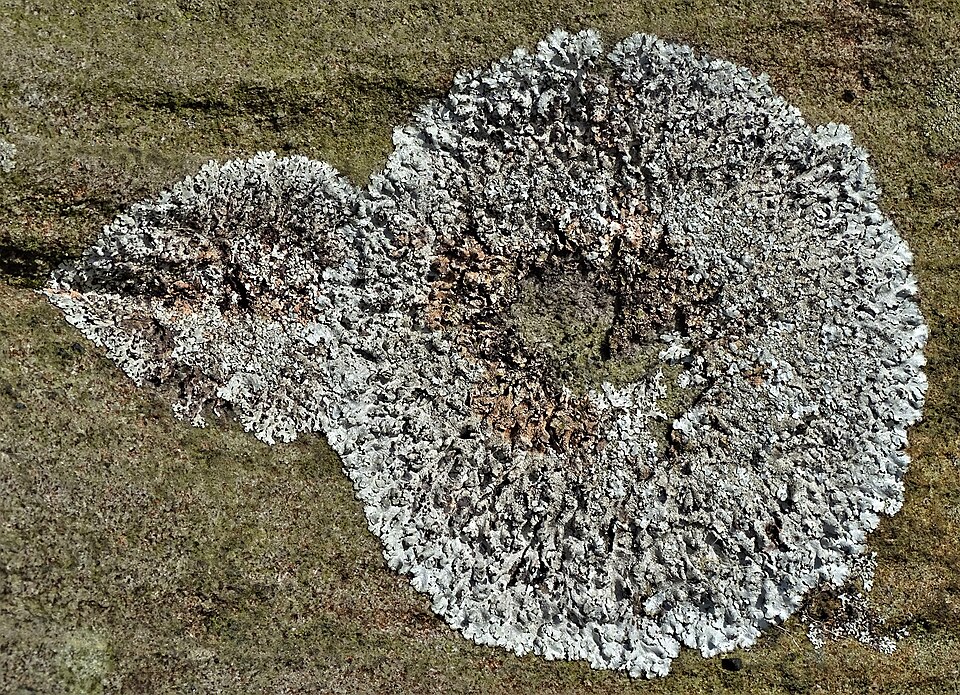
Succession can restart after disturbance. A forest cleared by fire or felling may pass through grassland and shrub stages before trees return, which is why abandoned shifting cultivation plots slowly turn back into forest if they are left long enough.
Why it matters. Ecological balance supports services such as clean water, pollination and soil fertility. Understanding succession guides the restoration of degraded land.
Biodiversity: where life is richest
Biodiversity is the variety of life on Earth. It is studied at three levels. Genetic diversity is the variation within a species, such as the thousands of varieties of rice grown in India. Species diversity is the number and variety of species in an area, and ecosystem diversity is the range of habitats, such as forests, wetlands, grasslands and coral reefs.
Biodiversity is spread unevenly. It is generally highest in the tropics, especially in rainforests and coral reefs, and it declines towards the poles. Warm temperatures, abundant rainfall, high productivity and a long, stable history all allow many species to evolve and coexist in tropical regions.
A few countries hold a large share of the world's species and are called megadiversity countries. India is one of them, with a wide range of habitats from the Himalaya to the coral reefs of Lakshadweep. Biodiversity hotspots are regions with very high numbers of endemic species that have already lost much of their original habitat.
India includes parts of four hotspots: the Himalaya, Indo-Burma (covering the north-east), the Western Ghats and Sri Lanka, and Sundaland, which includes the Nicobar Islands. These areas are rich in species found nowhere else, such as the lion-tailed macaque of the Western Ghats.
Conservation follows two broad approaches. In-situ conservation protects species in their natural habitats, through national parks, wildlife sanctuaries and biosphere reserves, which UNESCO promotes under its Man and the Biosphere programme begun in 1971. Ex-situ conservation protects species outside their habitats, in zoos, botanical gardens, gene banks and seed vaults, and is used especially for species on the brink of extinction.
Why it matters. Biodiversity provides food, medicines, genes for crop breeding and ecosystem services. Its loss through habitat destruction, over-exploitation, invasive species, pollution and climate change threatens human well-being too.
Quick revision
- Biosphere = zone of life across lithosphere, hydrosphere and atmosphere.
- Ecosystem = living community + non-living environment; abiotic and biotic parts.
- Producers (photosynthesis), consumers (herbivore, carnivore, omnivore), decomposers (bacteria, fungi).
- Food chains: grazing (from plants), detritus (from dead matter); linked chains = food web.
- Energy: one-way flow; about 10 per cent passes to the next level.
- Nutrients cycle: carbon, nitrogen, oxygen, water; nitrogen fixed by Rhizobium, lightning, fertilisers.
- Ecological balance = dynamic equilibrium; upset by invasive species, hazards, human action.
- Succession: pioneer species → climax community.
- Biodiversity levels: genetic, species, ecosystem; highest in tropics.
- India: megadiverse; four hotspots: Himalaya, Indo-Burma, Western Ghats–Sri Lanka, Sundaland (Nicobar).