

UPSC CAPF AC · Module 7 · standard depth · 15 min
From traders to rulers: the Company and the Anglo-French wars
What UPSC CAPF AC asks from this chapter
Syllabus lines this chapter covers:
- Paper I: General Ability and Intelligence · History of India : The questions will broadly cover the subject in its social, economic and political aspects. This shall also include the areas of growth of nationalism and freedom movement.
UPSC CAPF AC questions from this module are being sorted into our bank.
Cut to standard depth for UPSC CAPF AC. 8 deeper paragraphs are in the full chapter.
Start from zero: how can a shop become a government?
Imagine a big company from another country opens a shop in your town. At first it only buys and sells. It buys the best cloth from local weavers and sends it home, where people pay a high price for it.
Slowly the shop builds a strong warehouse with high walls, because it fears thieves and rival shops. Then it hires guards with guns. Then it starts fighting the other foreign shops in town, because they all want the same cloth from the same weavers.
One day the town's ruler gets angry and tries to shut the shop. But the shop's guards are now better trained than the ruler's soldiers, and they win. Now the shop decides who rules the town, and it starts collecting the town's taxes.
That is almost exactly what happened in India. A British trading company, the English East India Company, came to buy goods in 1600. In about 150 years it had become a ruling power, and by 1857 it governed most of India.
This chapter answers three questions:
- Why did Europeans come to India at all?
- Who were the Company's rivals, and how were they different?
- Why did Indian rulers fail to stop them?
The answers explain the whole of modern Indian history that follows.
The story at a glance: what, when, where, who and why
Before the details, here is the whole story in one table. Every row is explained later in this chapter.
| Question | Answer |
|---|---|
| What happened? | A British trading company slowly turned into a ruling power in India. It first had to defeat its European rivals, above all the French. |
| When? | The Company was set up in 1600. The decisive battle with the French was fought at Wandiwash in January 1760, and formal British rule is dated from Plassey in 1757. |
| Where? | The fight with the French took place in the Carnatic in south India, and the first big political gain came in Bengal. |
| Who? | The English East India Company fought the French company. Sir Eyre Coote won at Wandiwash, while Dupleix and Bussy had built French power in the south. |
| Why? | Indian goods earned huge profits in Europe. A weakened Mughal centre and quarrelling regional states gave the Company room to use force. |
| What changed? | The British became the strongest European power in India. The wars also showed that Indian armies could be beaten by small, well-drilled European forces. |
Keep the last row in mind. It explains why a company of merchants could later take on kings.
Why did Europeans come to India?
What they wanted. In the 16th and 17th centuries, Indian goods were in great demand in Europe. Indian cloth, cotton, silk and spices were of better quality and lower price than anything Europe could make. So whoever could carry them to Europe could sell them at a large profit.
Who came. Several European countries set up trading companies for this purpose. Besides the English, there were Portuguese, Dutch, French and Danish companies, all expanding in the East at the same time. The English company was set up in 1600 as "The Company of Merchants of London Trading into the East Indies", and people nicknamed it "John Company".
What a joint-stock company is. It was a joint-stock company, which means many investors put in money together and shared the profits. This mattered later. Because the Company had to pay its investors in Britain every year, it was always hungry for more income.
A royal monopoly. The Company had an exclusive royal charter from Queen Elizabeth I. This meant no other English merchant was allowed to trade with the East. Its main business was simple: buy spices, cotton and silk in India and sell them in Britain at large profits.
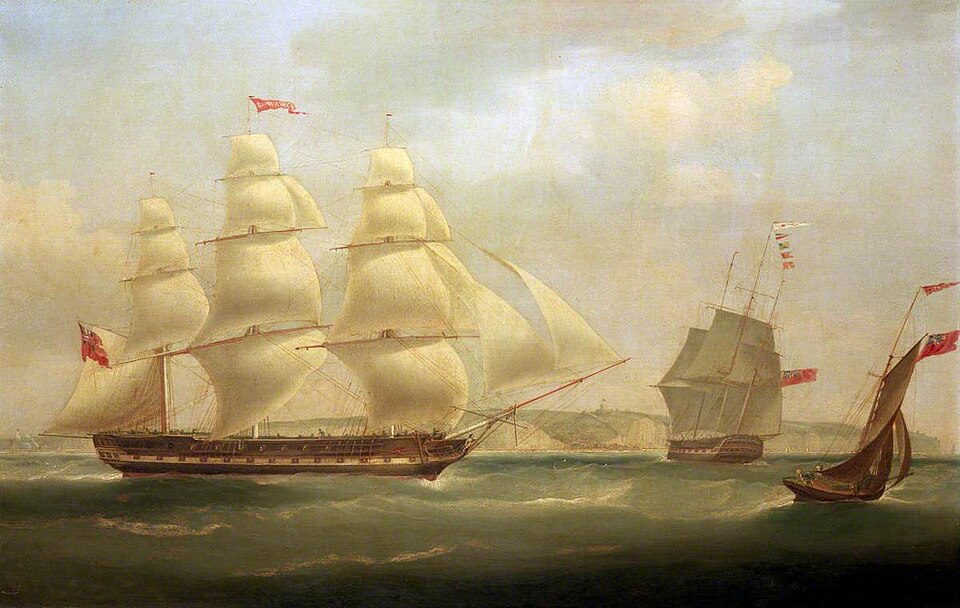
Why was this a problem for Europe? Trade has to be paid for. Europe wanted Indian goods, but India wanted very little that Europe made. So European traders had to pay in gold and silver (bullion), and a steady stream of bullion flowed from Europe to India.
The Company could not find British goods to sell in India to stop this outflow. On top of that, it spent large sums fighting the Portuguese, Dutch and French, who were all chasing the same goods. Keep this problem in mind, because the search for a way to pay for Indian goods without sending gold is one of the hidden drivers of this whole story.
From trade to territory: why did the Company want land?
At first, only trade. In its first 50 years the Company was not interested in colonies. Like the Portuguese, it preferred to trade from a few coastal bases and leave ruling to others.
A change of mind. By about 1650, the old group of royalist merchants lost control, and a new class of merchants took over the Company. These men copied the colonial merchants of the American colonies and the West Indies. They dreamt of a network of colonies linking England, Africa and India.
Why does owning land help a trader? If you rule a territory, you can collect its taxes. Those taxes can then pay for the goods you export, so you no longer need to send gold from home. Land also lets you keep soldiers and protect your trade by force.
The opening in India. Even so, the Company could not have grabbed land if India had been strong and united. In the first half of the 18th century the Mughal Empire declined. Regional states such as Bengal, Hyderabad, Awadh, Punjab and the Maratha kingdoms filled the gap.
These regional powers were often rich and well run, but they could not provide lasting stability. They fought one another, and their rulers often faced rivals inside their own courts. This gave the Company a chance to take sides, offer help for a price, and slowly build a territorial empire.
Three tools of expansion. Over the next hundred years the British used three methods to grow:
- Wars and conquest: they defeated rulers outright and annexed their lands. These areas were called British India.
- The subsidiary alliance: rulers kept their thrones but accepted British troops and control. Their states became princely states.
- The doctrine of lapse: states were annexed when a ruler died without a natural male heir or was judged incompetent.
The next chapters of this module follow each step in turn, starting with the wars against the French.
The rivals: who else came, and how the English and French companies differed
A crowded field. The English were not alone. Portuguese, Dutch, French and Danish companies were all trading in the East. Every company wanted the same Indian goods, so each one gained only by pushing the others out.
Why must a trading company remove its rivals? Think of two shops buying cloth from the same weavers. If both want it, the weavers can raise their price.
But if one shop drives the other away, it can buy cheap and sell dear. That is why a trading company of this age tried to eliminate competitors and build a monopoly.
The English start in the west. The English began trading in cloth and calicoes under an imperial firman from Emperor Jahangir. At first they were allowed to trade only on the western coast, at places such as Surat, Ahmedabad and Cambay.
The French arrive late. The English company was formed in 1600, but the French company came only in 1664. The French set up their first factory at Surat in 1668 and another at Masulipatam in 1669. In 1674 François Martin founded Pondicherry, which became the French capital in India and a rival to the English base at Madras.
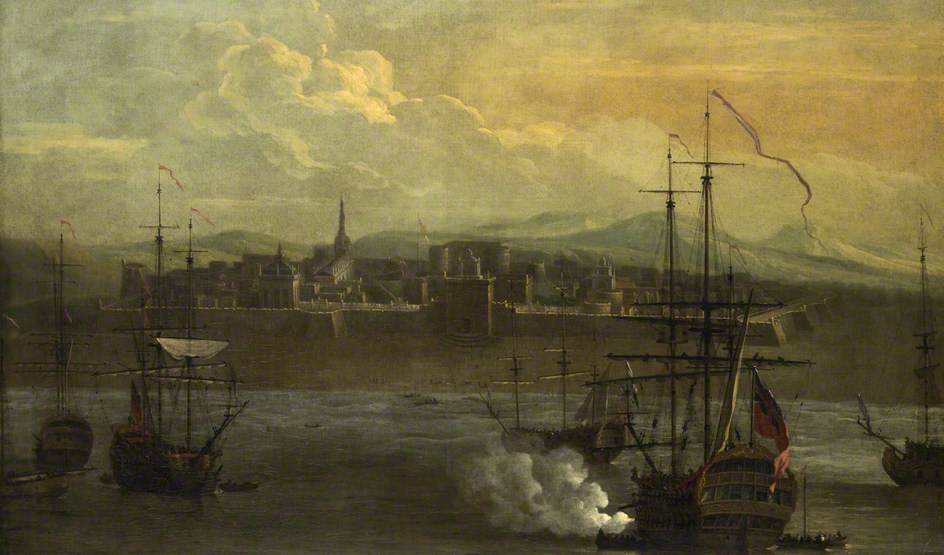
More French bases. Between 1690 and 1692 the French set up a factory at Chandernagore in Bengal. Early in the 18th century the French company declined for a while, but by about 1720 it revived under a new name, the "Perpetual Company of the Indies". It then added Mahe on the Malabar coast in 1725 and Karaikal on the east coast in 1739, and it built a naval base at Mauritius.
Two very different companies. The two rivals were built in different ways, and this mattered later:
- The English company was a private corporation, founded and kept going by private enterprise. It did not depend on the state; in fact, the state owed it money.
- The French company was a child of state patronage, and much of its income came from a state monopoly of the tobacco trade.
- The English company had better infrastructure, larger fleets, more money and more frequent voyages, and a longer, unbroken history of trade with the East.
Why did this difference matter? A private company could keep its eyes fixed on profit in India. A state company had to follow its government's wider worries in Europe. This is why, as the next chapter shows, the French government could recall its most successful leader in India for reasons that had little to do with India.
The road to Plassey: when trade privileges became a quarrel
A permit that was misused. The Company had obtained dastaks (permits) from the Mughal emperor. These permits let the Company trade without paying duties. In itself this was a trade concession, the kind of favour a ruler might give to a useful merchant.
What went wrong. The Company's own employees misused the dastaks for their private trade. They used the Company's duty-free permit for goods they bought and sold for themselves. This caused much corruption, and it meant heavy customs losses for the governors of Bengal, who later became the Nawabs.
Why did this matter so much? Customs duties were an important part of a ruler's income. Every boat that went duty-free on a false permit took money out of the Nawab's treasury. It also hurt Indian merchants, who had to pay the duty while their British rivals did not.
From quarrel to war. This issue became contentious. It was one of the chief causes of the Battle of Plassey in 1757, the battle where the Company first defeated a major Indian ruler.
Why 1757 is a turning point. Historians date formal British rule in India from 1757, after Plassey. From then on, the Company changed from a trading venture into a political power that took on the work of a government and an army. The story of how this happened in Bengal is told in Bengal: Plassey, Buxar, the Diwani and dual government.
The big picture. Notice the chain of events. Profit from trade led to forts and soldiers.
Rivalry with the French led to war and to the discovery that Indian armies could be beaten. And the misuse of trade privileges led to a direct clash with an Indian ruler. Each step made the next one possible.
Quick revision
- The English East India Company, nicknamed "John Company", was a joint-stock company set up in 1600 with an exclusive royal charter from Queen Elizabeth I.
- The Portuguese, Dutch, French and Danish companies were its rivals in the East.
- Indian goods were better and cheaper than European goods, so bullion flowed from Europe to India.
- The Company wanted only trade in its first 50 years, but by 1650 a new group of merchants aimed at colonies.
- The decline of the Mughal Empire in the first half of the 18th century and unstable regional states gave the Company its chance.
- The British expanded by three methods: wars and conquest, the subsidiary alliance and the doctrine of lapse.
- The French company was formed in 1664, and François Martin founded Pondicherry in 1674.
- The English company was private, while the French company depended on state patronage.
- The British and French then fought three Carnatic Wars, and the British won at Wandiwash in January 1760.
- The misuse of dastaks for private trade was a chief cause of Plassey (1757), from which formal British rule is dated.