

UPSC CSE · Module 17 · Mains depth · 19 min
Foundations of Indian dance: Natyashastra, rasa, and what makes a dance classical
What UPSC CSE asks from this chapter
Syllabus lines this chapter covers:
- Prelims Paper I: General Studies · History of India and Indian National Movement.
- Mains Paper II: General Studies I (Heritage, culture, history, geography, society) · Indian culture will cover the salient aspects of Art Forms, literature and Architecture from ancient to modern times.
UPSC CSE questions from this module are being sorted into our bank.
Read at full depth: basics, the standard layer and the Mains analysis.
Start from zero: a language without words
Watch an Indian classical dancer for a minute. The feet strike the floor in exact rhythm, the hands shape clear signs, and the eyes and face change mood again and again. Even if you do not know the story, you feel something: joy, anger, love or wonder.
That is the core idea of Indian dance. It is not only movement; it is a language. The feet keep time, the hands and face carry meaning, and the whole performance aims to create a special feeling in the audience called rasa.
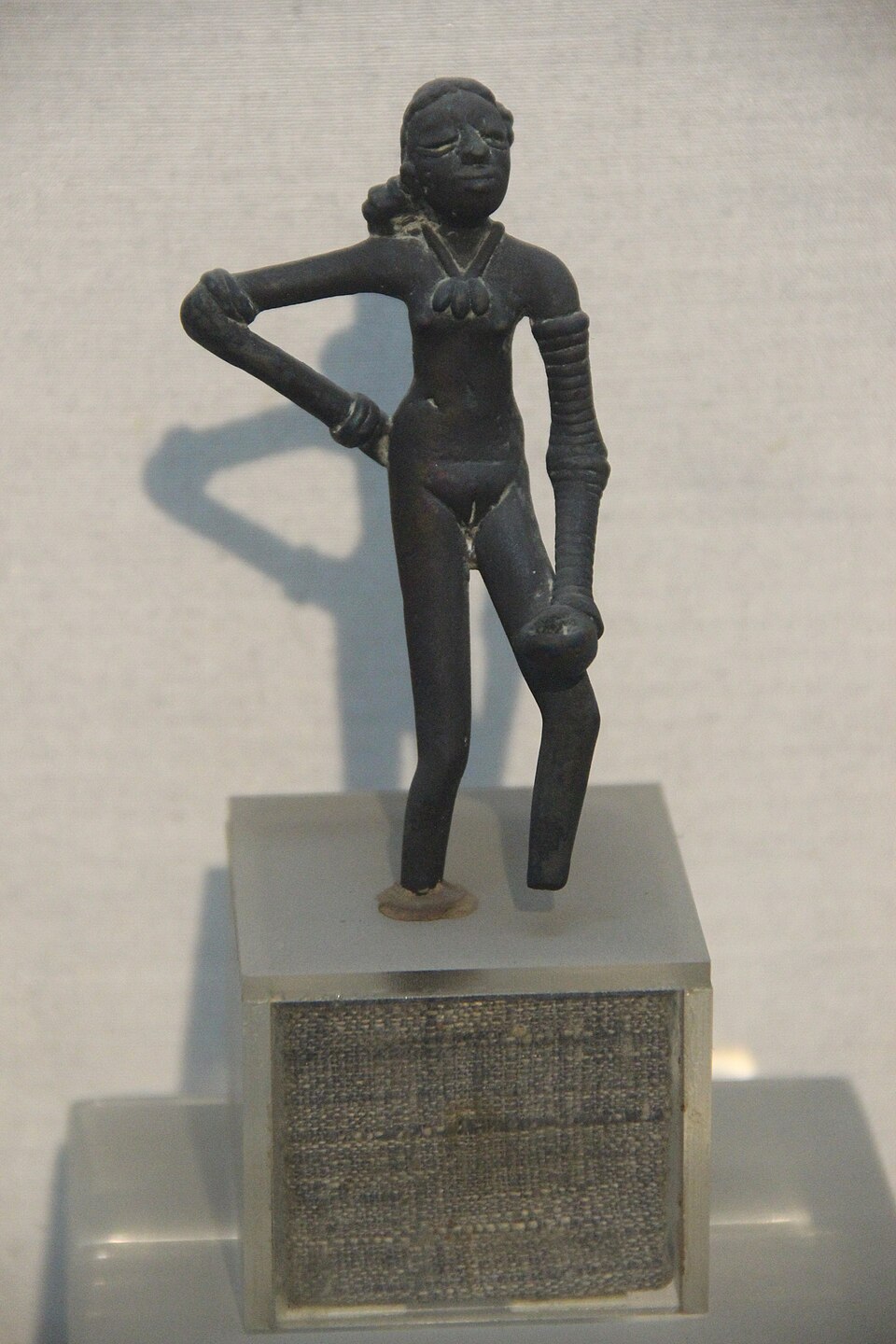
This language is very old. A small bronze figure from Mohenjo-daro, the famous "dancing girl", shows that dance mattered more than 4,000 years ago. The Rig Veda compares the dawn to a brightly dressed dancer.
In this chapter you will learn the grammar of that language: the old text called the Natyashastra, the key terms that every exam asks, and the test of what makes a dance classical. The next chapters then apply this grammar to each classical style and to folk dances.
Dance through time: the evidence
Why we need evidence. Dance vanishes the moment it ends. So historians reconstruct its past from objects, sculpture, painting and texts. Each kind of evidence tells us something different.
The early period. The bronze dancing girl of Mohenjo-daro and a broken Harappan torso in a dance pose are the first clues, as you saw in the Harappan art chapter. The Rig Veda uses words for dance (nrti) and dancer (nrtu). The Brahmanas mention dance and music together, and the epics describe dances on earth and in heaven.
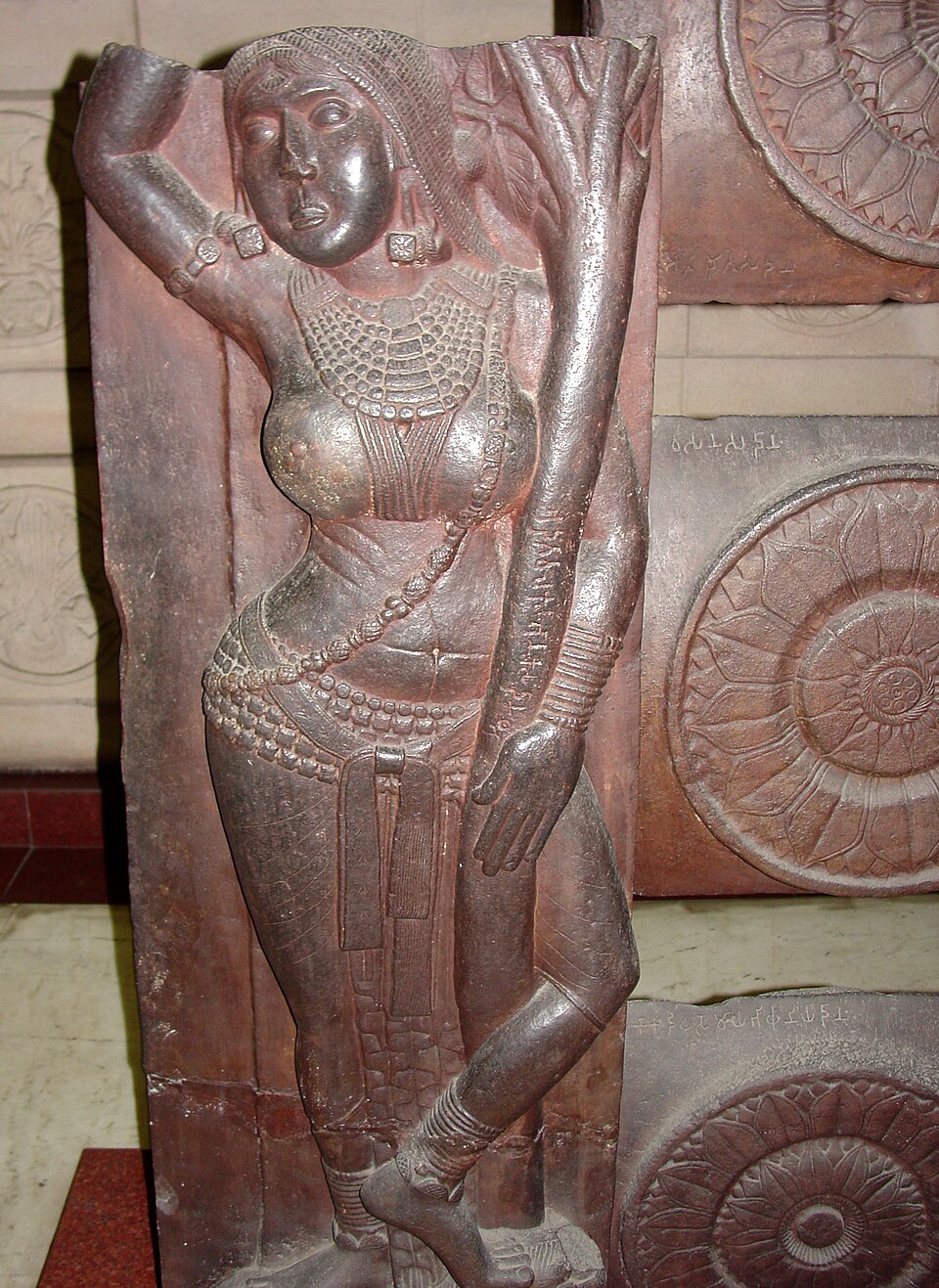
From the 2nd century BCE to the 9th century CE. This is when dance became a self-conscious art with rules. The Natyashastra was compiled. At the stupas of Bharhut, Sanchi and the Buddhist sites of Amaravati and Nagarjunakonda, yakshas and yakshis stand in dance poses, sometimes beside scenes of dancers with a full orchestra.
Gods who dance. In the same period, sculptors began to show Shiva, Durga, Saraswati and Ganesha in dancing forms, called nrittamurti. Shiva as Nataraja came to stand for the cosmic cycle of creation and destruction. Dance was so central to culture that sculptors carved it again and again.
From the 10th to the 18th century. Regional styles of architecture, painting, music and dance grew side by side with regional literature. This is the soil from which today's classical styles grew.
Three families of dance. Today we group Indian dance as classical, folk and tribal. The old word sangeet covered song, instrumental music and dance together, which is why the three are always studied as one family.
The Natyashastra: the rulebook of performance
What it is. The Natyashastra is the oldest surviving Indian treatise on performance. It is ascribed to the sage Bharata, and scholars date it somewhere between the 2nd century BCE and the 2nd century CE. Tradition calls drama the fifth Veda, a Veda that everyone could watch.
A book about drama, not only dance. The Natyashastra is first of all a book on natya, that is, drama. In its world, dance, music, poetry, costume and stage-building all serve one theatrical whole. That is why the theory of dance has to be picked out of a much larger theory of drama.
Why it was written. By Bharata's time, dance and drama had already fused. The text set down rules so that performers anywhere could share one technical language. It even claims that no knowledge, craft or art is absent from drama, and that the art would draw on every shastra.
The origin story. The text tells that Shiva asked the sage Tandu to teach dance to Bharata. From Tandu's teaching came tandava, the vigorous dance. The graceful lasya is associated with Parvati.
Why it still matters. Every classical style today claims roots in the Natyashastra. Its terms, such as abhinaya, rasa, bhava, nritta and nritya, are the vocabulary of every dance class and every exam question.
The grammar: nritta, nritya, natya
Three layers of one art. Medieval texts such as the Sangita Ratnakara and the Abhinaya Darpana divide dance into three layers. Learn them as a ladder, from pure rhythm to full drama.
| Term | What it means | Example |
|---|---|---|
| Nritta | Pure dance: movement and rhythm that express no mood and carry no meaning | Rhythmic footwork patterns set to a tala cycle |
| Nritya | Expressive dance: gestures and expressions that interpret sung words | A dancer miming a line of a devotional song |
| Natya | Drama: the full story told with dialogue, acting, music and dance | A dance-drama with several characters |
A second way to divide. The same texts also speak of tandava and lasya. Tandava is vigorous and forceful; lasya is soft and graceful. Dancers from every region use this shared vocabulary, even when they interpret it differently.
Two working heads. In practice, the technique can be reduced to two parts: nritta (pure dance) and abhinaya (dance that carries meaning). Most classical recitals move between the two, starting with rhythm and building up to storytelling.
Breaking the body into parts. The Natyashastra analyses the body very precisely. The angas (major limbs) are the head, chest, sides, hips and feet. The upangas (minor parts) are the eyes, eyebrows, nose, lips, chin and mouth.
From stance to sequence. The basic stances are called sthanas, and the basic leg movements charis. The text builds larger units from these, such as karanas, angaharas and rechakas. Indian dance is thus a chain of stylised poses linked within a rhythmic cycle.
What Indian dance avoids. Indian styles mostly avoid big leaps, apart from some parts of Kathakali and Chhau. They choose a limited set of movements and explore them to the full.
Abhinaya: four ways to carry meaning
What abhinaya means. The word abhinaya literally suggests "carrying towards": carrying the meaning to the audience. The Natyashastra describes four kinds. Together they explain how a dancer or actor communicates.
| Kind | Medium | In practice |
|---|---|---|
| Angika | The body: limbs, hands, face, eyes | Hand gestures (hastas) and glances |
| Vachika | Speech and song | Dialogue in drama; the sung text in dance |
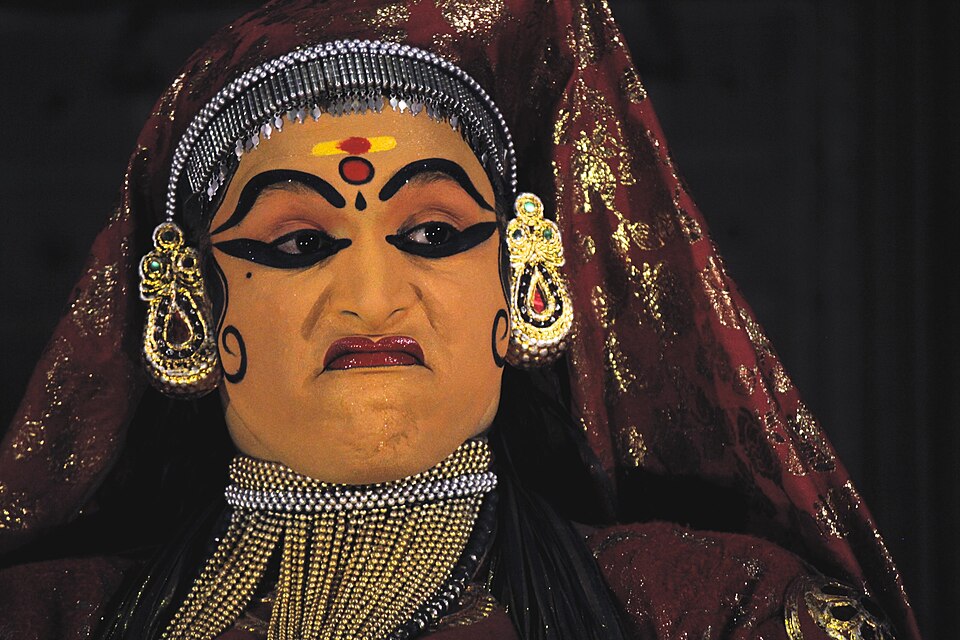
| Aharya | Costume, make-up, ornaments, props | Kathakali's painted face and headdress |
| Sattvika | Inner states shown involuntarily | Tears, trembling, change of colour |
How a solo dancer tells a story. In a solo, the dancer interprets each line of poetry in many different ways. One person may play the lover, the beloved and the friend, one after another, without changing costume. This follows the stylised stage way, natyadharmi.
Two ways of presenting. The Natyashastra names two modes. Natyadharmi is the stylised, theatrical way, full of conventions. Lokadharmi is the realistic way of the everyday world.
Four styles of mood. It also names four vrittis (styles): kaishiki (graceful), sattvati (grand), arabhati (energetic) and bharati (verbal). A classical dance is marked by a combination of these principles.
Hands and face matter most. Of all the parts of the body, abhinaya depends most on the hands and face, especially the eyes and eyebrows. That is why dance training spends years on hand gestures and expressions.
Rasa and bhava: the goal of it all
The question rasa answers. Why do we enjoy a sad song or a tragic story? Indian theory answers with rasa. The word means juice or flavour, and in art it means the taste of an emotion that the audience enjoys.
How rasa is produced. The performer shows a dominant state (sthayibhava), such as love or grief. They build it through many passing states (sancharibhavas), such as longing, worry or joy. The audience, watching with sympathy, tastes the emotion as rasa.
An everyday example. Think of a dancer showing a mother waiting for her child. Worry, hope, a smile at a sound, then fear again: these are passing states. Together they build one dominant feeling, motherly love, and you feel it as rasa.
The nine rasas. Exam books list nine rasas, the navarasa: shringara (love), hasya (laughter), karuna (pathos), raudra (anger), vira (heroism), bhayanaka (fear), bibhatsa (disgust), adbhuta (wonder) and shanta (peace). The Natyashastra itself treats eight; shanta was argued for by later theorists.
Why this matters for dance. Every technique in the chapter, from footwork to costume, exists to serve rasa. A dance that is technically perfect but leaves the audience untouched has missed its goal. This is the deepest idea that links all the classical styles.
From one grammar to many styles
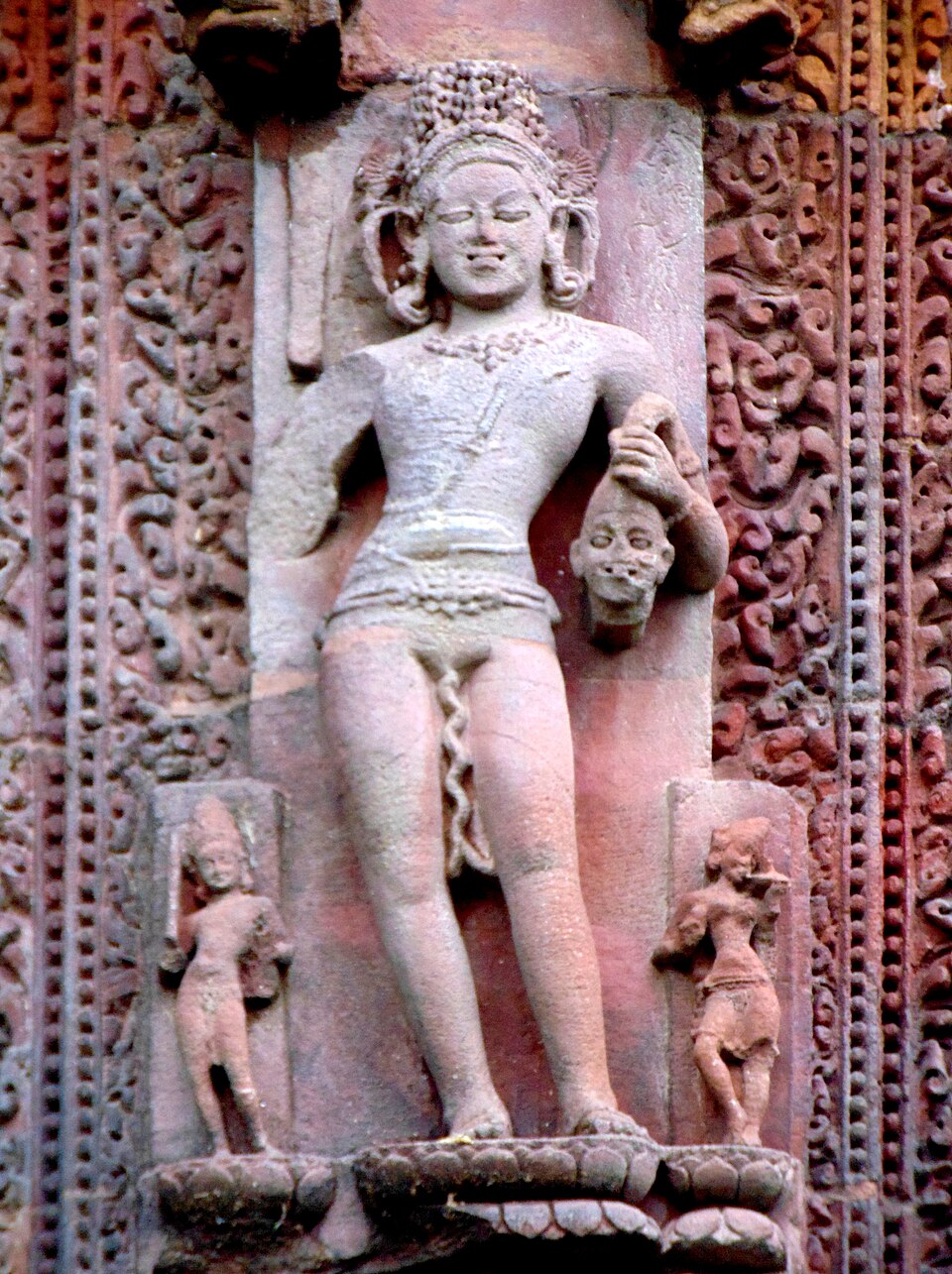
Sculptors as dance reporters. Temple walls show that sculptors watched dancers closely. On the temples of Bhubaneswar, such as the Rajarani, Parashurameshvara and Lingaraja, figures stand in the exact stances and movements that the Natyashastra describes. The Chandela temples of Khajuraho and the Paramara temple at Udayapur show solo dancers, groups and flying figures. Read more in the Odisha temples chapter.
Painters too. Murals at Bagh, Ajanta, Ellora and Panamalai show dance scenes, and miniature paintings carried the tradition forward. What no chronicle recorded in words, sculptors and painters recorded in stone, line and colour.
Poets and playwrights. Sanskrit drama shows how well writers knew dance. Bhasa, Kalidasa, Bhavabhuti and Harsha wrote plays that were never meant to depend on spoken words alone. By the 10th century, works such as Rajashekhara's Karpuramanjari show the musical play as a genre of its own.
New texts. Later, texts treated dance as an independent art. The Abhinaya Darpana became a standard work, and the Sangita Ratnakara of Sharngadeva and the Vishnudharmottara Purana followed similar lines. A famous passage in the Vishnudharmottara says that painting cannot be understood without dance, dance without instrumental music, and instrumental music without song.
Regional manuals, regional styles. From the 13th century, dance manuals appear from almost every region. They kept the Natyashastra's principles, but each region built its own vocabulary. This is how distinct classical styles were born, with roots in the period of roughly 1300 to 1800 CE.
Why this matters. India's classical dances are one family with many accents. They share a grammar but speak in different regional voices. This is a perfect example of unity in diversity for Mains.
What makes a dance classical?
A working test. There is no single legal definition of a "classical" dance. But scholars and institutions usually look for a set of features. Use this checklist in answers.
| Feature | Classical dance | Folk dance |
|---|---|---|
| Roots | Claims roots in the Natyashastra and later texts | Rooted in community life, seasons and rituals |
| Grammar | Codified steps, hand gestures and stances | Shared steps learned by joining in |
| Training | Years of training under a guru | Learned informally, from childhood |
| Performer | Often a solo artist or a small trained group | Often the whole community |
| Aim | Abhinaya and rasa for an audience | Celebration, worship, shared joy |
Temple and court. Classical dance grew in two settings. In temples it was part of ritual and worship, as in the dance of the temple dancers of the south and of Puri. In courts it became refined entertainment, as with Kathak in Mughal and Awadh courts.
Decline. In time, the hereditary women performers were looked down upon in society, and the dance lost respect. Reformers and "great music thinkers" worked to change this attitude, as the next chapters show.
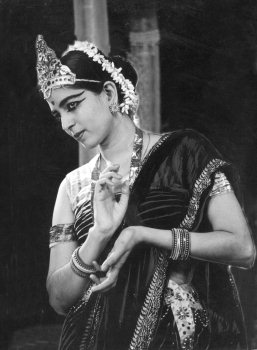
Revival. In the 20th century, the revival of classical dance became part of national pride in India's art. In Tamil Nadu, E. Krishna Iyer campaigned for the dance, Rukmini Devi gave her first performance in 1936, and Balasaraswati, from a hereditary family, performed outside the traditional setting in 1935. In Kerala, the poet Vallathol founded the Kerala Kalamandalam for Kathakali.
The official eight. Government cultural bodies count eight major classical dances: Bharatanatyam, Kathak, Kathakali, Kuchipudi, Manipuri, Mohiniyattam, Odissi and Sattriya. The Sangeet Natak Akademi, set up in 1953 as India's apex body for music, dance and drama, supports them, along with schools such as Kathak Kendra and groups like SPIC MACAY. You will meet each style and its revivers in Classical dances I and Classical dances II.
Mains lens: debates and practice
Debate 1: is "classical" a fair label? The label gives some dances prestige and funding. But it can make folk and tribal dances look "lesser", although they are equally old and skilled. Good answers treat the two as a continuum that constantly borrows from each other.
Debate 2: who owns a revival? The 20th-century revival saved classical dance. But in places it also moved the art away from the hereditary communities who had kept it alive. A balanced answer praises the revival and names this cost.
Debate 3: dance as heritage and soft power. UNESCO lists forms such as Kutiyattam, Chhau, Kalbelia, Mudiyettu, Sankirtana and Garba as intangible heritage of humanity. Dance festivals and cultural diplomacy carry India's image abroad. The challenge is to keep living traditions alive, not freeze them as museum pieces.
These are practice questions written by us, not past papers. Past questions from your exam appear in the PYQ panel.
| Angle | Question | Key points to cover |
|---|---|---|
| Theory | Explain the concepts of nritta, nritya and natya, and the place of abhinaya and rasa in Indian classical dance. | Definitions with examples; four abhinayas; bhava to rasa; navarasa. |
| History | Trace the evolution of Indian dance from the Harappan period to the regional classical styles. | Dancing girl, Vedas, Natyashastra, stupas and temples, regional manuals, 1300-1800, revival. |
| Sources | How do sculpture and painting help us reconstruct the history of Indian dance? | Yakshis, nrittamurti, Bhubaneswar and Khajuraho, Ajanta and Bagh murals, miniatures. |
| Society | Discuss the social decline and the 20th-century revival of Indian classical dance. What were its gains and costs? | Temple and court, stigma, Krishna Iyer, Rukmini Devi, Balasaraswati, Kalamandalam, hereditary communities. |
Answer plan for the theory question. Open with one line on the Natyashastra as the shared source of Indian dance theory. In the body, define nritta, nritya and natya with one example each, list the four abhinayas, and explain how bhava becomes rasa. Conclude that this shared grammar gives India's many regional styles their common identity.
Quick revision
- Earliest evidence: bronze dancing girl (Mohenjo-daro); Rig Veda's dawn as a dancer; Brahmanas and epics.
- Natyashastra: sage Bharata, 2nd c BCE-2nd c CE; a treatise on drama; "fifth Veda"; Tandu taught tandava; lasya with Parvati.
- Nritta = pure dance, no meaning; nritya = expressive dance to song; natya = drama. Tandava vigorous, lasya graceful.
- Angas (head, chest, sides, hips, feet); upangas (eyes, brows, nose, lips, chin); sthana = stance; chari = leg movement.
- Four abhinayas: angika, vachika, aharya, sattvika. Natyadharmi stylised, lokadharmi realistic. Four vrittis: kaishiki, sattvati, arabhati, bharati.
- Sthayibhava + sancharibhavas -> rasa in the audience. Navarasa; shanta added later.
- Later texts: Abhinaya Darpana, Sangita Ratnakara (Sharngadeva), Vishnudharmottara Purana; regional manuals from the 13th c; styles rooted in 1300-1800.
- Revival: E. Krishna Iyer, Rukmini Devi (1936), Balasaraswati (1935), Vallathol (Kerala Kalamandalam); Sangeet Natak Akademi 1953.
- Eight classical dances: Bharatanatyam, Kathak, Kathakali, Kuchipudi, Manipuri, Mohiniyattam, Odissi, Sattriya.
- UNESCO ICH: Kutiyattam 2008; Chhau, Kalbelia, Mudiyettu 2010; Sankirtana 2013; Garba 2023.