

UPSC CSE · Module 58 · Mains depth · 20 min
Forests, mines and dams: deforestation, development projects and fair rehabilitation
What UPSC CSE asks from this chapter
Syllabus lines this chapter covers:
- Prelims Paper I: General Studies · Economic and Social Development-Sustainable Development, Poverty, Inclusion, Demographics, Social Sector Initiatives, etc.
- Prelims Paper I: General Studies · General issues on Environmental ecology, Bio-diversity and Climate Change - that do not require subject specialization.
- Mains Paper III: General Studies II (Governance, Constitution, polity, social justice, IR) · Issues relating to poverty and hunger.
- Mains Paper IV: General Studies III (Technology, economy, environment, security, disasters) · Inclusive growth and issues arising from it.
- Mains Paper IV: General Studies III (Technology, economy, environment, security, disasters) · Conservation, environmental pollution and degradation, environmental impact assessment.
- Mains Paper IV: General Studies III (Technology, economy, environment, security, disasters) · Disaster and disaster management.
UPSC CSE questions from this module are being sorted into our bank.
Read at full depth: basics, the standard layer and the Mains analysis.
Start from zero: the forest above the coal
Imagine a dense sal forest in central India. A tribal village has lived there for generations, collecting mahua flowers, tendu leaves and firewood, and grazing cattle. Below the forest floor lies a seam of coal that could fuel a power plant for decades.
The country needs that coal for electricity, and the electricity for factories, schools and homes. But mining it means cutting the forest, moving the village and changing the streams that feed the fields downstream. Who should decide, and who should gain?
This is one of India's hardest development questions. The richest forests, the largest mineral deposits and the river valleys best suited to dams often lie in the same places, and these are often the homelands of tribal communities. Choices about them affect biodiversity, water, climate and the lives of millions of people.
This chapter explains why forests matter, what drives deforestation, and how mines and dams affect forests and people. It then looks at displacement and rehabilitation, the land acquisition law and ways to conserve forests with people rather than against them. The forest laws themselves are covered in the chapter on forest laws.
Why forests matter: three kinds of value
Economic value. Forests supply timber, fuelwood, fodder, fibre, fruits and medicinal plants. They also give non-timber forest products (NTFPs) such as gums, honey, resins, tendu leaves and mahua flowers, on which many tribal families depend for cash income. Wood and bamboo pulp are used to make paper and rayon.
Ecological value. Forests moderate climate by influencing the water and carbon cycles. Trees store carbon in their biomass, so forests act as a carbon sink, and burning or clearing them releases that carbon. They also check soil erosion, reduce landslides, protect watersheds and keep streams flowing through the dry season.
Biodiversity value. Forests are the greatest store of biodiversity on land. Tropical rainforests cover less than 7% of the Earth's land surface but hold more than half of all known species. Losing them means losing species before we even know their uses, as explained in the chapter on threats to biodiversity.
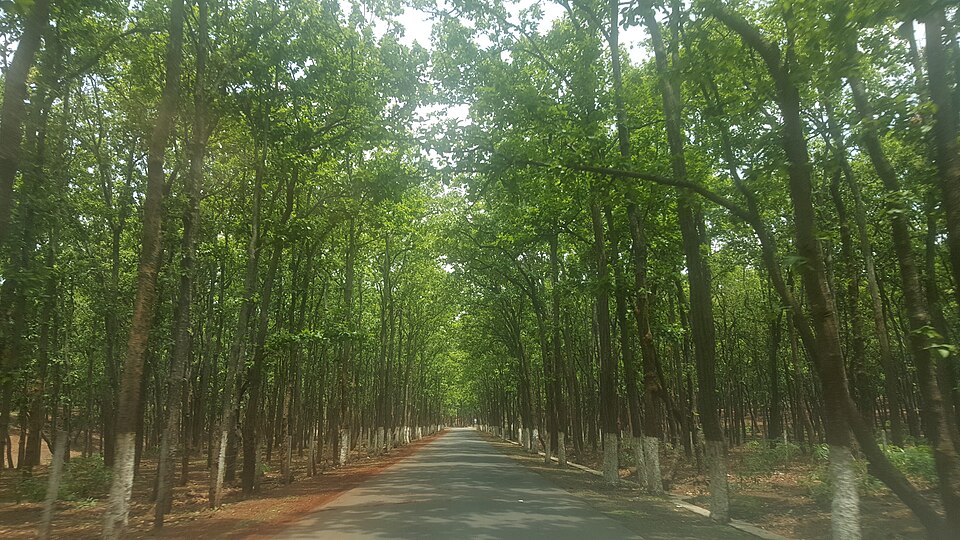
Social and cultural value. Forests have aesthetic, recreational and spiritual value, and many communities protect sacred groves. For forest-dwelling communities, the forest is home, food store, pharmacy and place of worship. Ignoring this value is a major reason why development projects in forests face resistance.
Deforestation: causes and consequences
What deforestation means. Deforestation is the permanent removal or destruction of natural forests. It is one of the world's most pressing land-use problems, and most of it now happens in the tropics. In India, forest cover is about 21.76% of the geographical area, against a long-standing national goal of one-third, as explained in the chapter on forest laws.
Causes. A growing population needs land for farms, settlements, mining, roads and railways, and more timber, firewood and paper. Forest fires, natural or human-made, destroy trees, seeds and soil life. Overgrazing compacts the soil and stops young trees from growing, and pests can kill large stands of trees.
Consequences on land and water. With less cover, rain runs off quickly instead of soaking in. This causes soil erosion, more floods, silting of rivers and reservoirs and a falling water table. Loss of fertile topsoil also lowers crop yields downstream.
Consequences for life and climate. Animals that live in trees lose their habitat, and plant, animal and microbial diversity declines. Burning and clearing forests add carbon dioxide to the air and reduce the planet's ability to absorb it. Local people face scarcity of fuelwood and forest products, which lowers their quality of life.
Mines: minerals under the forest
The overlap problem. In India, forests often lie in areas rich in coal, iron ore and bauxite. Mineral-based industries such as steel plants and alumina refineries are also set up there. Many of the top mineral-producing districts are tribal-dominated and have more forest than the national average, so mining almost always means a clash with forests and forest people.
How mining harms the environment. Open-cast mining removes the forest and topsoil completely and leaves deep pits and waste dumps. Dust from mines and transport pollutes the air, and runoff from waste dumps can pollute streams and groundwater. Mining also changes drainage, so springs and streams that fed farms may dry up.
Why it cannot simply be stopped. India needs coal for power, iron for steel and bauxite for aluminium, and mining gives jobs and revenue to poor states. So the question is how and where to mine, not whether to mine at all. Long-term ecological gains should not be sacrificed for short-term profit.
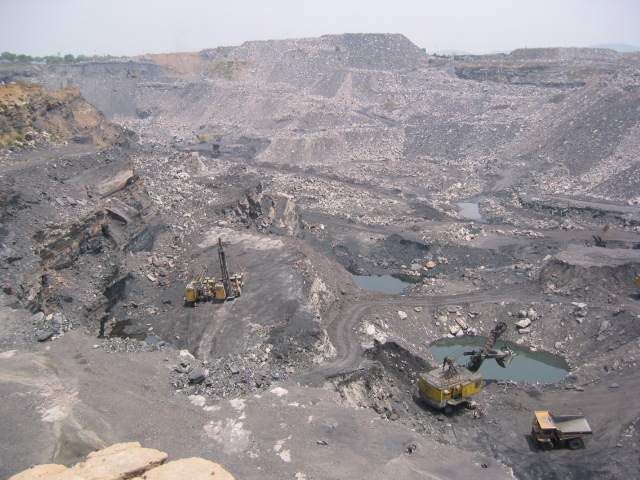
Better mining. Responsible mining avoids the densest forests and key wildlife corridors, follows clearance conditions and restores land after mining. Mined-out land can be reclaimed with soil, water bodies and native trees. Clearances under the forest and environment laws, explained in the chapter on pollution laws and clearances, are meant to enforce these conditions.
Dams: water and power, at a price
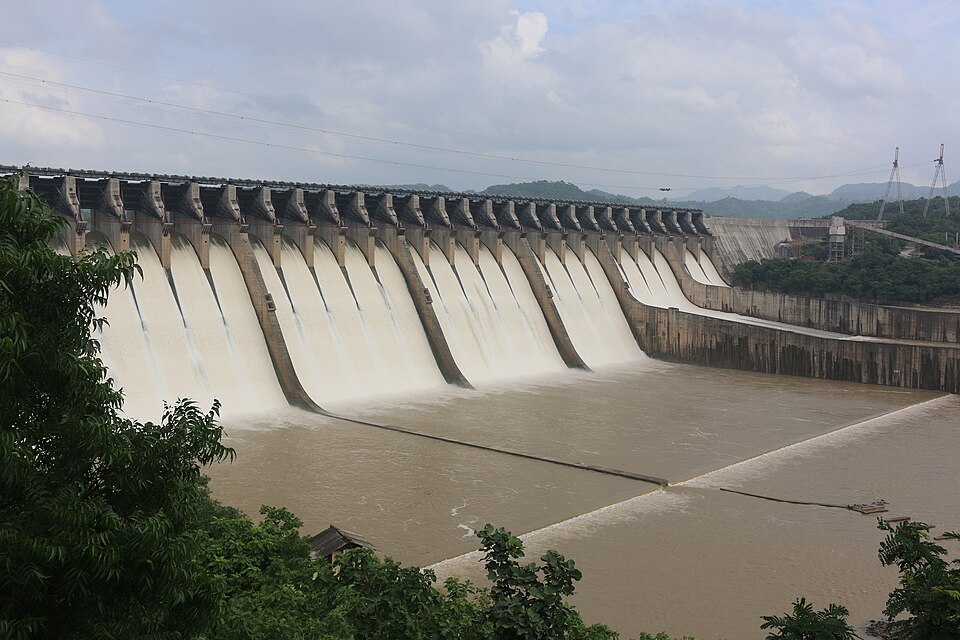
Why dams are built. Large dams store monsoon water for irrigation, drinking water and hydropower, and can reduce floods downstream. Forests often cover the steep sides of river valleys that are ideal for dams. India built many large dams after independence to feed a growing population.
The costs upstream. A reservoir submerges forests, farmland and villages, displacing thousands of people, many of them tribal. Rotting vegetation in new reservoirs can release methane, and large reservoirs in seismic zones may even induce earthquakes, as explained in the chapter on disasters. Wildlife habitats are split and migration routes blocked.
The costs downstream. Dams trap silt that would otherwise enrich farmland and build deltas, so deltas can shrink and coasts erode. Reduced flows harm fish, wetlands and people who depend on the river. Fish such as the hilsa need to swim upstream to breed, and dams block their path.
Big versus small. Because of these costs, there is growing interest in small hydro projects, check dams and local water harvesting. These cause less displacement and can be managed by local people. Large dams may still be needed in some places, but only after careful study of their full costs and benefits.
Displacement and rehabilitation
Poverty amid plenty. Tribal areas are rich in forests, minerals and the watersheds of major rivers, yet tribal people are among India's poorest. Development projects such as dams, mines and industries have alienated many from their land. Their economy, based on farming, shifting cultivation and forest produce, is informal and closely tied to the land.
Why cash compensation fails. When land is acquired, people often receive cash, which communities used to an informal, land-based economy may not know how to invest. The money may be spent quickly, leaving them landless and jobless. Common property resources, such as grazing land, forests and village ponds, are often not compensated at all.
From compensation to rehabilitation. True rehabilitation means rebuilding livelihoods, not just paying for land. It includes land for land where possible, skills training, jobs in the project, housing with water and schools, and keeping communities together. People who give up land should be treated as stakeholders who share in the project's benefits, as noted in the chapter on disasters.
The 2013 land law. The Right to Fair Compensation and Transparency in Land Acquisition, Rehabilitation and Resettlement Act, 2013 brought rehabilitation and resettlement into the land acquisition law itself. Its employment provisions apply to those whose land was acquired after 31 December 2013. In Scheduled Areas, acquisition needs the prior consent of the Gram Sabha, Panchayat or Autonomous District Council.
Monitoring. Under the Act, a National Monitoring Committee for rehabilitation and resettlement has been set up under the Secretary, Department of Land Resources. Forest rights recognised under the Forest Rights Act, explained in the chapter on forest laws, add another safeguard for forest dwellers.
Conserving forests with people
Planting and protecting. Trees can be planted on waste, degraded and marginal land, along roads, railways and canals, so that pressure on natural forests falls. Deforested areas need to be reforested with suitable native species. Wood substitutes, such as other building materials and cleaner cooking fuels, also cut demand for timber and fuelwood.
Watching and enforcing. Remote sensing makes it possible to spot deforestation hotspots and track changes quickly. Effective fire-fighting systems and strict enforcement against illegal felling protect what remains. Monitoring the rate, location and causes of forest loss is the first step to managing it.
Social forestry and agro-forestry. Social forestry aims to meet local needs for fuel, fodder, fruit and small timber by planting fast-growing trees on village land, field boundaries and roadsides. Agro-forestry combines trees with crops on the same farm, giving income and protecting soil. Both reduce pressure on natural forests.
Joint Forest Management. Local people support conservation only if they see some benefit from it. Joint Forest Management (JFM) began as an informal arrangement between communities and the forest department in 1972 in Midnapore district of West Bengal. Under JFM, forest protection committees of local people help restore and guard forests in return for a share of the benefits.
Respecting rights. All those with a stake in a forest should be involved in planning, management and benefit sharing. Recognising the traditional rights of forest dwellers reduces conflict between customary and statutory law. Forests protected with people tend to last longer than forests protected against them.
Mains lens: three live debates on forests, mines and dams
1. Poverty amid plenty: who gains from the minerals? Many of India's richest coal and iron ore deposits lie under dense forests in tribal areas. Mining brings royalty, steel, power and jobs for the nation. Yet the districts where the minerals are found often remain among the poorest, with damaged forests, polluted rivers and people who have lost land and forest livelihoods.
One side argues that the country cannot leave its minerals in the ground, because industry and energy depend on them. The other side argues that mining without consent and fair sharing turns local people into the losers of national growth. A balanced answer supports mining only with prior consent in Scheduled Areas, a fair share of benefits for local people, and strict restoration of mined land.
2. Large dams: temples or tombs? Large dams store water for irrigation and cities, generate hydropower and control floods. These benefits helped India grow food and power after independence. But dams also flood forests and villages, trap silt, change river flow downstream and displace large numbers of people, often tribal families.
Supporters say that well-planned dams remain vital, especially as climate change makes rainfall more erratic. Critics say that the full costs, including displacement and the loss of river ecosystems, were rarely counted honestly. In Mains, argue for full cost-benefit studies, smaller and decentralised options where possible, and rehabilitation that restores livelihoods, not just cash.
3. Cash or a new life? Displaced people are often paid cash for their land. But families whose lives depended on forests, common land and a local barter economy may not know how to use a lump sum, and the money can vanish quickly. Losing access to common property, like grazing land and forest produce, is a loss that cash rarely replaces.
The 2013 land acquisition law tried to fix this by making rehabilitation and resettlement part of every acquisition and by requiring Gram Sabha consent in Scheduled Areas. Supporters say this has made displacement fairer and slower. Critics say that projects now face delays and that States sometimes find ways around the law. A balanced answer says that land for land, skills, housing and community resettlement should come before cash.
Why it matters: Forests, mines and dams are where India's development and environment debates become most personal. Mains rewards answers that count the people who pay the price as carefully as the tonnes or megawatts gained.
Mains lens: two kinds of questions and how to answer them
Type 1: "How far has the law improved things?" (rehabilitation). Example: "How far has the 2013 land acquisition law improved the rehabilitation of displaced people?"
- Intro: Explain that earlier acquisition often paid cash and moved people without rebuilding their livelihoods.
- Body, what the law added: Show that the 2013 Act made rehabilitation and resettlement part of acquisition, required prior consent of the Gram Sabha or council in Scheduled Areas and set up a national monitoring committee.
- Body, the gains: Point out that it gave affected families a legal claim beyond the price of land.
- Body, the gaps: Note delays in projects, uneven State rules and the loss of common resources that are hard to compensate.
- Conclusion: Conclude that the law changed the starting point from cash to rehabilitation, and that its spirit depends on honest use.
Type 2: "Evaluate a model" (participatory conservation). Example: "Evaluate Joint Forest Management as a model of participatory conservation."
- Intro: Explain that Joint Forest Management began informally in 1972 in Midnapore, West Bengal, where villagers and forest staff protected forests together.
- Body, how it works: Describe forest protection committees of local people who guard forests and share in their produce.
- Body, the strengths: Show that it revived degraded forests, reduced conflict and gave villagers a stake in conservation.
- Body, the weaknesses: Point out that the forest department often keeps the real power, and that benefits can be slow or unequal within villages.
- Conclusion: Conclude that it proved that people can protect forests, and that true partnership needs secure rights and fair sharing.
Linking across papers. This chapter feeds GS-III (environment, infrastructure and mining), GS-II (tribal welfare, Scheduled Areas and governance) and GS-I (resources and their distribution). Displacement and development also make strong Essay and GS-IV themes.
Mains practice: six questions, six angles
These are practice questions we have written, not past papers. Past questions for each exam are in this module's PYQ panel.
| Angle | Question | How to approach |
|---|---|---|
| Conflict | "Poverty amid plenty" describes India's tribal regions. Examine the role of mining and dams. | Explain the overlap of forests, minerals and tribal land. Cover land alienation, cash compensation and lost commons. |
| Law | How far has the 2013 land acquisition law improved rehabilitation of displaced people? | Cover R&R inside the law, Gram Sabha consent in Scheduled Areas and the monitoring committee. Note gaps in implementation. |
| Dams | Critically examine the environmental costs and benefits of large dams. | List irrigation, power and flood control against submergence, silt trapping, fish and displacement. Suggest small hydro and full cost-benefit study. |
| Mining | Can mining and forest conservation coexist in India? | Explain why mining is needed and how it harms forests. Suggest no-go areas, clearances and land reclamation. |
| Community | Evaluate Joint Forest Management as a model of participatory conservation. | Give its origin in Midnapore and the committees. Discuss benefit sharing, and link to forest rights. |
| Essay | "Development that displaces is not development." | Balance national needs with local costs. Use mines, dams and fair rehabilitation, and end with people as stakeholders. |
How to use this table: each answer should first explain the what, then give the why from this chapter, and end with a way forward.
Quick revision
- Forest values: economic (timber, NTFPs), ecological (carbon sink, soil, water), social; rainforests <7% land, >50% species.
- Deforestation: farms, settlements, mining, roads, fire, grazing, pests → erosion, floods, falling water table, biodiversity loss, CO₂.
- Forests, minerals and tribal homelands overlap; mining harms land, air and water; reclamation needed.
- Dams: irrigation, power, flood control vs submergence, displacement, silt trapping, fish, induced quakes.
- R&R: cash fails; commons uncompensated; 2013 Act: R&R built in, Gram Sabha consent in Scheduled Areas, National Monitoring Committee (Secretary, DoLR).
- Conservation: plantations, substitutes, remote sensing, social and agro-forestry, JFM (1972, Midnapore).