

UPSC CSE · Module 52 · Mains depth · 21 min
Start from zero: environment, ecology and the ladder of life
What UPSC CSE asks from this chapter
Syllabus lines this chapter covers:
- Prelims Paper I: General Studies · General issues on Environmental ecology, Bio-diversity and Climate Change - that do not require subject specialization.
UPSC CSE questions from this module are being sorted into our bank.
Read at full depth: basics, the standard layer and the Mains analysis.
Start from zero: what is around you?
Stand near any village pond on a summer morning and simply look. You will see the sun on the water, mud at the edges, a few stones and the air moving over everything. You will also see lotus leaves, small fish, frogs, a heron waiting patiently and perhaps a buffalo cooling itself in the shallow water.
Now ask a simple question: can any of these living things manage alone? The fish need clean water and oxygen, and the lotus needs sunlight and mud. The heron needs the fish, while the buffalo needs the water and the grass along the bank.
So everything around the pond is connected to everything else. The living things depend on the non-living things, and they also depend on one another. This web of connections is what we call the environment, and the science that studies it is called ecology.
In this chapter we will build the basic vocabulary of environmental studies, step by step. We will ask what the environment is made of, where the word "ecology" came from, how life is arranged from a single fish to the whole planet, and why every species has both an "address" and a "job". Every later chapter in this subject stands on these few ideas.
The two parts of the environment: living and non-living
Look again at the pond and sort what you saw into two baskets. In the first basket go the sun, the water, the mud, the stones, the air and the temperature of the day. In the second go the lotus, the fish, the frogs, the heron, the buffalo and the tiny microbes you cannot see.
The first basket holds the abiotic or non-living components of the environment. These include physical factors such as sunlight, temperature, rainfall and humidity, and substances such as water, soil, minerals and gases like carbon dioxide, oxygen and nitrogen. The second basket holds the biotic or living components: plants, animals and micro-organisms.
Why do we split it this way? The split is useful because the two parts play different roles. The abiotic part supplies energy and raw materials, while the biotic part uses them, changes them and passes them on. A plant, for example, takes sunlight, water and carbon dioxide from the abiotic basket and turns them into food that the whole biotic basket depends on.
The two parts keep changing each other. Rain decides which plants can grow, but forests in turn hold soil and influence local rainfall and temperature. Decomposers such as bacteria and fungi break down dead plants and animals and return minerals to the soil, so the living part constantly feeds the non-living part. That two-way exchange is the heart of every environmental question you will study, from pollution to climate change.
Ecology: a science of relationships
Once we see that everything is connected, we need a science that studies the connections themselves. Ecology is the scientific study of the relationship of living organisms with each other and with their environment. Notice that it studies relationships, not just lists of plants and animals.
Where did the word come from? The term was first coined in 1869 by the German biologist Ernst Haeckel. He built it from two Greek words: oikos, meaning "home", and logos, meaning "study". So ecology literally means "the study of the home", and the home here is the whole Earth with everything living in it.
Why was a new science needed? Biology had long studied organisms one at a time, by their shape, their parts and how their bodies work. But a fish cannot be understood fully without the pond, and a tiger cannot be saved without its forest and its prey. Ecology grew because people realised that the most important questions lie in the links between living things and their surroundings.
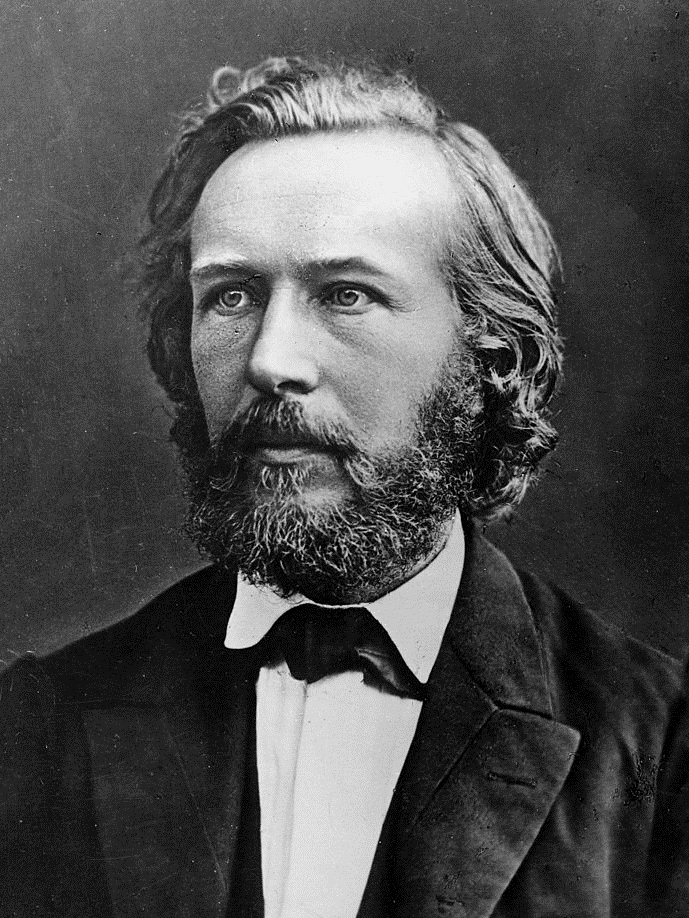
A second key word came later. In 1935 the British scientist A.G. Tansley coined the term ecosystem, for a living community together with its non-living environment working as one unit. You can explore it fully in the chapter on the ecosystem. For now, remember that Haeckel gave us "ecology" and Tansley gave us "ecosystem".
Why it matters today. Ecology is the scientific base of almost every environmental policy, from protecting wildlife to cleaning rivers. When a dam is planned or a forest is to be cleared, the question is always ecological: who depends on whom, and what will break if one link is removed? This is why UPSC treats ecology as the starting point of the environment syllabus.
The ladder of life: from one fish to the whole planet
Ecologists study life at different sizes, and it helps to picture these sizes as the steps of a ladder. Each step contains the one below it. Let us climb the ladder using our village pond.
- Organism. A single rohu fish is one organism, and the organism is the basic unit of study in ecology.
- Population. All the rohu fish in the pond together form a population. A population is a group of freely interbreeding individuals of the same species living in a specific area at a given time.
- Community. The rohu, the frogs, the lotus, the heron and the microbes together form a community. A community is a group of organisms of different species that live in an area and interact with each other.
- Ecosystem. Add the water, mud, sunlight and air to the community, and you get the pond ecosystem: living and non-living parts interacting as one unit.
Climbing higher. The ladder does not stop at the pond. A biome is a large community unit, marked by a major type of vegetation and its animals, found in a specific climatic region, such as a tropical rain forest or a desert. Biomes are basically terrestrial; water bodies are instead grouped by how salty they are, into freshwater and marine systems.
At the top stands the biosphere, the part of the Earth where life exists, covering land, water and air. Every organism on the planet belongs to this single, connected system. So when a pollutant spreads through the oceans or the air, it can reach life far from where it started.
Why does the ladder matter? Each level raises its own questions and needs its own policies. Protecting a tiger (organism) is about poaching, while protecting tigers (population) is about numbers and breeding, and protecting the forest community is about habitat, prey and water. Many policy mistakes happen when a problem at one level is treated with a tool meant for another.
Habitat: the address of a species
Every living thing lives somewhere, and that "somewhere" has a name. Habitat is the physical environment in which an organism lives. A frog's habitat is the edge of the pond, and a camel's habitat is the desert.
What makes a place a habitat? A place becomes a home only when it offers four things: space, food, water and cover or shelter. If even one of these is missing, the species cannot live there for long. This simple list explains why a forest with plenty of trees but no water holes cannot support elephants.
The four big habitats. On the largest scale, life uses four major habitats: terrestrial (land), freshwater, estuarine (where rivers meet the ocean) and ocean. Each one poses different challenges, such as drought on land, low salt in rivers, changing salt in estuaries and high salt in the sea. So the plants and animals of each habitat look and behave very differently.
Habitats can be surprisingly small. The human gut is the habitat of a tapeworm, and a rotting log is the habitat of a fungus. This reminds us that a habitat is defined by the organism's needs, not by its size.
Why it matters for policy. Loss of habitat is one of the biggest reasons species decline, because an animal cannot survive without its address. This is why conservation laws protect places, such as national parks and wetlands, and not only the animals themselves. When a forest is cut into pieces by roads, each piece may become too small to supply all four needs.
Niche: the job of a species
If habitat is the address, what does a species actually do at that address? Ecologists call this its niche. A niche is the sum of all the activities and relationships of a species by which it uses the resources in its habitat to survive and reproduce. It includes what the species eats, when and where it feeds, where it shelters and how it affects others.
Address and profession. A neat way to remember the difference is this: habitat is the species' address, and niche is its profession. Two people can live in the same building but do very different jobs. In the same way, many species share one pond but each earns its living differently.
The rule of one niche. No two species in a habitat can have exactly the same niche. If two species try to live in the same way, using the same food at the same time and place, they compete until one of them is displaced. So nature is full of small differences that let species share a place without fighting all the time.
How species share a place. Different insects feed on different parts of the same plant: some on leaves, some on flowers, some on roots. In a forest, plants grow to different heights, so each layer catches light in its own way. For animals, the niche depends mainly on food and shelter, while for plants it depends mainly on moisture and nutrients such as nitrogen and phosphorus.
Why it matters. When an alien species with a similar niche enters a habitat, it can push out a local species that does the same job. When a species disappears, its job may be left undone, so the whole system can change. Understanding niches therefore helps us predict what will happen when we add or remove a species.
Adaptation and species: how life fits its home
We have seen that each species has an address and a job. But how does a species become so well suited to them? The answer lies in adaptation and in the slow formation of new species.
Adaptation. An adaptation is the appearance, behaviour, structure or way of life of an organism that allows it to survive in a particular environment. The thick fur of a mountain animal, the stored water in a cactus stem and the night-time hunting of desert animals are all adaptations. Each one solves a problem that the habitat poses.
What is a species? A species is a group of similar populations whose members can interbreed and produce fertile offspring. The word "fertile" matters here, because some different species can mate but their young cannot reproduce. So the ability to produce fertile young is the test that keeps species separate.
How new species form. Variations appear among individuals by chance, and competition and natural selection decide which variations survive, an idea set out by Darwin and Wallace in 1859. The most common way a population splits into new species is geographic isolation. When a barrier such as a river, a mountain or a sea divides a population, the two groups change separately over many generations until they can no longer interbreed.
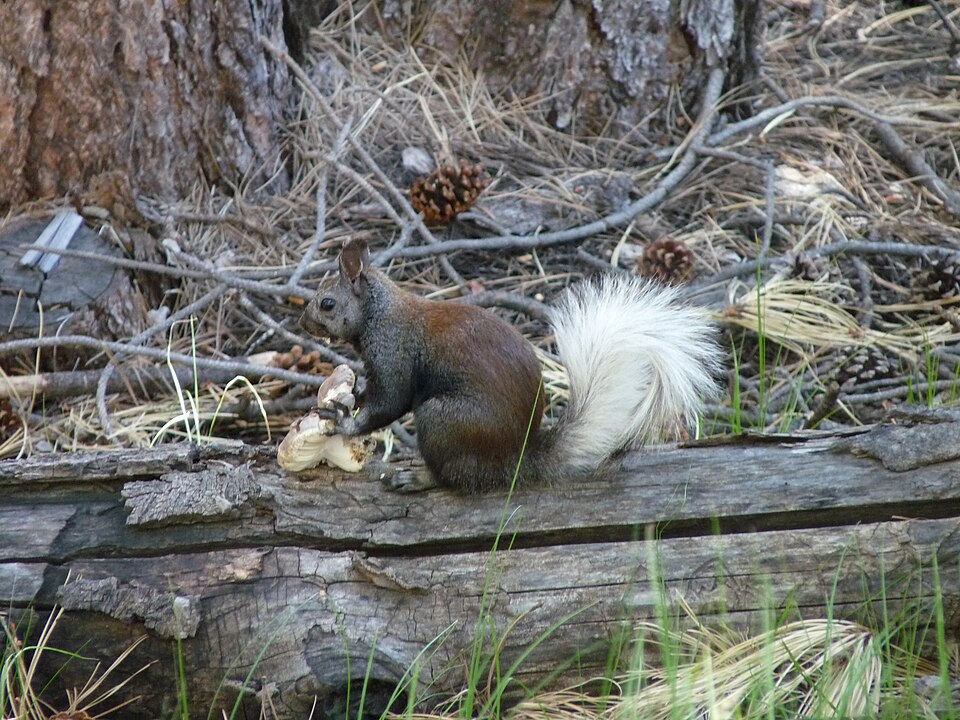
A real example. In North America, a deep river canyon split one squirrel population into two groups living on opposite rims. Over time the two groups became distinct forms, now known as the Kaibab and Abert squirrels. This example shows how landscape itself can create new species.
Why it matters today. Roads, dams and cities now act as new barriers that cut populations into small, isolated groups. Small groups lose genetic variety and adapt less well to change, so they face a higher risk of dying out. This is why wildlife corridors that reconnect habitats have become an important conservation tool.
Mains lens: why these basics shape policy
Mains rarely asks you to define "habitat" in isolation. Instead, it asks why a dam, a highway or a mine is harmful, and the honest answer always uses these basic ideas. So learn to turn each concept into an argument.
1. The connected-web argument. Because the biotic and abiotic parts keep changing each other, a change in one part spreads to others. Clearing a forest changes soil, water flow and local climate, and these changes then affect farms and towns downstream. Use this argument whenever a question asks about the wider impact of a project.
2. The habitat argument. A species needs space, food, water and shelter together, so protecting animals without protecting places does not work. Breaking a forest into small pieces can remove one of these needs even when many trees remain. This supports answers on protected areas, corridors and land-use planning.
3. The level-of-organisation argument. A policy must match the level of the problem. Anti-poaching action protects individual animals, but only habitat and prey protection can save a population or a community. Use this to judge whether a scheme is aimed at the right level.
4. The niche argument. Each species does a job, so removing or adding one can change the whole system. This explains the damage done by invasive species and the risks of losing pollinators or decomposers. It also gives you a scientific reason to value species that seem unimportant to people.
Linking across papers. These ideas feed GS-III (environment and conservation), GS-I (geography of natural regions) and the Essay paper, where themes such as "man and nature" are common. A short ecological explanation at the start of an answer makes the rest of the argument stronger.
Mains practice: six questions, six angles
These are practice questions written by us, not past papers. Past questions from each exam appear in the PYQ panel of this module.
| Angle | Question | Key points to cover |
|---|---|---|
| Concept | What is ecology? Why did it emerge as a separate science? | Define ecology as the study of relationships and give Haeckel's 1869 coinage. Then explain that organisms cannot be understood or protected apart from their surroundings. |
| Components | Explain the interaction between the biotic and abiotic components of the environment with examples. | List both kinds of components with examples. Then show the two-way exchange through photosynthesis, decomposition and the effect of forests on soil and water. |
| Levels | Distinguish between population, community and ecosystem. Why does the distinction matter for conservation? | Define each level using the pond example. Then show that saving a population or community needs habitat and prey protection, not only action against poaching. |
| Habitat | Habitat loss is a greater threat to wildlife than hunting. Discuss. | Explain the four needs of space, food, water and shelter, and show how fragmentation removes them. Then weigh this against hunting and suggest protected areas and corridors. |
| Niche | Differentiate between habitat and niche. How does the niche concept explain the impact of invasive species? | Use the address and profession comparison and the rule that two species cannot share one niche. Then explain how an invader with a similar niche can displace a native species. |
| Way forward | How can infrastructure development be made more ecologically sensitive? | Explain how roads and dams fragment habitats and isolate populations. Then suggest corridors, careful route planning and protecting key habitats before construction begins. |
How to use this table: each answer should first explain the what, then give the why from this chapter, and end with a way forward.
Quick revision
- The environment has abiotic (non-living) and biotic (living) components that keep changing each other.
- Ecology is the study of relationships among organisms and with their environment. Ernst Haeckel coined the word in 1869, from oikos (home) and logos (study).
- A.G. Tansley coined "ecosystem" in 1935.
- The ladder of life runs organism → population → community → ecosystem → biome → biosphere.
- A population is one species in one area at one time, while a community is many species living and interacting together.
- Habitat is the address, with four needs: space, food, water and shelter. The four major habitats are terrestrial, freshwater, estuarine and ocean.
- Niche is the profession. No two species can share the same niche for long.
- A species produces fertile offspring, and geographic isolation is the most common route to a new species.