

UPSC CSE · Module 54 · Mains depth · 22 min
Solid waste and plastic: the 2026 waste rules, landfills, single-use plastic ban and EPR
What UPSC CSE asks from this chapter
Syllabus lines this chapter covers:
- Prelims Paper I: General Studies · General issues on Environmental ecology, Bio-diversity and Climate Change - that do not require subject specialization.
- Mains Paper IV: General Studies III (Technology, economy, environment, security, disasters) · Conservation, environmental pollution and degradation, environmental impact assessment.
UPSC CSE questions from this module are being sorted into our bank.
Read at full depth: basics, the standard layer and the Mains analysis.
Start from zero: where does your garbage go?
Every home throws away vegetable peels, paper, bottles, packets and broken things each day. Most of us never think about it again once the bag leaves the door. But that bag does not vanish; it travels to a roadside heap, a recycler or a mountain of garbage at the edge of the city.
As cities grow and lifestyles change, waste grows too, and its nature changes. Indian cities and towns generated an estimated 6 million tonnes of solid waste in 1947, about 48 million tonnes in 1997 and 68.8 million tonnes in 2008. Today far more packaging, plastic and electronics are in the mix.
When waste is not collected or handled well, it clogs drains, causes floods, breeds disease, poisons soil and water, and catches fire. Old dumps on the outskirts of big cities have grown into hills of garbage that burn for days. Yet much of this waste is a resource that could be composted, recycled or turned into energy.
This chapter explains the principles of waste management and the ways of disposal. It then covers India's new Solid Waste Management Rules of 2026, the ban on single-use plastic, and how making producers responsible for their packaging is meant to close the loop.
The waste hierarchy: reduce first, dump last
Reduce. The best waste is the waste never created. Industries can use fewer raw materials and less packaging, and products can be made to last longer. At home, buying less packaged food and avoiding disposables cuts waste at its root.
Reuse. Reusing means using an item again for the same or another purpose without remaking it. Glass jars become storage containers, cloth bags replace plastic ones, and bottles are refilled. Reuse saves both materials and the energy needed to recycle.
Recycle. Recycling turns waste back into raw material, such as paper into pulp, glass into new glass, and scrap metal into new metal. Paper, cardboard, glass, metals, plastics and rubber recycle well, while food and textiles are less suitable for material recovery. Recycling conserves resources, saves energy, reduces emissions and creates jobs, including for India's many informal waste pickers.
Recover energy. Waste that cannot be recycled may still be burned to recover heat or turned into refuse-derived fuel. Since a large part of solid waste is organic, its energy content can be significant. The ash left behind takes much less space than the original waste.
Dispose safely. Only what is left should go to disposal. This order, from reduce to dispose, is called the waste hierarchy. Most of the problems of Indian cities come from turning it upside down and dumping first.
How waste is disposed of
Open dumps. In much of India, waste is still thrown into open dumps. These spoil the landscape, breed rats and flies, smell foul, catch fire and let rain carry harmful substances into streams. They are the worst way to handle waste.
Sanitary landfills. A sanitary landfill is designed to keep waste away from soil and water. The pit is lined with a non-porous layer such as clay or a high-density polyethylene (HDPE) sheet, often as a double liner, and waste is compacted and covered with earth each day. Burning is not allowed, and when full, the site can be capped and later used as a park.
Incineration. Incineration burns waste at high temperature, reducing its volume and destroying many harmful substances. It suits cities that lack land for landfills. But it is costly to run unless the heat is used, and the smoke must be cleaned with scrubbers to avoid air pollution.
Composting and biological treatment. Wet, organic waste such as food and garden waste can be turned into compost by microbes, or into biogas. This returns nutrients to the soil and keeps organic matter out of landfills, where it would rot and release methane. It works best when wet waste is kept separate from the start.
Sea and underground disposal. Dumping waste at sea rests on the false idea that the ocean can dilute anything, and international law bans dumping the most dangerous wastes there. Underground disposal in stable mines is reserved for special cases such as long-lived radioactive waste. Both are exceptions, not solutions for city garbage.
The Solid Waste Management Rules, 2026
Why new rules. The Solid Waste Management Rules, 2016 first required every household to separate waste into recyclable, non-recyclable and hazardous parts. A decade later, segregation was still weak and old dumps kept growing. So the government notified the Solid Waste Management Rules, 2026 under the Environment (Protection) Act, which superseded the 2016 rules and came into full effect on 1 April 2026.
Four bins, not two. The 2026 rules make four-stream segregation at source mandatory. Waste must be separated into wet waste (food and garden waste), dry waste (paper, plastic, metal, glass), sanitary waste (such as diapers and sanitary pads) and special care waste (such as old medicines, paint cans and batteries). Keeping these apart is what makes composting and recycling possible.
Big producers pay their share. Bulk waste generators, those with a floor area of 20,000 sq m or more, water use of 40,000 litres a day or more, or waste of 100 kg a day or more, carry extra duties. They must process their wet waste on site as far as possible, or obtain an Extended Bulk Waste Generator Responsibility certificate. This extends the "polluter pays" idea from factories to large housing societies, hotels and campuses.
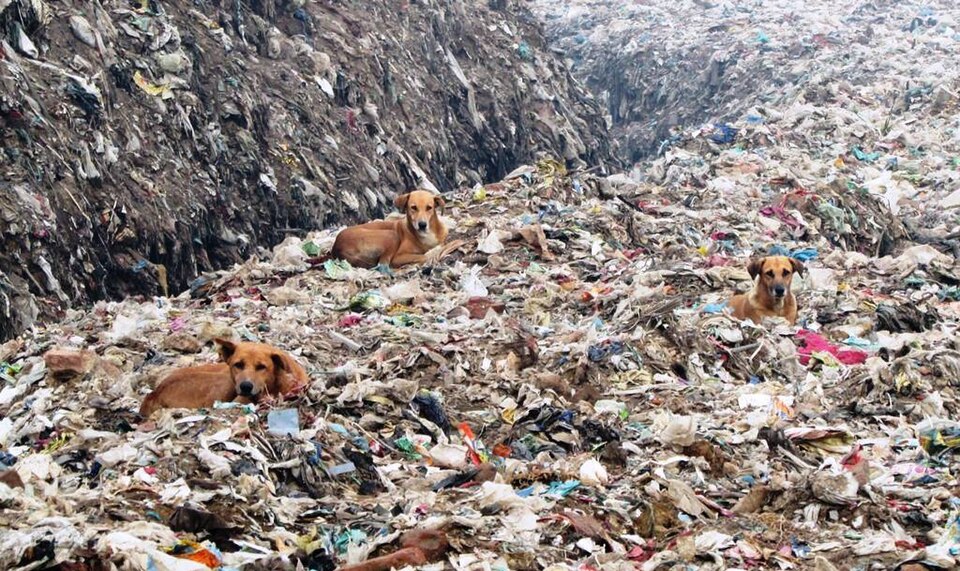
Landfills as the last resort. Under the new rules, landfills may receive only non-recyclable, non-energy-recoverable and inert waste. Unsegregated waste attracts higher landfill fees, and state pollution boards must audit landfills every year. Violators can be asked to pay environmental compensation.
Clearing the old mountains. All legacy dumpsites must be mapped and cleared in a time-bound way by biomining and bioremediation, which dig up, sort and treat old waste. Progress is reported on an online portal. Industries are to increase their use of refuse-derived fuel from 5% to 15% over six years, creating a market for non-recyclable dry waste.
Single-use plastic: the 2022 ban
Why plastic is a special problem. Plastic is cheap, light and durable, which is exactly why it is so hard to get rid of. It does not biodegrade, and thin, low-value items are rarely collected for recycling. Discarded plastic clogs drains, chokes cattle and marine animals, and breaks into tiny fragments that enter the food chain.
The ban. The Plastic Waste Management Amendment Rules, notified on 12 August 2021, banned identified single-use plastic items from 1 July 2022. The list includes earbuds with plastic sticks, plastic sticks for balloons, plastic flags, candy sticks, ice-cream sticks and thermocol decorations. It also covers plates, cups, glasses, cutlery, straws, trays and stirrers, and thin PVC banners.
Thicker carry bags. Thin carry bags are the most littered. So the rules banned plastic carry bags thinner than 75 microns from 30 September 2021, and thinner than 120 microns from 31 December 2022. Thicker bags cost more to make and are more likely to be reused and collected.
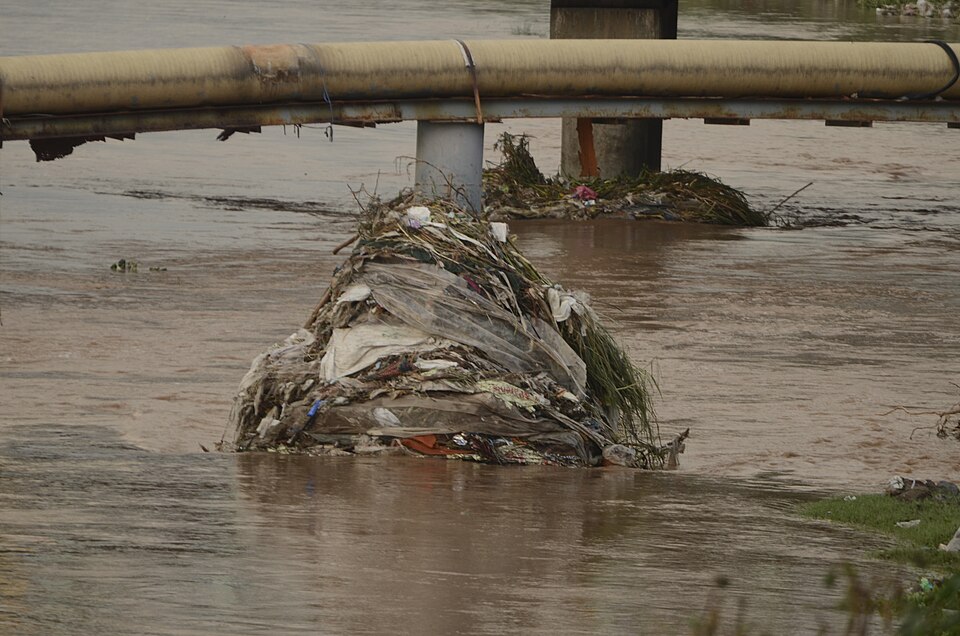
What makes a ban work. A ban alone fails if cheap alternatives are not available or if enforcement is weak. Success needs affordable substitutes such as cloth, paper and leaf plates, checks on manufacturers rather than only on street vendors, and public habit change. The global effort to agree a plastics treaty is explained in the chapter on chemicals, land and ocean treaties.
Extended Producer Responsibility: making producers close the loop
The idea. For a long time, companies sold products in packaging and left the waste for city governments to handle. Extended Producer Responsibility (EPR) changes this. It makes the producer, importer and brand owner responsible for collecting and recycling the packaging they put on the market.
EPR for plastic packaging. India notified EPR guidelines for plastic packaging through the Plastic Waste Management (Amendment) Rules, 2022, on 16 February 2022. They set mandatory targets for collecting and recycling plastic packaging waste, for reusing rigid plastic packaging and for using recycled plastic content in new packaging. Producers register and report on an online system run by the pollution control board.
Why it works in theory. If a company must pay to collect and recycle its own packaging, it has a reason to use less plastic, make packaging easier to recycle and design for reuse. The cost of waste moves from taxpayers to the producer and the consumer of the product. This is the "polluter pays" principle applied to products.
The risks. EPR can fail if certificates of recycling are faked or if collection depends on poorly paid informal workers without protection. Tracking and verifying actual recycling is therefore essential. Bringing waste pickers into the formal system can improve both recycling and their working conditions.
Cradle to grave: judging a product by its whole life
A simple question that is hard to answer. Is a paper bag better for the environment than a plastic bag? Most people say yes at once, because paper rots and plastic does not. But paper needs trees, a lot of water and chemicals to turn wood into pulp, and it is heavier to transport. The honest answer depends on the whole life of each bag.
What a life cycle assessment does. A life cycle assessment (LCA) follows a product from cradle to grave: raw material, manufacture, transport, use and final disposal. At every stage it counts the energy used, the water drawn, the waste and the emissions released. The international standards ISO 14040 and 14044 set out how this is done.
The four steps.
- Goal and scope: decide the question and draw the system boundary, for example whether to include the forest that supplies the wood.
- Inventory: measure every input and output, such as kilograms of pulp and litres of waste water.
- Impact assessment: turn these numbers into effects such as global warming, water pollution or land-use change.
- Interpretation: compare the options and find the stage that does the most harm.
Why it matters for policy. LCA shows that the factory chimney is often not the biggest problem. Mining the raw material, the electricity behind a product or its disposal can matter more, so a solar panel or an electric car is only as clean as the way it is made and finally recycled. This is why rules on Extended Producer Responsibility and eco-labels increasingly rest on life cycle thinking.
Mains lens: three live debates on waste
1. Bans or better systems? India banned a list of single-use plastic items from 1 July 2022 and raised the minimum thickness of carry bags in two steps. Supporters say that a clear ban changes habits fast and pushes industry towards substitutes. Critics say that bans are easy to announce, that cheap banned items keep appearing in markets, and that small makers lose their livelihood overnight.
A balanced answer treats a ban as one tool for items that have little use and cause great harm, such as straws, stirrers and thin bags. For most plastic, the better tool is a system: collection, recycling and producer responsibility. Bans also need enforcement, affordable substitutes and time for small units to switch.
2. Who should pay for packaging: the citizen, the city or the producer? For years, cities paid to collect and dump packaging that companies sold. Extended Producer Responsibility, notified for plastic packaging on 16 February 2022, shifts part of that cost back to the producer through targets for collection, recycling, reuse and recycled content. The idea is simple: the one who puts the plastic on the market should help close the loop.
Supporters say this rewards smarter design, because packaging that is easy to recycle costs less. Critics worry about fake certificates, weak checks and recyclers who exist only on paper. In Mains, back EPR as the right principle, and then stress audits, traceability and a fair role for informal waste workers as what makes it real.
3. Burn, bury or recycle? Cities short of land are tempted by incinerators and waste-to-energy plants. These plants can cut the volume of waste, but mixed Indian waste is wet and low in energy, so it burns poorly and can release harmful smoke. Landfills, on the other hand, take up land, leak leachate and release methane.
The 2026 rules answer this with the waste hierarchy: reduce, reuse, recycle, recover energy, and only then dispose. Landfills may now take only waste that cannot be recycled or used for energy, and refuse-derived fuel is to replace more coal in industry. A balanced answer says that segregation at source decides everything, because clean, separated streams make composting, recycling and energy recovery all work better.
Why it matters: Waste is where daily habits, city budgets, industry and the law all meet. Mains questions test whether you can see that link, so always connect the rule to the household, the city and the producer.
Mains lens: two kinds of questions and how to answer them
Type 1: "What has changed, and will it work?" (new rules). Example: "What are the key changes in the Solid Waste Management Rules, 2026? Will they solve India's urban waste crisis?"
- Intro: Note that the 2026 rules replaced the 2016 rules and came into full effect on 1 April 2026.
- Body, the changes: Explain the four-stream segregation at source, the duties of bulk generators, the limits on what can go to landfills, higher fees for unsegregated waste, biomining of old dumps and the rising share of refuse-derived fuel.
- Body, why they were needed: Show that mixed waste made recycling and composting fail, and that old dumpsites kept polluting land, water and air.
- Body, the doubts: Point out that city capacity, money for collection vehicles and processing plants, and daily public habits will decide the result.
- Conclusion: Conclude that the rules point the right way, and that success depends on enforcement and on every household separating its waste.
Type 2: "Explain the principle and its use" (circular economy). Example: "How can Extended Producer Responsibility help build a circular economy for plastics?"
- Intro: Define EPR as making the producer responsible for its product after use, and a circular economy as keeping materials in use instead of dumping them.
- Body, how EPR works: Describe the targets for collection, recycling, reuse of rigid packaging and use of recycled content.
- Body, what it changes: Show that it gives producers a reason to design packaging that is easy to recycle and to buy recycled plastic.
- Body, gaps: Add the risk of false claims and the need to bring informal waste pickers into the system with fair pay and safety.
- Conclusion: Conclude that EPR turns waste from a city's burden into a shared business responsibility.
Linking across papers. This chapter feeds GS-III (environment and economy), GS-II (urban local bodies and government policy) and GS-I (urbanisation). Circular economy is also a ready Essay theme.
Mains practice: six questions, six angles
These are practice questions we have written, not past papers. Past questions for each exam are in this module's PYQ panel.
| Angle | Question | How to approach |
|---|---|---|
| Policy | What are the key changes in the Solid Waste Management Rules, 2026? Will they solve India's urban waste crisis? | Explain four-stream segregation, bulk generator duties, landfill limits and legacy dumps. Weigh them against weak collection and municipal capacity. |
| Principle | "Segregation at source is the foundation of waste management." Discuss. | Show how mixed waste blocks composting and recycling. Suggest awareness, fees for unsegregated waste and support for waste pickers. |
| Plastic | Evaluate the effectiveness of India's ban on identified single-use plastic items. | Give the 2022 ban and carry bag limits. Discuss alternatives, enforcement at the source of manufacture and behaviour change. |
| Economy | How can Extended Producer Responsibility help build a circular economy for plastics? | Explain EPR targets for recycling, reuse and recycled content. Discuss fake certificates and the role of the informal sector. |
| Technology | Compare landfilling, incineration and composting as methods of municipal waste disposal for Indian cities. | Explain each method with its benefits and risks. Argue that the choice depends on segregation and the type of waste. |
| Society | Discuss the role and challenges of informal waste pickers in India's waste management system. | Show their contribution to recycling and the health and income risks they face. Suggest formal recognition, safety gear and links to EPR. |
How to use this table: each answer should first explain the what, then give the why from this chapter, and end with a way forward.
Quick revision
- Waste hierarchy: reduce > reuse > recycle > recover energy > dispose.
- Disposal: open dump (worst); sanitary landfill (clay/HDPE liner, daily cover); incineration (costly, needs scrubbers); composting (wet waste); sea dumping restricted; underground for special cases.
- SWM Rules 2026: replaced 2016 rules; full effect 1 Apr 2026; four streams: wet, dry, sanitary, special care.
- Bulk generators: ≥20,000 sq m, ≥40,000 L/day water or ≥100 kg/day waste; on-site wet processing or EBWGR certificate.
- Landfill only for non-recyclable, non-energy-recoverable, inert waste; higher fee for unsegregated; legacy dumps → biomining; RDF 5% → 15% in six years.
- Single-use plastic ban: notified 12 Aug 2021, in force 1 Jul 2022; carry bags 75 µm (30 Sep 2021), 120 µm (31 Dec 2022).
- EPR for plastic packaging: 16 Feb 2022; targets for recycling, reuse of rigid packaging, recycled content.