

UPSC CSE · Module 29 · Mains depth · 14 min
Human development: measuring well-being
What UPSC CSE asks from this chapter
Syllabus lines this chapter covers:
- Prelims Paper I: General Studies · Indian and World Geography-Physical, Social, Economic Geography of India and the World.
- Prelims Paper I: General Studies · Economic and Social Development-Sustainable Development, Poverty, Inclusion, Demographics, Social Sector Initiatives, etc.
- Mains Paper II: General Studies I (Heritage, culture, history, geography, society) · Role of women and women's organization, population and associated issues, poverty and developmental issues, urbanization, their problems and their remedies.
- Mains Paper III: General Studies II (Governance, Constitution, polity, social justice, IR) · Issues relating to poverty and hunger.
- Mains Paper IV: General Studies III (Technology, economy, environment, security, disasters) · Inclusive growth and issues arising from it.
UPSC CSE questions from this module are being sorted into our bank.
Read at full depth: basics, the standard layer and the Mains analysis.
Start from zero: is a richer country a better country?
Imagine two countries with the same income per person. In the first, most children finish school, people live into their seventies and women work and vote freely. In the second, many children die young, girls leave school early and the wealth sits with a few families. Few people would call both equally "developed".
This shows the difference between growth and development. Growth is a quantitative change, such as a rise in income or output, and it can be positive or negative. Development is a qualitative change, an improvement in the quality of people's lives, and it is always positive.
For a long time, development was measured mainly by income, using indicators such as gross national product per person. Over time economists and geographers realised that income is only a means. What really matters is what people can do and be with it, whether they can be healthy, educated, free and respected.
Human development therefore means enlarging people's choices and improving their capabilities so they can lead long, healthy and meaningful lives. Income is part of it, but so are health, knowledge, freedom, security and dignity.
Why it matters. Development planning that looks only at income can leave many people behind. The human development idea puts people at the centre of policy.
Where the idea came from, and its four pillars
The concept of human development was introduced by the Pakistani economist Mahbub-ul-Haq. Working with the United Nations Development Programme (UNDP), he led the team that published the first Human Development Report in 1990. The Indian economist Amartya Sen, who later won the Nobel Prize, provided much of its thinking through his idea that development means expanding freedoms and capabilities.
Why did this idea appear when it did? In the 1960s and 1970s, many developing countries recorded fast economic growth, yet poverty, hunger, illiteracy and disease barely fell, because the gains did not trickle down to the poor. This failure convinced thinkers that development had to be measured directly in people's lives, not assumed from national income.
Since then, the UNDP has published the report regularly, ranking countries on human development. Many countries, including India, have also prepared their own national and state human development reports.
The idea rests on four pillars. Equity means equal access to opportunities for everyone, regardless of gender, caste, religion, region or income. Sustainability means that each generation should have the same opportunities, so resources must be used without harming the future.
Productivity means improving human work through investment in people's health, skills and education, since a healthy and skilled population is the real wealth of a nation. Empowerment means giving people the power to make their own choices, through good governance, freedom and participation.
Why it matters. The four pillars give a checklist to judge any policy. A scheme that raises income but excludes women or harms the environment fails the test.
Four ways of looking at development
Thinkers have looked at human development in different ways. The income approach is the oldest, and it treats income as the key to well-being. The idea is simple: higher income means a person can buy more food, health care and education.
The welfare approach sees people as beneficiaries of government spending on education, health, housing and social security. It argues that the more the state spends on welfare, the higher human development will be. However, people in this view are passive receivers rather than active participants.
The basic needs approach, first proposed by the International Labour Organization (ILO), focuses on six basic needs: health, education, food, water supply, sanitation and housing. It asks governments to make sure that every person has at least these minimum requirements.
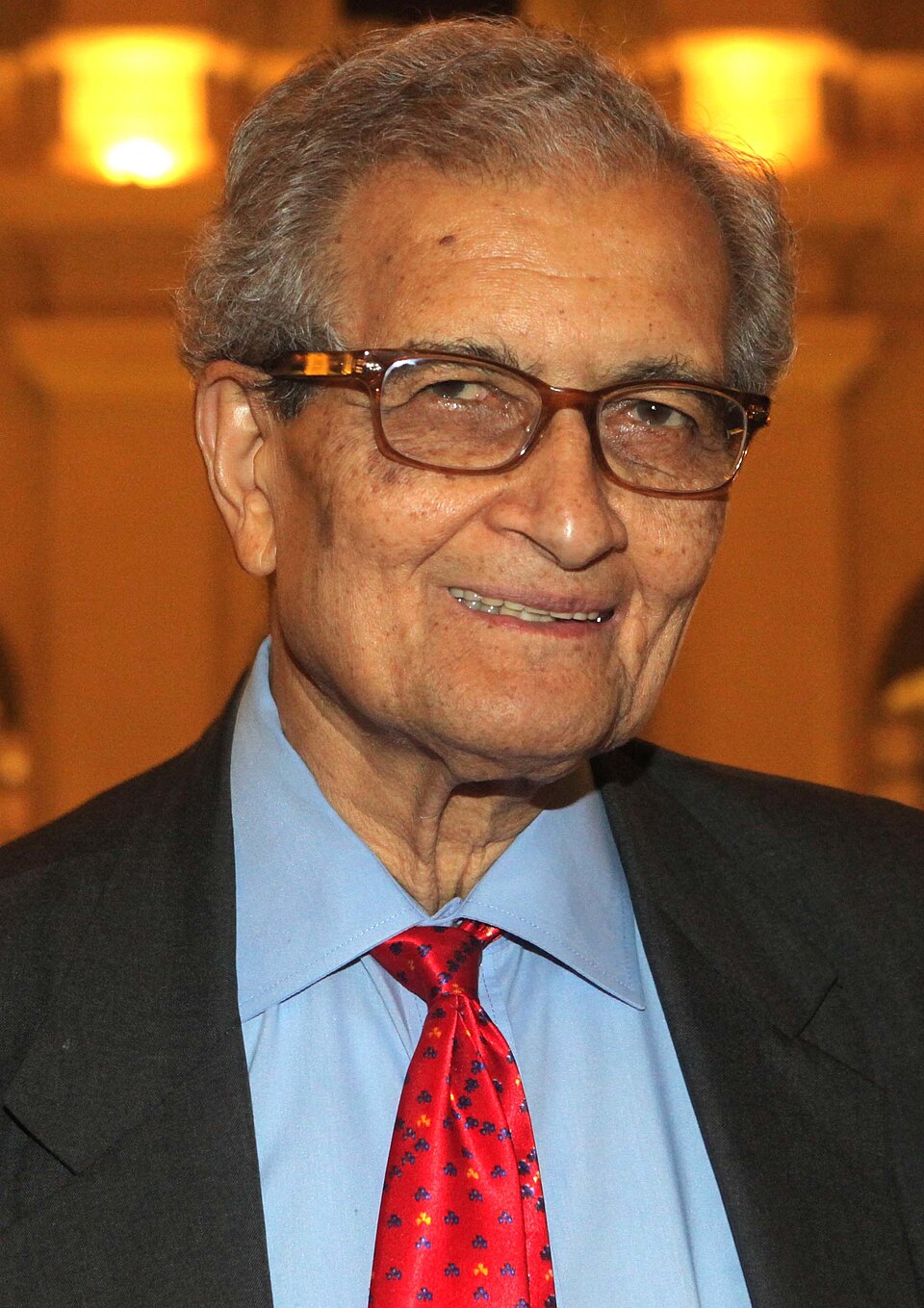
The capability approach, associated with Amartya Sen, says that development means building human capabilities, such as being healthy, educated and able to take part in social life. Income, welfare and basic needs are useful only to the extent that they expand what people can actually do and be.
Sen's work on famines gives a famous example of this thinking. He showed that famines often happen not because there is too little food, but because poor people lose the entitlement to buy or grow it, for example when wages collapse or prices soar. He also argued that famines rarely occur in functioning democracies with a free press, because governments are forced to act quickly.
Why it matters. Each approach leads to different policies. Modern thinking blends them, using income growth, welfare spending and basic services to build capabilities.
Measuring human development: HDI and other indices
The best-known measure is the Human Development Index (HDI). It combines three dimensions. A long and healthy life is measured by life expectancy at birth. Knowledge is measured by the mean years of schooling of adults and the expected years of schooling of children.
A decent standard of living is measured by gross national income per person, adjusted for purchasing power parity, so that a rupee or a dollar buys comparable goods across countries. Each dimension is turned into a score between 0 and 1, and these are combined into one HDI value between 0 and 1. Countries are then grouped into very high, high, medium and low human development.
Because averages can hide inequality, the UNDP also publishes other indices. The Inequality-adjusted HDI lowers a country's score when gains are unequally shared. The Gender Development Index compares HDI for women and men, and the Gender Inequality Index measures gaps in reproductive health, empowerment and participation in the labour market.
The Multidimensional Poverty Index (MPI), introduced in 2010 by UNDP with the Oxford Poverty and Human Development Initiative, looks beyond income. It counts a household as poor if it is deprived in several indicators of health, education and standard of living, such as nutrition, child mortality, years of schooling, cooking fuel, sanitation, drinking water, electricity, housing and assets.
India has also built its own national Multidimensional Poverty Index, prepared by NITI Aayog from the National Family Health Survey. It follows the same three dimensions but adds indicators such as maternal health and bank accounts, which matter for Indian conditions. Its results show that multidimensional poverty has fallen sharply over the past decade, though it remains highest in states such as Bihar, Jharkhand and Uttar Pradesh.
Why it matters. Indices turn the broad idea of well-being into numbers that can be compared and tracked. Each one shows a different side of human development.
Countries and human development
Countries with very high human development are mostly in Europe, North America, East Asia and Oceania, along with some oil-rich states of West Asia. They usually invest heavily in health and education, have stable governments and relatively low inequality. Countries with low human development are mostly in Sub-Saharan Africa and parts of South Asia, often affected by conflict, weak institutions and poor access to services.
India falls in the medium human development category. It has made large gains since 1990 in life expectancy, schooling and income, but it still lags in nutrition, learning quality and gender equality. These gaps pull down its rank compared with countries of similar income.
An important lesson is that income does not automatically bring human development. Some countries and regions with modest incomes, such as Sri Lanka in South Asia, have achieved high life expectancy and literacy through public investment in schools and health. On the other hand, some rich countries rank lower than their wealth suggests because of inequality or poor services.
A few countries try new measures altogether. Bhutan is known for measuring progress by Gross National Happiness, which gives weight to spiritual, cultural and environmental well-being along with material progress.
Why it matters. Comparing countries shows that public choices, not just wealth, decide human development. This is a recurring theme in Mains answers on welfare and growth.
Human development within India
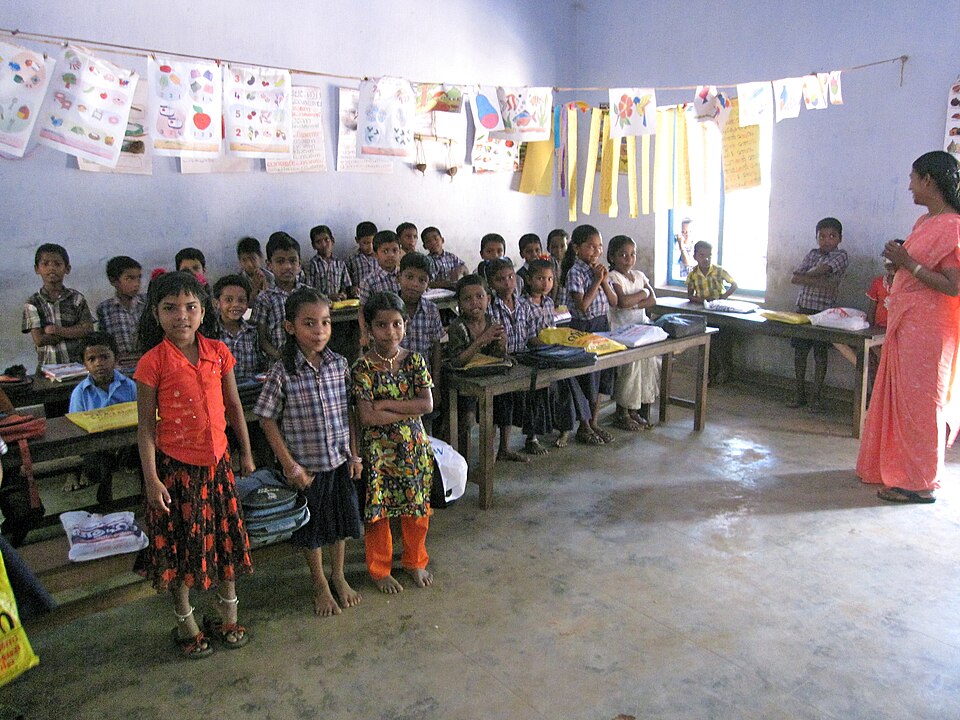
Human development varies greatly across India's states. Kerala has long ranked at the top, with high literacy, long life expectancy, low infant mortality and a favourable sex ratio, even though its per capita income was not the highest for many years. Other states such as Goa, Himachal Pradesh, Punjab, Tamil Nadu and Maharashtra also do relatively well.
States such as Bihar, Uttar Pradesh, Madhya Pradesh, Odisha, Jharkhand and Chhattisgarh have ranked lower. They face higher poverty, lower literacy, especially among women, poorer health services and larger shares of Scheduled Tribes and Scheduled Castes who have historically been left out.
Several factors explain these differences. Social reform movements, early spread of female education, strong public health systems and active local governments helped states like Kerala. In lagging states, weak infrastructure, low agricultural productivity, large family sizes and governance gaps have held back progress.
Within states too, there are big gaps between districts, between rural and urban areas, and between social groups. Tribal districts in the central highlands and flood-prone districts in the eastern plains often lag behind even within better-off states.
Public policy has tried to narrow these gaps. Programmes for universal schooling, midday meals, rural health missions, rural employment guarantee and food security reach every state, while special attention is given to backward and aspirational districts with low scores on health, education and infrastructure. Progress is measured district by district, so that the poorest places are not hidden by state averages.
Why it matters. Regional gaps in human development drive migration, social tension and demands for special support. Closing them is central to inclusive growth.
Mains lens: what, why, where and so what
This chapter supports GS Paper I (population and associated issues, poverty) and links strongly to GS Paper II (welfare, health, education, vulnerable sections) and GS Paper III (inclusive growth). Here are four angles.
1. Concept. Growth versus development; choices and capabilities.
2. Measurement. HDI, MPI and gender indices and what each reveals.
3. Growth and well-being. Income does not guarantee human development; public action matters.
4. Regional gaps. Why some states lead and others lag, and how to close the gap.
Mains lens: practice questions and answer plans
Now turn this understanding into written answers. The four questions below are written in the UPSC style, but they are our own practice questions, not previous-year questions. The real previous-year questions of your exam appear in the "Previous year questions" box once we have matched them with the official papers.
Q1. "Human development is about enlarging people's choices. Explain with reference to its four pillars." (150 words)
- Define the concept and its origin.
- Explain equity, sustainability, productivity and empowerment with examples.
Q2. "Economic growth is necessary but not sufficient for human development. Discuss with examples." (250 words)
- Introduction: Growth versus development.
- Body: Cases where modest income gives high outcomes, and the reverse; role of public action.
- Conclusion: Balanced strategy.
Q3. "How does the Multidimensional Poverty Index differ from income-based poverty measures?" (150 words)
- Give dimensions and indicators.
- Show what it reveals that income misses.
Q4. "Account for the regional disparities in human development among Indian states." (250 words)
- Cover leading and lagging states with reasons.
- Suggest policies for convergence.
Useful keywords: growth, development, human development, choices, capabilities, Mahbub-ul-Haq, Amartya Sen, UNDP, equity, sustainability, productivity, empowerment, income approach, welfare approach, basic needs, capability approach, HDI, life expectancy, mean and expected years of schooling, GNI per capita PPP, Inequality-adjusted HDI, Gender Inequality Index, Multidimensional Poverty Index, Gross National Happiness, regional disparity.
Quick revision
- Growth = quantitative, can be negative; development = qualitative, always positive.
- Human development = enlarging choices; Mahbub-ul-Haq; Amartya Sen (capabilities); first UNDP report 1990.
- Four pillars: equity, sustainability, productivity, empowerment.
- Approaches: income, welfare, basic needs (ILO, six needs), capability (Sen).
- HDI: life expectancy; mean and expected years of schooling; GNI per capita (PPP); 0 to 1.
- MPI (2010, UNDP and OPHI): health, education, standard of living.
- Gender Development Index; Gender Inequality Index (reproductive health, empowerment, labour market).
- India: medium human development.
- Kerala tops among states; Bihar, UP, MP, Odisha low.
- Bhutan: Gross National Happiness.