

UPSC CSE · Module 60 · Mains depth · 18 min
India's launch vehicles: why, when and where
What UPSC CSE asks from this chapter
Syllabus lines this chapter covers:
- Prelims Paper I: General Studies · General Science.
- Mains Paper IV: General Studies III (Technology, economy, environment, security, disasters) · Science and Technology- developments and their applications and effects in everyday life.
- Mains Paper IV: General Studies III (Technology, economy, environment, security, disasters) · Achievements of Indians in science & technology; indigenization of technology and developing new technology.
- Mains Paper IV: General Studies III (Technology, economy, environment, security, disasters) · Awareness in the fields of IT, Space, Computers, robotics, nano-technology, bio-technology and issues relating to intellectual property rights.
UPSC CSE questions from this module are being sorted into our bank.
Read at full depth: basics, the standard layer and the Mains analysis.
Why India wanted its own rockets: when and where it all began
Before we look at India's rockets one by one, ask a simpler question: why would a poor, newly independent country spend money on rockets at all? In the early 1960s India had food shortages, few roads and little electricity in villages. Many people asked the same question then.
The answer came from Dr Vikram Sarabhai, the founding father of the Indian space programme. He was convinced that the resources of space could help solve the real problems of man and society. In other words, space was not for showing off. It was a tool for weather warnings, TV lessons for villages, maps of crops and forests, and telephone links to far-off places.
When and where it began:
- 1962: the Indian National Committee for Space Research (INCOSPAR) was set up under the Department of Atomic Energy.
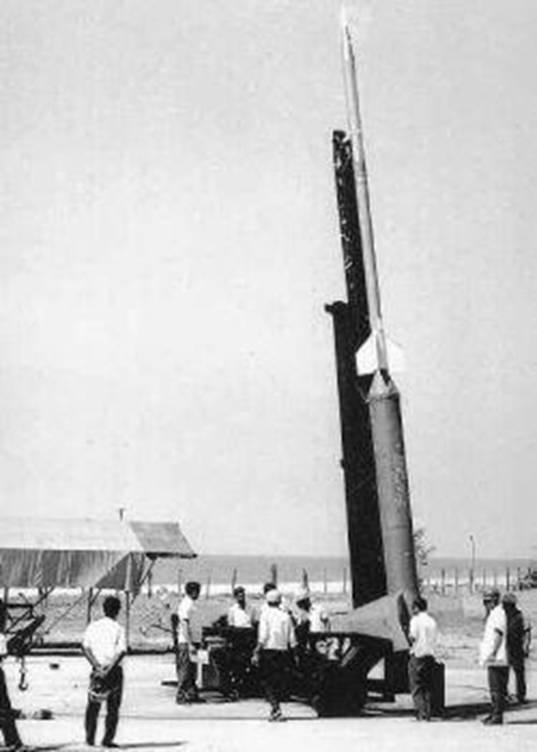
- 21 November 1963: India's first sounding rocket was launched from Thumba, near Thiruvananthapuram in Kerala. This launch marked the beginning of the Indian space programme.
- The Thumba Equatorial Rocket Launching Station (TERLS) was set up in 1963 at a place close to the magnetic equator.
- The first rockets were two-stage rockets imported from Russia (M-100) and France (Centaure). On 2 February 1968 TERLS was dedicated to the United Nations.
A sounding rocket goes straight up, measures the upper air for a few minutes and falls back. It does not reach orbit. So in the 1960s India could study the sky above it, but it could not yet put anything into space.
From a committee to a full department:
- 15 August 1969: the Indian Space Research Organisation (ISRO) was formed in place of INCOSPAR.
- June 1972: the government set up the Space Commission and the Department of Space (DOS), and brought ISRO under DOS in September 1972.
Why depending on others was a problem: India's first satellite, Aryabhata, went up on 19 April 1975, but on a Soviet launcher. A country that must borrow a rocket must also wait for another country's date, price and permission. So the next goal was clear: build an Indian rocket.
- 18 July 1980: SLV-3 placed the Rohini satellite RS-1 in orbit from Sriharikota (SHAR), after a partly successful first flight in August 1979. For the first time, an Indian rocket put an Indian satellite into orbit.
- ASLV followed: its first two flights, on 24 March 1987 and 13 July 1988, did not succeed, but ASLV-D3 placed SROSS-C in orbit on 20 May 1992. Failures taught lessons that went into the next rocket, PSLV.
Where India launches from today: the Satish Dhawan Space Centre (SDSC) SHAR is in Sriharikota, in the Nellore district of Andhra Pradesh. It has two launch pads for PSLV and GSLV launches, and a separate pad for sounding rockets. A launch site close to the equator is useful, because the ground there moves fastest as Earth spins and gives the rocket extra speed.
Why this history matters for the exam: every Indian rocket has an answer to "why".
SLV-3 ended dependence on others for small satellites. PSLV made launches to polar orbits reliable. Later, India's own cryogenic stage ended that dependence for heavy satellites too. Keep this chain in mind for Mains answers on self-reliance.
India's rocket family at a glance
Those steps gave India the four rockets it flies today. Each one is built on the three kinds of rocket fuel in a different mix, and here is the comparison that you must know:
| Rocket | Stages | Fuel by stage | Height and lift-off mass | Payload |
|---|---|---|---|---|
| SSLV (Small Satellite Launch Vehicle) | 3 solid + a liquid Velocity Trimming Module | Solid, solid, solid (HTPB); VTM liquid | 34 m, about 120 tonnes | Up to 500 kg to a 500 km planar orbit |
| PSLV (Polar Satellite Launch Vehicle) | 4 | Solid, liquid, solid, liquid; up to 6 strap-ons | 44 m, 320 tonnes (XL) | 1,750 kg to SSO (600 km); 1,425 kg to sub-GTO |
| GSLV Mk II (Geosynchronous SLV) | 3 | Solid core with 4 liquid strap-ons, liquid (Vikas), cryogenic (CE-7.5) | 51.73 m, 420 tonnes | 2,250 kg to GTO; 6,000 kg to LEO |
| LVM3 (formerly GSLV Mk III) | 3 | Two S200 solid boosters, L110 liquid core (2 Vikas), C25 cryogenic (CE-20) | 43.5 m, 640 tonnes | 4,000 kg to GTO; 8,000 kg to LEO |
How to remember it:
- "P for Polar": PSLV was designed for polar and sun-synchronous orbits, but it also does sub-GTO and deep-space work (Chandrayaan-1, Mars Orbiter Mission, Aditya-L1).
- "G for Geo": GSLV's cryogenic top stage gives the extra speed to reach GTO.
- LVM3 is shorter than GSLV Mk II but heavier. Its width (4 m) and two big S200 boosters make it the most powerful of the four.
- SSLV is all-solid in its three main stages, so it is quick and cheap to prepare.
GSLV first flew on 18 April 2001, and its first flight with the indigenous cryogenic stage was on 5 January 2014.
GSLV and LVM3: the heavy lifters
The table shows four rockets, but two of them were built for one hard job: carrying heavy satellites high up towards geostationary orbit. PSLV is excellent for low orbits, but it cannot lift a big communication satellite all the way to GTO. That gap is what GSLV and LVM3 were built to fill.
GSLV Mk II: the first step. GSLV first flew on 18 April 2001. It has an S139 solid core with four liquid strap-ons, each powered by one Vikas engine, then a GS2 liquid stage and finally a Cryogenic Upper Stage with the CE-7.5, India's first cryogenic engine. It was built to place communication satellites in GTO, and with the Indian cryogenic stage it can launch satellites of up to the 2-tonne class.
Why it took so long. Early GSLV flights used cryogenic stages supplied by Russia. India's own stage was inducted from GSLV-D5 in January 2014, and from then GSLV achieved six consecutive successes. So the real story of GSLV is the story of mastering cryogenic technology.
LVM3: the heavy lifter. Even 2 tonnes was not enough for the newest communication satellites, so ISRO built LVM3 (earlier called GSLV Mk III) to launch 4,000 kg spacecraft to GTO. It has two huge S200 solid boosters, each holding 205 tonnes of fuel, an L110 core stage with two Vikas engines, and a C25 upper stage driven by the CE-20, India's largest cryogenic engine.
LVM3 has had all successful launches from its very first development flight. On that first flight, on 18 December 2014, it carried a 3,775 kg crew module to test re-entry, and the module was recovered from the Bay of Bengal. That test was an early step towards carrying people.
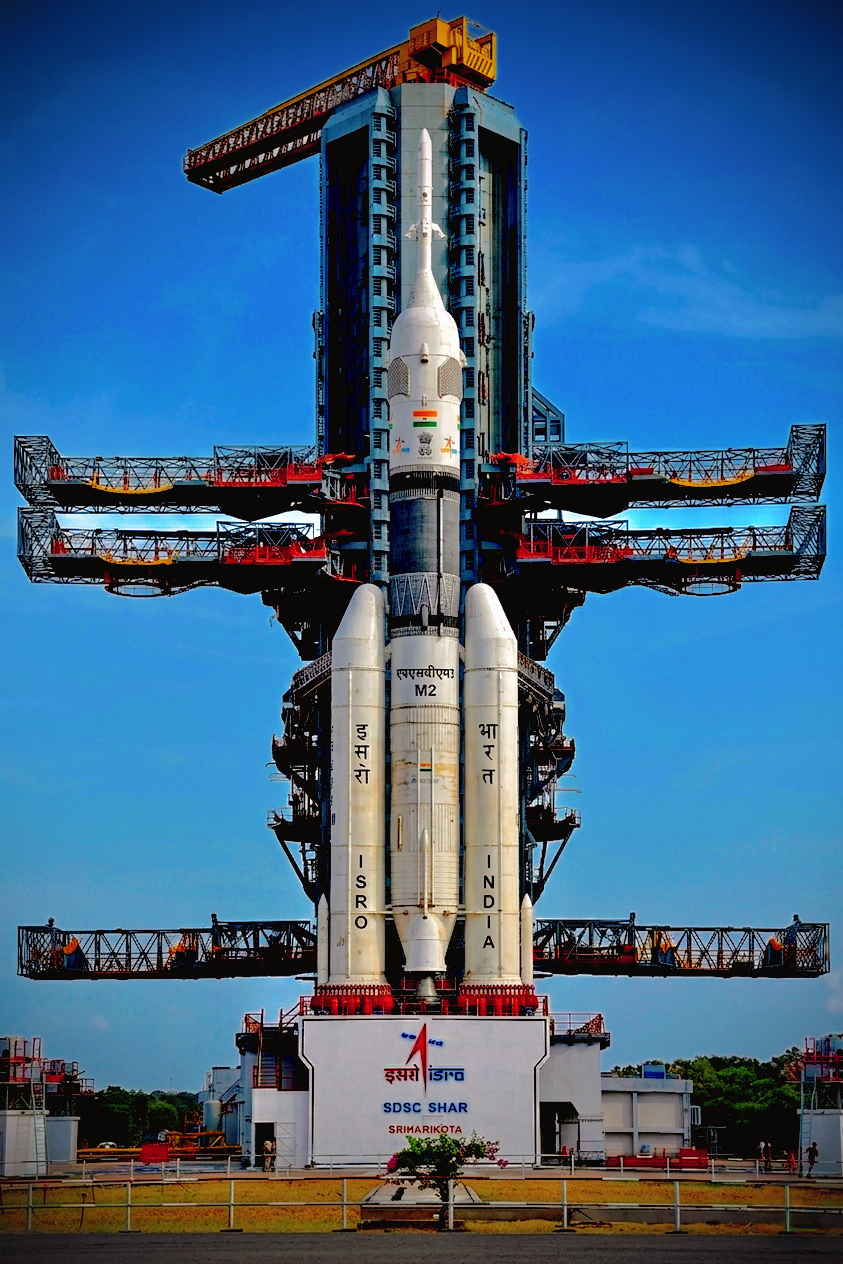
From cargo to crew. A rocket that carries astronauts must be far more reliable than one that carries satellites. The human-rated LVM3, called HLVM3, is built with extra reliability and a Crew Escape System that can pull the crew away if something goes wrong, and it is the rocket chosen for Gaganyaan.
SSLV and reusable rockets: making launches cheaper
Big rockets solved the problem of heavy satellites, but they created a new one. Many satellites today are small, and waiting months for a seat on a big rocket is slow and costly. So the next challenge was not more power, but lower cost and faster launches.
SSLV: a small rocket on demand. The Small Satellite Launch Vehicle is 2 m wide and 34 m long, with three solid stages and a liquid Velocity Trimming Module that fine-tunes the final orbit. It can put one satellite of up to 500 kg into a 500 km orbit, or several satellites of 10 to 300 kg.
Its design goals say why it exists: low cost, low turn-around time, room for multiple satellites, and launch on demand. Solid stages are simpler to prepare than liquid ones, which keeps the rocket quick to assemble.
Why reuse matters. Today almost every rocket is thrown away after one flight, so a new rocket must be built for every launch. If the most expensive parts could fly back and be used again, the cost of reaching space could fall sharply.
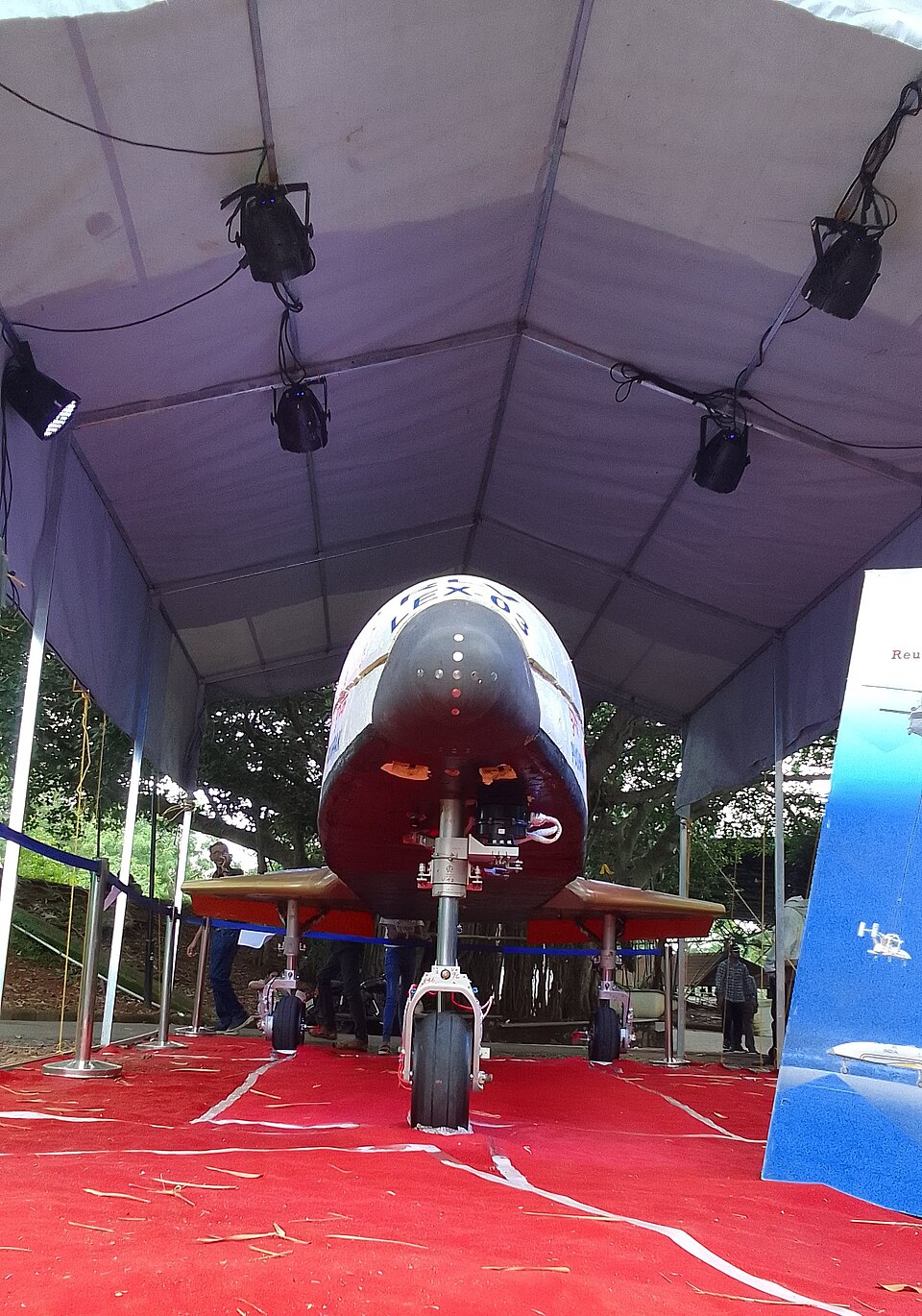
RLV-TD: a rocket that flies like a plane. The Reusable Launch Vehicle Technology Demonstrator looks like a small aircraft. It is a flying test bed for hypersonic flight, autonomous landing and powered cruise, and on 23 May 2016 an HS9 solid booster pushed it to Mach 5 from Sriharikota.
Pushpak lands on its own. The landing experiments were done at the Aeronautical Test Range, Chitradurga, in Karnataka. An Indian Air Force Chinook helicopter carried the winged vehicle Pushpak to 4.5 km and dropped it, and Pushpak then glided down and landed on a runway by itself.
- LEX-02 (22 March 2024) showed that Pushpak could land safely even when released in awkward conditions.
- LEX-03 (23 June 2024), the third and final test, faced stronger winds and a wider sideways gap, and it touched down at more than 320 km/h.
- LEX-03 reused LEX-02's vehicle without any change, and its sensors included India's own NavIC.
Where this is going. The plan is to scale RLV-TD up into the first stage of a reusable two-stage rocket. The design, building and testing of all these rockets is led by the Vikram Sarabhai Space Centre (VSSC) in Thiruvananthapuram, while Sriharikota remains India's spaceport.
What changed because India has its own rockets
Knowing the list of rockets is only half the story. UPSC also asks so what? Owning these launchers changed two big things for India.
1. Strategic freedom. India's first satellite, Aryabhata, needed a Soviet rocket. Early GSLV flights used cryogenic stages supplied by Russia. Today SLV-3's successors, PSLV, GSLV with an Indian cryogenic stage, LVM3 and SSLV, let India choose its own launch dates and orbits. That is what "strategic autonomy" means in practice.
2. Industry and skills. Building engines, motors and guidance systems trains engineers and builds supplier companies. This also prepares the ground for private companies that build and launch their own rockets.
The one-line takeaway: a rocket is not just a machine. It is the key that opens every orbit, and whoever holds the key decides how space is used.
Mains lens: one debate and three kinds of questions
GS-III asks about "achievements of Indians in science and technology; indigenisation of technology" and "awareness in the field of space". A good answer goes beyond facts and argues. Here is the debate that keeps coming back.
The questions in this section are practice questions written by us, not past papers.
Debate: own rockets or buy launches abroad?
- For own rockets: a country that depends on foreign rockets depends on another government's permission and timetable for its weather, navigation, defence and communication satellites. Own launchers give strategic autonomy, build industry and skills, and can earn money by launching other countries' satellites.
- Against (or "not only"): building and maintaining launchers costs a lot; for some very heavy satellites, buying a foreign launch may still be quicker and cheaper until our own heavy-lift capacity grows.
- Balanced view: a mix is sensible for now, while capacity at the heavy end (LVM3 and beyond) is expanded.
Question type 1: "Trace the evolution" (the when-and-why question). Example: Trace the evolution of India's launch vehicle programme and the reasons behind each stage of growth.
- Intro: Sarabhai's idea of space for the real problems of man and society.
- Body as a timeline, each step with its "why": Thumba 1963 (study the upper air) → Aryabhata 1975 on a Soviet launcher (dependence) → SLV-3 1980 (own access to orbit) → ASLV (lessons from failure) → PSLV (reliable polar launches) → GSLV with Russian, then Indian cryogenic stage from January 2014 (heavy satellites) → LVM3 (heavy GTO, Moon).
- Conclusion: each rocket solved the bottleneck left by the one before.
Question type 2: "Critically examine" (the both-sides question). Example: "Self-reliance in launch vehicles is a strategic necessity, not a luxury." Critically examine.
- For: own launch dates and orbits, security and disaster satellites under national control, industry and skills, earning from launches.
- Against or limits: high cost, the heaviest satellites may still be cheaper to launch abroad for now, and failures delay programmes.
- Way forward: keep building heavy-lift capacity, share work with industry, and buy foreign launches only where it is clearly cheaper and quicker.
Question type 3: "Issues and way forward" (the policy question). Example: Discuss the challenges India faces in increasing its launch capacity.
- Challenges: cost per launch, launch frequency, heavy-lift limits, space debris from spent stages.
- Ways forward: reusable and cheaper launchers, more launch pads and private launchers, and debris-safe disposal of upper stages.
- Conclusion: capacity, cost and responsibility have to grow together.
Useful keywords: sounding rocket, SLV-3, PSLV, GSLV, LVM3, SSLV, cryogenic upper stage, strategic autonomy, indigenisation.
Previous years' questions
This section shows the real past questions on this chapter for the exam you have chosen. Each question is copied word for word from the official paper, with the year and paper, so that you can see how the topic is actually asked.
Questions are being collected from the official UPSC and BPSC papers. They will appear here once each one is checked against the original paper.
Quick revision
- PSLV carries 1,750 kg to SSO, GSLV Mk II carries 2,250 kg to GTO, LVM3 carries 4,000 kg to GTO and 8,000 kg to LEO, and SSLV carries 500 kg to 500 km.
- India's space programme began at Thumba on 21 November 1963. ISRO was formed on 15 August 1969, Aryabhata went up on a Soviet rocket in 1975, and SLV-3 put Rohini in orbit from Sriharikota on 18 July 1980.
- Each rocket fixed the gap left by the one before: SLV-3 gave India its own way to orbit, PSLV made polar launches reliable, and GSLV with an Indian cryogenic stage (from January 2014) and LVM3 opened the road to heavy satellites.