

UPSC IES / ISS · Module 10 · standard depth · 16 min
Revolutionaries, Ghadar, Home Rule and the Lucknow Pact
What UPSC IES / ISS asks from this chapter
Syllabus lines this chapter covers:
- General Studies (IES and ISS) · The paper will also include questions on Indian Polity including the political system and the Constitution of India, History of India and Geography of a nature which a candidate should be able to answer without special study.
UPSC IES / ISS questions from this module are being sorted into our bank.
Cut to standard depth for UPSC IES / ISS. 7 deeper paragraphs are in the full chapter.
Start from zero: when patience runs out
Think of three people who want the same thing, say a fair rule in their town. One writes letters, one organises a mass protest, and one decides that only force will work. They want the same result, yet they choose very different roads.
Indian nationalism between 1897 and 1916 had all three kinds of people. The Moderates still wrote petitions, the Extremists led mass protest, and a small number of young men and women turned to revolutionary methods. Some acted inside India, and others organised from London, Canada and the United States.
At the same time the British changed their tactics. They offered limited reforms in 1909, but with separate electorates for Muslims, and they met revolutionaries with harsh trials and executions. Then the First World War changed everything, opening space for the Home Rule movement.
This chapter ends in 1916, a year of reunions. The Moderates and Extremists came back together, and the Congress and the Muslim League signed the Lucknow Pact. Keep one question in mind as you read. Did the revolutionaries help or hurt the national movement, and was the Lucknow Pact a step towards unity or a seed of later division?
Key events at a glance
This table lists the main events from the first revolutionary acts to the Lucknow Pact. Each is explained in the sections below.
| When | What happened | Why it matters |
|---|---|---|
| 1879 | Vasudev Balwant Phadke's armed rebellion | An early attempt at armed revolt after 1857. |
| 22 June 1897 | Chapekar brothers kill W.C. Rand in Pune | An early political killing in Maharashtra. |
| 11 August 1908 | Khudiram Bose hanged, aged 18 | A young martyr inspires a generation. |
| 1909 | Indian Councils Act (Morley-Minto); separate electorates; Dhingra hanged in London | Reform and repression go together. |
| 1913 | Ghadar Party formed on the Pacific coast of North America | Indians abroad organise for revolution. |
| 1914 | Komagata Maru turned back; 19 killed at Budge Budge; war begins | Racism abroad fuels anger at home. |
| 1915 | Lahore Conspiracy trial; Sarabha hanged; Gandhi returns; Congress admits Extremists again | The stage is set for a new phase. |
| 1916 | Congress reunited; Lucknow Pact with the Muslim League; Home Rule movement | A united demand for self-government. |
Notice how the table moves from lonely acts of courage to joint political demands. That shift is what made 1916 such an important year.
Why some turned to revolution: the early acts
Why choose force? Some young Indians felt that petitions had failed and that even mass protest was being crushed. They admired the courage of earlier rebels and believed that only fear could make the British leave. Their methods were secret societies, physical training, weapons and attacks on officials seen as oppressive.
Vasudev Balwant Phadke. One of the earliest examples came from Maharashtra. In 1879 Vasudev Balwant Phadke led an armed rebellion with the support of Koli, Bhil and Dhangar groups. He was captured, and he died in prison on 17 February 1883 after a hunger strike.
The Chapekar brothers. In 1897 Pune was struggling with an outbreak of plague, and W.C. Rand was the officer in charge of the plague measures there. On 22 June 1897 the Chapekar brothers, Damodar, Balakrishna and Vasudev, killed W.C. Rand, the plague commissioner of Pune. All three brothers were hanged in 1899.
What do these early acts tell us? They show that anger against British rule was not confined to the educated classes or to meeting halls. They also show the limits of isolated violence: each act was followed by arrests and executions, and the British system remained in place. Later revolutionaries tried to build larger organisations to overcome this weakness.
Revolutionaries in Bengal
Secret societies. The Swadeshi years in Bengal, studied in the chapter on the partition and Swadeshi, also produced secret revolutionary groups. The best known was the Anushilan Samiti, a secret society that aimed to overthrow colonial rule. Aurobindo Ghose and Sarala Devi are among those credited with founding it, and Bagha Jatin was associated with it.
Why did Swadeshi produce revolutionaries? When peaceful protest met bans, arrests and deportations, some young people concluded that open methods would never succeed. Secret groups offered them discipline, a sense of mission and a way to strike back. In this sense, repression of the open movement fed the underground one.
Khudiram Bose. Khudiram Bose became a symbol of youthful sacrifice. He was only eighteen when he was hanged on 11 August 1908 in the Muzaffarpur case, and reports said he walked to the gallows with a smile. He and Prafulla Chaki are remembered among the earliest revolutionary martyrs.
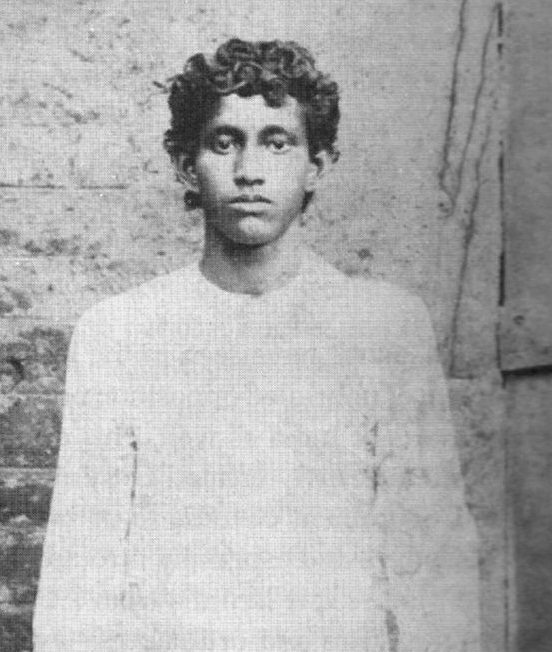
Alipore, 1908. After the Alipore bombing of 1908, revolutionaries such as Pandurang Mahadev Bapat had to go into hiding. Yet each new martyr drew more young people towards the cause, which was the opposite of what the government intended.
Revolutionaries in London and Maharashtra
India House, London. Some revolutionaries worked from the heart of the empire. India House in London became a centre for young Indians, and the Savarkar brothers, Vinayak and Ganesh, were prominent there. Pandurang Mahadev Bapat was associated with them, and he went into hiding after the Alipore bombing of 1908.
Madan Lal Dhingra. Madan Lal Dhingra, from Amritsar, went to London in 1905, stayed at India House and met Savarkar. On 1 July 1909 he shot Sir William Curzon Wyllie in London, saying it was revenge for the execution and deportation of Indian patriots. He was hanged at Pentonville Prison on 17 August 1909, at the age of twenty-six.
Nashik, 1909. In Maharashtra, the secret society Abhinav Bharat was active. On 21 December 1909 Anant Laxman Kanhere shot Jackson, the Collector of Nashik. Kanhere and Krishnaji Gopal Karve were hanged at Thane on 19 April 1910, when Kanhere was only eighteen.
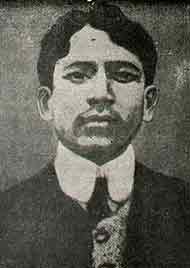
Why work abroad? Britain itself offered some freedom of movement and printing that was denied in India, and acts in London drew world attention. But it also meant that revolutionaries were watched closely by British police on both sides. The links between London, Bengal and Maharashtra show that revolutionary nationalism had become a network, not just scattered local acts.
The Ghadar Party and the Komagata Maru
Indians on the Pacific coast. In the early twentieth century many Indians, mostly from Punjab, worked in Canada and the United States. They faced racial discrimination and saw how a subject people was treated abroad. In 1913 they formed the Ghadar Party, also called the Hindi Association of the Pacific Coast, with Sohan Singh Bhakna, inspired by Lala Hardayal, as its founder president.
What does 'Ghadar' mean? Ghadar means 'revolt', a word that recalled 1857. The party aimed to free India by armed revolution. Pandurang Sadashiv Khankhoje from Maharashtra was among its founding members, which shows that it was not a purely regional body.
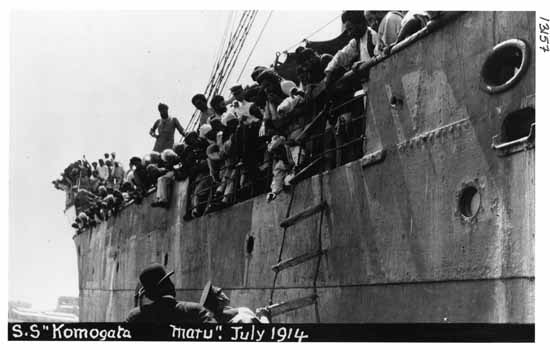
The Komagata Maru, 1914. Canada had rules that kept out Indians by requiring a continuous passage from India and 200 dollars on landing. In 1914 Baba Gurdit Singh, a businessman in Singapore, chartered the Japanese ship Komagata Maru, which reached Vancouver on 23 May 1914 with 376 passengers, mostly Punjabi Sikhs, but was refused entry. When the ship returned to India, police firing at Budge Budge near Calcutta on 29 September 1914 killed 19 passengers.
Why did it matter? The Komagata Maru showed Indians that being British subjects gave them no equality even within the empire. Anger over the incident strengthened the Ghadar movement. Today the station at Budge Budge carries the name Komagata Maru, and a memorial stands there.
Kartar Singh Sarabha. Kartar Singh Sarabha, a young student in California, returned to India to urge Indian soldiers to revolt. He was among those tried in the Lahore Conspiracy trial of 1915, held under the Defence of India Act. Sarabha and Vishnu Ganesh Pingle were hanged at Lahore on 16 November 1915, and Sarabha's courage made him a hero to later revolutionaries.
The British answer: the Morley-Minto Reforms of 1909
Reform alongside repression. The British did not rely only on force. In 1909 they passed the Indian Councils Act, called the Morley-Minto Reforms after John Morley, the Secretary of State, and Lord Minto, the Viceroy. Nationalists saw it as an attempt to win over the Moderates with concessions while isolating the radicals.
What did it change? The central legislative council was enlarged from 16 to 60 members. For the first time, an Indian, S.P. Sinha, was appointed to the Viceroy's Executive Council. Gokhale used the enlarged council to move the first non-official resolution in 1910, on indentured labour.
Separate electorates. The most far-reaching feature was the creation of separate electorates for Muslims, meaning that Muslim voters would elect Muslim members in separate constituencies. The British presented this as protection for a minority. Nationalists saw it as a way to divide Indians by religion, and it became a deeply contested part of Indian politics.
Why was it disappointing? The councils were larger, but they still had no real power over the government. Nationalists felt they had been offered the appearance of reform without its substance. The constitutional side of these Acts is traced in the Polity chapter on British-era Acts.
The war, the reunion and the Home Rule movement
The war of 1914. When the First World War broke out in 1914, the Congress promised to help Britain and asked for Indians to be admitted to the higher ranks of the army. Indian leaders hoped that loyalty in the war would be rewarded with constitutional powers. Meanwhile Gandhi returned to India from South Africa in January 1915, a return whose meaning is traced in the chapter on Gandhi's arrival.
Healing the split. The split of 1907 had weakened the Congress for years. At the Bombay session of December 1915, the Congress altered its constitution so that the Extremists could return, and Tilak announced that his followers would re-enter. In 1916 the two wings were reunited, helped by the efforts of Annie Besant.
The Home Rule movement. During the war, Tilak and Annie Besant led the Home Rule movement, which demanded self-government for India within the empire. It worked through local leagues and drew in a new generation; in Uttar Pradesh, Motilal Nehru was president of the Home Rule League and the young Jawaharlal Nehru a joint secretary. The movement pressed the British towards accepting responsible government as the final goal of their rule in India.
Why did Home Rule matter? It kept nationalist politics alive at a time when the Congress was cautious and the war made open protest difficult. It reached small towns and new groups, and trained workers who would later join the Gandhian movements. In this way it formed a bridge between the Swadeshi years and the mass struggles after 1917.
The Lucknow Pact of 1916
What was agreed? In 1916 the Congress and the Muslim League reached an understanding known as the Lucknow Pact. The Congress accepted separate electorates for Muslims and gave them weightage, meaning more seats than their share of the population in some provinces. In return, both bodies put forward a joint demand for self-government.
Why did they come together? By 1916 both bodies wanted more from the British than the reforms of 1909 had given. A joint demand from Hindus and Muslims carried far greater weight than separate ones. Leaders on both sides saw that the British could not easily ignore a united front.
Why was it significant? The Lucknow Pact was a rare moment of open cooperation between the Congress and the League. Together with the reunion of Moderates and Extremists in the same year, it made 1916 a high point of nationalist unity. The movement entered the next phase with a common demand rather than competing ones.
The other side of the coin. By accepting separate electorates, the Congress gave formal approval to the principle of political representation by religion. At the time this seemed a price worth paying for unity. In the long run, separate electorates became one of the most debated legacies of the period, a point Mains answers should weigh carefully.
Quick revision
- Phadke: armed rebellion 1879; died in prison, 1883.
- Chapekar brothers killed W.C. Rand (Pune plague commissioner), 22 June 1897.
- Anushilan Samiti: secret society of Bengal (Aurobindo, Sarala Devi; Bagha Jatin).
- Khudiram Bose: hanged 11 August 1908, aged 18 (Muzaffarpur case); with Prafulla Chaki.
- India House, London: Savarkar brothers; Dhingra shot Curzon Wyllie (1 July 1909), hanged 17 August 1909.
- Abhinav Bharat: Kanhere shot Jackson, Collector of Nashik (21 December 1909).
- Morley-Minto (Indian Councils Act 1909): council 16 → 60; separate electorates for Muslims; S.P. Sinha first Indian on the Executive Council.
- Ghadar Party 1913 (Hindi Association of the Pacific Coast): Sohan Singh Bhakna, inspired by Lala Hardayal.
- Komagata Maru: Baba Gurdit Singh; 376 passengers; Vancouver 23 May 1914; Budge Budge firing 29 September 1914 (19 killed).
- Sarabha and Pingle hanged 16 November 1915 (Lahore Conspiracy).
- 1915 Bombay: Extremists readmitted; 1916 reunion (Annie Besant); Home Rule: Tilak and Besant; Lucknow Pact 1916: separate electorates and weightage accepted, joint demand for self-government.