Special wastes: hazardous, e-waste, battery, bio-medical and construction waste
What UPSC IFoS asks from this chapter
Syllabus lines this chapter covers:
Prelims Paper I: General Studies · General issues on Environmental ecology, Bio-diversity and Climate Change - that do not require subject specialization.
UPSC IFoS questions from this module are being sorted into our bank.
Cut to standard depth for UPSC IFoS. 14 deeper paragraphs are in the full chapter.
Start from zero: waste that needs special care
Not all waste is the same. A banana peel will rot harmlessly in a compost pit, but an old mobile phone, a used syringe or a car battery can poison people if they are thrown on the same heap. Some wastes carry metals, acids, germs or chemicals that need special handling.
Special-waste rules over time
India produces growing amounts of such waste. More people own phones, laptops and electric vehicles, more hospitals treat more patients, and cities are constantly building and rebuilding. Each of these creates waste that ordinary municipal systems cannot safely handle.
Much of this waste is also valuable. Old electronics and batteries contain gold, copper, lithium and other metals, while concrete and bricks from demolished buildings can be crushed and reused. Handled well, special wastes can become raw materials; handled badly, they become poisons.
This chapter explains what makes waste hazardous and how it is treated. It then covers the rules for e-waste, batteries, bio-medical waste and construction waste, and the common thread that runs through them: making producers responsible.
Hazardous waste: what it is and how it is handled
Five warning signs. A waste is hazardous if it shows any one of five properties. It may be ignitable (catches fire easily), corrosive (eats away other materials), reactive (reacts violently with water or explodes), radioactive (gives off ionising radiation) or toxic (causes poisoning, disease, genetic damage or cancer). One property is enough.
Five signs of hazardous waste
Toxic versus hazardous. People often use the two words as if they mean the same thing, but they do not. Toxic means a substance can injure a living body once it enters its metabolism. Hazardous is broader: it includes toxic substances but also things that can burn, corrode or explode. Benzene, for example, is both toxic and ignitable.
Toxic is a part of hazardous
Where it comes from. Hazardous waste comes mainly from industries such as pesticides, electroplating, metal finishing, chemicals and photography. It also comes from hospitals, laboratories and households, in the form of old medicines, paints, batteries and spray cans. Though it is a small share of industrial waste, about 15%, its harm can be disastrous.
Handling hazardous waste in four steps
How it is managed. The strategy has four steps: minimise the waste, recycle what can be recovered, treat the rest to make it harmless, and dispose of it safely. Treatment may be physical, chemical (such as neutralising acids), biological, solidification (locking waste into a hard mass so it cannot leach) or incineration. What remains goes to a secured landfill.
The legal framework. India's waste rules are made under the Environment (Protection) Act. Hazardous waste is governed by the Hazardous and Other Wastes (Management and Transboundary Movement) Rules, 2016, which also control imports and exports of such waste. The international rules on cross-border movement of hazardous waste are explained in the chapter on chemicals, land and ocean treaties.
E-waste: the fastest-growing stream
What it is.E-waste is discarded electrical and electronic equipment, such as phones, computers, televisions, refrigerators and their parts. These items contain valuable metals like gold, silver and copper, but also toxic ones like lead, mercury and cadmium. As people replace devices faster, e-waste grows quickly.
The e-waste loop under EPR
The danger of informal recycling. Much e-waste in India has been handled by informal workers who burn wires to get copper or use acids to extract gold. These methods release toxic fumes and poison soil and water, often in crowded neighbourhoods. Workers, including children, face serious health risks.
Informal vs formal e-waste recycling
The 2022 rules. The E-Waste (Management) Rules, 2022 were notified in November 2022 and have been in force since 1 April 2023. They require all manufacturers, producers, refurbishers and recyclers to register on a portal developed by the CPCB. E-waste may be collected and processed only by registered producers, recyclers and refurbishers.
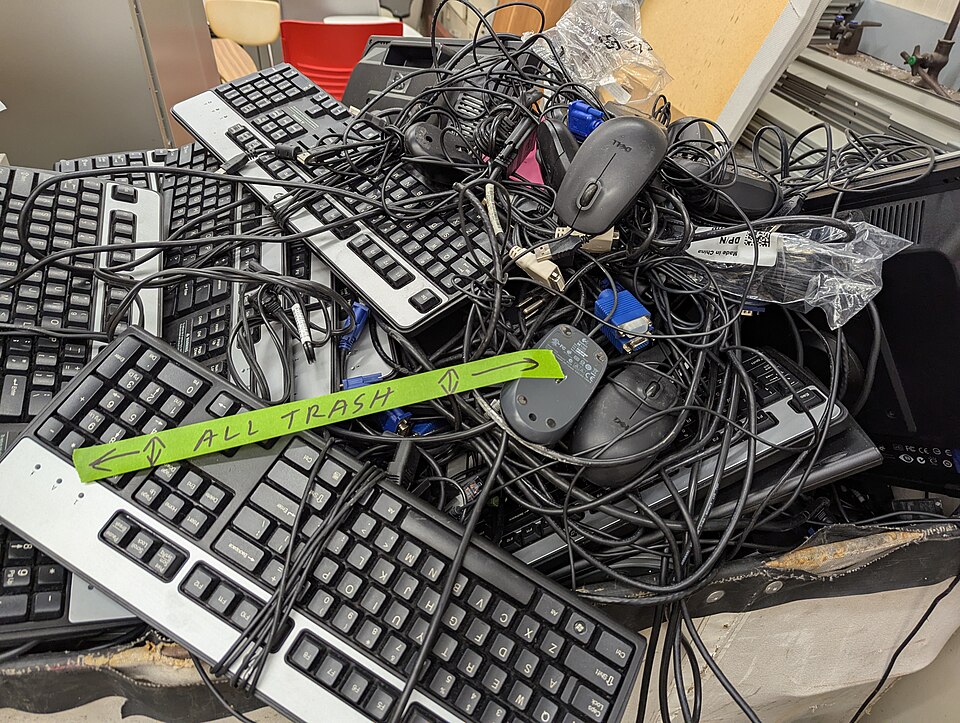
A heap of discarded electronicsPhoto: Reconrabbit, CC0, via Wikimedia Commons
How EPR works here. Under Extended Producer Responsibility, producers must ensure that a share of the electronics they sell is collected and recycled. They meet this by obtaining certificates from registered recyclers through the portal. This creates a formal, traceable chain from the shop to the recycling plant.
Why it matters. Proper recycling recovers scarce metals that India otherwise imports, and keeps toxic substances out of the environment. Repair and refurbishment extend the life of devices and cut waste further. The challenge is to bring informal workers into this formal system rather than push them out.
Battery waste: preparing for the electric age
Why batteries matter now. Batteries power phones, laptops, inverters, cars and, increasingly, electric vehicles. Old batteries contain lead, acids, lithium, cobalt and other materials that can harm soil and water. At the same time, these materials are scarce and valuable.
Battery rules for the electric age
The 2022 rules. The Battery Waste Management Rules, 2022 were published on 24 August 2022, replacing the Batteries (Management and Handling) Rules, 2001. They cover all types of batteries: electric vehicle, portable, automotive and industrial batteries. This was needed because the old rules focused mainly on lead-acid batteries.
Producers take responsibility. Under Extended Producer Responsibility, producers, including importers, are responsible for collecting waste batteries and getting them recycled or refurbished. EPR certificates can be traded through a central online portal, letting producers buy certificates from registered recyclers.
Closing the loop. The rules also require new batteries to contain a certain amount of recycled material. This creates steady demand for recovered metals and reduces the need for fresh mining. It also cuts India's dependence on imported critical minerals.
Why it matters for policy. As electric vehicles spread, a wave of used batteries will follow in the coming years. Building recycling capacity now prevents a future pollution problem. It also turns waste into a domestic source of critical minerals.
Bio-medical waste: keeping hospital waste safe
What it is.Bio-medical waste is waste from hospitals, clinics, laboratories and blood banks. It includes soiled bandages, used syringes and needles, body parts, cultures, discarded medicines and chemicals. Much of it is infectious and can spread diseases if mishandled.
Bio-medical waste: 10 categories to 4
Why it is dangerous. A needle thrown into a municipal bin can infect a waste picker with hepatitis or HIV. Infected waste dumped in the open can spread germs to animals and people. Burning it carelessly can release toxic smoke.
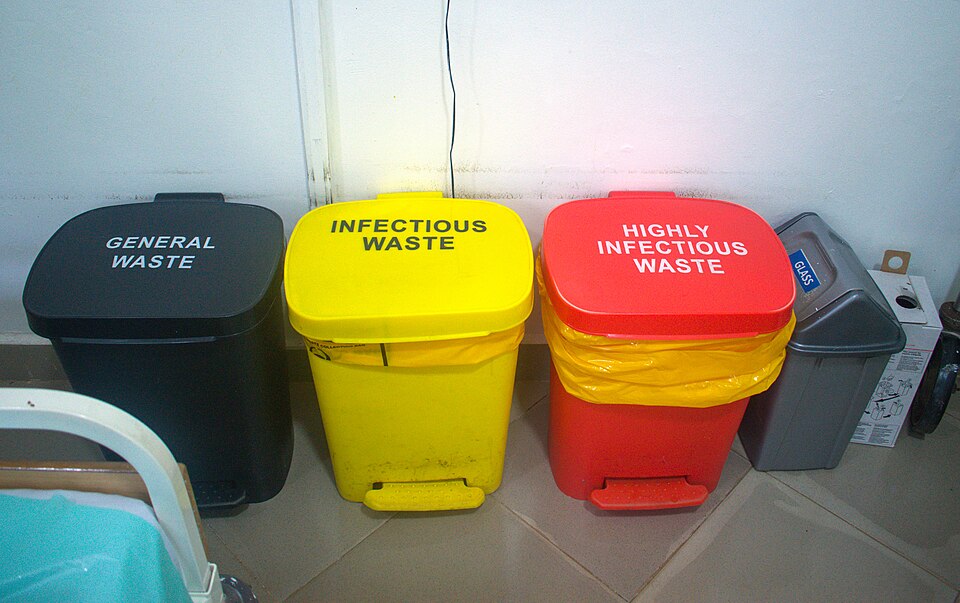
The 2016 rules. The Bio-Medical Waste Management Rules, 2016 simplified the system by reducing the categories of bio-medical waste from 10 to 4. Fewer categories make it easier for busy hospital staff to sort waste correctly at the bedside. Each category goes into a separate, coded container for the right treatment.
Cleaner plastics. The rules required hospitals to phase out chlorinated plastic bags, gloves and blood bags within two years. When chlorinated plastics are burned, they can release very toxic compounds such as dioxins. Removing them makes incineration of hospital waste safer.
Lessons from the pandemic. During COVID-19, masks, gloves and protective kits created a surge of infectious waste, including from homes. This showed that bio-medical waste is not only a hospital issue. Common treatment facilities and clear rules for household medical waste are needed.
Construction and demolition waste
The problem. Building roads, flyovers and houses, and tearing down old ones, produces huge amounts of concrete, bricks, sand, steel and wood. This debris is often dumped on roadsides, in rivers and on wetlands. It also adds dust to city air, one of the main causes of particulate pollution.
From debris to building material
The 2016 rules. The Construction and Demolition Waste Management Rules were notified for the first time in March 2016. Every generator must segregate such waste and deposit it at collection centres or processing facilities. Large generators, those producing over 20 tonnes a day or 300 tonnes per project in a month, must submit a waste management plan, get it approved and segregate waste into four streams.
Creating a market for recycled material. Recycling debris works only if someone buys the products. So the rules ask local authorities to use 10-20% materials made from construction and demolition waste in municipal and government contracts. Crushed concrete and bricks can become aggregate, paving blocks and fill material.
Processing facilities. The rules set deadlines for cities to build processing plants, with the largest cities required to act first. Such plants reduce the need to dig fresh sand and stone from rivers and hills. They also save scarce landfill space.
Quick revision
Hazardous = ignitable, corrosive, reactive, radioactive or toxic; broader than toxic; ~15% of industrial waste; minimise → recycle → treat → secured landfill.
Rules under the EPA: Plastic, Bio-medical, C&D, Hazardous and Other Wastes (2016); E-waste and Battery (2022); SWM replaced in 2026.
E-Waste Rules 2022: notified Nov 2022, in force 1 Apr 2023; manufacturers, producers, refurbishers, recyclers register on CPCB portal; only registered handle e-waste; EPR.
Exam-style questions on this chapter. Pick an answer to see the explanation. 0 of 9 answered
Consider the following statements:
1. All toxic wastes are hazardous, but not all hazardous wastes are toxic.
2. A waste must show all five properties of ignitability, corrosiveness, reactivity, radioactivity and toxicity to be called hazardous.
Which of the statements given above is/are correct?
In hazardous waste treatment, 'solidification' mainly aims to:
The E-Waste (Management) Rules, 2022 came into force on:
Under the E-Waste (Management) Rules, 2022, which of the following must register on the portal developed by the CPCB?
1. Manufacturers and producers
2. Refurbishers
3. Recyclers
Select the correct answer using the code below:
Consider the following statements about the Battery Waste Management Rules, 2022:
1. They cover electric vehicle batteries.
2. Importers of batteries are excluded from Extended Producer Responsibility.
Which of the statements given above is/are correct?
The Bio-Medical Waste Management Rules, 2016 changed the number of bio-medical waste categories:
Assertion (A): The Bio-Medical Waste Management Rules, 2016 required chlorinated plastic bags, gloves and blood bags to be phased out.
Reason (R): Burning chlorinated plastics can release highly toxic compounds such as dioxins.
Under the Construction and Demolition Waste Management Rules, 2016, local authorities are asked to use what share of materials made from C&D waste in municipal and government contracts?
Under which Act are India's waste management rules, such as the e-waste and bio-medical waste rules, notified?
Previous year questions
Previous year questions for UPSC CSE will appear here once each one is checked word for word against the official question paper.
Frequently asked questions
What goes into the yellow biomedical waste bag?
Human and animal anatomical waste, soiled dressings, expired medicines and chemical waste, which is usually incinerated.
Which convention controls cross-border movement of hazardous waste?
The Basel Convention of 1989.
Why is e-waste dangerous?
It contains lead, mercury, cadmium and other toxins that leak when it is burnt or broken in informal recycling.