

UPSC IFoS · Module 57 · standard depth · 15 min
Pollution laws and clearances: Water Act, Air Act, Environment Protection Act, EIA and CRZ
What UPSC IFoS asks from this chapter
Syllabus lines this chapter covers:
- Prelims Paper I: General Studies · General issues on Environmental ecology, Bio-diversity and Climate Change - that do not require subject specialization.
- Main: optional subjects (choose any two, 2 papers each) · Forestry
UPSC IFoS questions from this module are being sorted into our bank.
Cut to standard depth for UPSC IFoS. 14 deeper paragraphs are in the full chapter.
Start from zero: who stops the factory next door?
Imagine a factory starts pouring coloured water into the river your village drinks from. Its chimney blackens the sky every evening. You complain to the owner, who says he has every right to run his business.
Who decides that he does not? In India, the answer lies in a set of pollution laws. They create boards that set standards and give or refuse consent to run, and they give the government power to close a polluting unit.
These laws also decide whether a big project, such as a port, a mine or a power plant, can be built at all. That decision is made through an environmental clearance after the project's impacts are studied. Special rules protect the coast, where land and sea meet.
This chapter explains the Water Act, the Air Act and the Environment (Protection) Act, and how recent reforms changed punishments. It then covers environmental clearance, coastal rules, and why enforcement remains weak.
The Water Act, 1974 and the pollution boards
Why it came first. By the early 1970s, untreated sewage and factory waste were choking India's rivers. After the 1972 Stockholm conference, India moved to build a legal system against pollution. The Water (Prevention and Control of Pollution) Act, 1974 was its first major pollution law.
The boards. The Act created the Central Pollution Control Board (CPCB), constituted on 23 September 1974, and State Pollution Control Boards (SPCBs). The CPCB advises the Centre, sets standards and coordinates the states. The SPCBs do most of the field work, inspecting units and testing water.
Consent to operate. A unit that discharges waste water into a river, well or sewer needs the consent of the SPCB. The board can impose conditions on the quality of the discharge and refuse or cancel consent. A 1988 amendment strengthened the boards by letting them order closure and stop power or water to a polluting unit, and allowed citizens to take polluters to court after notice.
Money for the boards. A separate Water Cess Act of 1977 levied a cess on water used by certain industries and local bodies. The money helped fund the pollution boards.
The 2024 change. The Water (Prevention and Control of Pollution) Amendment Act, 2024 replaced imprisonment for many offences with penalties of ₹10,000 to ₹15 lakh. It applies at first to Himachal Pradesh, Rajasthan and the Union Territories. The idea is to treat minor lapses as civil wrongs, and keep courts for serious cases.
The Air Act, 1981 and clean-air plans
Why a separate law. Smoke from factories, power plants and vehicles was a different problem from dirty water. So Parliament passed the Air (Prevention and Control of Pollution) Act, 1981. Instead of creating new bodies, it gave the same CPCB and SPCBs powers over air.
How it works. A state can declare an air pollution control area. Inside such an area, an industry needs the consent of the SPCB to operate, and must meet emission standards. The board can also restrict the kind of fuel burned there.
Noise and closure. A 1987 amendment brought noise within the meaning of air pollution. It also gave the boards power to order closure of a polluting unit and allowed citizens to approach the courts. These changes mirrored the 1988 changes to the Water Act.
Beyond the law: NCAP. Laws set limits, but many cities still breathe dangerous air. The National Clean Air Programme (NCAP), launched in January 2019, covers 131 cities in 24 States and UTs. Its target is a reduction of up to 40% in PM10 levels by 2025-26, through city-specific plans.
Why it matters. Air pollution crosses city and state borders, as smoke from crop burning shows each winter. A city plan alone cannot clean air that blows in from elsewhere. This is why experts call for planning across whole airsheds, not just city limits.
The Environment (Protection) Act, 1986: the umbrella law
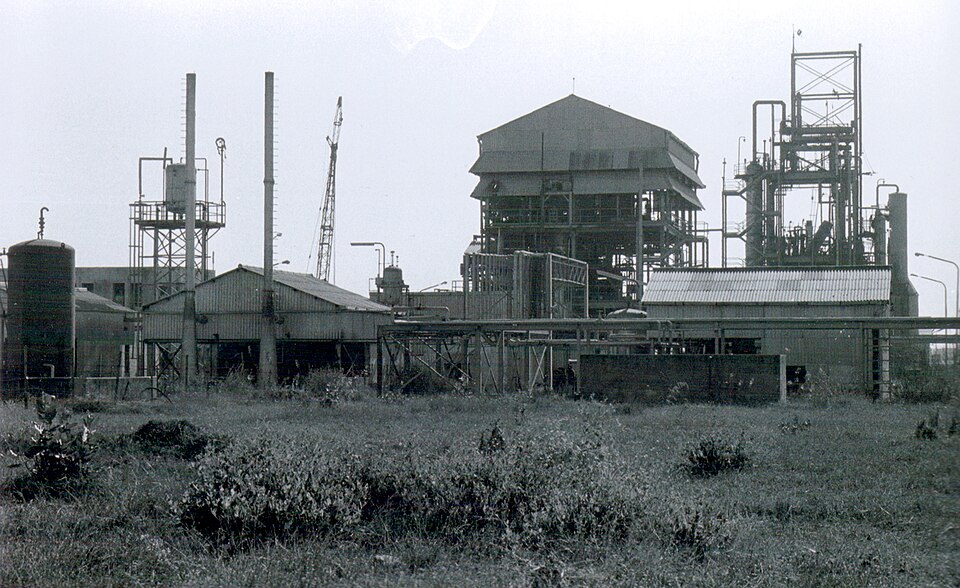
Why it was needed. On the night of 2–3 December 1984, gas leaked from a pesticide plant in Bhopal, killing thousands of people. The tragedy showed that the Water and Air Acts could not deal with hazardous chemicals and industrial disasters. In response, Parliament passed the Environment (Protection) Act, 1986.
Why "umbrella". The earlier laws each dealt with one medium, water or air. The EPA covers the environment as a whole and gives the Centre broad powers. Many later rules, including those on waste, hazardous chemicals, coastal zones and clearances, are made under it.
Section 3: power to act. Section 3 gives the Central Government power to take all measures it thinks necessary to protect and improve the environment. These include setting standards for emissions and discharges and restricting where industries may be located. The Centre can also create authorities under this section.
Section 5: power to direct. Section 5 lets the Centre issue directions to any person or authority. These can include the closure, prohibition or regulation of any industry, and the stoppage of electricity, water or any other service. This direct closure power made the EPA much stronger than earlier laws.
Citizens can complain. The Act also lets a citizen take a polluter to court after giving notice to the government. This opened the door for people to enforce the law when officials are slow. Together with court rulings, it gave India a strong legal base on paper.
Jan Vishwas: from jail to fines
What changed. The Jan Vishwas (Amendment of Provisions) Act, 2023, passed by the Lok Sabha on 27 July and the Rajya Sabha on 2 August 2023, amended many laws to reduce small criminal offences. For the environment, it completely decriminalised the penal provisions of the Environment (Protection) Act with effect from 1 April 2024. Imprisonment was replaced by monetary penalties decided by adjudicating officers, and the adjudication process under the Air Act was changed too.
Why the government did it. The aim is "ease of doing business" and "ease of living". Officials argued that the fear of jail for minor or technical lapses led to harassment and corruption. Fines decided quickly by an officer, they said, would be more certain than criminal cases that drag on for years.
The concerns. Critics argue that jail was a real deterrent for big polluters, while a fine may simply become a cost of doing business. Penalties also depend on how strongly officers enforce them. The balance between trust in business and protection of people is the key debate.
The bigger picture. The 2024 Water amendment follows the same idea of replacing jail with penalties. Together, these changes mark a shift in Indian environmental law from punishment to penalty. How well they work will depend on whether fines are high enough and collected in practice.
Environmental clearance: the EIA Notification, 2006
What EIA is. Environment Impact Assessment (EIA) is a study of how a proposed project will affect air, water, land, wildlife and people before it is built. The idea is simple: it is cheaper and wiser to prevent damage than to repair it. A project is changed, moved or refused if its harm is too great.
The legal basis. India's current system rests on the EIA Notification, 2006, issued as S.O. 1533(E) on 14 September 2006 under the Environment (Protection) Act. It lists the kinds of projects, such as mines, thermal power plants, ports, dams and large buildings, that need prior environmental clearance. Without this clearance, work on the project cannot legally start.
Two levels. Projects are split into Category A and Category B. Category A projects, usually the larger ones, are appraised at the Central level by the Ministry. Category B projects are handled at the State level by a State Environment Impact Assessment Authority.
Public voice. The process includes a stage of public consultation, where people likely to be affected can raise objections. This is meant to give villagers, fishers and tribal communities a say before their land or river changes. In practice, hearings are sometimes rushed, held far away or written in a language people cannot read.
The criticisms. EIA reports are prepared by consultants paid by the project developer, which creates a conflict of interest. Conditions attached to clearances are often poorly monitored after work starts. Courts have repeatedly been asked to check projects cleared on weak studies.
Coastal Regulation Zone: protecting the shore
Why coasts need special rules. India's coast is home to fishing villages, mangroves, beaches, coral reefs and busy ports. Building too close to the sea destroys natural buffers against storms and erosion, and can push out fishers. So the Centre, using its EPA powers, regulates what can be built along the coast.
Three notifications. The first Coastal Regulation Zone (CRZ) notification came in 1991. It was replaced in 2011, and again in 2019. Each version divides the coast into zones with different rules, measured from the high tide line.
The 2019 change. In rural coastal areas, the 2019 rules created two sub-zones. CRZ-IIIA covers densely populated rural areas with a population density of 2,161 per sq km, where the no-development zone shrank to 50 m from the high tide line. CRZ-IIIB, the less populated rural areas, keeps a no-development zone of 200 m.
The debate. Supporters say the change allows housing, tourism and jobs for growing coastal populations. Critics fear that more building near the sea will harm mangroves and dunes and make coasts more exposed to cyclones and sea-level rise. For fishers, the key question is whether their traditional spaces are protected.
Why enforcement stays weak
Strong laws, weak results. India has many environmental laws, yet rivers stay polluted and cities choke. The gap lies mostly in enforcement. Pollution boards are often short of staff, laboratories and money.
Punishing, not preventing. For years the laws worked mainly after damage was done, through fines and court cases. Many industries need several separate permissions, which creates delay without real checking. Public participation in decisions has often been limited.
Priority by risk. To focus limited staff, the CPCB classifies industries by how much they pollute and keeps a list of 17 categories of heavily polluting industries. These units face closer monitoring. Continuous online monitoring of emissions is another tool used to watch them.
Hard choices. Strict rules can face resistance, as when Delhi had to shift public buses to CNG and phase out old diesel vehicles. Such steps show that clean air and water need political will and public support, not just laws. The courts, as explained in the chapter on the Constitution and the courts, have often filled the gap.
Quick revision
- Water Act 1974: first major pollution law; CPCB constituted 23 Sep 1974 under it; SPCBs give consent; 1988 amendment: closure, citizen suit; Cess Act 1977.
- Water Amendment 2024: jail replaced by penalties ₹10,000–₹15 lakh; first for HP, Rajasthan, UTs.
- Air Act 1981: air pollution control areas, consent; 1987 amendment added noise.
- NCAP: Jan 2019; 131 cities, 24 States/UTs; up to 40% PM10 cut by 2025-26.
- EPA 1986: after Bhopal (1984); umbrella law; Section 3 measures; Section 5 directions incl. closure, cutting power/water.
- Jan Vishwas Act 2023: EPA penal provisions decriminalised from 1 Apr 2024; penalties by adjudicating officers.
- EIA Notification 2006: S.O. 1533(E), 14 Sep 2006, under EPA; Category A Centre, Category B State authority; public consultation.
- CRZ: notifications 1991, 2011, 2019; IIIA (2,161/sq km) NDZ 50 m; IIIB 200 m.
- 17 categories of heavily polluting industries for closer monitoring.