

UPSC IFoS · Module 10 · standard depth · 27 min
Partition of Bengal, Swadeshi and the Extremists
What UPSC IFoS asks from this chapter
Syllabus lines this chapter covers:
- Prelims Paper I: General Studies · History of India and Indian National Movement.
- Main: General Knowledge · The paper will also include questions on Indian Polity including the political system and the Constitution of India, History of India and Geography of a nature which the candidate should be able to answer without special study.
UPSC IFoS questions from this module are being sorted into our bank.
Cut to standard depth for UPSC IFoS. 9 deeper paragraphs are in the full chapter.
Start from zero: what happens when a ruler cuts a people in two?
Imagine that the government decides to split your state into two, drawing the line so that neighbours, relatives and old friends suddenly live in different provinces. The officials say it is only for easier administration. Many people suspect a different motive: to weaken a region that has become too vocal.
That is roughly what happened to Bengal in 1905. Bengal was then a huge province and the home of the most active educated class in India. When Lord Curzon divided it, Bengalis of every background felt that their homeland had been deliberately broken.
The reaction surprised the British. Instead of petitions, people answered with boycott and Swadeshi: they refused British goods and built Indian ones. Songs, processions, newspapers and new schools spread the message far beyond the educated few.
The same storm divided the Congress. A group of radical leaders, impatient with the Moderates, wanted to turn the protest into a national movement for Swaraj. This chapter follows that story from the partition to the split at Surat.
Keep one question in mind as you read. Did the partition of Bengal weaken Indian nationalism, as the British hoped, or make it stronger?
Key events at a glance
This table lists the main events of the Swadeshi years. Each is explained in the sections below.
| When | What happened | Why it matters |
|---|---|---|
| 7 August 1905 | Calcutta Town Hall meeting; boycott resolution; Swadeshi Movement launched | Protest moves from petitions to economic pressure. |
| 16 October 1905 | Partition of Bengal comes into effect | The anti-partition movement spreads. |
| December 1905 | Benares session; dispute over boycott | First open rift between Moderates and Extremists. |
| August 1906 | English daily Bande Mataram launched under B.C. Pal | A national voice for the radicals. |
| December 1906 | Calcutta session under Naoroji declares Swaraj the goal; Muslim League founded at Dacca (30 December) | A shared goal, and a new rival platform. |
| December 1907 | Congress splits at Surat | Two wings go separate ways until 1916. |
| 1908 | Tilak arrested and deported to Mandalay | Repression of the radical leadership. |
| 1911 | Partition annulled; capital shifted to Delhi | The movement wins its main demand. |
Notice the arc of this table. It begins with a protest against one decision and ends with that decision reversed, but in between the national movement itself changed shape.
The partition of Bengal: stated reasons and real aims
What was done? Lord Curzon, the Viceroy, decided to partition the province of Bengal, and the partition came into effect on 16 October 1905. The government said that Bengal was too large to be governed well, so splitting it would make administration easier. On paper, it looked like a routine change of boundaries.
Why did Indians reject the official reason? Educated Indians saw a political motive behind the administrative language. Bengal was the centre of nationalist activity, and dividing it would weaken that centre. The real aim, as nationalists understood it, was divide and rule, which meant splitting people by region and by religion so that they could not act together.
Curzon's earlier blows. The partition came after other moves that angered educated Bengal. In 1899 Curzon cut the number of elected members of the Calcutta Corporation, mainly to please European business. The Universities Act of 1904 reduced elected members of the senate and gave officials the power to affiliate colleges and give grants, although the only Indian on the Universities Commission, Gurudas Banerji, had disagreed.
How the plan was made. Bengal was then a huge province that also included Bihar and Orissa, and Assam had been separated from it only in 1874. Curzon and his advisers, Andrew Fraser and H.H. Risley, could have separated the non-Bengali areas, as nationalists themselves had urged. Instead an official note put the real aim bluntly: "Bengal united is a power, Bengal divided will pull in several different ways."
What the new province looked like. The plan took shape from Curzon's minute of 1 June 1903 and was announced on 19 July 1905. The new province of Eastern Bengal and Assam, with Dacca as its capital, took the Chittagong, Dacca and Rajshahi divisions, Hill Tippera, Malda and Assam. Curzon openly hoped Dacca would become a centre where Muslim interests would be strong, a rival to nationalist Calcutta.
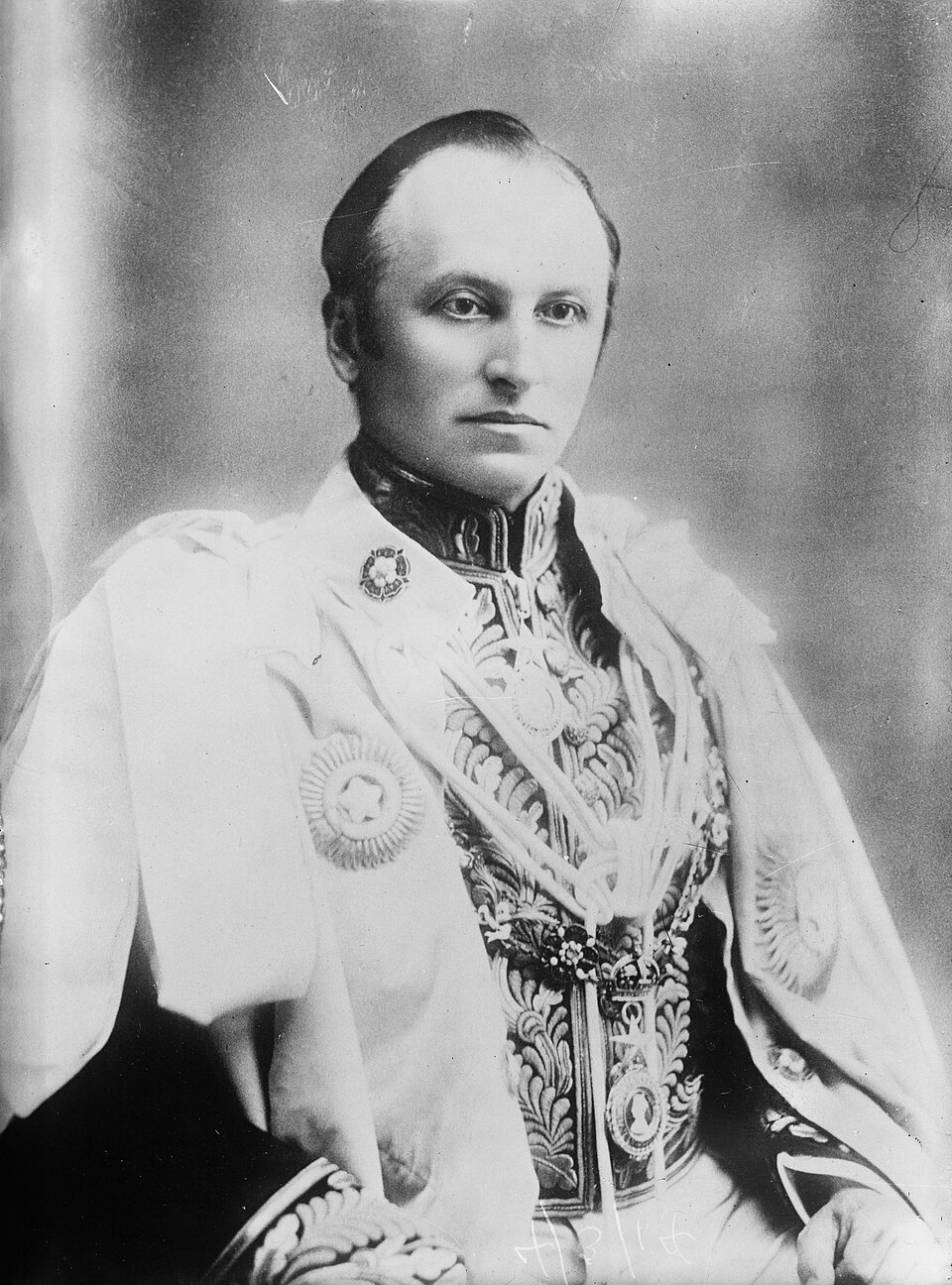
How did people feel? For Bengalis, the partition was not a line on a map but a wound to their sense of identity. People who shared a language, a literature and a history were now told they belonged to different provinces. That emotional shock is why the response went far beyond the usual circle of lawyers and journalists.
How did it end? The protest did not die down, and in 1911 the partition was annulled. In the same year the capital of British India was shifted from Calcutta to Delhi. The annulment showed that determined mass protest could make the government reverse a major decision, a lesson that later movements did not forget.
Swadeshi and boycott: a new way to fight
How it began. The Swadeshi Movement was launched on 7 August 1905 at a meeting in the Calcutta Town Hall, even before the partition came into effect. The meeting adopted a resolution for the boycott of foreign goods. In 2015 the Government of India declared 7 August National Handloom Day to mark that day.
What do 'Swadeshi' and 'boycott' mean? Swadeshi means 'of one's own country', so the movement asked people to use goods made in India. Boycott was its other face: refusing to buy British goods, especially cloth. Together they hit British trade and encouraged Indian industry at the same time.
Why was this a turning point? Petitions asked the British to change; boycott put pressure on them directly. Ordinary people, by choosing what to buy and wear, became part of politics. Tilak gave great importance to boycott because it turned every household into a site of protest.
Building, not only refusing. Swadeshi was also constructive. Indians set up textile mills, banks, hosiery units, tanneries, chemical works and insurance companies, and the industrialists of Bombay played a significant role. The movement also promoted national education and Indian languages, so that the young would learn in an Indian setting.
Where boycott came from. At first the protest used the old moderate methods of press campaigns, meetings and petitions, and they had no effect. The call to boycott British goods first appeared in Krishnakumar Mitra's paper Sanjivani on 3 July 1905, and the Town Hall meeting of 7 August adopted it. On partition day Rabindranath Tagore called for raksha bandhan, and Ramendra Sundar Trivedi for arandhan, keeping every hearth unlit as a sign of mourning.
Names to remember. Swadeshi enterprises included Bengal Chemicals, the Banga Lakshmi Cotton Mills, Mohini Mills and the National Tannery, along with swadeshi banks, insurance and steam navigation companies. The charkha became a symbol of economic self-reliance, and swadeshi melas sold handicrafts.
From picketing to national education. When students picketed shops, the Carlyle Circular of 22 October 1905 threatened their schools with the loss of grants and affiliation. Many students left these "schools of slavery", and leaders built a parallel system: the Bengal Technical Institute (25 July 1906, the seed of today's Jadavpur University) and the Bengal National College (15 August 1906), with Aurobindo Ghosh as principal.
Symbols of unity. The tying of rakhi became a symbol of the unity of the people of Bengal across the new boundary. Such symbols mattered because they let people of different classes and religions show solidarity in a simple, visible way. The use of symbols, songs and everyday choices became a lasting feature of Indian mass politics.
How the movement spread: songs, papers, processions and a flag
A song becomes a slogan. 'Vande Mataram' became the cry of the movement. The Bande Mataram Sampradaya was formed in North Calcutta in October 1905, and in November 1905 two hundred students at Rangpur were fined for chanting the song. When schoolboys are fined for singing, it shows how much the government feared the mood it carried.
Barisal. In April 1906 the Bengal Provincial Conference at Barisal was prohibited. Yet on 20 May 1906 a procession of more than ten thousand people, Hindus and Muslims together, marched through Barisal. Such scenes showed that the movement had moved from meeting halls to the streets.
Samitis carry the message. Volunteer bodies called samitis sprang up in Calcutta and the districts: the Dawn Society, the Anti-Circular Society, the Swadesh Bandhab, the Brati and the Anushilan, among others. They preached boycott, ran national schools, did relief work in famines and set up arbitration committees. The Swadesh Bandhab Samiti alone had 175 village branches in Barisal district, and folk singers such as Mukunda Das carried swadeshi songs to the villages.
The power of the press. In August 1906 the English daily Bande Mataram was launched under Bipin Chandra Pal, and Aurobindo later joined it as joint editor. In Bengali, Brahmabandhav Upadhyay's paper Sandhya popularised Swaraj and Swadeshi, and he was arrested for sedition on 10 September 1907, dying the next month. The government's use of sedition charges shows that it saw the press as a real threat.
Beyond Bengal. The movement did not stay in one province. In May 1907 young people in Lahore protested against the arrest of Swadeshi leaders at Rawalpindi. In the far south, on 27 February 1908, about a thousand workers of the Coral Mills at Tuticorin went on strike in solidarity with the Swadeshi Steam Navigation Company, an Indian shipping venture.
A flag is born. The story of India's national flag began in 1906, during the Swadeshi and Boycott movement, when a flag was first hoisted in Calcutta. A flag gave the idea of the nation a shape that people could see and salute. From this point on, flags, songs and slogans were part of every major phase of the struggle.
The Extremists: Lal, Bal and Pal
Who were they? The radical wing of the Congress, called the Garam Dal, was led by Lala Lajpat Rai of Punjab, Bal Gangadhar Tilak of Maharashtra and Bipin Chandra Pal of Bengal, together known as Lal-Bal-Pal. The years from 1905 to 1918 are often called the era of the Garam Dal. Notice that its three leaders came from three different regions, which itself showed that the movement was becoming national.
How did they differ from the Moderates? The Extremists did not trust British justice and saw little use in petitions. They relied on mass protest, boycott and Swadeshi, and wanted Swaraj rather than small reforms. Most importantly, they set out to bring peasants, workers, students and women into the movement.
Tilak's methods. Tilak, born in 1856, wrote in his paper Kesari and gave the slogan 'Swaraj is my birthright and I shall have it'. From 1893 he turned the Ganesh festival into a public celebration, and he did the same with Shivaji Jayanti. These festivals brought large numbers of ordinary people together and filled them with pride in their own heritage.
Why use festivals and pride? The Extremists understood that an abstract idea like Swaraj moves people only when it is tied to things they already love. Festivals, heroes and songs gave nationalism an emotional base that council debates never could. Critics noted, however, that symbols drawn from one religion could make others feel left out, a tension that later leaders had to manage.
Three trends in Swadeshi Bengal. The moderates, such as Surendranath Banerjea and Krishnakumar Mitra, still trusted British justice and pinned their hopes on the Liberal Morley as Secretary of State, and they quickly lost popularity. The constructive swadeshi group, including Rabindranath Tagore, Satishchandra Mukherji and Aswini Kumar Dutta, stressed atmashakti (self-reliance) through Indian enterprises, national schools and village work. Political extremism spoke through papers such as New India (Bipin Chandra Pal), Bande Mataram (Aurobindo Ghosh), Sandhya (Brahmabandhav Upadhyay) and Yugantar (Bhupendranath Dutta), and demanded swaraj free of all British connection.
From boycott to passive resistance. The extremists wanted boycott widened from goods and schools to British courts, services and administration, which Bipin Chandra Pal called passive resistance. In April 1907 Aurobindo Ghosh went further with "organised and relentless boycott", including the social boycott of loyalists and civil disobedience of unjust laws. For them swaraj mattered so much that undoing the partition looked a small aim, which shows how a regional protest had become a national struggle.
Where did their ideas come from? Extremism did not appear suddenly in 1905; it had been growing slowly for decades. Its thinkers drew on Bankim Chandra Chattopadhyay, Swami Dayananda and Swami Vivekananda, who urged Indians to take pride in their own civilisation instead of copying the West. Aurobindo raised patriotism to a kind of worship, writing, "I know my country as my mother.
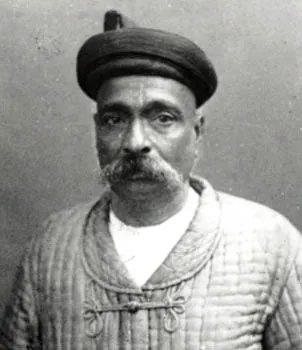
I adore her. I worship her." The Extremists formed three groups: Maharashtra under Tilak, Bengal under Bipin Chandra Pal and Aurobindo, and Punjab under Lajpat Rai.
How the rift opened in Maharashtra. Tilak opposed government interference in family life and quarrelled with the reformers over the Age of Consent Bill of 1891. In 1895 he would not let the National Social Conference, which the Moderates influenced, meet in the Congress pavilion at Poona.
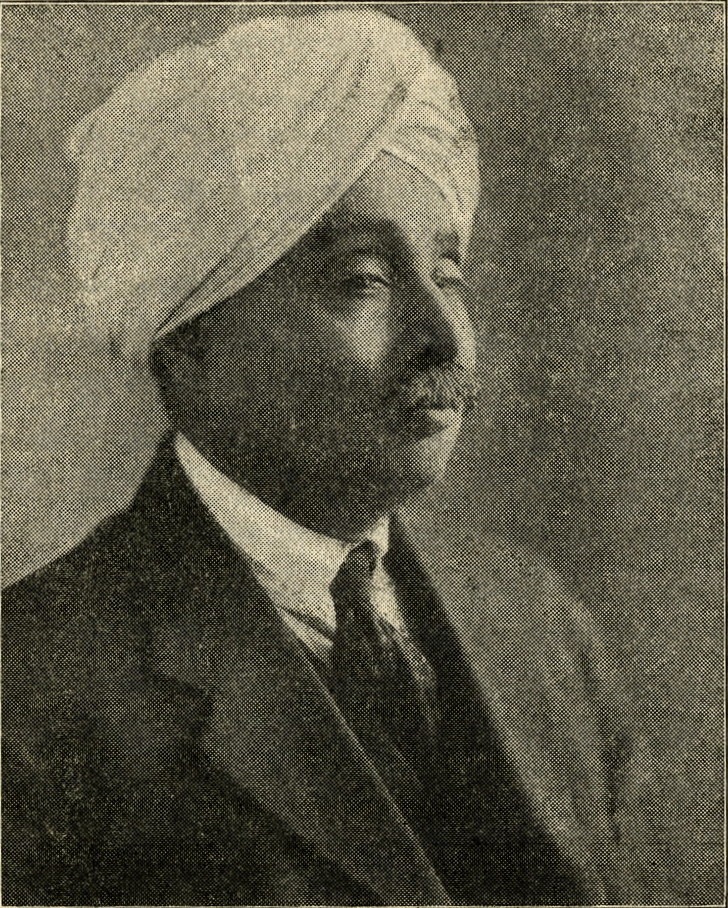
The first Shivaji festival was held on 15 April 1896, and the founding of the Deccan Sabha on 4 November 1896 completed the split in Maharashtra. Aurobindo, meanwhile, had attacked the Moderates in a series called 'New Lamps for Old' in Indu Prakash in 1893–94.
What did Tilak actually propose? Tilak did not ask Indians to take up arms. He asked them to stop helping the foreign power to rule, to run their own courts and, when the time came, to stop paying taxes.
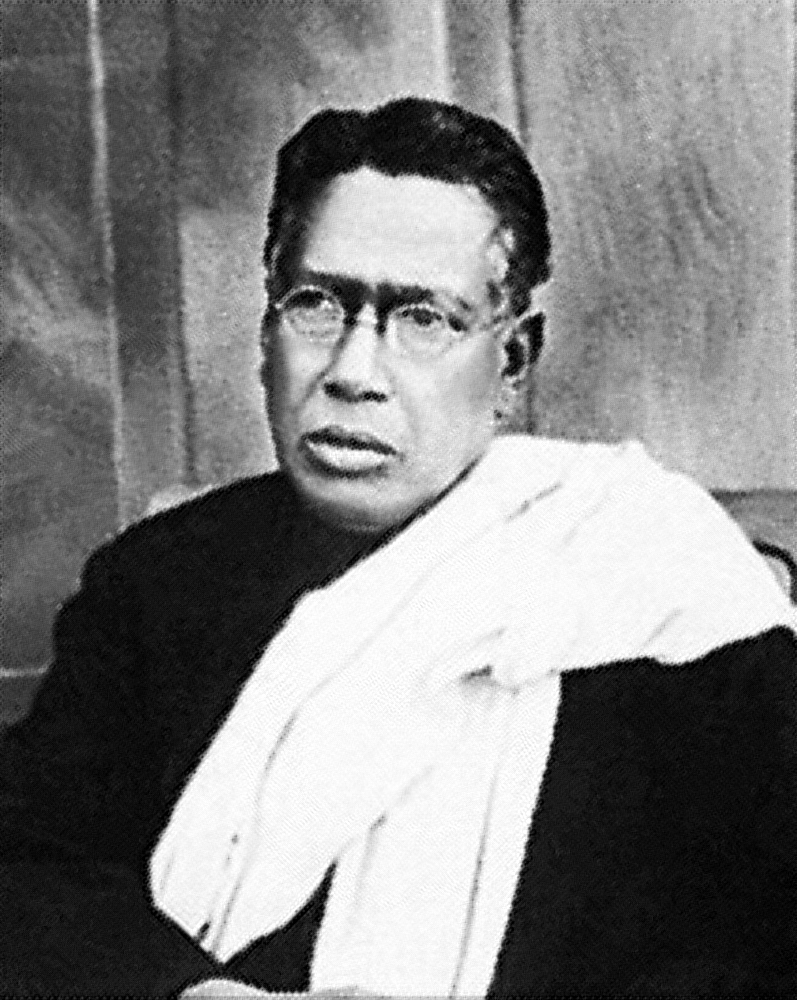
Aurobindo wanted a 'Swadeshi Swaraj', not a copy of European government. In goals the two wings were closer than their language suggests, since Gokhale and Naoroji also spoke of self-rule; the real quarrel was over methods.
One word, four meanings. Both wings took part in Swadeshi, but they understood it differently. For Gokhale, who learned it from Ranade, it meant industrial regeneration, and for Surendranath Banerjea it was a movement to protect Indian industry.
For Tilak and Lajpat Rai it was moral training in self-help and a weapon of political agitation. For Aurobindo it was a faith in India's spiritual destiny.
From Benares to Surat: the Congress splits
Benares, December 1905: the first rift. The quarrel began over tactics. At the Benares session, Tilak and Lajpat Rai wanted the Congress to boycott the visit of the Prince of Wales in protest against the partition. The Moderates opposed this, fearing that it would look disloyal and close the door to reform.
Calcutta, December 1906: a compromise. To keep the party together, the Moderates invited the respected Dadabhai Naoroji to preside. Under him, the Congress declared Swaraj to be its goal. For a moment the two wings seemed to agree, but they meant different things by the word and wanted different methods to reach it.
Surat, December 1907: the break. The session was held at Surat in December 1907, with Rash Behari Ghose as the designated President. The Extremists pressed for resolutions on Swaraj, boycott and national education, while the Moderates wanted a softer course. Amid uproar over the chair, the session broke up and was suspended, and the Congress split.
Two men from Poona. The quarrel was also personal. Tilak and Gokhale both came from Poona, and the two had clashed there since the early 1890s.
Tilak had been pushed out of the Deccan Education Society after a quarrel with G.G. Agarkar. Pherozeshah Mehta, D.E. Wacha and the Bombay group, who controlled the Congress establishment, had distrusted Tilak ever since.
Inside the Calcutta session. Before the 1906 session, Pal and Aurobindo wanted Tilak as President. The Moderates, without consulting the Reception Committee, wired Dadabhai Naoroji, and once he accepted the Extremists had to give way. The Extremists were in a majority there, and the resolutions on partition, Swadeshi and boycott were rephrased as a hurried compromise that settled nothing.
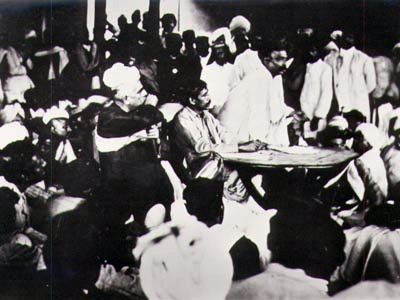
From Nagpur to Surat. The 1907 session was first fixed for Nagpur, but Pherozeshah Mehta moved it to Surat, where the Moderates expected to have their way. Gokhale backed Rash Behari Ghose for President, and the Moderates were determined to keep Tilak out of the chair. When Tilak was not allowed to speak on the election, the hall broke into shouting, waving of sticks and breaking of chairs.
Why did they split? The deeper cause was a difference of belief. The Moderates still hoped that British reforms would come through persuasion, while the Extremists had lost that faith and wanted to rely on the people's own strength. Neither side could accept the other's methods, and the partition had made the question urgent.
What did the split cost? With the Extremists outside the Congress, the government could deal with them separately, and the movement lost its united front. The two wings came together again only in 1916, as explained in the chapter on revolutionaries, Home Rule and the Lucknow Pact.
Minto's joy, Morley's warning. Viceroy Minto told Secretary of State Morley that the split was 'a great triumph for us'. Morley saw further and predicted that the Extremists would in the end capture the Congress.
That is what happened: the Extremists returned in 1916, and the Moderates left in 1918. It is often said that the Moderates were the brain of the movement and the Extremists its heart, and the movement needed both; Gandhi, Gokhale's political disciple, later joined reason with faith in his own way.
Repression, the Muslim League and the annulment
Repression. The government answered the radicals with arrests and prosecutions. Tilak was arrested in 1908 and deported to Mandalay in Burma, far from his followers. Editors were tried for sedition, and meetings were banned, as at Barisal.
The Muslim League, 1906. On 30 December 1906 the All India Muslim League was founded at Dacca during the Muhammadan Educational Conference, on a proposal by Nawab Salimullah, with the Aga Khan as its first president. Its stated aim was to protect the rights of Muslims. It has been described as the first fruit of the British policy of divide and rule, because the government encouraged a separate Muslim platform at the very time Bengal was being divided.
Why does this matter? The founding of the League showed that national unity could not be taken for granted. The Barisal procession of Hindus and Muslims together and the founding of a separate League in the same year show two pulls working at once. How Congress and League later came together is part of the story of 1916.
Workers join, peasants stay away. Some swadeshi leaders organised workers: 247 clerks of Burn Company in Howrah struck in September 1905, the Printers' Union formed in October 1905, a Railwaymen's Union in July 1906, and police fired on workers at the Jamalpur railway workshop on 27 August 1906. Peasants, however, were barely touched. The leaders, many of whom lived on rents from land, offered nothing on rents, debts, evictions or begar, and Aurobindo Ghosh himself ruled out rent campaigns that might hurt patriotic zamindars.
The communal tangle. Bampfylde Fuller, the first Lieutenant Governor of Eastern Bengal and Assam, openly played Hindus and Muslims against each other, and he resigned in August 1906. At the same time the movement's heavy use of Hindu religious symbols, such as swadeshi vows before Kali and the cult of Durga, pushed away the mostly Muslim peasants of east Bengal. Riots broke out at Ishwarganj in Mymensingh in May 1906 and at Comilla and other places in 1907, often aimed at Hindu zamindars and moneylenders, although joint processions such as that of 10,000 students in Calcutta on 23 September 1906 showed unity too.
From open politics to secret societies. Repression grew harsh: shouting "Bande Mataram" in public was banned, Gurkha troops were sent to Barisal, and the delegates of the Barisal conference of April 1906 were lathi-charged. With mass action blocked, some young people turned to secret groups such as Yugantar in Calcutta and the Anushilan Samiti in Dacca. In April 1908 a bomb factory was found at Manicktala in Calcutta, and many militants, including Aurobindo Ghosh, were arrested; the story of the revolutionaries continues in the next chapter.
The annulment of 1911. In 1911 the partition of Bengal was annulled, and the capital was shifted from Calcutta to Delhi. The movement had won its immediate demand. Yet the wider changes it set in motion, mass participation, Swadeshi enterprise and the demand for Swaraj, could not be undone.
Quick revision
- Partition of Bengal: by Curzon; came into effect 16 October 1905; stated reason administrative, real aim divide and rule.
- Swadeshi Movement launched 7 August 1905, Calcutta Town Hall, boycott resolution; 7 August = National Handloom Day (declared 2015).
- Methods: boycott, Swadeshi goods and enterprises (mills, banks, insurance), national education, Indian languages, rakhi as a symbol of unity.
- Vande Mataram: Bande Mataram Sampradaya (Oct 1905); Rangpur students fined; Barisal conference banned (Apr 1906), procession of 10,000+ (20 May 1906).
- Bande Mataram English daily (Aug 1906): B.C. Pal, later Aurobindo; Sandhya: Brahmabandhav Upadhyay.
- Tuticorin strike (Feb 1908) for the Swadeshi Steam Navigation Company; flag first hoisted in Calcutta, 1906.
- Lal-Bal-Pal; Tilak: 'Swaraj is my birthright', Kesari, Ganesh festival (1893), Shivaji Jayanti.
- Benares 1905 (boycott dispute) → Calcutta 1906 (Naoroji, Swaraj) → Surat 1907 (split; Rash Behari Ghose designated President).
- Roots: Bankim, Dayananda, Vivekananda; Maharashtra rift: Age of Consent Bill 1891, Shivaji festival 15 April 1896, Deccan Sabha 4 November 1896; Aurobindo's 'New Lamps for Old' (Indu Prakash, 1893–94).
- 1907 venue moved from Nagpur to Surat by Pherozeshah Mehta; Minto: 'a great triumph for us'; Extremists back 1916, Moderates leave 1918.
- Muslim League: 30 December 1906, Dacca; Salimullah; first president Aga Khan.
- Tilak deported to Mandalay (1908); partition annulled 1911; capital to Delhi 1911.