

UPSC NDA & NA · Module 5 · basic depth · 15 min
The Tughlaqs, Sayyids and Lodis
What UPSC NDA & NA asks from this chapter
Syllabus lines this chapter covers:
- Paper II, Part B: General Knowledge · A broad survey of Indian History, with emphasis on Culture and Civilisation.
UPSC NDA & NA questions from this module are being sorted into our bank.
Cut to basic depth for UPSC NDA & NA. 10 deeper paragraphs are in the full chapter.
Start from zero: the rise and shrinking of the Sultanate
In the last chapter Alauddin Khalji expanded the Sultanate and squeezed the economy for revenue. After him, his successors quarrelled, and by 1320 the provinces were breaking away and the treasury was empty. A new dynasty, the Tughlaqs, took over.
Under Muhammad Tughluq the Sultanate became bigger than ever before, reaching from Peshawar to Madurai. Yet within his own lifetime it began to fall apart. His bold experiments, from a new capital to a token currency, are among the most famous episodes in medieval Indian history.
After Timur's invasion of 1398, the Sultanate shrank to a small region round Delhi. The Sayyids and the Afghan Lodis ruled this smaller state until Babur ended it in 1526.
Why study this? Exams ask about Muhammad Tughluq's experiments, the token currency, Feroz Tughluq's measures, Timur, the regional states, and the Lodis. Mains asks why the Sultanate declined and whether Muhammad Tughluq was a 'mad' ruler or an unlucky reformer.
The later Sultanate at a glance
| Ruler or event | Key facts |
|---|---|
| Ghiyasuddin Tughluq (1320) | Restores treasury; Warangal, Ma'bar, Jajnagar annexed |
| Muhammad Tughluq | Largest extent; Devagiri as second seat; token currency; Khurasan, Qarachil; doab taxation and famine |
| Bahmani (1347) | First province to break away |
| Feroz Tughluq (1351-88) | Hereditary iqtas; grants restored; jiziya; canals; slaves |
| Timur (1398) | Invasion; Jaunpur, Malwa, Gujarat break away |
| Sayyids (1414-51), Lodis (1451-1526) | Small state round Delhi; Afghan clan polity; Babur ends it |
The key idea. The Tughlaqs tried to rule the whole subcontinent directly. That overstretch, combined with a restless nobility, set off the long decline.
Ghiyasuddin and Muhammad Tughluq: from repair to overreach
Repairing the state. Ghiyasuddin Tughluq took the throne in 1320. The outlying provinces had declared independence, the administration was out of gear and the treasury was empty. He first restored the finances and the administration, then turned to recovering the Sultanate's authority in distant regions.
A gentler rural policy. Ghiyasuddin kept Alauddin's tax system but softened it. He exempted khots and muqaddams from paying tax on their own cultivation and cattle. But he did not allow them to impose any cesses on the peasants.
From tribute to annexation. Alauddin's southern kingdoms had only accepted Delhi in name, and beyond Devagiri they had thrown off imperial authority. In 1321 Ghiyasuddin sent his son Ulugh Khan south. After two long sieges, Rai Rudra Dev of Warangal surrendered; this time he was taken prisoner, and Warangal was annexed under direct imperial rule.
Ruling the south directly. Ulugh Khan also brought Ma'bar under direct administration. Telangana was divided into several administrative units, local talent was widely employed in running it, and acts of vandalism against the defeated were forbidden. This marked a clear shift from Alauddin's protectorates to direct rule.
Orissa and Bengal. Bhanudeva II of Jajnagar in Orissa had helped Warangal, so Ulugh Khan marched against him in 1324, won a fierce battle and annexed Jajnagar. In Bengal, a succession quarrel at Lakhnauti drew in Delhi's army, and one faction was given tributary status.
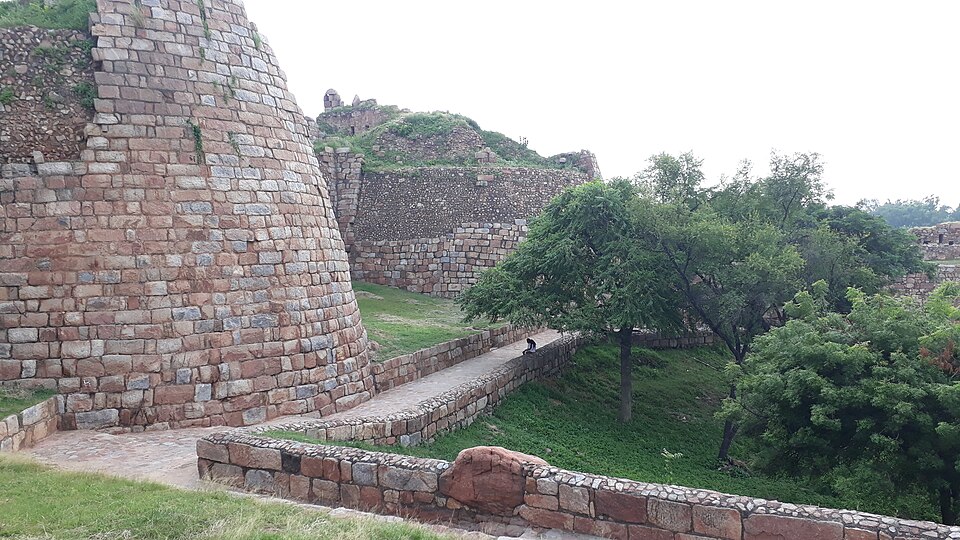
Muhammad Tughluq's empire. Ulugh Khan became Sultan as Muhammad Tughluq. Under him the Sultanate reached its greatest extent: from Peshawar in the north-west to Ma'bar in the south, and from Gujarat in the west to Jajnagar in the east. After the Mongol invasion of Tarmashirin (1326-27), he secured Kalanaur and Peshawar to guard the frontier.
A second capital. To control this vast empire, Muhammad Tughluq made Devagiri in the Deccan a second administrative seat of the Sultanate. The idea was to rule the south more effectively. But the experiment was short-lived and failed, partly because the ruling and other classes were unwilling to move.
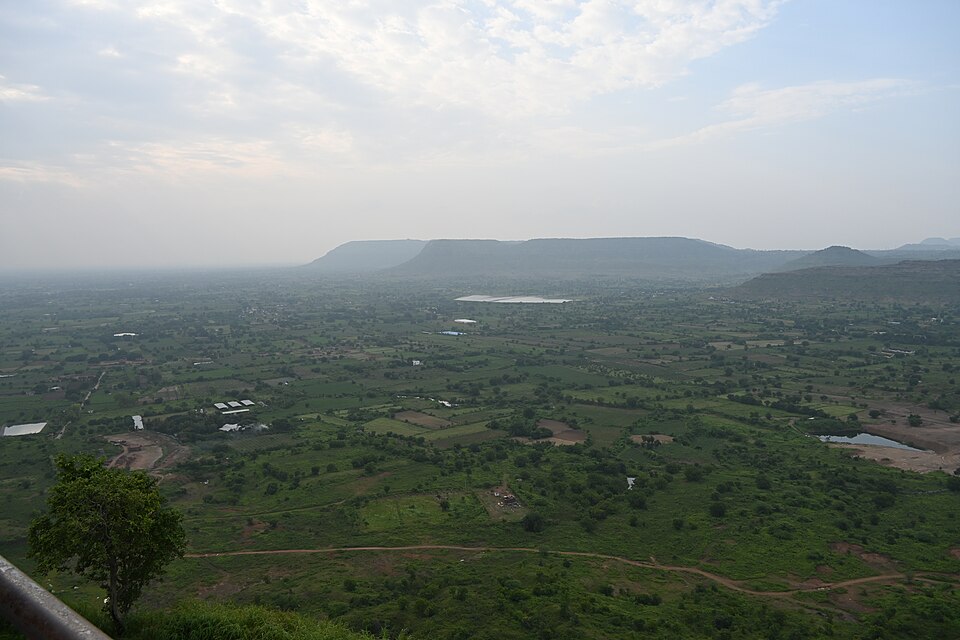
The Khurasan project. He also planned to bring Khurasan in Central Asia under his control. He recruited a huge army of about 3,70,000, paid them a year's salary in advance and bought costly equipment. When the project was abandoned as unrealistic and the army disbanded, the loss was enormous, and the Sultan's authority suffered.
The Qarachil disaster. Around 1332 he sent an army to Qarachil, the Kulu region of Kangra, to fortify the northern frontier. Its commander went beyond his orders and marched towards Tibet. When the rains came, disease and panic destroyed the army; the sources say only three soldiers returned.
Shrinking at the end. These setbacks wasted resources and eroded the Sultan's authority. A series of rebellions followed. By the closing years of Muhammad Tughluq's reign, the Sultanate had shrunk almost to its 1296 size.
Muhammad Tughluq's experiments: money, land and nobles
The coinage background. Iltutmish had standardised the Sultanate's coins: the silver tanka and the copper jital, with 48 jitals to a tanka in the north. Silver dominated until Alauddin. From Ghiyasuddin's reign silver declined, and under Muhammad Tughluq gold coins overshadowed silver.
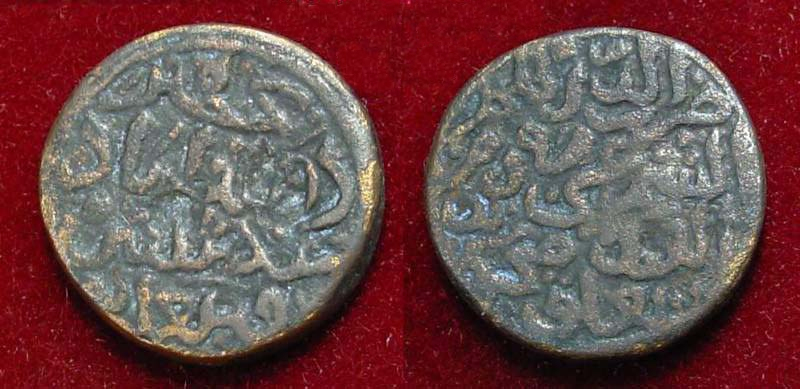
The token currency. Muhammad Tughluq made the only major innovation in Iltutmish's system. He issued a coin of copper and brass and declared it equal in value to a silver tanka.
For the first time, a coin carried an inscription in Persian. A coin whose face value is far above the value of its metal is called a token currency.
Asian precedents. The idea was not new. In China Qublai Khan (1260-94) had introduced a paper token currency that worked. In Persia Kaikhatu Khan tried one around 1293, but it failed.
Why it failed. Muhammad Tughluq's experiment met total failure, probably because the new coin was easy to forge. Barani says rhetorically that every household became a mint. The Sultan accepted the failure gracefully and exchanged all token coins brought to the treasury for pure coins, which was a heavy loss.
Taxing the land harder. Muhammad Tughluq first extended Alauddin's measurement-based revenue system to Gujarat, Malwa, the Deccan, the south and Bengal. Later he raised the burden sharply, above all in the doab, not by changing Alauddin's 50% rate but through new and revived cesses (abwab). Officials assessed tax on officially decreed yields (wafa-i farmani) and decreed prices (nirkh-i farmani), which were higher than the real ones, so the state's share was overstated.
Revolt and famine. The result was a contraction of cultivation, flight of peasants and a major peasant revolt in the doab and around Delhi. Grain supplies to Delhi failed, and a famine lasted about seven years, from 1334-35 to 1342. Cattle were branded and houses counted to prevent concealment.
The first agricultural policy. Faced with this crisis, Muhammad Tughluq became the first Sultan to frame a policy for promoting agriculture. He gave loans called sondhar to extend cultivation and dig wells. He created a new department, the diwan-i amir-i kohi, to extend the area under the plough, reclaim abandoned land and improve the cropping pattern, for example from wheat to sugarcane.
Mixed results. Barani says these measures were almost a complete failure. Large loans were given, but little land seems to have come under cultivation. Yet the attempt shows a ruler thinking about the economy, not only about tax.
Trouble with the nobles. Muhammad Tughluq tried again and again to reorganise the nobility. He favoured Khurasani nobles, whom he called 'Aizzah' (the dear ones), but even they betrayed him. There were twenty-two rebellions in his reign, and in 1347 the Bahmani kingdom broke away in the Deccan, the first sign of the Sultanate's break-up.
Feroz Tughluq: peace with the nobles, at a price
A different temperament. After Muhammad Tughluq's death the crisis seemed out of hand. Feroz Tughluq (1351-88) could not afford to be stern with the nobles. He chose appeasement and gave them many concessions.
Hereditary iqtas. Under Feroz, revenue assignments became hereditary and permanent, even for soldiers. The writer Afif says that when a man died, his office went to his son; if he had no son, to his son-in-law; then to his slave; then to his women. The nobles were pleased, but in the long run this proved disastrous.
A weaker army. The branding of horses (dagh), which Alauddin had introduced to stop cheating at musters, was almost given up. The army became inefficient. Later rulers could not roll back this decline.
Revenue and grants. Feroz abandoned Muhammad Tughluq's farm projects but abolished agrarian cesses and forbade the taxes called ghari and charai. Unlike Alauddin and Ghiyasuddin, he returned the revenue grants that had been taken back and made new ones. Even so, his grants came to only about a twentieth of the estimated revenue.
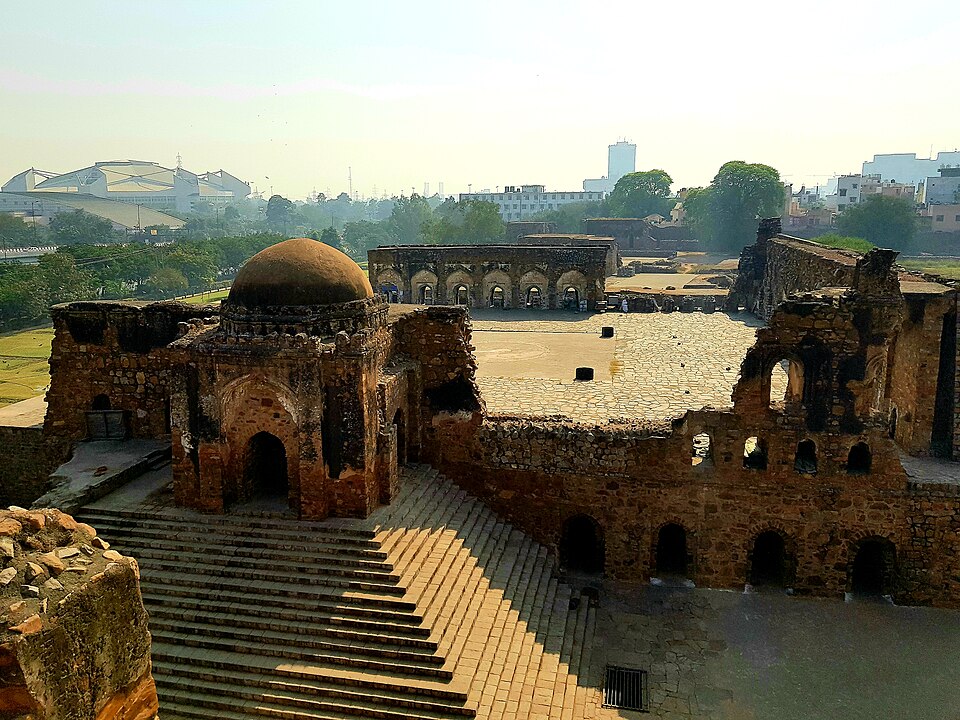
Jiziya and canals. He is reported to have imposed jiziya on the peasants as a tax separate from kharaj, the land tax. He also dug canals in Haryana and levied an irrigation tax there. These canals extended cultivation in a dry region.
Slaves. Slavery was widespread in the Sultanate. Alauddin's establishment had about 50,000 slaves; under Feroz the number rose to about 1,80,000, including 12,000 artisans. Feroz also banned the export of slaves from India.
Coins and money. Under Feroz, silver coinage almost disappeared. In the fifteenth century billon (copper with a little silver) dominated, and the Lodis issued no other coins. Prices, which had risen under Muhammad Tughluq, fell back under Feroz to the level of Alauddin's reign.
Timur, the regional states, the Sayyids and the Lodis
Timur's blow. For about fifty years after the Bahmani break-away, the Sultanate stayed largely intact. Then Timur's invasion of 1398 exposed its weakness. Nobles seized the chance to set up their own areas of power, independent of the Sultan.
Provinces break away. Governors declared independence one after another: Khwaja Jahan at Jaunpur (1394), Dilawar Khan in Malwa (1401) and Zafar Khan in Gujarat (1407), along with parts of Rajasthan. Bengal had been semi-independent since the days of Bughra Khan. The Sultanate shrank to about 200 miles round Delhi.
Why the loss mattered. Bengal, Malwa, Jaunpur and Gujarat were fertile and rich. Losing them cut the state's revenue, so Delhi could no longer wage long wars against rebels. Under the Sayyids and Lodis, even regular revenue needed yearly campaigns against chiefs such as those of Katehr, Mewat, Bayana and Gwalior.
The Sayyids. The rivalries after Feroz Tughluq led to the rise of the Sayyids (1414-51). They ruled a much smaller state and were not strong enough to restore it. The Sultanate's control in the fifteenth century was often nominal.
The Lodis and Afghan kingship. With the Lodis (1451-1526) the Afghans came to power. They accepted a Sultan over them but expected the empire to be shared among their clans, such as the Farmulis, Sarwanis and Niyazis. Even royal privileges were shared: keeping elephants was a royal right, yet Azam Humayun Sarwani is said to have had seven hundred elephants.
Tribal militias. The Afghans also kept tribal militias, which weakened the central army in the long run. Sikandar Lodi (1489-1517) tried to keep the ambitious nobles in check, but the Afghan idea of polity leaned towards decentralisation. After his death the empire was divided between Ibrahim and Jalal.
The end. Ibrahim Lodi, facing a scarcity of currency and cheap grain, ordered land revenue to be collected in kind. Dissensions and personal ambitions among the Afghans hastened the end. The historian's verdict is sharp: the Sultanate's demise was 'actually its murder, with Babur as the executioner'.
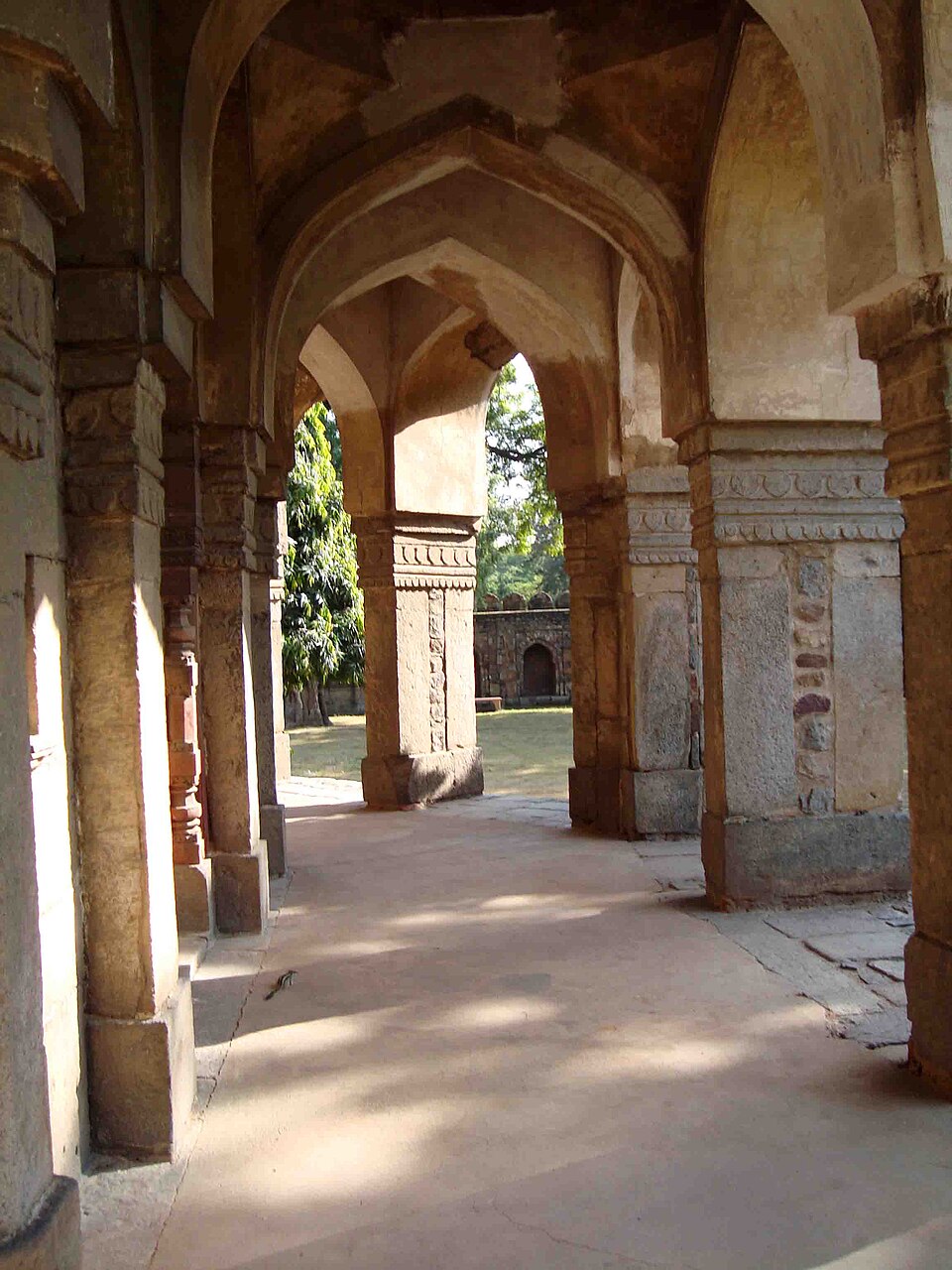
Why did the Sultanate decline? First, there was no fixed law of succession; in practice, 'the longest the sword, the greater the claim'. Second, the nobles shaped both the rise and fall of every dynasty.
Third, Feroz's hereditary iqtas let assignees grow local roots and cost the state revenue, and fourth, the regional states took away rich provinces. The Mongols, though costly, did not substantially weaken the Sultanate.
Quick revision
- Ghiyasuddin Tughluq 1320: empty treasury; khots, muqaddams exempt on own land but no cesses; Warangal annexed (Rudra Dev prisoner), Ma'bar, Jajnagar; Bengal tributary.
- Muhammad Tughluq: largest extent (Peshawar to Ma'bar, Gujarat to Jajnagar); Kalanaur, Peshawar after Tarmashirin; Devagiri second seat (failed); Khurasan army ~3,70,000 (abandoned); Qarachil c. 1332.
- Token currency: copper-brass = silver tanka, first Persian inscription; precedents Qublai Khan (paper), Kaikhatu; forged; exchanged.
- Doab tax on wafa-i farmani, nirkh-i farmani; revolt, famine 1334-35 to 1342; sondhar loans; diwan-i amir-i kohi.
- Nobles: Aizzah (Khurasanis); 22 rebellions; Bahmani 1347.
- Feroz Tughluq (1351-88): hereditary iqtas (Afif), dagh dropped; grants restored; cesses abolished; jiziya separate from kharaj; Haryana canals, irrigation tax; 1,80,000 slaves; slave export banned.
- Coins: Iltutmish's tanka and jital; gold under Muhammad; silver gone under Feroz; billon under Lodis.
- Timur 1398; Jaunpur 1394, Malwa 1401, Gujarat 1407; Sultanate ~200 miles round Delhi.
- Sayyids 1414-51; Lodis 1451-1526: Afghan clan sharing (Farmulis, Sarwanis, Niyazis), 700 elephants, tribal militias; Sikandar Lodi; Ibrahim (revenue in kind); Babur.
- Decline: no succession law, nobles, hereditary iqtas, regional states; Mongols not decisive.