

UPSC NDA & NA · Module 22 · basic depth · 14 min
Fundamental Rights: exploitation, religion, culture and remedies (Articles 23 to 35)
What UPSC NDA & NA asks from this chapter
Syllabus lines this chapter covers:
- Paper II, Part B: General Knowledge · Elementary study of Indian Constitution and Administration.
UPSC NDA & NA questions from this module are being sorted into our bank.
Cut to basic depth for UPSC NDA & NA. 32 deeper paragraphs are in the full chapter.
Start from zero: a promise or a guarantee?
You buy a new phone. Shop A says, "Trust us, it's a good phone." Shop B gives you a warranty card with the address of a service centre: "If it fails, bring it here and we must fix it."
Both shops "promise" a good phone. But only Shop B gives you a guarantee, because it tells you where to go and who must act if the promise breaks.
Rights work the same way. A long list of rights is only Shop A's promise unless there is a place to go when the State breaks them. The Constitution gives that "service centre": Article 32, the right to go straight to the Supreme Court, which itself is a Fundamental Right.
This chapter finishes the list of rights (against exploitation, religion, culture and education) and then studies the warranty card: remedies, and the few places where the Constitution allows rights to be narrowed.
Right against Exploitation (Articles 23 and 24)
Freedom means little to a person who is bought, sold or made to work without pay. So the Constitution bans the worst forms of exploitation outright.
Article 23: no trafficking, no forced labour.
- 23(1): traffic in human beings, begar (forced unpaid labour, once common for landlords and officials) and other similar forms of forced labour are prohibited. Breaking this is an offence punishable by law.
- 23(2): the State can still impose compulsory service for public purposes (for example, in a national emergency), but it cannot discriminate in doing so on grounds only of religion, race, caste or class.
Article 24: no child labour in dangerous work. No child below fourteen years shall be employed in any factory or mine or in any other hazardous employment.
Like Article 17, these rights also bind private persons: a brick-kiln owner who keeps workers by force against an old debt violates Article 23, and a factory owner employing a 12-year-old violates Article 24.
Link: Article 24 and Article 21A (free education for ages 6 to 14) work together. A child of that age belongs in school, not in a mine.
Freedom of religion (Article 25)
India is home to almost every major faith. The Constitution's answer is simple: every person may believe, and the State takes no side.
Article 25(1) gives all persons (not just citizens) an equal right to:
- freedom of conscience (what you believe inside your mind);
- profess religion (declare it openly);
- practise it (perform its rituals);
- propagate it (spread it by explaining and persuading).
But the freedom is "subject to public order, morality and health" and the other provisions of Part III. So a procession cannot block an ambulance, and no ritual can harm a person's health or dignity.
Article 25(2): room for reform. The State can still make laws:
- (a) regulating any economic, financial, political or other secular activity linked with religious practice (for example, the management of a temple's money);
- (b) for social welfare and reform, including throwing open Hindu religious institutions of a public character to all classes and sections of Hindus (temple entry for all castes).
Two Explanations examiners love:
- Explanation I: wearing and carrying a kirpan is part of professing the Sikh religion.
- Explanation II: in clause 2(b), "Hindus" includes persons professing the Sikh, Jaina or Buddhist religion.
Cultural and Educational Rights (Articles 29 and 30)
A democracy where the majority always wins could slowly swallow smaller languages and cultures. These two Articles protect diversity.
Article 29: protecting culture.
- 29(1): any section of citizens living in India that has a distinct language, script or culture of its own has the right to conserve it. This is for any such group, majority or minority: Maithili speakers in Bihar or Tamil speakers in Delhi.
- 29(2): no citizen can be denied admission to an institution maintained by the State or receiving State aid on grounds only of religion, race, caste or language.
Article 30: minorities' own schools and colleges.
- 30(1): all minorities, whether based on religion or language, have the right to establish and administer educational institutions of their choice.
- 30(1A) (added by the 44th Amendment): if the State acquires the property of such an institution, the compensation must not be so low that it restricts or destroys this right.
- 30(2): in giving aid, the State shall not discriminate against an institution because it is managed by a minority.
Article 32: the warranty card
Article 32(1): "The right to move the Supreme Court by appropriate proceedings for the enforcement of the rights conferred by this Part is guaranteed." Note that this remedy is itself a Fundamental Right, so the government cannot take it away by ordinary law.
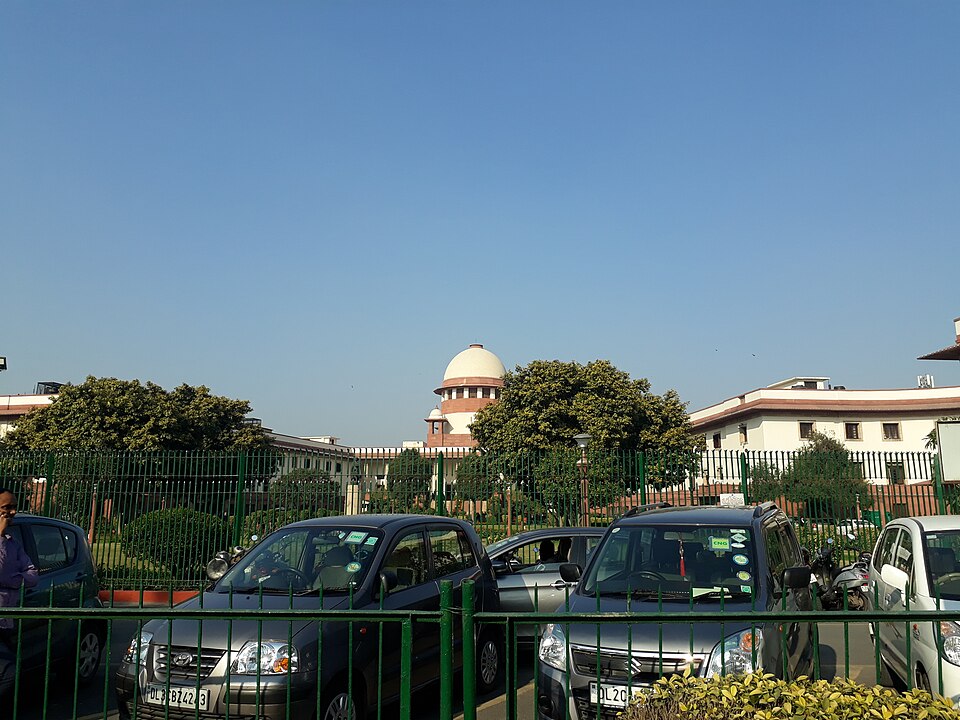
Article 32(2): the Supreme Court can issue directions, orders or writs, including five writs. This is what each one means:
| Writ | What it does | Everyday picture |
|---|---|---|
| Habeas corpus | Orders the State to produce the detained person before the court, to justify the detention or release him | "Where is my brother? Bring him to court." |
| Mandamus | A superior court orders a lower court, tribunal or public authority to perform its duty | "Issue the licence you are legally bound to issue." |
| Prohibition | A superior court forbids a lower court or tribunal from proceeding with a case beyond its jurisdiction | "Stop, this case is not yours to hear." |
| Quo warranto | Restrains a person from acting in a public office to which he is not entitled | "By what right do you hold this post?" |
| Certiorari | Means "to be informed"; a superior court orders a lower court to transfer a matter to itself or another court for decision | "Send the file up; we will decide." |
Dr B. R. Ambedkar called the writs the "soul of Part III" of the Constitution.
Two more clauses:
- 32(3): Parliament may by law let other courts use these writ powers within their local limits.
- 32(4): the right under Article 32 shall not be suspended except as the Constitution itself provides (that is, under Article 359 during an Emergency).
A lesson from the Emergency. In ADM Jabalpur v Shivakant Shukla (1976), the Supreme Court held that this right to approach the court was not available during a National Emergency. That position was later changed by a constitutional amendment, and the case is now remembered as a warning about how fragile rights can be.
Even a letter will do. In Bandhua Mukti Morcha, a case about freeing bonded labourers, the Court said "appropriate proceedings" in Article 32(1) is about purpose, not form. So a letter from a public-spirited person seeking to enforce the rights of the poor can be treated as a petition. This opened the door for undertrial prisoners and bonded labourers who could never file a case themselves.
Money for a wrong. Courts can also order compensation in suitable cases. In Rudul Shah, a man stayed in jail for 14 years because officials did not act on an order to release him, and the Supreme Court awarded him ₹30,000.
Why these rights were written in, and what they changed
The second half of Part III deals with three worries: people being bought, sold or forced to work; a country of many faiths and languages; and rights that need a way to be enforced.
| Provision | Why it was needed | What it changed |
|---|---|---|
| Art 23: no trafficking or begar | Forced, unpaid labour (begar) was common | It is an offence; the State may still ask for public service without discrimination |
| Art 24: no child in factories, mines or hazardous work | Children below 14 worked in dangerous places | A fixed age line that no employer can cross |
| Art 25: freedom of religion, with limits | Many faiths had to live together, and some customs needed reform | Free practice, subject to public order, morality and health |
| Art 27: no tax for one religion | Public money should not be used to favour one faith | The State stays neutral with taxpayers' money |
| Art 29, 30: culture and minority schools | Minorities feared their language and culture would fade | They can run their own schools; the State cannot refuse aid just for that reason |
| Art 31 removed, Art 300A added | Property as a Fundamental Right kept slowing land reform | Property is now a legal right: taken only by authority of law |
| Art 32: right to go to the Supreme Court | A right without a remedy is only a wish | Five writs; the remedy is itself a Fundamental Right |
The big picture. This half of Part III protects the weak against the strong, minorities against majorities, and every person against an inactive State. Article 32 is what makes the rest work, which is why Dr Ambedkar calling the writs the "soul" of Part III.
Why it matters today. Debates on bonded labour, on religious practices and reform, on minority institutions, and on land acquisition all come back to these Articles. A good answer shows both sides: the freedom given and the limit placed on it.
Quick revision
- Art 23 bars trafficking, begar and forced labour and makes them offences, though 23(2) allows compulsory public service without discrimination. Art 24 bars any child below 14 from work in a factory, mine or hazardous job.
- Art 25 gives all persons freedom of conscience and the right to profess, practise and propagate religion, subject to public order, morality and health. Under 25(2) the State can regulate the secular side and make reform laws, including temple entry; the kirpan is covered by Expl. I, and "Hindus" includes Sikhs, Jainas and Buddhists (Expl. II).
- Under Art 26, denominations manage their religious affairs and property. Art 27 bars taxes for a particular religion, and Art 28 bars religious instruction in wholly State-funded institutions, while aided ones need consent.
- Under Art 29, any section of citizens can conserve its language, script and culture, and no one can be denied admission on religion, race, caste or language. Under Art 30, religious or linguistic minorities can run their own institutions without aid discrimination; clause 30(1A) came with the 44th Amendment.
- Property: 31A, 31B and the Ninth Schedule came with the 1st Amendment (1951), and 31C with the 25th (1971). Art 31 was omitted by the 44th Amendment (w.e.f. 20 June 1979), and property now sits in Art 300A.
- Under Art 32, the right to move the Supreme Court is itself a Fundamental Right, with five writs. Under 32(3) Parliament can empower other courts, and under 32(4) the right cannot be suspended except as the Constitution provides; Ambedkar called the writs the "soul of Part III".
- Under Art 226, High Courts can issue writs for Fundamental Rights and for any other purpose, so their power is wider. Under Art 359, court access can be suspended, except for Articles 20 and 21.
- Art 33 lets Parliament restrict rights of the forces (50th Amendment 1984), Art 34 deals with martial law, and under Art 35 only Parliament can legislate on these matters.