

Module 10 · 19 min read · Free chapter
The Moderates, 1885–1905
From 1885 to 1905 the Congress was led by Moderates such as Dadabhai Naoroji, Pherozeshah Mehta and Gopal Krishna Gokhale. They believed in British justice and used petitions, speeches and resolutions to ask for more Indians in councils and services, lower military spending and economic relief. Their greatest gift was the economic critique of colonialism, though critics called their methods 'political mendicancy'.
Start from zero: how do you change a powerful ruler's mind?
Suppose your school has a rule that you think is unfair. You could write a polite letter to the principal with facts and figures, or you could organise the whole class to stop attending until the rule changes. Both are ways of seeking change, but they rest on very different beliefs about the principal and about your own strength.
The first generation of Congress leaders chose the first path. They believed that the British were basically fair-minded and that, if they were shown the facts, they would reform their rule in India. These leaders are called the Moderates, and the years from 1885 to 1905 are known as their era.
Their names are among the best known of the period: Dadabhai Naoroji, Pherozeshah Mehta, Gopal Krishna Gokhale, Surendranath Banerjea and Badruddin Tyabji. They were lawyers, teachers, journalists and businessmen, mostly from the cities. They spoke English fluently, admired British institutions and wanted Indians to share in them.
This chapter explains what the Moderates demanded, how they worked, what they won and why a younger generation grew impatient with them. Keep one question in mind as you read. Were the Moderates too timid to matter, or did they lay the foundations on which the whole movement was built?
The Moderate years at a glance
This table lists the main events of the Moderate phase. Each is explained in the sections below.
| When | What happened | Why it matters |
|---|---|---|
| 1885–1905 | Era of the Moderates | Petitions, resolutions and debate as the main tools. |
| 1889 | Bombay session; Banerjea on representative government | Representation seen as the key to all other reforms. |
| 1892 | Indian Councils Act; Naoroji elected to the House of Commons | A small opening in the councils; India's voice in London. |
| 1893 | First question asked under the 1892 Act; Lahore session under Naoroji | Indians begin to question the government inside the council. |
| 1895 | Banerjea presides; delegates rise to 1,584 | The Congress keeps growing. |
| 1898, 1904 | Curzon-era laws on provoking disaffection and on universities | Government hardens; patience wears thin. |
| 1905 | Gokhale founds the Servants of India Society | Public service as a lifelong calling. |
| 1906 | Calcutta session under Naoroji declares Swaraj the goal | Even the oldest Moderate now speaks of Swaraj. |
Notice how the table ends. The phase that began with polite petitions closed with the word Swaraj, spoken by Naoroji himself.
Who were the Moderates, and what did they believe?
A small, educated leadership. The Moderates came mainly from the urban educated classes. Pherozeshah Mehta and Badruddin Tyabji were prominent in Bombay, Surendranath Banerjea in Bengal, Gokhale in Poona, and Naoroji worked both in Bombay and in London. Their strength lay in knowledge and argument, not in numbers.
Faith in British justice. They believed that British rule had brought some benefits, such as modern education, and that the British public was fair-minded. India's problems, in their view, came from bad policies and from officials who did not understand India. So the task was to inform and persuade, not to overthrow.
But they were also sharp critics. It would be wrong to see the Moderates as mere admirers of the British. They built the economic critique of British rule, with Naoroji's drain theory at its heart, as explained in the chapter on why nationalism grew. That critique demolished the myth of a benevolent empire and later became a base for mass movements.
Why this combination? The Moderates lived at a time when Indians had no vote, no mass organisation and little experience of all-India politics. Open confrontation could have been crushed easily. They chose to build public opinion first, which shaped both their strength and their limits.
Who actually sat in the hall? The Congress claimed to speak for all of India, but its delegates were far from a cross-section of the country. Over half the delegates at the first session were lawyers, and for decades more than a third continued to come from the legal profession.
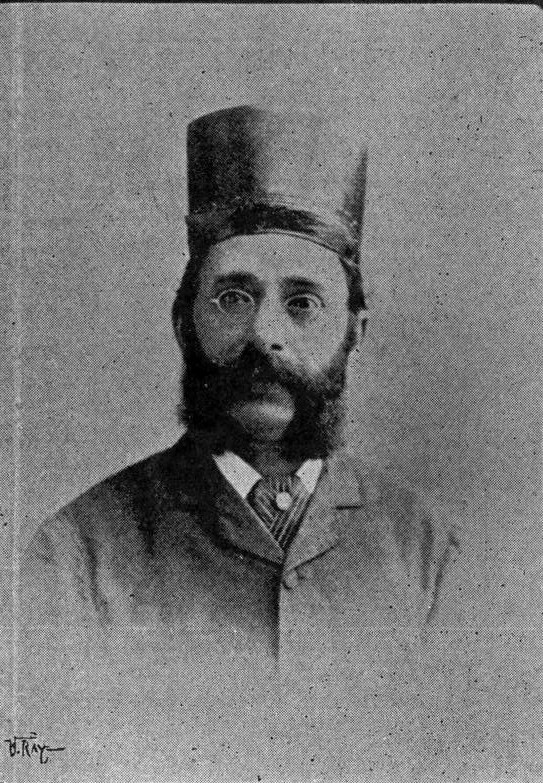
Teachers grew from just two at the first session to fifty at the fourth, while the presidencies of Bombay, Calcutta and Madras took the lead. The masses were almost absent, and so were the big landed classes.
Why court the princes and nobles? The Congress still tried to win over the old aristocracy, even though it showed little interest in public affairs. Support from princes and great landlords would show that British India and princely India stood together. It would also impress conservative opinion in Britain and help to pay for the movement.
A tradition that began with Rammohun. Moderate thought did not appear from nowhere. It carried forward the rational, liberal tradition of Raja Rammohun Roy, who had also seen British rule as a means of progress for India.
That is why the Moderates' language was cautious and their hopes modest. Yet the early Congress kept its doors open to every class and community, so it was more a movement than a party.
What the Moderates demanded
Political demands. The Moderates wanted representative legislatures, with elected Indians in the councils. They asked for civil rights such as free speech and a free press. They also asked for the judiciary to be separated from the executive, so that the same official would not both accuse and judge.
Administrative demands. They wanted the higher services to be Indianised, and asked for the civil service examination to be held in India, not only in London. They also demanded cuts in military expenditure, because the money could be better spent on India's own needs.
Economic demands. They asked for lower land revenue and a lower salt duty, relief to cultivators and reform of tenancy laws. They also wanted the government to help Indian industries and handicrafts, which were losing out to British goods. These demands followed directly from their economic critique of British rule.
Social and educational demands. They wanted more education for Indians and more spending on welfare. In their view an educated India would be better able to govern itself and to argue its case. Many of these demands, such as an Indian civil service and a separate judiciary, became part of free India's system decades later.
More items on the list. The Moderates also asked for the India Council in London to be abolished or reformed, and for the Arms Act to be repealed. They wanted Indians to be given commissions as officers in the army, and the Permanent Settlement to be extended to other parts of India.
Strikingly, these demands hardly changed between 1885 and 1905. They were repeated year after year, although the government gave almost no response.
Politically moderate, economically radical. Their political demands were mild, but their economic demands were far-reaching. Besides lower land revenue, they asked for the salt tax to be abolished, for better working conditions for plantation labourers and for tariff protection and state aid to Indian industry.
Many of them also opposed the large-scale import of foreign capital into railways, plantations and industries. When the government did nothing, they began to popularise Swadeshi, the use of Indian goods, as a way to build Indian industry.
Why this was a real challenge. By attacking spending on the army and the civil service, the Moderates questioned what the empire cost India. By attacking land revenue and tax policy, they questioned the financial base of British administration itself. They also condemned the use of Indian troops and Indian revenue for imperial wars in Asia and Africa, and they treated the freedom of the press as part of the national struggle.
Raising the bar. After the 1892 Act failed to satisfy them, the Moderates demanded Indian control over the public purse. They borrowed the slogan of the American Revolution, 'No taxation without representation'.
By 1905 the Congress was asking for self-rule within the Empire, on the model of self-governing colonies such as Australia and Canada. Gokhale first spoke of it as President at Benares in 1905, and Naoroji stated Swaraj plainly at Calcutta in 1906.
How the Moderates worked: sessions, councils and London
The annual session. The heart of Moderate politics was the yearly Congress session, held in a different city each December. Delegates debated resolutions, which were then sent to the government and printed in the press. The Congress kept growing, and when Surendranath Banerjea presided in December 1895, the number of delegates rose from 1,163 in 1894 to 1,584.
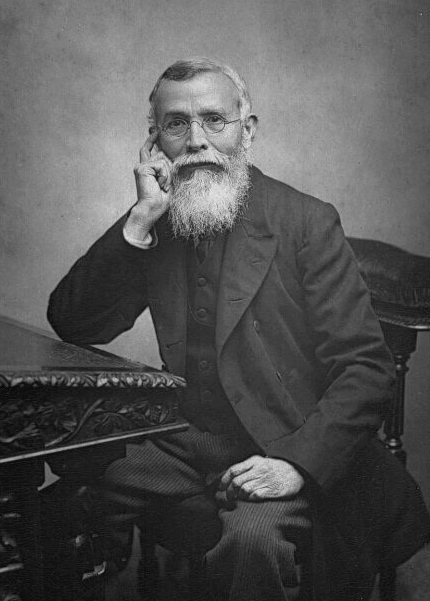
Representation as the master key. The Moderates believed that if Indians had a real voice in the councils, every other reform would follow. At the Bombay session of 1889, Banerjea said of representative government, 'If you get that, you get everything else.' This is why the councils were at the centre of their demands.
Working inside the councils. Once a few Indians entered the councils, they used them as a platform. Pherozeshah Mehta was the first elected Indian member, and the first question under the 1892 Act was asked on 16 February 1893. Asking questions let Indians put their criticism on the official record.
Taking India's case to Britain. The Moderates also worked in Britain itself. Dadabhai Naoroji was elected to the House of Commons for Central Finsbury as a Liberal in 1892 and sat there until 1895, raising Indian issues in the heart of the empire. He was President of the Congress in 1886 and in 1893, when the session met at Lahore, the first such convention in undivided Punjab.
The press and three days a year. The press was the only agency that carried the Congress message all through the year. Many leaders were themselves editors of English or Indian-language papers and wrote with great force.
The annual session drew the attention of the educated classes and of the government. Its gravest weakness was that it lasted only three days a year, and there was no machinery to carry on the work between one session and the next.
A lobby in London. The Moderates believed that it was mainly the bureaucracy in India that stood between Indians and their rights. So they tried to reach the British public directly by sending deputations of leading Indians to Britain.
In 1889 a British Committee of the Indian National Congress was founded, and in 1890 it started its own journal, India. Naoroji spent much of his life in England for the same purpose.
The Indian Councils Act of 1892: a small door opens
What did the Act do? The Indian Councils Act of 1892 is counted as an achievement of the Moderates' steady pressure. It raised the number of additional members of the central legislative council to between ten and sixteen, and it implicitly accepted the principle of indirect election. Members could now ask questions in the council.
Why was it only a small step? Only a few non-official members were added, and Indians still had no right to elect their representatives directly. Real power stayed with the government. In other words, Indians could now speak inside the council, but they still could not decide.
The Congress's own verdict. The Moderates did not pretend the Act was enough. The Congress session at Allahabad in December 1892 criticised it because it did not give Indians the right to elect their own representatives. This shows that the Moderates were persistent, not easily satisfied.
The civil service question. Another gain claimed for the Moderates was a resolution for holding the civil service examination simultaneously in London and India. The demand mattered because an examination held only in London shut out most Indians, who could not afford the long journey and stay abroad. The constitutional details of these councils are traced in the Polity chapter on British-era Acts.
Gokhale and the Servants of India Society
The model Moderate. Gopal Krishna Gokhale is often seen as the finest example of the Moderate style. He was known for careful study, precise argument and a deep sense of public duty. He carried forward the economic critique of British rule begun by Naoroji and Ranade.
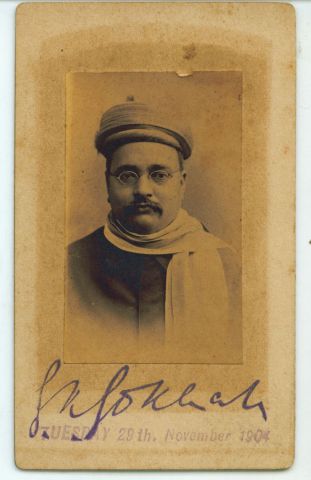
The Servants of India Society, 1905. In 1905 Gokhale founded the Servants of India Society. Its members pledged themselves to serve the country, living simply and working for education, social welfare and public causes. The idea was that politics needed trained, dedicated workers, not just eloquent speakers at annual sessions.
Speaking for Indians abroad. Gokhale's concern reached beyond India's borders. On 25 February 1910 he moved the first non-official resolution in the enlarged council, on the system of indentured labour for Natal in South Africa. It shows how the Moderates used the councils to raise the plight of Indian workers overseas.
Why this matters. Gokhale linked politics with service and study. Later leaders, including Gandhi, drew on this idea of the political worker as a servant of the people. It is a reminder that the Moderate legacy was not only resolutions but also a way of doing public work.
Curzon hardens, patience runs out
The government turns hostile. The Congress's tone was mild, yet from its fourth session in 1888 the government grew hostile to it. Officials encouraged groups opposed to the Congress, such as the Aligarh movement. Lord Curzon went furthest, and his stated ambition was 'to assist the Congress to a peaceful demise'.
A harder government. Around the turn of the century the government's attitude hardened, especially under Lord Curzon. An Act of 1898 made it an offence to provoke people against the British. The Indian Universities Act of 1904 brought the universities under tight official control, which educated Indians saw as an attack on their institutions.
Why did this hurt the Moderates? The Moderate method depended on the belief that the British would listen to reasoned argument. Each new restriction made that belief harder to defend. Younger nationalists began to ask what twenty years of petitions had really achieved.
The radical answer. A younger group wanted to involve peasants, workers, students and women, and to use mass protest instead of petitions. Their moment came with the partition of Bengal, which is the subject of the next chapter. For now, note that the Moderates' narrow urban base was exactly what the radicals set out to change.
Even Naoroji speaks of Swaraj. The change of mood touched the Moderates too. At the Calcutta session of 1906, Dadabhai Naoroji, the grand old man of the Moderates, presided, and the Congress declared Swaraj to be its goal. The word that later defined the whole freedom struggle was first placed at the centre of the Congress by its most senior Moderate.
Doubts inside the national camp. Disillusionment grew among the nationalists themselves. Bipin Chandra Pal wrote in 1897 that he was loyal to the British Government, but by 1902 he called the Congress and its British Committee 'begging institutions'.
Lajpat Rai did not attend a single Congress meeting between 1893 and 1900. Critics now called the Moderates political mendicants, people who only petitioned for small favours.
Asia wakes up. Events abroad added to the mood. In 1896 the Ethiopians defeated an Italian army, and in 1904–05 Japan defeated Russia. These victories punctured the belief that Europeans could not be beaten and gave Indians fresh self-confidence.
Mains lens: were the Moderates a failure?
The case against them. Critics point out that the Moderates won very little in twenty years. The 1892 Act gave only a few seats and no real power, and the Congress itself called it inadequate. Their base was narrow and urban, and their faith in British justice was proved wrong by Curzon's policies.
The case for them. Yet the Moderates did several things that no later leader had to do again. They built an all-India organisation that met every year, trained a generation in public politics, and gave nationalism a clear programme. Above all, their economic critique demolished the myth of benevolent British rule and became the intellectual base for later mass movements.
A fair verdict. It is more accurate to see the Moderates as builders of foundations than as failures. They worked in a time when mass politics was not yet possible, and they prepared the ground on which the radicals and later Gandhi built. Many of their demands, from a separate judiciary to an Indian civil service, became part of free India's constitution and administration.
How to use this in an answer. Avoid one-sided judgements in Mains. Weigh their limits (narrow base, modest gains) against their contributions (organisation, economic critique, political training), and end with how both the Extremists and Gandhi built on them.
Their sharpest weapon. The Moderates' most original service was their critique of the financial foundations of the Raj. They saw poverty as a problem of too little production and development, not as a fate to be accepted.
Their economic policies were not shaped by narrow class interest, even though they themselves came from the urban middle class. This is why their drain theory became a lasting symbol of foreign exploitation in the popular mind.
Mains practice: the Moderates
| Angle | Question | Key points to cover |
|---|---|---|
| Assessment | "The Moderates laid the foundations of the national movement." Critically examine. | Organisation and annual sessions; economic critique; political training; limits: narrow base, modest gains; legacy for Extremists and Gandhi. |
| Demands | Classify the demands of the early Congress and explain the reasoning behind them. | Political, administrative, economic, social; link each to the economic critique and to lack of representation. |
| Councils | Assess the significance of the Indian Councils Act of 1892 for Indian nationalists. | 10 to 16 additional members; indirect election implicitly accepted; questions in council; no direct election; Congress criticism 1892. |
| Economy | "The early nationalists were moderate in politics but radical in economics." Discuss. | Mild political demands; drain, land revenue, salt tax, plantation labour, tariffs, foreign capital; challenge to the Raj's finances; Swadeshi as an answer. |
| Personality | Discuss the contribution of Gokhale to Indian public life. | Economic critique; Servants of India Society 1905; 1910 resolution on indentured labour; politics as service. |
These are practice questions written by us, not past papers. Past questions from your exam appear in the PYQ panel.
How to use this table: each answer should explain the what, then the why, and end with what it led to.
Quick revision
- 1885–1905: era of the Moderates; leaders Pherozeshah Mehta, Gokhale, Naoroji, Badruddin Tyabji, Surendranath Banerjea.
- Demands: representative councils, Indianised services, ICS exam in India, less military spending, separate judiciary, civil rights, lower land revenue and salt duty, help for industries.
- 1889 Bombay: Banerjea, 'If you get that, you get everything else.'
- Indian Councils Act 1892: 10 to 16 additional members; indirect election implicitly accepted; criticised at Allahabad 1892.
- Pherozeshah Mehta: first elected Indian member; first question 16 February 1893.
- Naoroji: MP for Central Finsbury (Liberal), 1892–1895; Congress President 1886, 1893 (Lahore), 1906 (Calcutta, Swaraj).
- 1895: Banerjea presides; delegates 1,584.
- Gokhale: Servants of India Society 1905; resolution on indentured labour for Natal, 1910.
- Curzon: 1898 Act on provoking disaffection; Indian Universities Act 1904; aim 'to assist the Congress to a peaceful demise'.
- Delegates: over half lawyers at the first session; teachers 2 → 50 by the fourth; masses and landed classes absent.
- Methods: press (year-round) and a three-day session; British Committee of the INC 1889, journal India 1890.
- More demands: abolish or reform the India Council, repeal the Arms Act, army commissions for Indians, extend the Permanent Settlement.
- Economic: abolish salt tax, plantation labour, tariff protection, oppose foreign capital; 'No taxation without representation'.
- Self-rule on the Australia/Canada model: Gokhale, Benares 1905; Swaraj: Naoroji, Calcutta 1906.
- Government hostile from the fourth session (1888); encouraged the Aligarh movement against the Congress.
- Pal: loyal in 1897, 'begging institutions' in 1902; Lajpat Rai away 1893–1900; Japan beats Russia 1904–05.