

KPSC KAS · Module 5 · Mains depth · 27 min
ಸುಲ್ತಾನರ ಆಡಳಿತ, ಆರ್ಥಿಕತೆ ಮತ್ತು ಸಮಾಜ
What KPSC KAS asks from this chapter
Syllabus lines this chapter covers:
- Paper I: General Studies · ರಾಷ್ಟ್ರೀಯ ಚಳುವಳಿ ಮತ್ತು ಕರ್ನಾಟಕಕ್ಕೆ ಒತ್ತು ನೀಡಿ ಭಾರತದ ಇತಿಹಾಸ.
- GS 1 · ಭಾರತ ಮತ್ತು ಕರ್ನಾಟಕದ ಇತಿಹಾಸ ಮತ್ತು ಸಾಂಸ್ಕೃತಿಕ ಪರಂಪರೆ.
8 KPSC KAS questions in our bank come from this module (ದೆಹಲಿ ಸುಲ್ತಾನರು ಮತ್ತು ಪ್ರಾದೇಶಿಕ ರಾಜ್ಯಗಳು).
Read at full depth: basics, the standard layer and the Mains analysis.
Start from zero: how did the Sultans rule and what changed?
In the Mamluk and Khalji chapter and the Tughlaq chapter, we followed kings, battles and rebellions. This chapter asks a different question: how was the Sultanate actually run, and how did life change for peasants, traders and craftsmen?
The Turks who founded the Sultanate were few in number and ruled a vast and populous land. To survive they had to control its resources: land revenue, soldiers and towns. Almost every institution of the Sultanate, from the iqta to the diwan-i wizarat, grew out of this need.
The Sultanate also brought new things. Towns grew, money came into wider use, and new techniques arrived: the spinning wheel, the Persian wheel, paper and the true arch. Some of these changed Indian life for centuries.
Why study this? Exams ask about the departments and their heads, the iqta system, revenue terms, the ruling class, towns, trade and technology. Mains asks whether the Sultanate was a theocracy, how the iqta worked, and what the Sultanate changed in the economy.
Sultanate administration at a glance
| Office or term | What it meant |
|---|---|
| Wazir: diwan-i wizarat | Finance; revenue, expenditure, iqtas |
| Ariz-i mumalik: diwan-i arz | Army; muster, huliya, dagh |
| Dabir-i mumalik: diwan-i insha | Royal correspondence, farmans |
| Sadr-us sudur: diwan-i risalat | Religious affairs, grants, qazis |
| Barid-i mumalik | News and intelligence |
| Qazi-ul mumalik | Chief judge |
| Muqti or wali | Iqta-holder and governor |
| Shiqqdar, chaudhuri, patwari | Shiqq officer; head of 100 villages; village accountant |
The key idea. The centre ran through four big departments under the Sultan, while the provinces ran through iqtas. The long story of the Sultanate is the centre trying, and often failing, to keep the iqta-holders under control.
The nature of the state and the central government
The Caliph link. After the Prophet, the Caliph became the head of the Muslim community. In theory no Muslim ruler could set up a state without the Caliph's permission. The Delhi Sultans showed respect through robes of honour, letters of investiture, titles, the Caliph's name on coins and in the Friday khutba, but this was a formality, and under the Sayyids and Lodis it was purely nominal.
Was it a theocracy? The Sultans formally accepted the sharia and tried to prevent its open violation. But they also framed secular regulations called zawabit. The historian Barani accepted that some secular rules were unavoidable because of the needs of the state.
Two telling examples. When theologians asked Iltutmish to apply Islamic law strictly to Hindus, his wazir Junaidi replied that this was not possible, because Muslims were like salt in a dish of food. Alauddin Khalji told Qazi Mughisuddin that he acted according to the needs of the state, not legal opinion. So in practice the state was shaped by expediency, not run by priests.
Marks of sovereignty. The khutba was the Friday sermon in which the ruler's name was read as head of the community. The sikka was the ruler's right to have his name on coins. Together they showed who was sovereign.
The Sultan and his court. The throne was never safe, because the Sultan depended on nobles who felt they had an equal right to rule. Balban therefore stressed the Sultan as the 'shadow of God' (zill-i Allah), with court splendour, strict etiquette and severe punishments. The wakil-i dar ran the royal household, and the amir-i hajib was master of ceremonies through whom all petitions reached the Sultan.
Finance: the wazir. The wazir headed the diwan-i wizarat and was the most important minister, with general supervision over the others. His department collected revenue, controlled expenditure, kept accounts, paid salaries and allotted iqtas. He was helped by the mushrif-i mumalik (accountant-general) and mustaufi-i mumalik (auditor-general), and Alauddin created the diwan-i mustakhraj to recover arrears.
The army: diwan-i arz. The ariz-i mumalik headed the military department, inspected the troops of iqta-holders and managed supplies. Alauddin ordered a huliya (descriptive roll) of every soldier and the dagh (branding) of horses, so that poor horses could not be passed off at muster. The army had the Sultan's standing troops (hashm-i qalb) plus troops maintained by nobles.
Correspondence and news. The diwan-i insha under the dabir-i mumalik handled letters to other rulers and to provinces and issued farmans. The barid-i mumalik ran the state news service, with local barids reporting wars, rebellions, finances and the state of farming. Secret reporters called munhiyan worked alongside them.
Religion and justice. The diwan-i risalat under the sadr-us sudur handled religious affairs, appointed qazis and approved grants such as waqf (for religious and educational institutions), wazifa and idrar. The Sultan was the final court of appeal; next to him was the qazi-ul mumalik, the chief judge, and often the same man held both top posts. Muhtasibs (public censors) checked open breaches of religious rules.
Iqtas, provinces and land revenue
Why the iqta? After the conquests, the Turks had displaced many local chiefs (rais and ranas), and they had little cash. So they gave their nobles revenue assignments called iqtas in place of salaries. The holder, the muqti or wali, collected revenue, paid himself and his troops, and sent the surplus (fawazil) to the centre.
What an iqta was not. The iqta was an old Islamic institution. It gave no right to the land and was not hereditary; the holder was usually transferred every three or four years. That is why it should not be equated with the hereditary fief of medieval Europe.
The rule book. The Seljuq statesman Nizam-ul Mulk Tusi wrote that the muqti could only take the rightful revenue peacefully. The life, property and family of the subjects were not his. If a subject wished to appeal directly to the Sultan, the muqti could not stop him.
Tightening and loosening. The centre kept changing the rules. Alauddin made audit strict and raised the expected income of iqtas; Ghiyasuddin Tughluq limited annual increases to about one-tenth and let muqtis keep a small extra share. Muhammad Tughluq appointed a wali for revenue and an amir for the army in some iqtas, such as Amroha, and paid the troops from the treasury, which angered the nobles.
Retreat after Feroz. Feroz Tughluq gave in to the nobles and began granting iqtas to the sons and heirs of holders. His successors made no attempt to restore central control. Under the Lodis, assignments were simply called sarkars and parganas, and Sikandar Lodi allowed sub-assignments to subordinates and soldiers.
Paying the army. Under Iltutmish, about 3,000 royal cavalrymen were paid with small iqtas in villages near Delhi. Balban tried to end these and failed.
Alauddin succeeded and paid soldiers in cash, 238 tankas a year plus 78 for an extra horse. Feroz reversed this and gave soldiers itlaq drafts or village assignments (wajh), which became permanent and hereditary.
Below the province. By the late thirteenth century sources mention the shiqq under a shiqqdar; under Sher Shah it became the sarkar. Ibn Battuta says the chaudhuri was head of a hundred villages, the nucleus of the later pargana. The village stayed much as before, with its khot, muqaddam (headman) and patwari, while the kotwal kept order in towns and the panchayat heard civil cases in villages.
The rural intermediaries. Khots, muqaddams and chaudhuris collected the land revenue, kharaj, from peasants for the state. In return they enjoyed perquisites (haqq-i khoti) and took something extra from the peasants. Each cultivator also paid house tax (ghari) and grazing tax (charai).
Alauddin's change. Alauddin fixed the demand at half the produce, assessed by measurement (masahat), and made intermediaries and ordinary peasants (balahar) pay at the same rate. He cut the intermediaries' perquisites and charged them ghari and charai too. Barani says the aim was that the burden of the strong should not fall on the weak; the 50% demand was the highest in India's agrarian history, and since it was uniform it was regressive.
Fixing corruption. Direct dealing with peasants created a large staff of revenue officials, and corruption followed. The naib wazir Sharaf Qaini punished it harshly: about 8,000 to 10,000 officials were imprisoned. Auditors compared the bahi (ledger) of the village patwari with the receipts.
After Alauddin. Ghiyasuddin restored the haqq-i khoti and exempted intermediaries from house and cattle tax. Muhammad Tughluq did not raise the 50% rate, contrary to a common belief, but added new cesses (abwab) and used decreed yields and prices. Feroz claims to have abolished twenty-three cesses and took a water tax (haqq-i sharb) on land watered by state canals.
The first revenue estimate. No total estimate of revenue was made before Feroz. His minister Khwaja Hisamuddin Junaid fixed the jama by inspection over six years at six crore seventy-five lakh tankas, and it stayed valid for the whole reign. Under the Tughlaqs, revenue farming, giving collection to contractors for a lump sum, also appeared.
The ruling class, slaves and karkhanas
Who ruled? The early nobles, and even the first Sultans such as Aibak and Iltutmish, began as Turkish slave-officers who were freed before rising to power. Iltutmish built his own corps of Turkish slaves, the Shamsi maliks, whom Barani calls turkan-i chihilgani (the Forty). His nobility also included some free-born Tajiks.
A closed club. Though divided into factions, the Turkish nobles were united against outsiders. They resented Raziya for making the Abyssinian Jamaluddin Yaqut master of the royal horses (amir-i akhur). When Nasiruddin Mahmud replaced Balban with the Indian convert Imaduddin Raihan, the 'Turks of pure lineage' forced Raihan out and Balban back.
Balban and the Forty. Barani says the old nobles told each other, 'What are you that I am not?' On becoming Sultan, Balban broke the power of the Forty, and had several old nobles killed. Every Sultan tried to build a group personally loyal to him, so we read of Qutbi, Shamsi, Balbani and Alai amirs.
The Khaljis widen the circle. The Khaljis were not seen as Turks in the thirteenth century, so their rise in 1290 was seen as something new. Alauddin brought in Mongols ('New Muslims'), Indians and Abyssinians, Malik Kafur being the best-known example. He also watched nobles through barids, checked their social gatherings, and banned marriages between noble families without his permission.
Muhammad Tughluq's open door. Under Muhammad Tughluq the nobility became more varied than ever. Besides Khurasanis (Aizzah) and Afghans, he gave posts to Hindus such as Sai Raj and to men Barani calls 'low-born', such as musicians, barbers and cooks. Barani's example is Peera the gardener (mali), who was given the diwan-i wizarat.
Titles and honours. Nobles bore titles such as khan, malik and amir. They received symbols of rank called maratib: robes of honour (khilat), swords, horses and elephants for processions, the canopy, the parasol (chhatri) and kettledrums. With the Lodis, Afghans came to dominate.
The ulema. The ulema (theologians) supplied the judicial and religious officers: the sadr-us sudur, shaikh-ul Islam, qazi, mufti, muhtasib, imam and khatib. They were maintained by revenue grants and gave the ruling class legitimacy. Their influence was sometimes political as well as religious.
Slaves at court. Slaves were central to the royal household. Alauddin had about 50,000 slaves; Feroz had about 1,80,000, including 40,000 bodyguards and 12,000 artisans, and he set up a separate department of slaves (diwan-i bandagan). Barani describes a large slave market at Delhi, but by the early sixteenth century slave markets are no longer mentioned.
Royal workshops. The court's needs were met by karkhanas, each supervised by a noble and an accounts officer, the mutasarrif. Muhammad Tughluq is said to have employed about 500 workers in gold brocade and 4,000 weavers to make cloth and robes of honour. These goods were for the court and the army, not for sale in the market.
Villages, crops and peasants
Plenty of land. In the Sultanate period much cultivable land was still not under the plough. So agriculture was extensive: output grew by bringing more land under crops, not by using more inputs on the same land. Cattle were plentiful and cheap, and Afif says no village in the Doab was without a cattle-pen (kharak).
Many crops. Ibn Battuta was struck by the number of crops and noted double cropping around Delhi, with kharif and rabi crops on the same soil. Thakkur Pheru, mint-master under Alauddin, lists about twenty-five crops: wheat, barley, paddy, millets and pulses, plus cash crops like sugarcane, cotton and oilseeds. Indigo was not on his list, but it was already an export to Persia.
New fruits, no true silk. Muhammad Tughluq urged peasants to move from wheat to sugarcane to grapes, and Feroz laid out 1,200 orchards near Delhi with seven kinds of grapes, so grape prices fell. Wine-making from sugarcane spread around Delhi and the Doab. But true sericulture (rearing silkworms) was not practised; the first reference is by the Chinese navigator Ma Huan for Bengal in 1432.
Lifting water. Canals were the main source of artificial irrigation, and Feroz dug them in Haryana. The saqiya or Persian wheel, with gears and animal power, lifted water continuously from wells. It helped extend the area under rabi crops such as wheat and sugarcane.
An unequal village. Farming was done by individual peasant families, but holdings varied widely. At the top were khots and muqaddams with large holdings and superior rights; at the bottom was the balahar, a village menial with a petty plot. Below them was probably a mass of landless labourers, though contemporary sources do not mention them.
No ownership. Despite plentiful land, the peasant had no proprietary right over the land he tilled. Superior classes had claims even on his produce. Though called 'free-born', he was not free to leave the land or change his home at will.
The village record. Afif says a village had 200 to 300 men, and Barani says each village had a patwari to keep accounts. The patwari was a village official, not a government servant. His bahi (register) recorded every payment, legal or illegal, made to revenue officials.
The chaudhuri appears. The chaudhuri is not mentioned in thirteenth-century sources; he appears in Barani in the mid-fourteenth century. Ibn Battuta calls him the chief of a group of a hundred villages. From the middle of the fourteenth century such a group was usually called a pargana, and Feroz gave the intermediaries further concessions.
Towns, trade and new technology
From decline to growth. Before 1200, towns were fewer and smaller, and coin hoards of the period contain almost no foreign coins, a sign of weak trade. After the Sultanate was founded, archaeological, coin and written evidence all show towns and trade growing. Muhammad Habib called this an 'urban revolution'.
Big towns. Major towns included Delhi, Multan, Anhilwara (Patan), Cambay, Kara, Lakhnauti and Daulatabad (Devagiri). Ibn Battuta, who saw Delhi in 1330, called it the largest city in the Islamic East. Lahore declined after the Mongol attacks but revived in the fourteenth century.
Why towns grew. Early towns were often iqta headquarters, such as Hansi and Kara, where the muqti lived with his cavalry and retinue. The new ruling class wanted Persian songs, books, silk and light arched buildings, so craftsmen, musicians, poets and physicians migrated from the Islamic world. The nobility's spending created demand for both luxury goods and ordinary products.
Induced trade. Because revenue was increasingly taken in cash, peasants had to sell their grain, often at the side of the field. This village-to-town trade, caused by the revenue system, is called 'induced trade'. It was one-way: grain and raw cotton flowed into towns, but self-sufficient villages bought little in return.
Long-distance trade. Towns exchanged high-value goods: Delhi got wine from Kol (Aligarh) and Meerut, muslin from Devagiri, striped cloth from Bengal and betel leaf from Malwa. Multan was the great centre for overland trade with Central Asia and Persia. Cambay and Broach in Gujarat linked India with the Red Sea, the Persian Gulf and Malacca.
What India bought and sold. The main imports were horses, since good war-horses were not bred in India, and silver and gold; one Persian historian says 10,000 horses a year went to Ma'bar and Cambay. India exported grain and textiles, as well as indigo and slaves. Yet Indian merchants' share of overseas trade was small; it was mainly in the hands of Arab merchants.
The merchant classes. Karwanis, whom a Sufi called nayaks, carried grain to Delhi with thousands of bullocks; they were the banjaras of later centuries. Multanis and sahas handled long-distance trade and lent money to nobles. Dallals (brokers) linked buyers and sellers, and sarrafs (money-changers) tested coins and issued hundis (bills of exchange), acting as bankers.
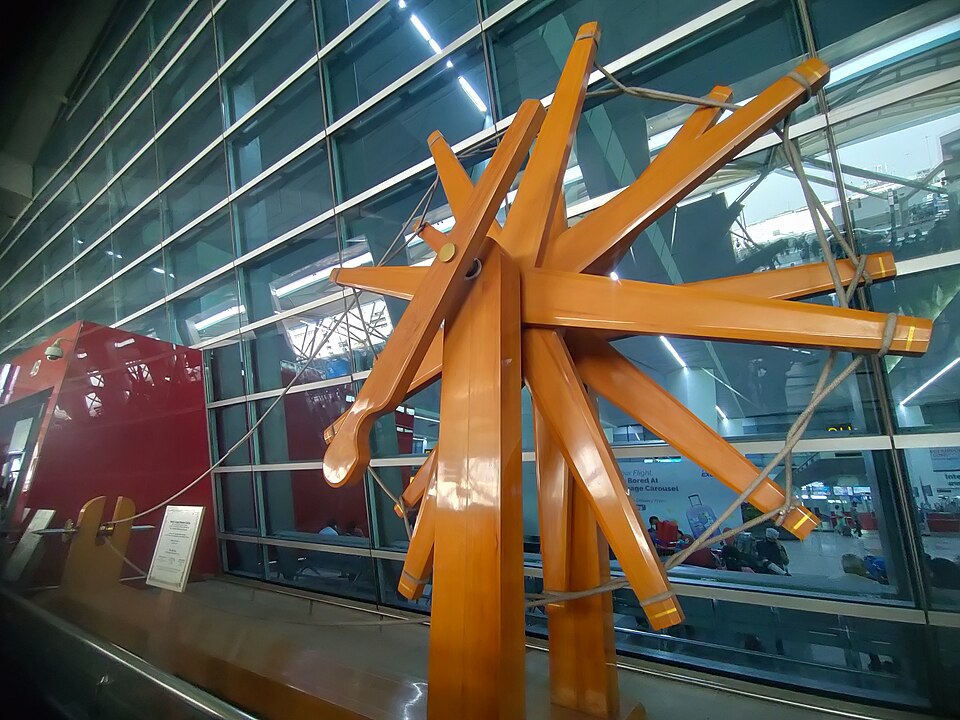
Workshops and workers. Artisans usually owned their simple tools. Spinning was done by women at home, and weavers worked at their own looms. Costly materials such as silk and gold thread were worked in karkhanas under supervision, and building was a major employer: Barani says Alauddin employed 70,000 craftsmen on his buildings.
The spinning wheel. The most important change in textiles was the spinning wheel (charkha), which came with the Muslims and did not exist in ancient India. Its first literary mention is in Isami's Futuh-us Salatin (1350). It spun about six times as much yarn as the spindle, though the yarn was coarser.
Lime mortar, arch and dome. Immigrants brought lime mortar, made of lime (chuna) and powdered brick (surkhi). Strong mortar made the true arch possible, and a dome is a true arch turned through 360 degrees. Before the Turks, Indian buildings used the pillar-and-beam (trabeate) method and the corbelled arch; true arches are known only from a few Kushana windows at Kausambi.
Paper and more. Paper was used widely for books, farmans and business papers; Delhi sweet-sellers wrapped sweets in paper packets. But papermaking centres were few, and much paper was imported from Samarqand and Syria. Bookbinding, the iron stirrup, carpet weaving from Persia and distillation were also new.
Mains lens: what did the Sultanate change?
A state of necessity. The Sultanate was ruled by a small foreign elite over a large population. Its institutions answered one need: to collect the surplus and pay an army. That is why the state was pragmatic rather than theocratic, with zawabit alongside the sharia.
Centralisation and its limits. The iqta let the Sultan pay nobles without cash and move them around. Alauddin and Muhammad Tughluq pushed central control to its height through audit, cash salaries and direct revenue collection. Feroz's hereditary iqtas reversed this, and the Lodis' clan assignments completed the retreat.
Change in the village. Alauddin's measures squeezed the intermediaries and brought the state into direct contact with the peasant, but the peasant paid the highest rate ever. The village itself, with its headman and patwari, changed little. Historians debate how deep the change went: some see only a change of masters, others a more radical shift.
Change in towns and techniques. The clearest changes were urban. Cash revenue, induced trade, growing towns and new crafts expanded the money economy. The charkha, saqiya, lime mortar, paper and the arch outlived the Sultanate and shaped later Indian life.
Implications. Many institutions passed on to later rulers. The shiqq became Sher Shah's sarkar, the chaudhuri's group of villages became the pargana, and the Iltutmish coinage of tanka and jital survived the Sultanate. Understanding the Sultanate is the base for understanding the Mughal system.
How to write it. Separate continuity (village, intermediaries) from change (iqta, cash revenue, towns, technology). Use named evidence, such as Junaidi's 'salt in a dish', the jama of Feroz or the charkha in Isami, and end with a balanced judgement.
Mains practice: administration, economy and society
| Angle | Question | Key points to cover |
|---|---|---|
| Nature of state | 'The Delhi Sultanate was a theocratic state only in name.' Discuss. | Caliph link nominal; sharia plus zawabit; Barani; Junaidi's 'salt in a dish'; Alauddin and Qazi Mughisuddin; ulema as legitimisers; needs of the state. |
| Institution | Trace the evolution of the iqta system from Iltutmish to the Lodis. | Purpose; muqti, fawazil, transfer; not a fief; Tusi; Alauddin audit; Ghiyasuddin 1/10 cap; Muhammad Tughluq wali/amir split; Feroz hereditary, wajh; Lodi sarkars, parganas, sub-assignments. |
| Economy and technology | How far did the Delhi Sultanate bring about an 'urban revolution'? Examine with reference to towns, trade and technology. | Pre-1200 urban decline; iqta towns; cash revenue and induced trade; Multanis, banjaras, dallals, sarrafs, hundi; Gujarat ports, horse imports; charkha, saqiya, lime mortar, arch, paper; limits: Arab control of sea trade, village little changed. |
ಇವು ನಾವು ರಚಿಸಿದ ಅಭ್ಯಾಸ ಪ್ರಶ್ನೆಗಳು, ನಿಜವಾದ ಹಿಂದಿನ ಪ್ರಶ್ನೆಪತ್ರಿಕೆಗಳಲ್ಲ. ನಿಮ್ಮ ಪರೀಕ್ಷೆಯ ಹಿಂದಿನ ಪ್ರಶ್ನೆಗಳು PYQ ಫಲಕದಲ್ಲಿ ಕಾಣಿಸುತ್ತವೆ.
ಈ ಕೋಷ್ಟಕವನ್ನು ಬಳಸುವ ವಿಧಾನ: ಪ್ರತಿ ಉತ್ತರವು ಏನು ಎಂದು ವಿವರಿಸಬೇಕು, ನಂತರ ಏಕೆ ಎಂದು ಹೇಳಬೇಕು, ಮತ್ತು ಅದು ಯಾವುದಕ್ಕೆ ಕಾರಣವಾಯಿತು ಎಂದು ಕೊನೆಗೊಳಿಸಬೇಕು.
Quick revision
- Caliph: robes, investiture, coins, khutba; nominal. State not theocratic: sharia + zawabit; Junaidi 'salt in a dish'; Alauddin and Qazi Mughisuddin.
- Khutba and sikka = sovereignty; Balban zill-i Allah; wakil-i dar (household), amir-i hajib (ceremonies, petitions).
- Wazir (diwan-i wizarat): mushrif-i mumalik (accountant-general), mustaufi-i mumalik (auditor-general), diwan-i mustakhraj (arrears, Alauddin).
- Ariz-i mumalik (diwan-i arz): huliya, dagh; dabir-i mumalik (diwan-i insha); barid-i mumalik, munhiyan; sadr-us sudur (diwan-i risalat); qazi-ul mumalik; muhtasib.
- Iqta: muqti/wali, fawazil, transfer every 3-4 years, not a fief; Tusi; Ghiyasuddin 1/10 cap; Muhammad Tughluq wali/amir split (Amroha); Feroz hereditary; Lodis sarkar/pargana, sub-assignments.
- Army pay: Iltutmish small iqtas (~3,000); Alauddin cash 238 + 78 tankas; Feroz itlaq, wajh.
- Shiqq/shiqqdar (later sarkar); chaudhuri 100 villages (pargana); khot, muqaddam, patwari (village official); kotwal; panchayat.
- Revenue: kharaj, ghari, charai; haqq-i khoti; Alauddin 50%, masahat, same rate; Sharaf Qaini; Ghiyasuddin restores haqq-i khoti; Muhammad Tughluq cesses, not a higher rate; Feroz 23 cesses abolished, haqq-i sharb, jama 6 crore 75 lakh tankas.
- Ruling class: Turkish slaves, Tajiks, the Forty; Yaqut, Raihan; Khaljis add Mongols, Indians, Abyssinians; Muhammad Tughluq: Aizzah, Afghans, Hindus, Peera Mali; maratib; ulema.
- Slaves: Feroz diwan-i bandagan, 1,80,000 (40,000 guards, 12,000 artisans); karkhanas not for market.
- Villages: extensive farming; double cropping (Ibn Battuta); Thakkur Pheru ~25 crops; 1,200 orchards; sericulture first noted 1432 (Ma Huan); balahar; no proprietary right.
- Towns: urban revolution (Muhammad Habib); induced trade; Multanis, karwanis/banjaras, dallals, sarrafs, hundi; horses imported; charkha (Isami 1350), saqiya, lime mortar and true arch, paper (Samarqand, Syria), stirrup.