

TNPSC Group 1 · Module 66 · Mains depth · 18 min
Artificial intelligence
What TNPSC Group 1 asks from this chapter
Syllabus lines this chapter covers:
- தாள் III: GS II · இந்தியாவின் வளர்ச்சியில் அறிவியல் மற்றும் தொழில்நுட்பத்தின் பங்கும் தாக்கமும்.
TNPSC Group 1 questions from this module are being sorted into our bank.
Read at full depth: basics, the standard layer and the Mains analysis.
Start from zero: can a machine learn?
Think about how you learned to tell a cat from a dog. Nobody gave you a rulebook saying "a cat has these exact ears and that exact tail". You simply saw many cats and many dogs, and slowly your brain picked up the difference by itself.
Ordinary computer programs do not work like that. A programmer has to write every rule by hand, such as "if the email contains this word, mark it as spam". This works for simple jobs, but it fails when the rules are too many or too hard to write down, like recognising a face or understanding speech.
Artificial intelligence (AI) is the effort to make machines do tasks that normally need human intelligence, such as seeing, understanding language, making decisions and learning. The most successful way to do this today is to let the machine learn from examples, just as you did with cats and dogs.
This chapter explains how machines learn, what the big new "generative" AI tools are, how India is building its own AI, and why the same technology brings both great promise and real risks.
Why AI took off now, and why India is investing
The idea of thinking machines is decades old, so why has AI suddenly become so powerful? The answer is that three things came together at the same time. Each one was needed, and none was enough on its own.
1. Huge amounts of data. Phones, the internet and sensors now produce enormous amounts of data every second. Learning machines need many examples, and this flood of data gave them their textbooks.
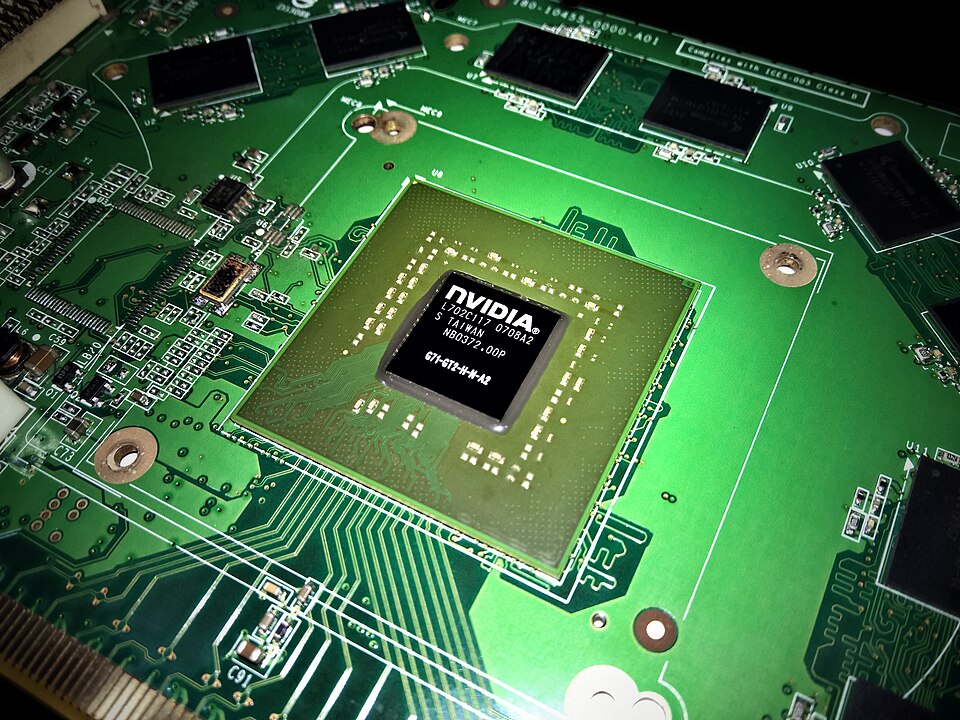
2. Powerful computing. Special chips called GPUs (graphics processing units), first made for video games, turned out to be very good at the many small calculations that learning needs. Large clusters of them now train AI models.
3. Better methods. New ways of building learning systems, especially deep learning, allowed machines to learn far more complex patterns than before.
Why India is investing. AI is becoming a general-purpose technology, like electricity, that will shape farming, health, education, governance and defence. A country that depends entirely on foreign AI models and computing risks losing control over its data, its languages and its economic future.
When India acted. The IndiaAI Mission was approved on 7 March 2024, with an outlay of ₹10,371.92 crore over five years. It is run by IndiaAI, an independent business division under the Ministry of Electronics and IT (MeitY).
The family of AI: machine learning, deep learning and generative AI
People often use AI, machine learning and deep learning as if they were the same thing. It is easier to picture them as circles, one inside another. Each inner circle is a special part of the outer one.
Artificial intelligence is the biggest circle. It includes any method that makes a machine act intelligently, even one built only from hand-written rules.
Machine learning (ML) sits inside AI. It means creating knowledge in a machine by letting it learn patterns from data, instead of giving it every rule. Banks, for example, use ML to spot fraud, score credit and judge loan risk.
Deep learning sits inside ML. It uses neural networks with many layers, loosely inspired by the brain, and it powers face recognition, speech-to-text and translation.
Generative AI sits inside deep learning. Instead of only sorting things, it creates new text, images, audio or code. Large language models (LLMs) are generative AI trained on huge amounts of text, so they can answer questions, write and translate.
Data analytics: the cousin of AI. Organisations also study data to make decisions, and this has four types.
- Descriptive analytics asks what happened?
- Diagnostic analytics asks why did it happen?
- Predictive analytics asks what is likely to happen?
- Prescriptive analytics asks what should we do about it?
How a machine actually learns
Now let us look a little deeper at how a learning machine works. The process has three steps: training, testing and use. It is very like a student preparing for an exam.
1. Training. The machine is shown many examples. In supervised learning, each example comes with the right answer, such as thousands of photos labelled "cat" or "dog". The machine adjusts itself again and again until its guesses match the labels.
2. Learning from mistakes. Inside a neural network, each connection has a strength called a weight. When the network guesses wrong, the error is sent back and the weights are adjusted a little. After millions of such rounds, the network gets very good at the task.
3. Testing and use. The trained model is then tested on new examples it has never seen. If it does well, it is put to use, for example to read X-rays, translate speech or recommend crops.
Other ways of learning. In unsupervised learning, the machine gets data without answers and finds groups by itself, such as customers with similar habits. In reinforcement learning, it learns by trial and error, earning rewards for good moves, which is how machines have learned to play complex games.
Why data quality matters. A machine can only learn what is in its examples. If the data is incomplete or one-sided, the model will make the same mistakes, which is why bias is one of the biggest problems in AI.
Where AI is already at work
AI is not only a future idea. It already runs inside many services that people use every day, often without noticing. Here are the main areas that matter for a country like India.
Agriculture. AI can study satellite images and weather data to warn about pests, predict yields and advise farmers on when to sow and water.
Health. AI can read X-rays and scans to flag possible disease, which helps where specialist doctors are few. It can also help track disease outbreaks from health data.
Language and governance. India has many languages, and AI translation and speech tools can let a citizen talk to a government service in their own language. Chatbots can answer common questions on schemes and forms.
Finance and security. Banks use machine learning to catch fraud and assess loans, and analytics helps spot unusual patterns in payments. The same tools help detect cyber attacks.
Industry. Factories use AI for planning production, predicting machine failures and managing supply chains and stock.
The IndiaAI Mission: building India's own AI
We saw why India is investing in AI. Now let us see how the money is being used. The IndiaAI Mission is built on seven pillars, each tackling one gap that held India back.
1. IndiaAI Compute. Training AI needs costly GPUs, which start-ups and researchers often cannot afford. The mission began with a target of 10,000 GPUs and had reached 38,000 GPUs by October 2025, offered at a subsidised rate of about ₹65 per hour. A purchase order has also been placed for an AI compute system of about 1.1 exaflops at the NIC data centre in Delhi.
2. Application Development. This pillar funds AI solutions for real public problems, through challenges and hackathons in areas such as health, farming and governance.
3. AIKosh. AI needs data, so AIKosh is a platform that shares datasets and models. As of July 2025, it held over 3,000 datasets and 243 AI models across 20 sectors.
4. IndiaAI Foundation Models. India wants its own large models trained on Indian languages and needs. A call on 30 January 2025 drew 506 applications, and by August 2026, 20 indigenous model proposals had been chosen. Sarvam AI was approved in April 2025 to build a sovereign LLM ecosystem, and BharatGen, launched on 2 June 2025, supports 22 Indian languages.
5. IndiaAI FutureSkills. This pillar trains people, with support for PhD, postgraduate and undergraduate students and AI data labs across the country.
6. Startup Financing. It helps Indian AI start-ups raise money and reach global markets.
7. Safe and Trusted AI. It funds tools to make AI fair, explainable and secure. An expression of interest for an IndiaAI Safety Institute was published on 9 May 2025, and 13 safe-AI projects had been chosen by August 2026.
Supporting pieces. 58 AI Centres of Excellence have been approved, and the National Supercomputing Mission runs PARAM Siddhi at C-DAC Pune as a national AI facility. A November 2025 global report ranked India 3rd in AI vibrancy.
The risks: bias, deepfakes, privacy and jobs
The same power that makes AI useful also makes it risky. UPSC often asks about these concerns, so it is worth knowing them clearly. Each risk also points to a kind of rule or safeguard that is needed.
1. Bias and unfairness. An AI model learns from past data, and if that data reflects past unfairness, the model repeats it. A loan or hiring tool could treat some groups unfairly without anyone intending it.
2. Deepfakes and false information. Generative AI can create very realistic fake videos, voices and images. These can be used for fraud, harassment or to spread false news, especially during elections.
3. Privacy. AI systems need large amounts of data, often personal data. Without strong protection, people's information can be collected and used without their consent.
4. Jobs. AI can do some routine tasks faster and cheaper than people, which can change or remove certain jobs. At the same time, it creates new kinds of work, so reskilling becomes essential.
5. The black box problem. Deep learning models are often hard to explain, even for their makers. When a model makes an important decision, such as rejecting a loan, people deserve to know why.
These concerns are why the IndiaAI Mission includes a Safe and Trusted AI pillar and an AI Safety Institute. Protecting personal data is covered in cyber security and digital public infrastructure.
What AI changes for India
We have seen the technology, the mission and the risks. UPSC will also ask so what? Here is the bigger picture for India.
1. A chance to leapfrog. Just as India skipped landlines for many people and went straight to mobiles, AI in Indian languages could bring services to people who cannot read English or fill complex forms.
2. Sovereignty over data and models. Building Indian foundation models and shared compute reduces dependence on a few foreign companies and keeps Indian data and languages under Indian control.
3. Jobs and skills. India has a large technology workforce, but the skills needed are changing fast. Training programmes like FutureSkills matter as much as GPUs.
4. Energy and cost. Large AI systems use a lot of electricity and costly chips. India's AI growth is therefore linked to its power supply, its semiconductor plans and its data centres.
Mains lens: one debate and three kinds of questions
GS-III asks about "awareness in the fields of IT, computers and robotics" and about the effects of technology on jobs. GS-IV may ask about AI ethics. A good answer combines the technology, India's mission and the risks.
The questions in this section are practice questions written by us, not past papers.
Debate: should AI be regulated strictly now?
- For strict rules: deepfakes, bias and privacy harms are already happening, and late rules may come too late.
- For light rules: heavy rules too early may choke Indian start-ups while foreign giants keep moving ahead.
- Balanced view: rules based on risk, so that high-risk uses such as health, credit and policing get strict checks, while low-risk uses stay free to grow.
Question type 1: "Explain" (the concept question). Example: Explain the difference between machine learning, deep learning and generative AI, with examples.
- Intro: Describe AI as machines doing tasks that need human intelligence.
- Body: Use the nested circles: ML learns from data (fraud detection), deep learning uses many-layered neural networks (face recognition), and generative AI creates content (LLMs).
- Conclusion: Note that data quality decides how good and fair a model is.
Question type 2: "Discuss" (the application question). Example: Discuss how the IndiaAI Mission seeks to build an AI ecosystem in India.
- Intro: Approved 7 March 2024, ₹10,371.92 crore over five years, under MeitY.
- Body: Explain the seven pillars with facts: 38,000 GPUs, AIKosh datasets, foundation models such as BharatGen, skills, start-ups and safe AI.
- Conclusion: Mention the challenges of power, chips and skills.
Question type 3: "Critically examine" (the both-sides question). Example: "AI will do more harm than good to employment in India." Critically examine.
- For the statement: routine jobs in services and offices can be automated.
- Against: new jobs in data, AI building and services, and higher productivity in farming and health.
- Way forward: reskilling at scale, social protection and AI that assists workers rather than replaces them.
Useful keywords: machine learning, deep learning, neural network, generative AI, large language model, GPU compute, foundation model, AIKosh, algorithmic bias, deepfake, explainability, risk-based regulation.
Previous years' questions
This section shows the real past questions on this chapter for the exam you have chosen. Each question is copied word for word from the official paper, with the year and paper, so that you can see how the topic is actually asked.
Questions are being collected from the official UPSC and BPSC papers. They will appear here once each one is checked against the original paper.
Quick revision
- AI makes machines do tasks that need human intelligence. Machine learning learns patterns from data, deep learning uses many-layered neural networks, and generative AI creates new content, with LLMs as the language kind.
- Supervised learning uses labelled data, unsupervised finds groups, and reinforcement learns by rewards.
- Data analytics has four types: descriptive, diagnostic, predictive and prescriptive.
- The IndiaAI Mission was approved on 7 Mar 2024, with ₹10,371.92 crore over 5 years under MeitY, and has seven pillars.
- GPUs rose from a target of 10,000 to 38,000 (Oct 2025) at about ₹65/hour. AIKosh shares datasets, and BharatGen (2 Jun 2025) supports 22 languages.
- The main risks are bias, deepfakes, privacy, jobs and the black box problem, which is why there is a Safe and Trusted AI pillar.