

Module 11 · 14 min read · Free chapter
ஸ்வராஜிஸ்ட்கள், சைமன் கமிஷன், புரட்சியாளர்கள் மற்றும் பூர்ண சுயராஜ்ய கோரிக்கை
After Non-Cooperation ended, C.R. Das and Motilal Nehru formed the Swaraj Party in 1923 to fight from inside the councils. Young revolutionaries in the HSRA, led by Bhagat Singh and Chandrashekhar Azad, chose armed action. The all-white Simon Commission of 1927 was boycotted with 'Simon Go Back', the Nehru Report proposed a constitution, and the Lahore Congress of 1929 demanded Purna Swaraj.
Start from zero: what do you do after a pause?
Think of a cricket team that has just been stopped from winning by a sudden decision of its captain. Some players want to keep playing by the old rules, some want to change the rules from inside the board, and some want to fight in a completely different way. The team does not break up, but for a while it pulls in several directions.
That was the Indian national movement after February 1922. Gandhi had called off Non-Cooperation and was in jail. Over the next eight years, leaders tried three paths: entering the councils, building workers' and peasants' movements, and armed revolutionary action.
Then a single British decision brought everyone together again. In 1928 the British sent a commission to decide India's future without a single Indian member. The anger it caused led, within two years, to the Congress demanding nothing less than Purna Swaraj, complete independence.
This chapter follows that journey from 1922 to 1930. Keep one question in mind as you read. How did a movement that seemed to have lost its way in 1922 end the decade with its boldest demand yet?
Key events at a glance
This table lists the main events from 1923 to 1930. Each is explained in the sections below.
| When | What happened | Why it matters |
|---|---|---|
| 1 January 1923 | Swaraj Party formed by C.R. Das and Motilal Nehru | The struggle moves into the councils. |
| 1925 | Kakori train action by the HRA | Revolutionary action revives. |
| 3 February 1928 | Simon Commission lands; hartal and boycott | An all-white commission unites Indians. |
| 1928 | Nehru Report; Bardoli satyagraha | Indians draft their own constitution. |
| 17 November 1928 | Lala Lajpat Rai dies of police blows | Revolutionaries seek revenge. |
| December 1928 | Calcutta Congress gives one year for Dominion Status | A deadline is set. |
| 8 April 1929 | Bomb in the Central Legislative Assembly | 'Inquilab Zindabad' reaches the nation. |
| December 1929 | Lahore Congress adopts Purna Swaraj | The goal becomes complete independence. |
| 26 January 1930 | Independence Day observed across India | The date later chosen for the Republic. |
Notice how the decade starts with division and ends with a single clear goal. The Simon Commission is the hinge on which that change turned.
The Swaraj Party: fighting from inside the councils
Why a new party? After Non-Cooperation was suspended in 1922, the Congress faced a hard question: what next? One group of leaders, led by C.R. Das and Motilal Nehru, argued that boycotting the councils had left them in the hands of loyalists. They proposed entering the councils and using them as a platform against the government.
The Swaraj Party. On 1 January 1923 they formed the Swaraj Party, with C.R. Das as president and Motilal Nehru as secretary. It was a party within the Congress, not a rival to it. Its aim was to enter the councils created by the reforms of 1919 and to change that constitution from within.
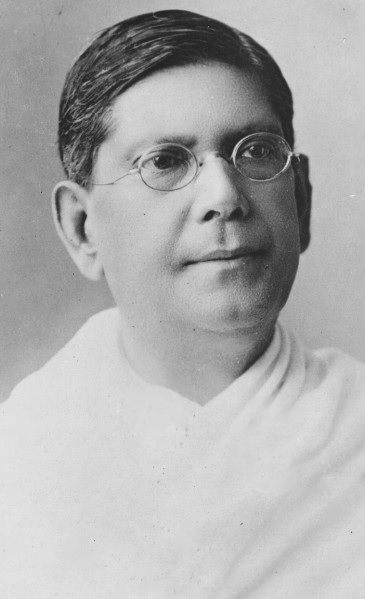
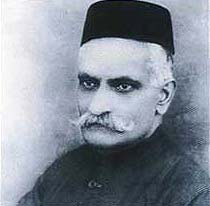
What did it achieve? Inside the councils, the Swarajists questioned government policies and kept the national demand alive at a time when mass action had paused. Well-known leaders joined them; Lala Lajpat Rai, who had been jailed in 1922 for Non-Cooperation, joined in 1926 and became the party's deputy leader in the Central Legislative Assembly. The councils, meant to tame Indian politics, became a stage for criticising British rule.
Why does it matter? The Swarajists showed that the national movement could use more than one method at a time. Agitation outside and debate inside the legislatures were not opposites; both kept up pressure on the government. The workings of the 1919 councils that they entered are explained in the chapter on the Acts of 1919 and 1935.
New forces: workers, peasants and revolutionaries
Workers and peasants. The 1920s also saw new groups organise themselves. The All India Trade Union Congress had been formed in 1920, and Workers and Peasants Parties grew during the decade. The Russian Revolution of 1917 influenced many Indian nationalists, who began to ask not only who should rule India but also for whose benefit.
Why did revolutionaries return? Many young people had joined Non-Cooperation with great hope, and its sudden end left them disappointed. Some concluded that non-violence alone would not win freedom. They turned to armed action, but now with clearer ideas about what kind of free India they wanted.
Kakori, 1925. Revolutionaries of the Hindustan Republican Association (HRA), among them Ram Prasad Bismil and Ashfaqulla Khan, raided a train at Kakori in 1925 to seize government treasury money. The money was to fund their organisation. Supporters took great risks for them; Sushila Didi, for one, sold the gold kept for her own marriage to help the revolutionaries caught after Kakori.
From HRA to HSRA. In Punjab, Bhagat Singh became secretary of the Naujawan Bharat Sabha, founded in March 1926, which worked to rouse young people. In 1928 the Hindustan Socialist Republican Association (HSRA) was formed, with Chandrashekhar Azad, Bhagat Singh and B.K. Dutt among its members. The word 'Socialist' showed the influence of new ideas: freedom was to mean justice for workers and peasants as well.
The Simon Commission and the death of Lajpat Rai
What was the Simon Commission? The British government appointed a commission, named after its chairman Simon, to look into further constitutional change in India. Its report would shape the next set of reforms. Yet not a single Indian was made a member of it.
Why did Indians boycott it? To Indians, a commission that would decide their future without a single Indian member was an insult. When it landed in India on 3 February 1928, it was met with a hartal. Wherever it went, it was greeted with black flags and the slogan 'Simon go back', and on 16 February 1928 Lajpat Rai moved a resolution in the Central Legislative Assembly refusing to cooperate with it.
The death of Lajpat Rai. On 30 October 1928, Lala Lajpat Rai led a demonstration against the Commission in Lahore and was assaulted by the police. He died of his injuries on 17 November 1928. The death of the 'Punjab Kesari', a veteran leader of the Lal-Bal-Pal trio, shocked the country.
Revenge and its cost. The young revolutionaries of the HSRA held a police officer named Scott responsible and planned to kill him. In a case of mistaken identity, another officer, Saunders, was shot instead. This act, and what followed, made Bhagat Singh and his comrades the most talked-about young men in India.
Bhagat Singh and the Assembly bomb
The bomb of 8 April 1929. On 8 April 1929, Bhagat Singh and B.K. Dutt threw a bomb in the Central Legislative Assembly. They were protesting against two repressive measures, the Public Safety Bill and the Trade Disputes Bill. The bomb was not meant to kill, and no one was hurt.
Why throw a bomb that hurt no one? The aim was to be heard, not to take lives. They shouted 'Inquilab Zindabad' ('Long live the revolution') and did not try to escape. Their arrest and trial turned the courtroom into a platform from which their ideas reached the whole country.
The sacrifice. Bhagat Singh, Sukhdev and Rajguru were tried in the Lahore conspiracy case and hanged in Lahore Central Jail on 23 March 1931. They were young men who had chosen death over silence. The day is remembered as Shahidi Diwas, and 'Inquilab Zindabad' became one of the most famous slogans of the freedom struggle.
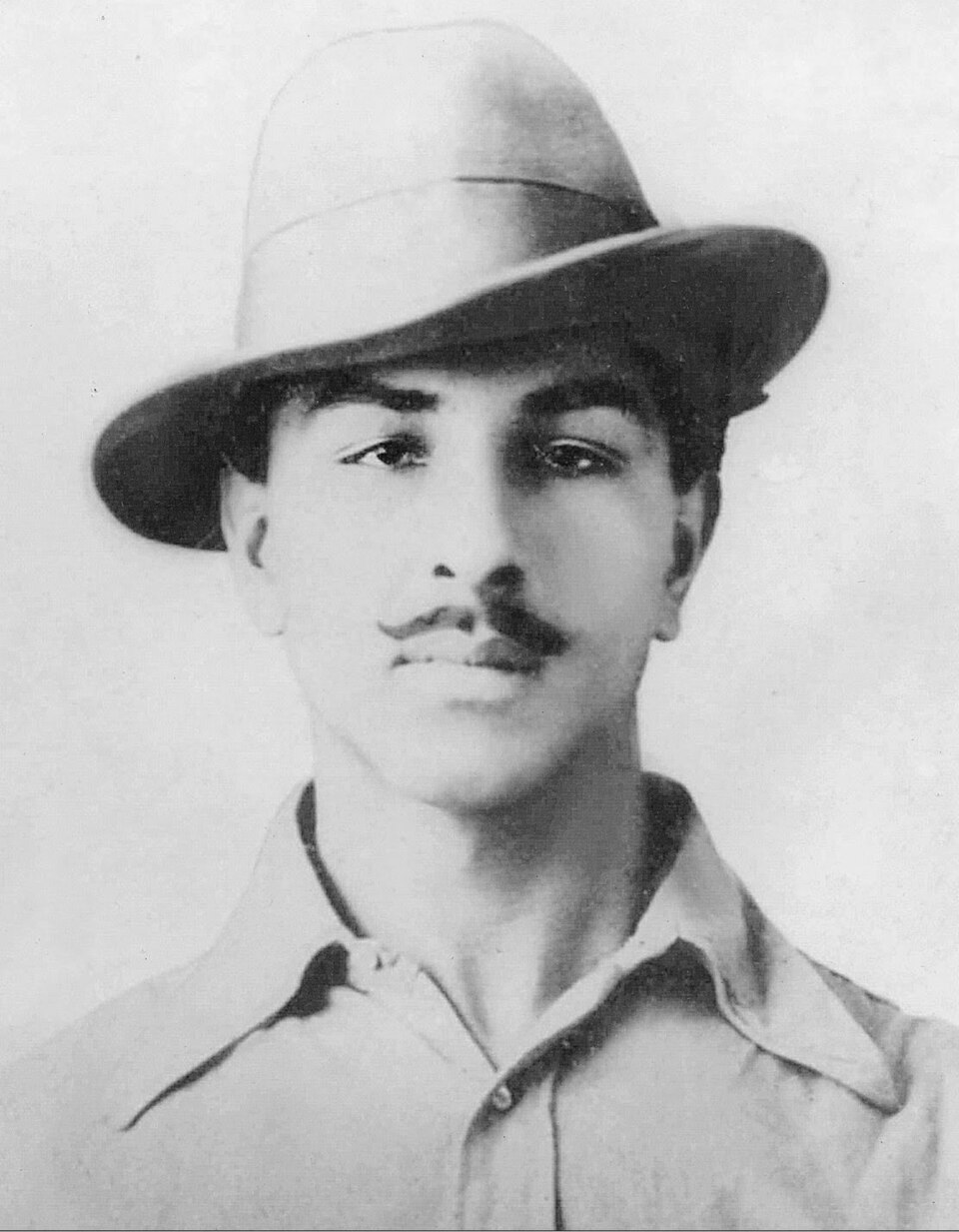
Ideas, not just bombs. It is a mistake to see the HSRA only as men with guns and bombs. They spoke of socialism, of ending exploitation and of a free India that served workers and peasants. Their courage won the admiration of millions, even among those who disagreed with their methods.
The Nehru Report and Bardoli, 1928
An Indian answer to Simon. If the British would not let Indians help decide their future, Indians would set out that future themselves. That was the spirit behind a remarkable document. The Nehru Report of 1928, drafted by Motilal Nehru and released by the All India Congress Committee, set out a constitutional design for India.
What did it propose? The report called for fundamental rights, parliamentary government, adult franchise and an independent judiciary with a Supreme Court. It also spoke of cultural and religious rights for all. Many of these ideas reappeared in the Constitution of 1950, which is why the report is seen as one of its foundations; the longer story is told in the chapter on the historical background of the Constitution.
Bardoli, 1928. In the same year, the peasants of Bardoli in Gujarat ran a satyagraha of their own. It was led by Vallabhbhai Patel, who had earlier led the Kheda satyagraha in 1918. His role at Bardoli raised him to national fame and earned him the title 'Sardar'.
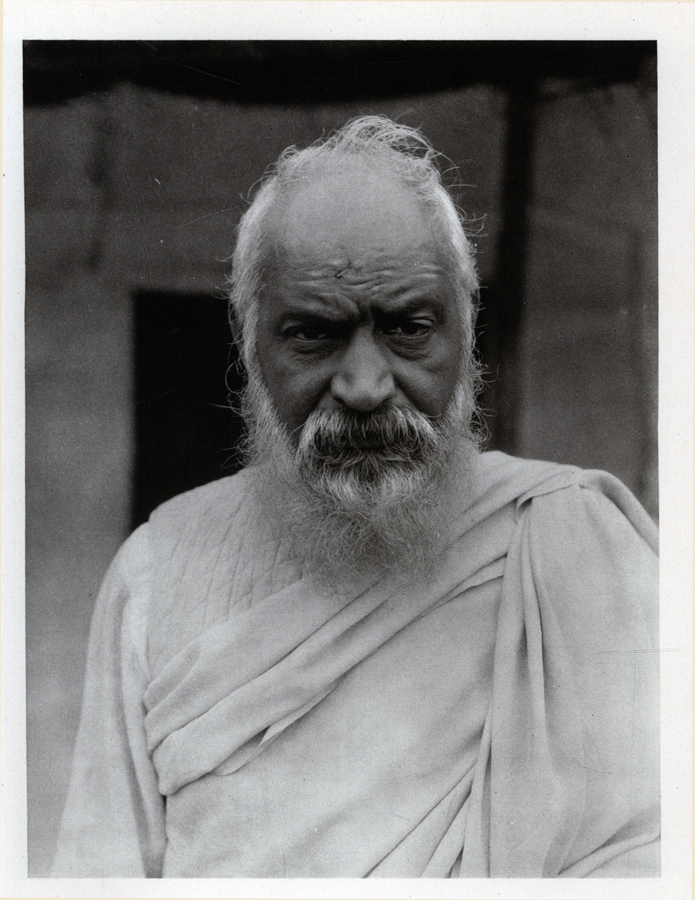
Why put these two together? The Nehru Report showed that Indians could plan their own government, while Bardoli showed that peasants could be organised for disciplined, non-violent struggle. Together they prepared the ground for the next mass movement. One spoke to the educated, the other to the village.
From Dominion Status to Purna Swaraj
The one-year deadline. In December 1928 the Congress met at Calcutta under the presidency of Motilal Nehru. It gave the British government one year to accept the demand for Dominion Status, that is, self-government within the British Empire. If the demand was not met, the Congress would go further.
The Lahore Congress, December 1929. The year passed without the British accepting the demand. At its Lahore session in December 1929, the Congress adopted Purna Swaraj, complete independence, as its goal. A mass Civil Disobedience Movement followed in 1930.
26 January 1930. On 26 January 1930, people across India observed the first Independence Day and took a pledge for complete freedom. Twenty years later, the Constitution of India was brought into force on 26 January 1950 to honour that day. That is why India celebrates Republic Day on 26 January.
Why was this a turning point? Until 1929, the official Congress goal had been self-government within the empire. From now on, the goal was to leave the empire altogether. The struggle to achieve it began with the Civil Disobedience Movement, explained in the next chapter.
Mains lens: two paths, one goal
Constitutional and revolutionary paths. The 1920s are often presented as a contest between the Swarajists in the councils and the revolutionaries outside them. In fact, both served the same goal. The Swarajists exposed the limits of the 1919 reforms from inside, while the revolutionaries showed that young Indians were ready to die for freedom.
Comparing methods. The Swarajists relied on debate and legal methods and appealed mainly to the educated. The revolutionaries relied on dramatic action and sacrifice and appealed to the young. Gandhi's mass non-violent method would return in 1930 and draw on both: the political experience of the Swarajists and the spirit of sacrifice the revolutionaries had shown.
Why the Simon Commission mattered. The all-white Commission united groups that had drifted apart after 1922. It provoked the Nehru Report, a mass boycott and, through Lajpat Rai's death, the revolutionaries' most famous actions. Its exclusion of Indians pushed the Congress from Dominion Status to Purna Swaraj in just two years.
A balanced view. In a Mains answer, avoid treating the 1920s as a 'dull decade'. It was a period of regrouping in which new social forces, new ideas and a new goal took shape. Without it, the mass movement of 1930 would not have had the same reach.
Mains practice: 1922–1930
| Angle | Question | Key points to cover |
|---|---|---|
| Strategy | Assess the role of the Swaraj Party in keeping the national movement alive after 1922. | Context of suspension; Das and Motilal, 1 January 1923; council entry; Lajpat Rai in the Assembly; limits. |
| Ideas | "The revolutionaries of the 1920s were inspired by ideas, not only by anger." Discuss. | HRA and Kakori; Naujawan Bharat Sabha; HSRA and socialism; Assembly bomb; 'Inquilab Zindabad'; 23 March 1931. |
| Turning point | How did the Simon Commission change the goal of the national movement? | No Indian member; boycott; Lajpat Rai; Nehru Report; Calcutta deadline; Lahore 1929 and 26 January 1930. |
இவை நாங்கள் எழுதிய பயிற்சி வினாக்கள், முந்தைய தேர்வு வினாத்தாள்கள் அல்ல. உங்கள் தேர்வின் கடந்தகால வினாக்கள் PYQ panel-இல் தோன்றும்.
How to use this table: each answer should explain the what, then the why, and end with what it led to.
Quick revision
- Swaraj Party: 1 January 1923; C.R. Das president, Motilal Nehru secretary; party within Congress; council entry.
- Lajpat Rai: joined Swarajists 1926, deputy leader in the Central Legislative Assembly.
- AITUC 1920; Workers and Peasants Parties in the 1920s; Russian Revolution's influence.
- Kakori 1925: HRA, Bismil, Ashfaqulla Khan; treasury money.
- Naujawan Bharat Sabha (March 1926), Bhagat Singh secretary; HSRA 1928: Azad, Bhagat Singh, B.K. Dutt.
- Simon Commission: no Indian member; landed 3 February 1928; hartal, black flags, 'Simon go back'.
- Lajpat Rai assaulted at Lahore, 30 October 1928; died 17 November 1928; Saunders shot instead of Scott.
- 8 April 1929: bomb in the Central Legislative Assembly against the Public Safety and Trade Disputes Bills; 'Inquilab Zindabad'; no one hurt.
- Bhagat Singh, Sukhdev, Rajguru hanged 23 March 1931, Lahore Central Jail.
- Nehru Report 1928: rights, parliamentary government, adult franchise, Supreme Court.
- Bardoli 1928: Vallabhbhai Patel becomes 'Sardar'.
- Calcutta, December 1928: one year for Dominion Status; Lahore, December 1929: Purna Swaraj; 26 January 1930 Independence Day.