Preliminary: General Knowledge (General Studies 50, General Science and Mathematics 50, Mental Ability 50) · India and neighbouring countries: history of neighbouring countries, history of India, culture
Mains Paper 2: General Knowledge (General Studies 50, General Science and Mathematics 50, Mental Ability 50) · India and neighbouring countries: history of neighbouring countries, history of India, culture
BPSC ASO questions from this module are being sorted into our bank.
Cut to standard depth for BPSC ASO. 9 deeper paragraphs are in the full chapter.
Start from zero: the king who gave up war
In the previous chapter we watched Chandragupta and Bindusara build an empire by conquest. Their successor Asoka inherited the largest state India had ever seen. Around 260 BC he added one more conquest, Kalinga, and then did something no king of his age is known to have done: he renounced war.
In its place he preached Dhamma, a code of moral conduct, carved on rocks and pillars across the subcontinent. He spoke directly to his subjects, in their own language, about tolerance, kindness and duty. His inscriptions are the first royal voice in Indian history that we can still read.
This chapter asks: who was Asoka, what happened at Kalinga, what did Dhamma mean, and why did he adopt it? Was it simply Buddhism, or a clever answer to the problems of ruling a vast and diverse empire?
Why study this? Asoka is one of the few ancient kings whose own words survive across a whole subcontinent. Exams ask about his edicts, their places, Kalinga and Dhamma every year. Mains asks whether Dhamma was a religion, a moral ideal or a policy of state, and whether it weakened the empire.
Asoka at a glance
Theme
Key facts
Titles
Devanampiya Piyadasi, 'Beloved of the Gods'
Before the throne
Viceroy at Taxila and Ujjain
Coronation
About 269-268 BC, after a succession struggle
Kalinga war
About 260 BC, eight years after consecration (Rock Edict XIII)
Inscriptions
14 major rock edicts, minor rock edicts, 7 pillar edicts, others
Decipherment
1837, James Prinsep (Brahmi)
Dhamma officers
Dhamma-mahamattas (Rock Edict V)
Personal faith
Buddhism; third council at Pataliputra in his reign
The key distinction. Keep Asoka the Buddhist separate from Asoka the emperor. His personal faith was Buddhism, but his public Dhamma was a moral code for people of all faiths. Most exam traps on Asoka test exactly this difference.
From prince to penitent: Asoka and Kalinga
A rediscovered king. For centuries Asoka was a dim figure known mainly from Buddhist legends. In 1837James Prinsep deciphered a Brahmi inscription of a king called Devanampiya Piyadasi, 'Beloved of the Gods'. Comparing it with the Sri Lankan chronicle Mahavamsa, scholars realised that this king was Asoka Maurya.
The cost of Kalinga, in Asoka's own words
Viceroy and prince. During his father's reign Asoka served as viceroy at Taxila, reportedly sent to put down a revolt, and then at Ujjain. There he married a merchant's daughter from Vidisa, and their children Mahinda and Sanghamitta would later be linked with Buddhism. Buddhist sources say these years drew him towards the Buddha's teaching.
A disputed succession. Most sources agree that Asoka was not the crown prince. After Bindusara's death he fought his brothers for about four years and was crowned around 269-268 BC. Buddhist accounts paint him as extremely wicked before his conversion, but this is exaggerated to make his later piety shine brighter.
Why Kalinga? Earlier Mauryas had pushed deep into the Deccan, but Kalinga, modern Odisha, remained independent. It was strategically vital, controlling the land and sea routes to south India. Leaving it free left a hole in the heart of the empire's eastern flank.
Asoka's path
The war. In Rock Edict XIII Asoka says that eight years after his consecration, around 260 BC, he conquered Kalinga. 150,000 people were deported, 100,000 were killed and many times that number perished. These are the king's own figures, set down in stone.
Remorse. The same edict describes his remorse. What weighed on him most was that ordinary, good people, brahmanas, sramanas and householders who respected parents and teachers, suffered violence, death and separation from loved ones. Even survivors grieved for their friends and relatives.
A new kind of conquest. Asoka declared that his sons and grandsons should not seek new conquests, and that if they had to fight, they should show patience and light punishment. The only true conquest, he said, was conquest by Dhamma (dhammavijaya). No other monarch of the ancient world is known to have renounced war in this way.
The edicts: an empire written in stone
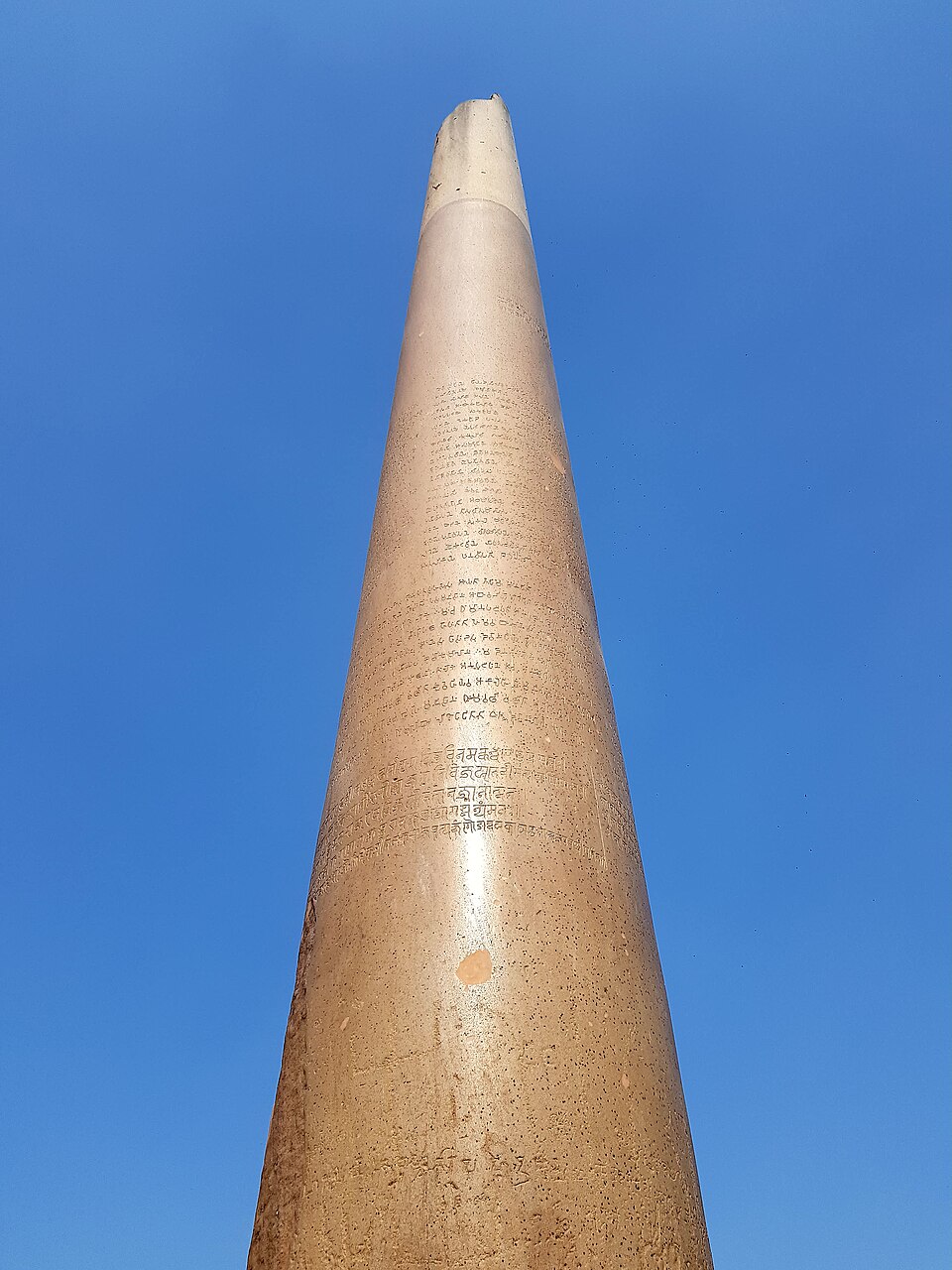
Talking to the people. Asoka used his inscriptions to explain Dhamma directly to his subjects. They were placed where many people would pass, near towns and trade routes, so they work like public proclamations. Each was written in a different year, so together they show how his thinking grew.
Where Asoka spoke: the edicts on the map
Two kinds of inscriptions. A small group is addressed to the Buddhist sangha. In these Asoka declares his personal relationship with the Buddhist order and names some scriptures all Buddhists should know. The larger group, the rock and pillar edicts, speak to the public at large about Dhamma.
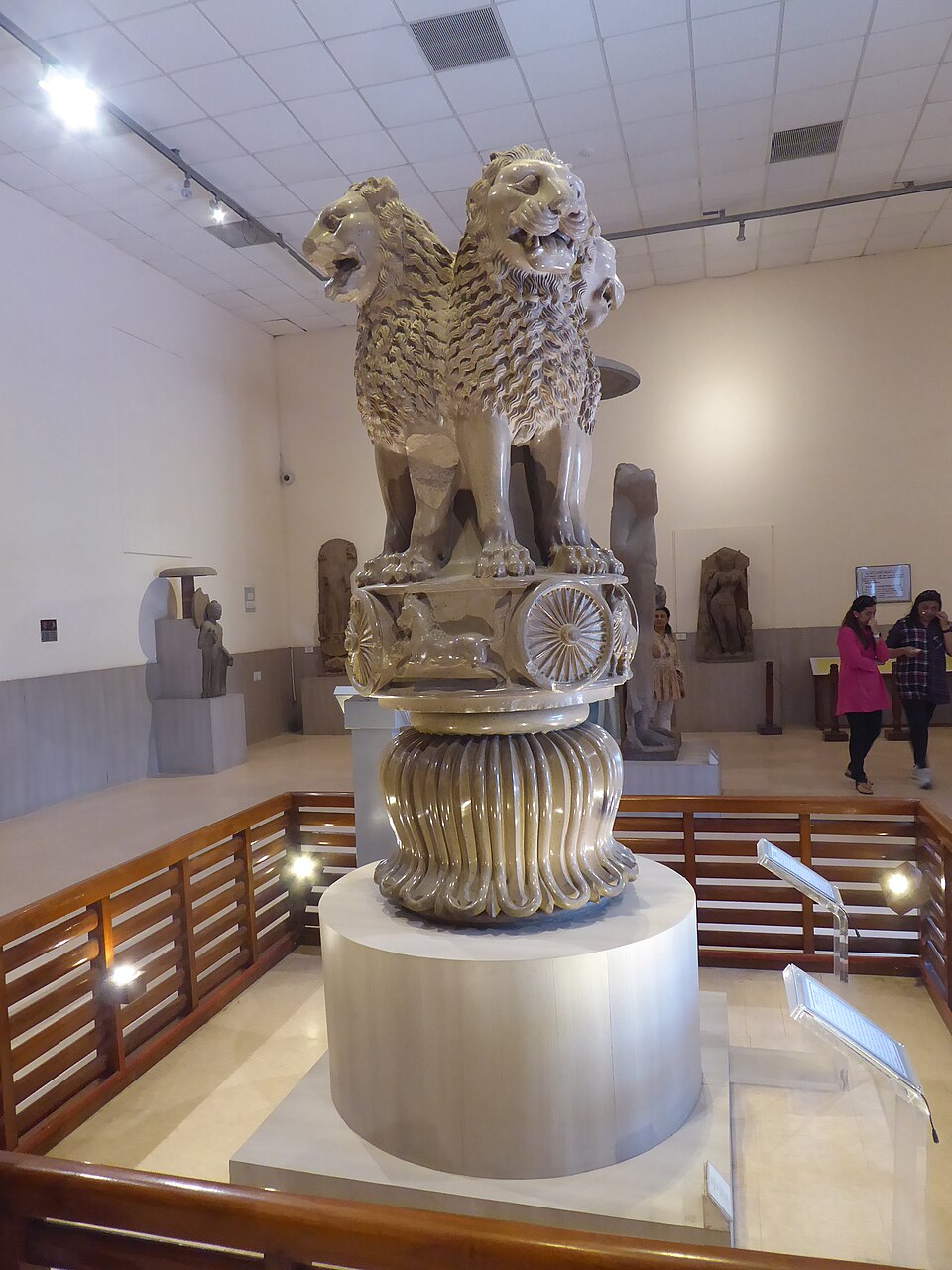
The Lion Capital from SarnathPhoto: lisa bat, CC BY 2.0, via Wikimedia Commons
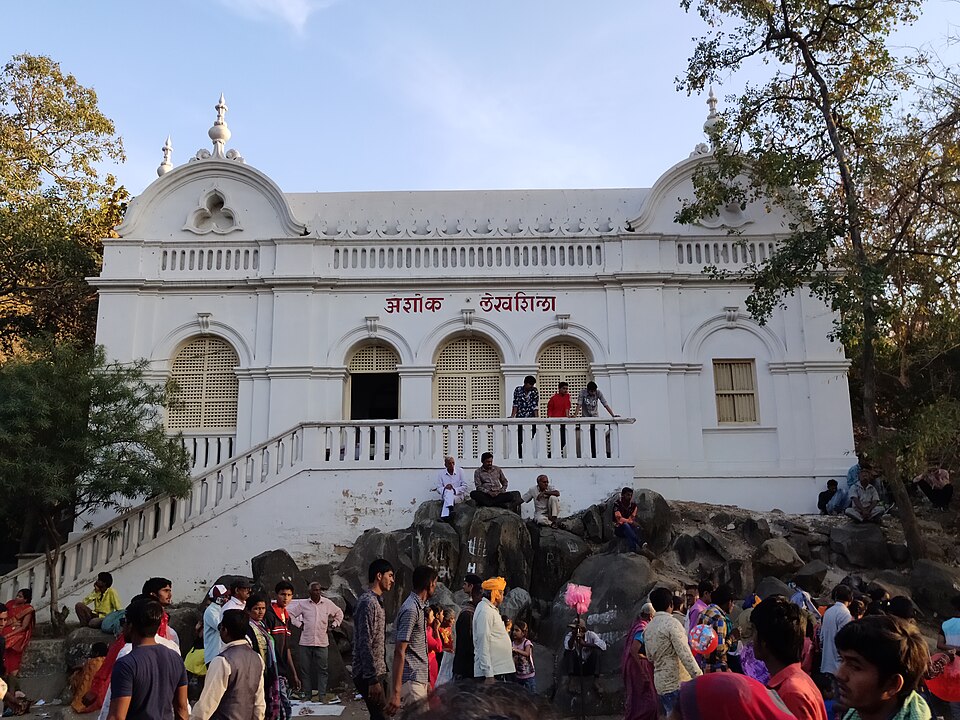
The major rock edicts. The fourteen major rock edicts appear at Shahbazgarhi and Mansehra near Peshawar, Kalsi near Dehradun, Sopara near Mumbai, Girnar near Junagadh, and Dhauli and Jaugada in Odisha. Their spread from the north-west to the east coast traces the outline of the empire.
The minor rock edicts.Minor rock edicts are found in Karnataka at Brahmagiri, Siddapura, Jatinga-Rameshwara and Maski, and further north at Rupnath near Jabalpur, Sahasram in Bihar and Bairat near Jaipur. The southern sites show Mauryan reach into the Deccan.
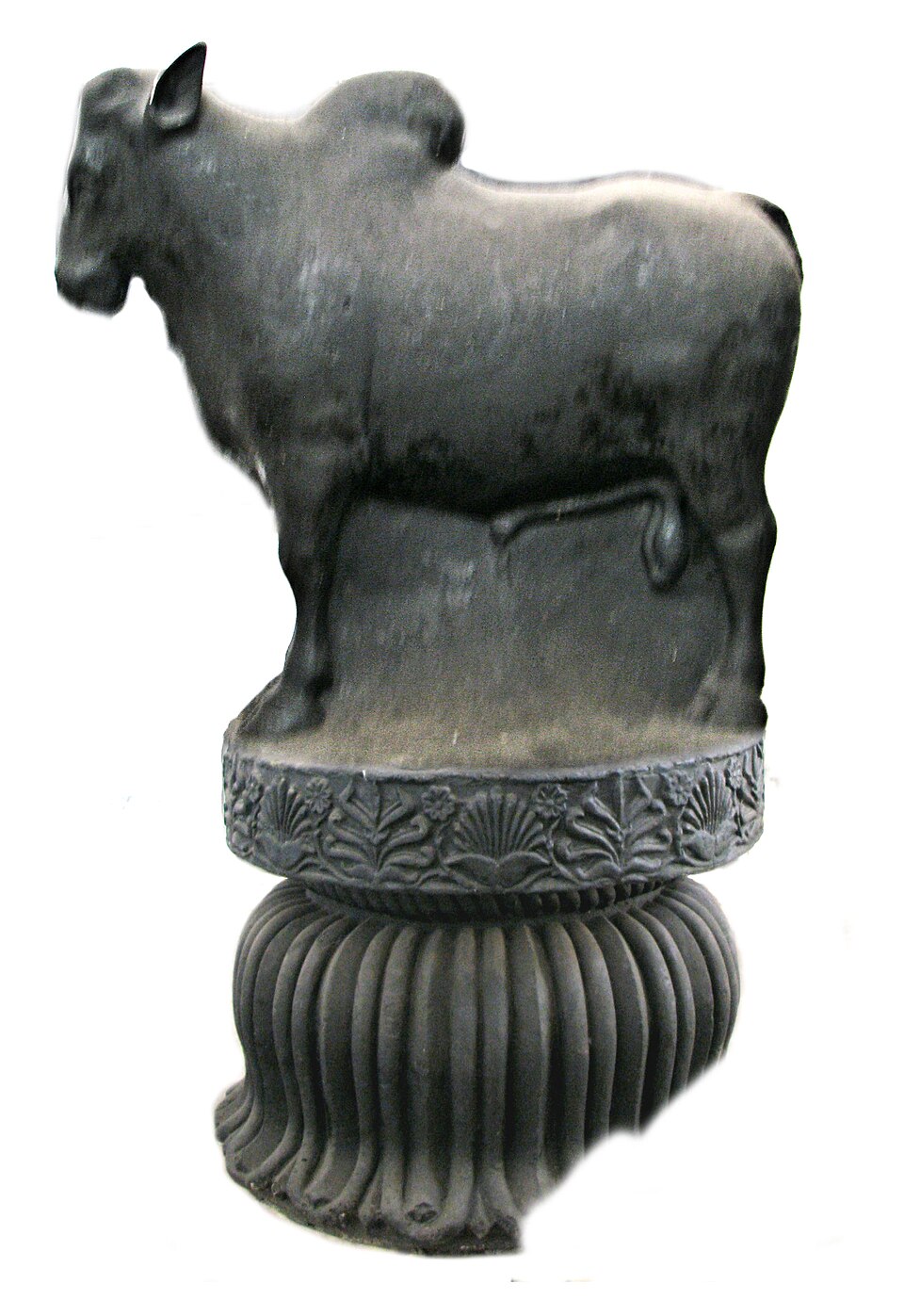
The pillars. The seven pillar edicts stand on pillars at Delhi (two, brought from Topra near Ambala and from Meerut), Kausambi, and Lauriya Araraj, Lauriya Nandangarh and Rampurva in Bihar. Other inscribed pillars stand at Sanchi, Sarnath and Rummindei (Lumbini) in Nepal. Some carry animal capitals, such as the bull-crowned pillar at Rampurva and the famous capital at Sarnath.
In other tongues. In the far north-west, two inscriptions of Asoka at Laghman in Afghanistan are written in Aramaic, the old Persian link script. One even records a royal road with distances. Asoka adapted his message to the people he was addressing.
The edges of the empire. The edicts name the Cholas, Pandyas, Satiyaputras and Keralaputras and Sri Lanka as neighbours outside the empire in the south. In the north-west, the realm of the Greek king Antiochus II lay outside. The empire, including north and south Bengal, reached its greatest extent under Asoka.
Many peoples within. Inside the empire lived very different peoples: Yavanas (Greeks) and Kambojas in the north-west, and Bhojas, Pitinikas, Andhras and Pulindas in western India and the Deccan. Asoka distinguished the conquered and royal territories (vijita, rajavishaya) from the border peoples (pratyanta). Whether areas without edicts were ruled in the same way is still uncertain.
What was Dhamma?
Not a religion.Dhamma is the Prakrit form of the Sanskrit dharma, translated as piety, moral life or righteousness. It was not a particular religious faith, and it was not an arbitrary royal whim. It was a set of norms of social behaviour, carefully drawn from the many traditions of Asoka's time.
The fourteen rock edicts in one card
Why it was needed: the economy. The Mauryan age saw a shift from a simple rural economy to one in which cities, trade and coins mattered. The commercial classes came forward, and tribes from outlying areas were being drawn into society. An urban, mixed society demanded a more flexible social order.
Why it was needed: society and faith. The brahmanical response was to make the varna system more rigid and deny higher status to merchants. The lower orders turned to heterodox sects such as Buddhism, Jainism and the Ajivikas, and this created social tensions. Brahmanas still held great influence, so some hostility between groups was inevitable.
Why Dhamma was needed
Why it was needed: the empire. By Asoka's time one region, Magadha, ruled a vast territory of many regions, cultures and faiths, including Greek areas and tribal lands. Such an empire could not be held by the army alone, which would have been ruinously expensive. A policy that worked at the level of ideas and reached all sections of society was a wiser choice.
What Dhamma asked. Dhamma stressed a dual tolerance: tolerance of people and of their beliefs. It asked for consideration towards slaves and servants, obedience to parents and elders, and generosity towards friends, the needy, brahmanas and sramanas. It urged non-violence, both in giving up war and in restraint in killing animals.
What Dhamma asked of people
Welfare and ceremonies. Dhamma also meant welfare: medical treatment for people and animals, roads, wells and tree-planting. Asoka attacked meaningless ceremonies at birth, illness, marriage and before journeys, especially those performed by women. In their place he urged the practice of Dhamma.
The edicts in sequence.Rock Edict I bans animal sacrifice and certain festive gatherings. II lists welfare works, III praises liberality to brahmanas and sramanas and respect for parents, and IV claims that Dhamma has reduced violence and immorality. V records the appointment of the Dhamma-mahamattas, and VI tells them they may report to the king at any time.
Tolerance and tours.VII and XII plead for tolerance among sects, hinting that rivalry between them could be intense. VIII says the king has replaced pleasure and hunting trips with dhammayatras, tours to meet his people. IX criticises ceremonies, X rejects fame and glory, XI explains Dhamma again, and XIII tells the story of Kalinga and dhammavijaya.
Dhamma as state policy
A new ideal of kingship. Asoka declared, 'All men are my children', and said that all his efforts were to repay the debt he owed to all living beings. This was a striking change. The king of the Arthasastra owed nothing to anyone and spent only where it brought more revenue.
Two ideas of the king
Welfare on a royal scale. Asoka set up medical centres for people and animals, both inside and outside the empire. Shady groves, wells, fruit orchards and rest houses were laid out along the roads. He set an example by almost stopping the killing of animals for the royal kitchen.
Missions abroad. Wanting to win the world through love and faith, Asoka sent missions of Dhamma to distant lands, including Egypt, Greece and Sri Lanka. These were not armies but messengers. They carried an idea of moral conduct far beyond India's borders.
Mercy in justice. The Dhamma-mahamattas were asked to look after the welfare of prisoners. Convicts kept in fetters after their sentence had ended were to be released. Those condemned to death were given three days' grace.
Dhamma as state policy
Officers of Dhamma. The Dhamma-mahamattas were a new cadre of officials, meant to see that people of all sects were treated fairly and to spread Dhamma in every corner of society. Over time, though, they seem to have grown into a powerful 'priesthood of Dhamma', and began to interfere in politics. This shows how even a moral policy could become a tool of state power.
Touring the empire. Asoka and his senior officials went on dhammayatras, tours to preach Dhamma and meet the people directly. Some officials also had to go on tours of inspection (anusamyana) every five years. Such direct contact between ruler and ruled was new.
Asoka the Buddhist. In his personal life Asoka was a Buddhist, and his inscriptions to the sangha show this. As we saw in the chapter on Buddhism, the third Buddhist council met at Pataliputra in his reign under Moggaliputta Tissa. Because of his devotion, the scholar Kern called him 'a monk in a king's garb'.
Quick revision
Devanampiya Piyadasi; Brahmi deciphered by James Prinsep, 1837; identified via the Mahavamsa.
Viceroy at Taxila and Ujjain; Vidisa merchant's daughter; Mahinda, Sanghamitta; not crown prince; crowned c. 269-268 BC.
Kalinga c. 260 BC, 8 years after consecration (RE XIII): 150,000 deported, 100,000 killed; remorse; dhammavijaya.
Major RE: Shahbazgarhi, Mansehra, Kalsi, Sopara, Girnar, Dhauli, Jaugada. Minor RE: Brahmagiri, Siddapura, Jatinga-Rameshwara, Maski, Rupnath, Sahasram, Bairat.
Outside: Cholas, Pandyas, Satiyaputras, Keralaputras, Sri Lanka, Antiochus II. Inside: Yavanas, Kambojas, Bhojas, Pitinikas, Andhras, Pulindas.
Dhamma: Prakrit of dharma; social ethics, not a religion; dual tolerance; slaves, elders, brahmanas and sramanas; non-violence; welfare; anti-ceremony.
RE I animal sacrifice ban; V Dhamma-mahamattas; VI report any time; VII, XII tolerance; VIII dhammayatras; XIII Kalinga.
State policy: 'All men are my children'; medical centres; missions to Egypt, Greece, Sri Lanka; prisoners; three days' grace; Kern: 'a monk in a king's garb'.
Personal Buddhism: sangha inscriptions; third council (Moggaliputta Tissa). Thapar: Dhamma answered socio-political needs; failed to survive him.
Exam-style questions on this chapter. Pick an answer to see the explanation. 0 of 11 answered
Who deciphered the Brahmi inscriptions of 'Devanampiya Piyadasi' in 1837?
Which of Asoka's edicts describes the Kalinga war and his remorse?
Consider the following statements about Asoka before his accession:
1. He served as viceroy at Taxila and Ujjain.
2. He married a merchant's daughter from Vidisa.
3. He was the declared crown prince (yuvaraja) of Bindusara.
Which of the statements given above is/are correct?
Which of the following is a site of Asoka's major rock edicts?
Asoka's inscriptions at Laghman in Afghanistan are written in:
Asoka's edicts mention which of the following as lying outside his empire in the south?
1. Cholas
2. Pandyas
3. Keralaputras
Which of the statements given above is/are correct?
Which Rock Edict records the appointment of Dhamma-mahamattas?
Which of the following were part of Asoka's Dhamma?
1. Consideration towards slaves and servants.
2. Generosity towards brahmanas and sramanas.
3. Compulsory conversion of officials to Buddhism.
Which of the statements given above is/are correct?
According to Rock Edict VIII, Asoka replaced royal hunting and pleasure trips with:
Who described Asoka as 'a monk in a king's garb'?
Assertion (A): Asoka's Dhamma cannot simply be equated with Buddhism.
Reason (R): Asoka created a separate office of Dhamma-mahamattas and his edicts urge respect for brahmanas and sramanas alike.
Mains answer practice
Write your answer first, then open the points a good answer should cover.
Why did Asoka adopt the policy of Dhamma? Was it a moral ideal or an instrument of statecraft? (250 words)
Show answer points
Meaning: Prakrit of dharma; social ethics, not a religion
Economy: urban growth, coins, merchants; tribes drawn in
Society: rigid varna, heterodox sects, social tensions