

BPSC ASO · Module 3 · standard depth · 18 min
The Gupta age: empire, administration, economy and society
What BPSC ASO asks from this chapter
Syllabus lines this chapter covers:
- Preliminary: General Knowledge (General Studies 50, General Science and Mathematics 50, Mental Ability 50) · India and neighbouring countries: history of neighbouring countries, history of India, culture
- Mains Paper 2: General Knowledge (General Studies 50, General Science and Mathematics 50, Mental Ability 50) · India and neighbouring countries: history of neighbouring countries, history of India, culture
BPSC ASO questions from this module are being sorted into our bank.
Cut to standard depth for BPSC ASO. 10 deeper paragraphs are in the full chapter.
Start from zero: the 'classical age' and its limits
In an earlier chapter we saw north India split among many powers after the Mauryas. By about AD 300 even the Kushanas and Satavahanas had faded. Out of this patchwork rose a family from the Ganga plain, the Guptas, who built the largest north Indian empire since the Mauryas.
The Gupta age is famous. Its gold coins are among the finest in Indian history, its temples mark the start of Indian temple building, and poets like Kalidasa and scientists like Aryabhata worked in this time. That is why many books call it a 'Golden Age'.
But a good student asks: golden for whom? The same period saw more land grants, a heavier burden on ordinary peasants, stricter caste rules and the growth of untouchability. A palace can glitter while the village around it struggles.
Why study this? The Gupta age shaped Indian kingship, Sanskrit culture, temple art and caste society for centuries. Exams ask about Samudragupta's prasasti, Chandragupta II, Gupta officials, land grants and Gupta culture. Mains asks whether the 'Golden Age' label is justified and why the empire fell.
The Guptas at a glance
| Ruler | Key facts |
|---|---|
| Sri Gupta, Ghatotkacha | Early rulers; Guptas perhaps subordinate to later Kushanas |
| Chandragupta I | First Maharajadhiraja; Lichchhavi marriage; Gupta era 319-320 |
| Samudragupta | Prayaga prasasti by Harishena; Aryavarta annexed; south captured and released |
| Chandragupta II | Ended Saka rule in western India; Vakataka alliance; Fa-Hien |
| Kumaragupta I | About 415-455; inscriptions Bengal to Gujarat |
| Skandagupta | Repelled Hunas; Sudarshana repaired; last date 467 |
| End | Weak successors; Guptas till about 550 |
The key idea. The Guptas built a large but loosely held empire. They ruled the Ganga valley directly, but in many regions they let defeated kings rule on as subordinates. This choice made the empire easier to build and also easier to break.
From a small kingdom to an empire
A crowded map. In the early fourth century, north India had no great power. Naga rulers held Mathura and other centres, and republics such as the Yaudheyas, Malavas and Madras ruled in Haryana, Rajasthan and Punjab. In the Deccan, the Vakatakas rose in Vidarbha, the Kadambas in Karnataka and the Pallavas at Kanchi.
Where did the Guptas come from? Their origin is uncertain. Scholars have placed their home in north Bengal, Magadha or Uttar Pradesh, but the Allahabad inscription, coin hoards and Puranic descriptions suggest eastern Uttar Pradesh. They may once have been subordinates of the later Kushanas.
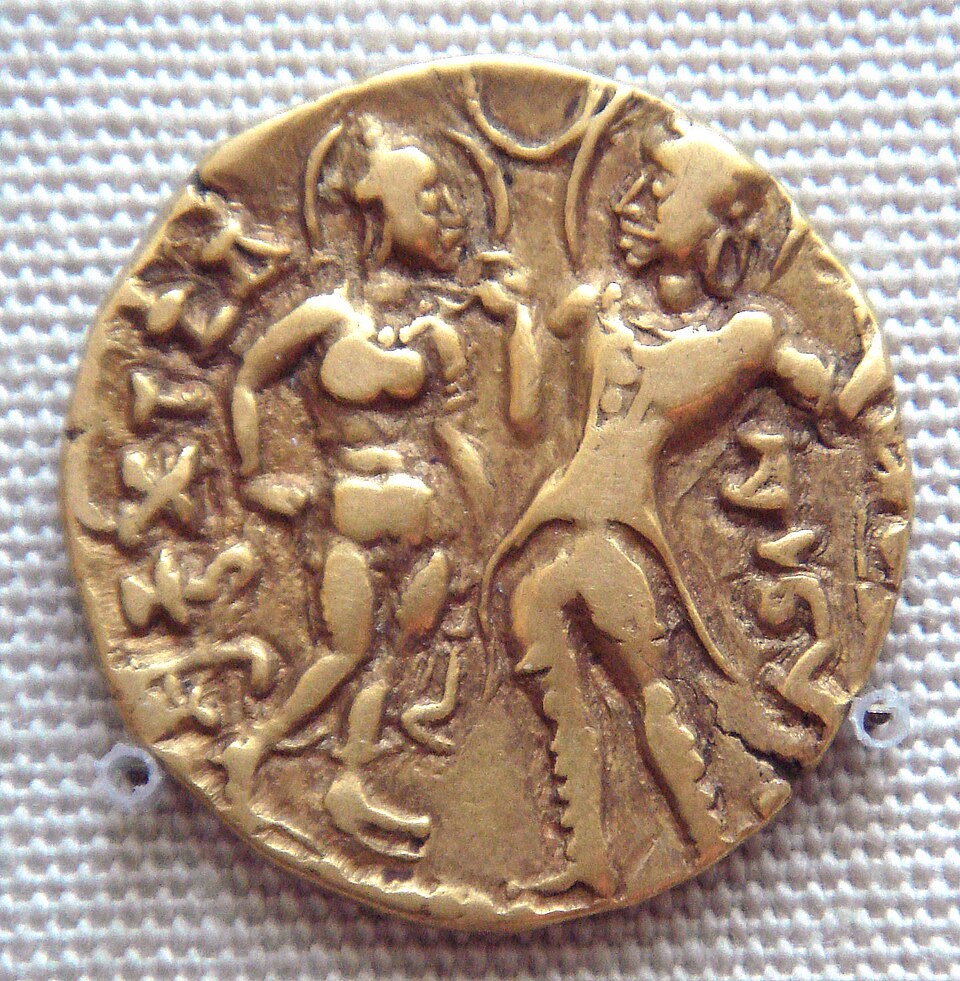
Chandragupta I and a useful marriage. Sri Gupta and Ghatotkacha were the first rulers. Chandragupta I was the first to take the title Maharajadhiraja and married Kumaradevi, a Lichchhavi princess.
Gold coins show the king and queen with the legend 'Lichchhavayah', a sign of how much this alliance mattered. He is credited with the Gupta era, beginning in AD 319-320.
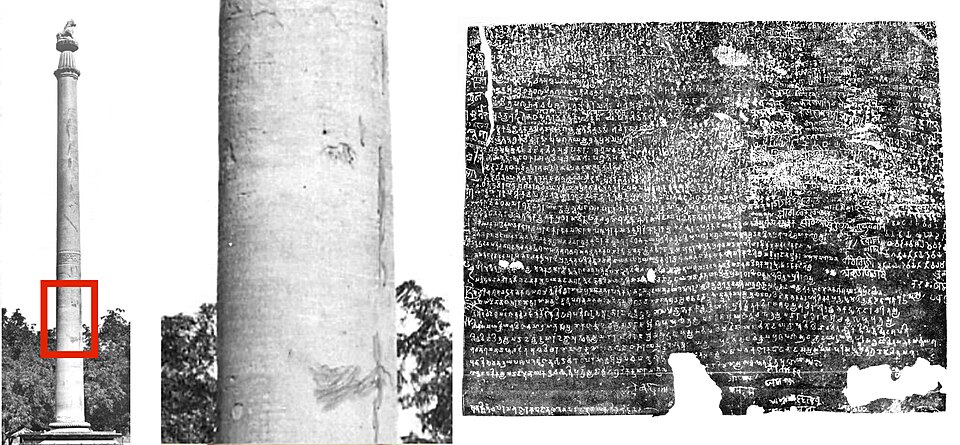
Samudragupta's record. Almost all we know of Samudragupta comes from one record, the Prayaga prasasti. It was composed by Harishena, a high official, and engraved on the Asokan pillar at Allahabad. It describes how Chandragupta I chose Samudragupta as heir, to the joy of courtiers and the dismay of rivals.
The Kacha puzzle. Gold coins bearing the name Kacha look much like Samudragupta's, but Kacha is missing from official Gupta lists. Some think Kacha was a rival brother, others that he was Samudragupta himself under an earlier name. What seems clear is that Samudragupta faced a disputed succession but won.
Four ways to deal with kings. Samudragupta treated different regions differently. He uprooted and annexed the kings of Aryavarta in the north. In the south he captured and then released twelve kings of Dakshinapatha, including Vishnugopa of Kanchi, a policy called grahana-moksha.
Tribute and homage. Forest kings were made 'servants'. Frontier kingdoms such as Samatata, Kamarupa and Nepala, and republics such as the Malavas and Yaudheyas, paid tribute and obeyed orders. Distant rulers such as the later Kushanas, the Sakas and Simhala (Sri Lanka) are said to have offered homage.
Why release the southern kings? Holding distant regions directly would have been hard, given the problems of communication and control. Letting defeated kings rule as tributaries gave stability for the time being. Harishena's claims are often exaggerated, but Samudragupta clearly laid the military foundations of the empire.
The Ramagupta story. Gupta inscriptions name Chandragupta II as the next king, but a play, the Devichandraguptam, tells another tale. In it the weak Ramagupta, facing defeat by the Sakas, agrees to give up his queen Dhruvadevi, and Chandragupta, disguised as the queen, kills the Saka king, then kills his brother and marries Dhruvadevi. Copper coins and Jaina image inscriptions bearing Ramagupta's name lend the story some support.
Chandragupta II: alliances and conquest. Chandragupta II strengthened his position through marriages. He married the Naga princess Kuberanaga, and their daughter Prabhavati married the Vakataka king Rudrasena II. These alliances helped prepare his greatest campaign.
The end of the Sakas. He defeated the Saka ruler Rudrasimha III and added Gujarat, Kathiawad and west Malwa to the empire. Saka coins in the region stop, and the Guptas began issuing Saka-type silver coins for the region. This victory probably gave rise to the tradition of Sakari Vikramaditya, 'Vikramaditya, enemy of the Sakas'.
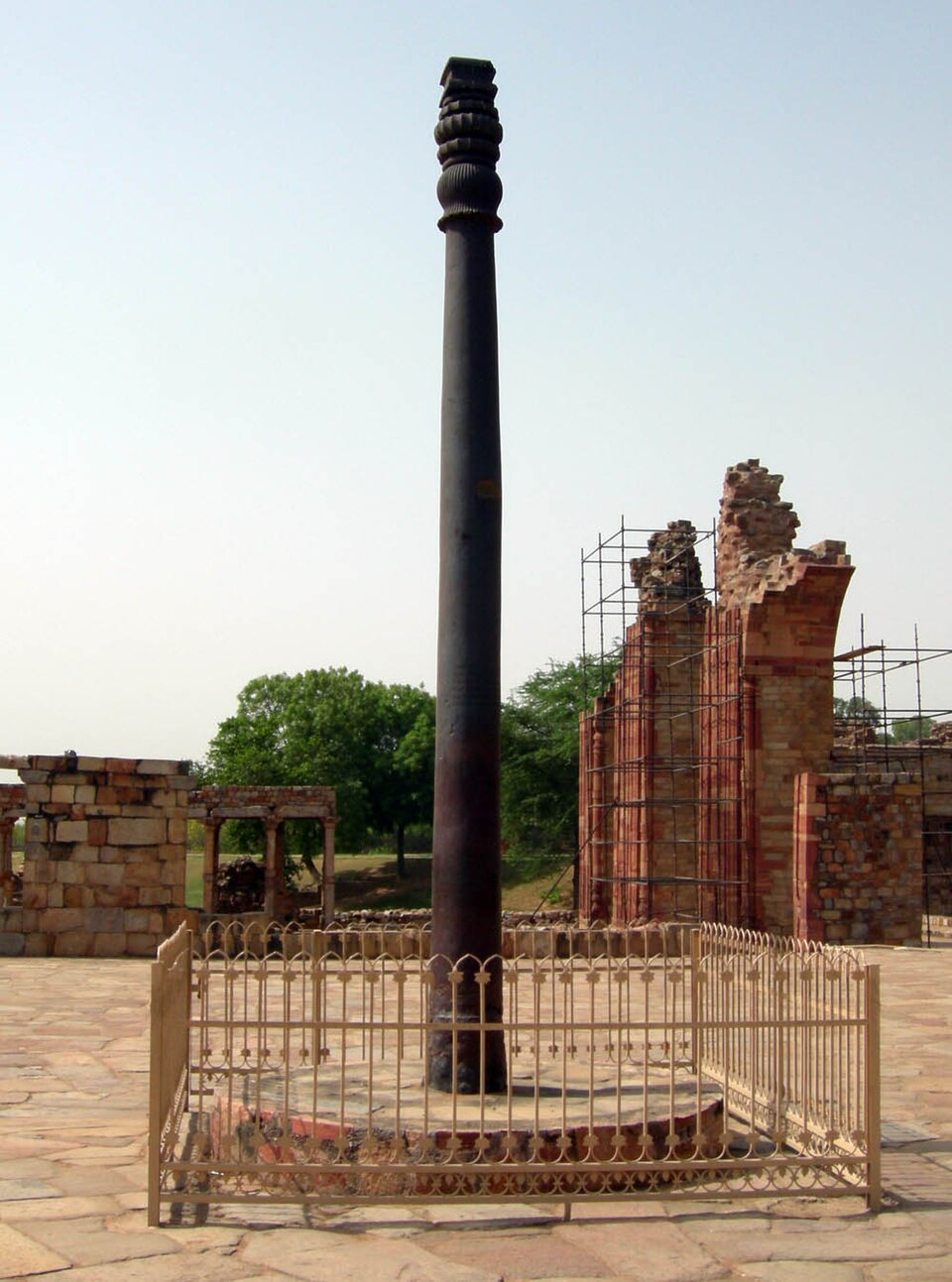
Other evidence. The Mehrauli iron pillar in the Qutb complex praises a 'King Chandra' who crossed the seven rivers of the Indus and defeated the Vahlikas, and won in Vanga (Bengal); many scholars identify him with Chandragupta II. The Chinese pilgrim Fa-Hien visited India during his reign.
Kumaragupta and Skandagupta. Kumaragupta I (about AD 415-455) ruled from Bengal to Gujarat; the Damodarpur plates show him appointing the governor of Pundravardhana himself. His son Skandagupta fought the Pushyamitras and threw back the Hunas. His governor Parnadatta repaired the Sudarshana lake once more, but his gold coins carry less gold, a sign that the wars were costly.
How the Guptas governed
A king like a god. The king remained the centre of government, but the style of kingship changed. Gupta rulers took grand titles such as Paramabhattaraka, Paramadaivata, Chakravarti and Paramesvara. The Prayaga prasasti compares Samudragupta to the gods Kubera, Varuna, Indra and Yama.
Duties as well as glory. Yet the king was also expected to be righteous. Skandagupta's Bhitari pillar inscription praises him as merciful to the conquered and free of pride. The king decided war and peace, led the army, protected brahmanas and sramanas, acted as supreme judge, appointed officials and named his heir.
Ministers and officers. Ministers advised the king, and their posts were often hereditary. The Udayagiri inscription tells us that Virasena Saba, the minister of peace and war (sandhivigrahika), held his office by inheritance. The mahadandanayaka was the chief justice, the mahapratihara headed the palace guards, and dutakas carried out land grants.
Army and accounts. The mahabaladhikrita commanded the army, with officers for elephants, horses and foot soldiers under him. The army was paid in cash, and an officer kept the stores of weapons. The akshapataladhikrita kept the accounts and checked embezzlement, and the pustapala kept records.
Justice. In the provinces the uparikas and in districts the vishayapatis handled justice, while village elders settled petty disputes. The Chinese traveller Fa-Hien says that capital punishment was not given.
Provinces and districts. The empire was divided into bhuktis (also called desa or rashtra) under governors called uparikas, appointed by the king. Examples include Pundravardhana bhukti in north Bengal and Tirabhukti in north Bihar. Each bhukti was split into vishayas (districts) under a vishayapati or ayuktaka.
Merchants in the district office. In Bengal, the district office (adhikarana) included local leaders. These were the nagarasreshthi (head of the city merchants), the sarthavaha (caravan leader), the prathama-kulika (head artisan) and the prathama-kayastha (head of the scribes). This shows how important merchants and artisans had become in local government.
Villages. The village was headed by a gramapati or gramadhyaksha, assisted by village elders. In north Bengal, bodies above the village drew representatives of landholders called gramikas, kutumbis and mahattaras. Local bodies of farmers and craftsmen managed village affairs.
Subordinate rulers. Not every region was ruled directly. In western Malwa, Bandhuvarman ruled as a subordinate of Kumaragupta I, while in Saurashtra Skandagupta appointed Parnadatta as governor. This mix of direct rule and subordinate rulers was a defining feature of Gupta government.
Revenue. Land revenue was the main income. Kalidasa and the Narada Smriti put the king's share at one-sixth of the produce. Other dues included uparikara, a commercial tax called sulka, forced labour (vishti) and bali, while treasure trove, mines and salt belonged to the king.
Land, trade and a changing society
Bringing land under the plough. Inscriptions speak of cultivated land (kshetra) and uncultivated land (khila), and suggest that waste land was steadily being brought under cultivation. Land measures varied: nivartana in some areas, kulyavapa and dronavapa in Bengal. Cereals, pulses, cotton and sugarcane were all grown.
Watering the fields. Irrigation mattered, but the state's role was marginal. Farmers drew water from wells with the ghati-yantra or araghatta, a chain of pots that filled and emptied as it turned. In Bengal rainwater was stored in ponds, and in the peninsula tanks became the norm.
The rise of land grants. The most important change was the spread of land grants. Kings and others gave land to brahmanas and to Buddhist and Jaina establishments, and officials were often paid in land. Bengal inscriptions even show people buying land in cash from the district office in order to gift it.
A new landed class. As ruling families multiplied, the number of people who held land but did not farm grew. Together with their high varna, these superior rights over land gave them high economic and social status. Village landholders called gramikas, kutumbis and mahattaras also mattered.
The cultivator's burden. Ordinary cultivators, known as krishibala, karshaka or kinasa, had low status. Some tilled others' land for a share of the crop, and slaves also worked the fields. The number of taxes grew and vishti (forced labour) was imposed, so the condition of ordinary peasants seems to have worsened.
Crafts and coins. Crafts ranged from pots and baskets to jewellery, ivory and fine silk. A fifth-century inscription from Mandasor records a guild of silk weavers who had moved from south Gujarat to Malwa. The Gupta gold coins show excellent craftsmanship, and seals from Vaisali show merchants were a key part of city life.
Signs of decline? Yet archaeology suggests that craft production may have suffered a setback compared with the Saka-Kushana period. Some historians argue that crafts and trade began to decline from the Gupta period, leading to the decline of towns and greater dependence on farming. This is still debated.
Brahmanas and the varna ideal. Brahmanas gained great influence over kings, receiving land and settling in brahmadeya and agrahara villages, even in remote areas. Through these settlements the idea of a varna-divided society spread across India.
Explaining a complex society. Real society did not fit the four varnas neatly. The Dharmasastras explained new jatis as born from varna-samkara, the mixing of varnas, and gave foreign ruling families vratya-kshatriya status. They also allowed apaddharma, conduct permitted in times of distress, and craftsmen tended to form separate jatis.
Those left out. Groups such as the chandalas were treated as untouchables (antyajas), considered impure even to touch. The position of women of higher varnas was low; texts saw them mainly as wives and mothers, and no land grants to brahmana women are known. Exceptions existed, such as the Vakataka queen Prabhavatigupta, who wielded real power.
City and village. Life in the city differed sharply from life in the village. The ideal city-dweller, the nagaraka described in Vatsyayana's Kamasutra, lived a life of wealth, pleasure and refined taste. Most townsfolk, let alone villagers, could not live this way.
Culture: why it is called a 'Golden Age'
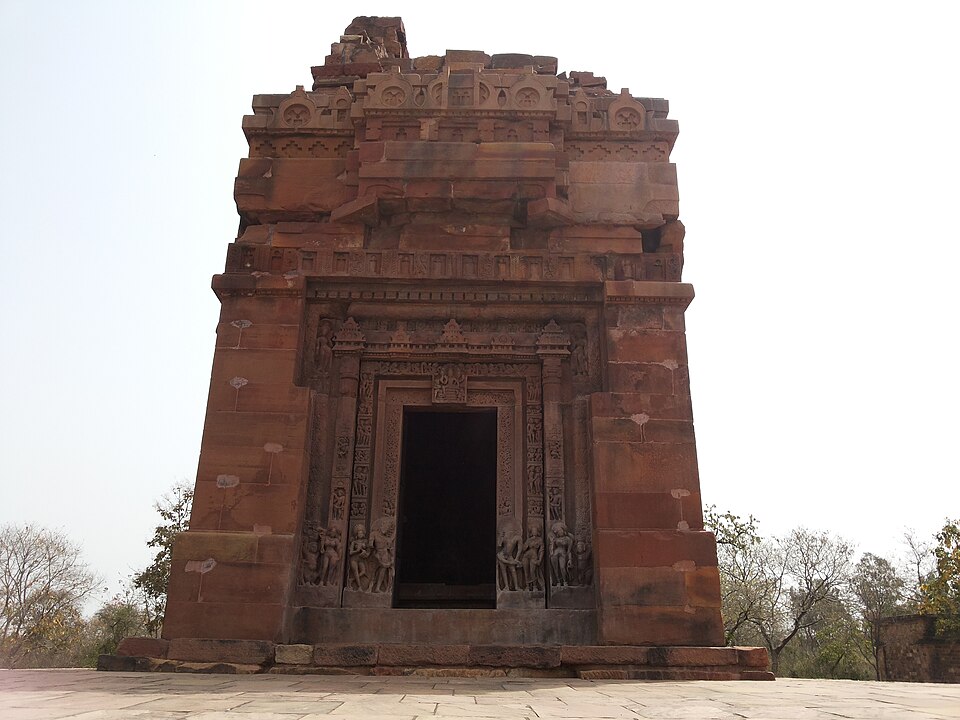
Temples begin. The Gupta period marks the formative phase of temple building in India. Examples include the Dashavatara temple at Deogarh (Jhansi), the brick temple at Bhitargaon near Kanpur, and temples at Tigawa, Bhumara and Nachna-Kuthara in Madhya Pradesh. They grew out of the older rock-cut shrines, but the tall carved shikharas of later temples had not yet appeared.
The language of the court. What we call classical Sanskrit took shape under the Guptas. Sanskrit became the official language of their court, and all Gupta inscriptions are in Sanskrit. Even Mahayana Buddhist scholars now wrote in Sanskrit rather than in Pali or Prakrit.
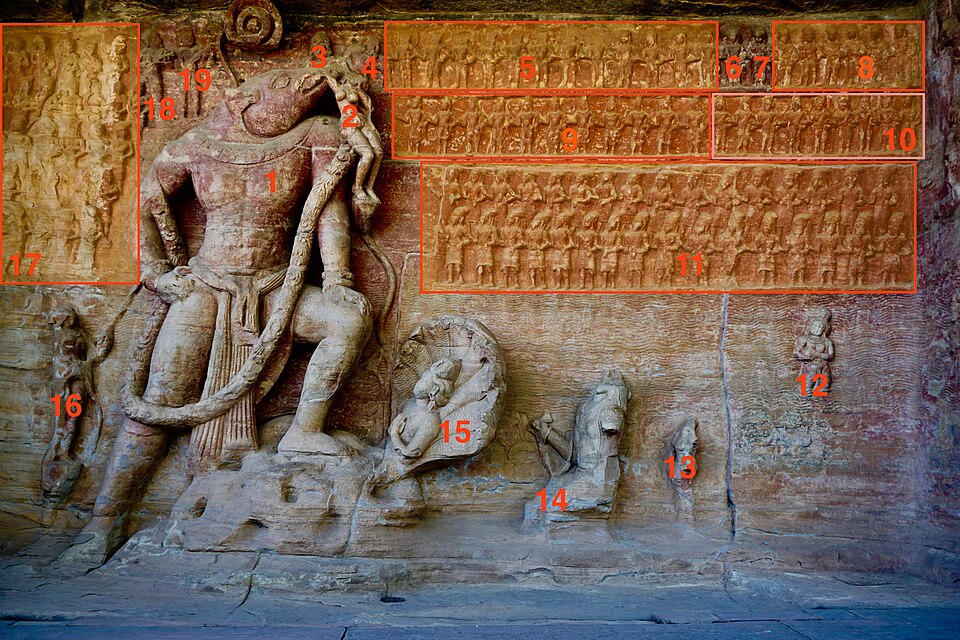
Literature. The Ramayana and Mahabharata are believed to have taken their final form around the fourth and fifth centuries. Kalidasa, whom tradition counts among the 'nine gems' of Chandragupta Vikramaditya's court, wrote the plays Abhijnana-shakuntalam, Malavikagnimitram and Vikramorvashiyam, and the poems Raghuvamsham, Kumarasambhavam and Meghadutam.
Science. Aryabhata wrote the Aryabhatiyam, a famous work on arithmetic, algebra, geometry and trigonometry. Varahamihira wrote the Brihat Samhita, covering subjects such as astronomy and botany. The Amarakosha and Brihat Samhita also list many crafts and their makers.
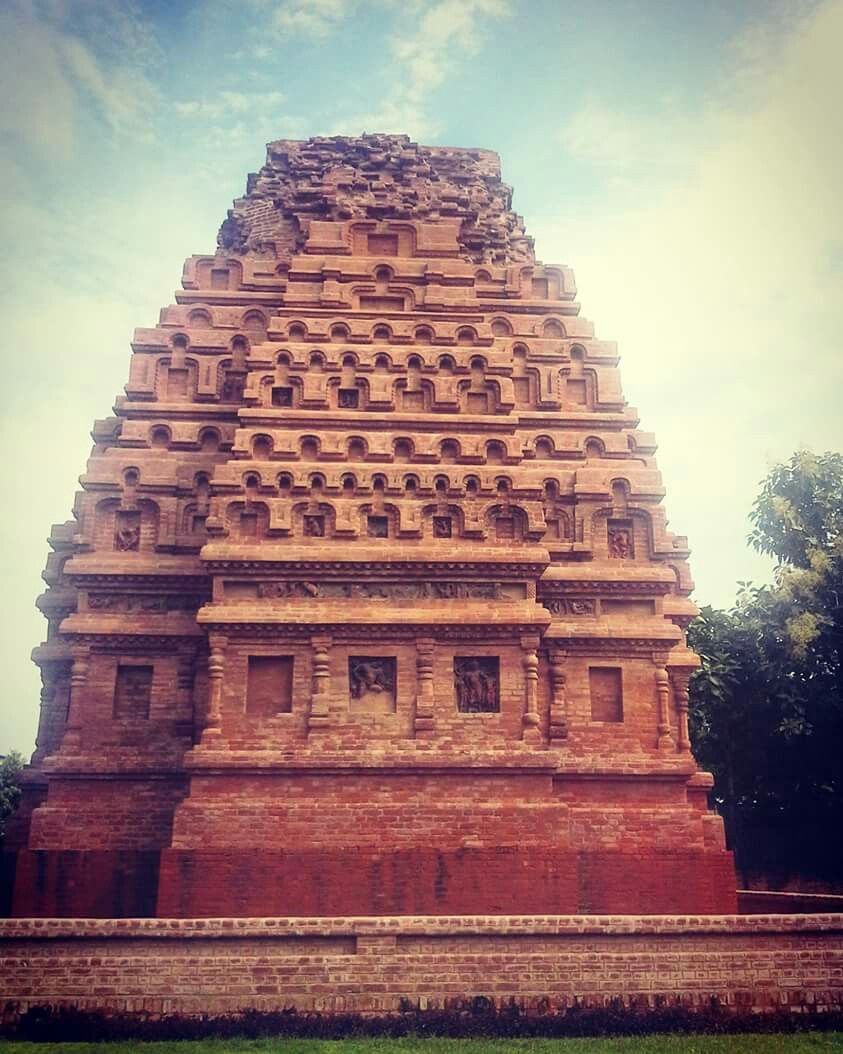
Why the label is debated. The 'Golden Age' label fits the court, the temples and Sanskrit learning. It fits less well the peasants burdened by taxes and forced labour, the untouchables pushed outside society, and the women whose position declined. Historians now prefer to describe the period's achievements and its costs together.
Quick revision
- Background c. AD 300: Nagas, republics (Yaudheyas, Malavas, Madras), Vakatakas (Vidarbha), Kadambas, Pallavas (Kanchi). Gupta home probably eastern UP.
- Chandragupta I: first Maharajadhiraja; Kumaradevi (Lichchhavi), 'Lichchhavayah' coins; Gupta era 319-320.
- Samudragupta: Prayaga prasasti by Harishena on the Asokan pillar; Aryavarta annexed; 12 southern kings grahana-moksha (Vishnugopa of Kanchi); Samatata, Kamarupa, Nepala tributaries; Kacha puzzle.
- Chandragupta II: Ramagupta story (Devichandraguptam, Dhruvadevi); Kuberanaga; Prabhavati to Vakataka Rudrasena II; beat Rudrasimha III; Saka-type silver; Sakari Vikramaditya; Mehrauli pillar 'Chandra'; Fa-Hien.
- Kumaragupta I (415-455), Damodarpur plates; Skandagupta: Pushyamitras, Hunas repelled, Parnadatta repaired Sudarshana, less gold in coins; last date 467; Guptas to c. 550.
- King: Paramabhattaraka, Paramadaivata; Bhitari pillar; hereditary ministers (Virasena Saba, sandhivigrahika); mahadandanayaka, mahabaladhikrita, akshapataladhikrita, pustapala; Fa-Hien: no death penalty.
- Bhukti (uparika) > vishaya (vishayapati) > village (gramapati); Pundravardhana, Tirabhukti; adhikarana with nagarasreshthi, sarthavaha, prathama-kulika, prathama-kayastha.
- Revenue 1/6; uparikara, sulka, vishti, bali; ghati-yantra/araghatta; land grants, land bought in cash to gift; peasants' condition worse; Mandasor silk guild.
- Society: brahmadeya/agrahara; varna-samkara; vratya-kshatriya; apaddharma; antyajas, chandalas; women low, Prabhavatigupta exception; nagaraka (Kamasutra).
- Culture: Deogarh Dashavatara, Bhitargaon, Tigawa; no tall shikhara yet; all inscriptions in Sanskrit; Kalidasa, Aryabhatiyam, Brihat Samhita. Decline: Toramana, Mihirakula; restored rulers; samantas.