

BPSC ASO · Module 11 · standard depth · 12 min
The road to freedom and Partition, 1945–1947
What BPSC ASO asks from this chapter
Syllabus lines this chapter covers:
- Preliminary: General Knowledge (General Studies 50, General Science and Mathematics 50, Mental Ability 50) · India and neighbouring countries: history of neighbouring countries, history of India, culture
- Preliminary: General Knowledge (General Studies 50, General Science and Mathematics 50, Mental Ability 50) · Independence movement and national movement
- Mains Paper 2: General Knowledge (General Studies 50, General Science and Mathematics 50, Mental Ability 50) · India and neighbouring countries: history of neighbouring countries, history of India, culture
- Mains Paper 2: General Knowledge (General Studies 50, General Science and Mathematics 50, Mental Ability 50) · Independence movement and national movement
BPSC ASO questions from this module are being sorted into our bank.
Cut to standard depth for BPSC ASO. 7 deeper paragraphs are in the full chapter.
Start from zero: freedom and a wound together
Imagine a family that wins a long legal battle for its home, but on the very day of the victory the house is divided by a wall, and some family members must leave for the other side. The joy of winning and the pain of the division arrive together. Both are remembered for generations.
India's independence in August 1947 was like that. After decades of struggle, British rule ended at midnight between 14 and 15 August 1947. But the country was partitioned into India and Pakistan, and about 20 million people were caught up in one of the largest migrations in human history.
How did a national movement that had worked for Hindu-Muslim unity end in Partition? The answer lies in the growing gap between the Congress and the Muslim League, the weakening of British power after the war and the rapid events of 1946 and 1947. Each of these is explained in this chapter.
Keep one question in mind as you read. Why did freedom come so quickly after 1945, and why did it come with Partition?
Key events at a glance
This table lists the main events from 1940 to 1947. Each is explained in the sections below.
| When | What happened | Why it matters |
|---|---|---|
| 1940 | Muslim League under Jinnah takes up the Pakistan demand | The idea of division enters politics. |
| 18 February 1946 | Naval Uprising begins on HMIS Talwar, Bombay | Britain's armed forces can no longer be relied on. |
| 1946 | Cabinet Mission; Constituent Assembly elections | A plan for a united India and a constitution. |
| 16 August 1946 | Direct Action Day called by the League | Communal violence spreads. |
| September 1946 | Interim government formed by the Congress | Indians run the central government. |
| 9 December 1946 | Constituent Assembly first meets | Indians begin to write their Constitution. |
| June 1947 | Mountbatten plan: transfer of power with Partition | Partition is accepted. |
| 14–15 August 1947 | Independence; India and Pakistan created | Freedom and Partition together. |
Notice how fast the final stage moved. Less than eighteen months separate the Naval Uprising from independence.
Why British rule could not last after 1945
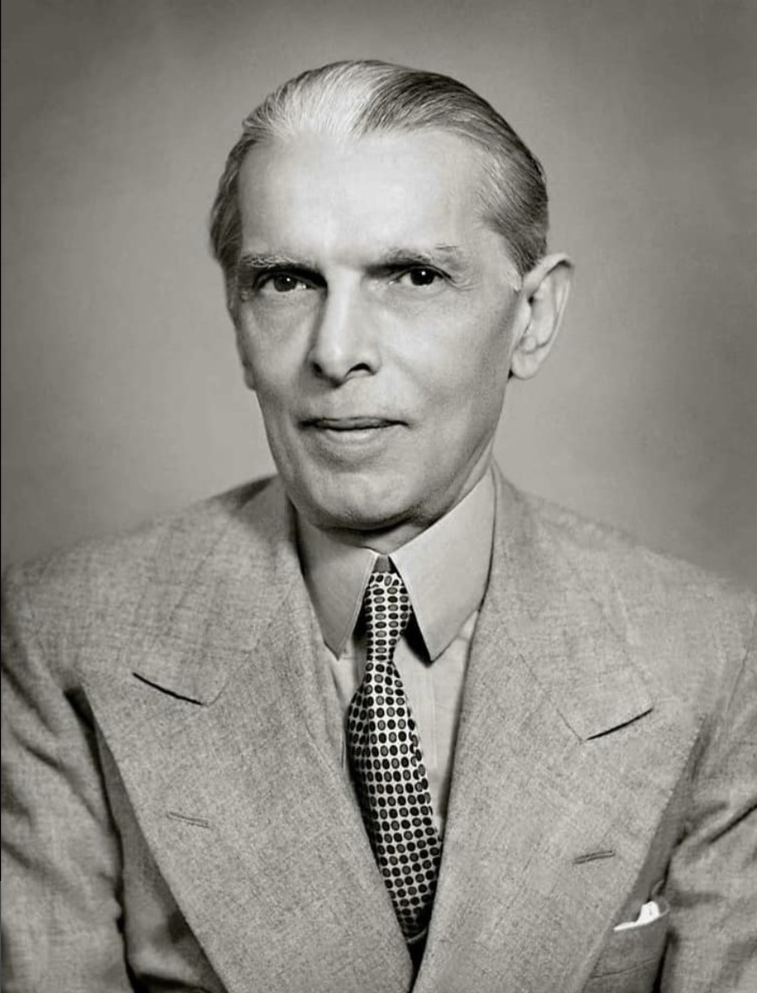
The growing divide. While the Congress led the national movement, the Muslim League's demands had been growing since the late 1930s. The two-nation theory, which claimed that Hindus and Muslims formed separate nations, was put forward in this period. In 1940 the League under Muhammad Ali Jinnah took up the demand for Pakistan.
Why had the gap widened? Several threads came together. Separate electorates since 1909 had encouraged politics by community, and the Congress's refusal to form coalitions with the League in 1937 deepened distrust, as explained in the chapter on the Acts of 1919 and 1935. The war years, when Congress leaders were in jail after 1942, also gave the League room to grow.
The Naval Uprising, 1946. On 18 February 1946, Indian sailors rose in revolt on HMIS Talwar in Bombay. The uprising spread from Karachi to Calcutta, involving more than 20,000 sailors and 78 ships and shore establishments, and the people of Bombay came out on the streets in support. For the British, it was a warning that the armed forces they relied on could no longer be taken for granted.
A weakened empire. After the war, Britain was exhausted, while Indian demands had grown louder through the experience of 1942, the INA and the naval revolt. Holding India by force was no longer practical. The question was no longer whether Britain would leave, but how and to whom it would hand over power.
The Cabinet Mission and the interim government, 1946
The Cabinet Mission. In 1946 the British government sent a Cabinet Mission to India to plan the transfer of power. Under its scheme, a Constituent Assembly was to be formed to frame a constitution. The plan aimed to keep India united while addressing the League's fears.
Elections to the Constituent Assembly. Members of the Constituent Assembly were elected indirectly by the provincial assemblies. In these elections, the Congress won 199 seats and the Muslim League 73. The results showed that the Congress was the largest party, but that the League had strong support among Muslim voters.
The League's rejection and Direct Action. The Muslim League rejected the Cabinet Mission plan. It called for Direct Action Day on 16 August 1946 to press its demand for Pakistan. Communal tension rose sharply in the months that followed, and the gap between the two parties grew wider.
The interim government. In September 1946 the Congress formed an interim government at the Centre, and the League at first refused to join it. For the first time, Indian leaders ran the central government. Yet the deep distrust between the two parties made it increasingly hard to imagine a single, united India.
The Constituent Assembly begins its work
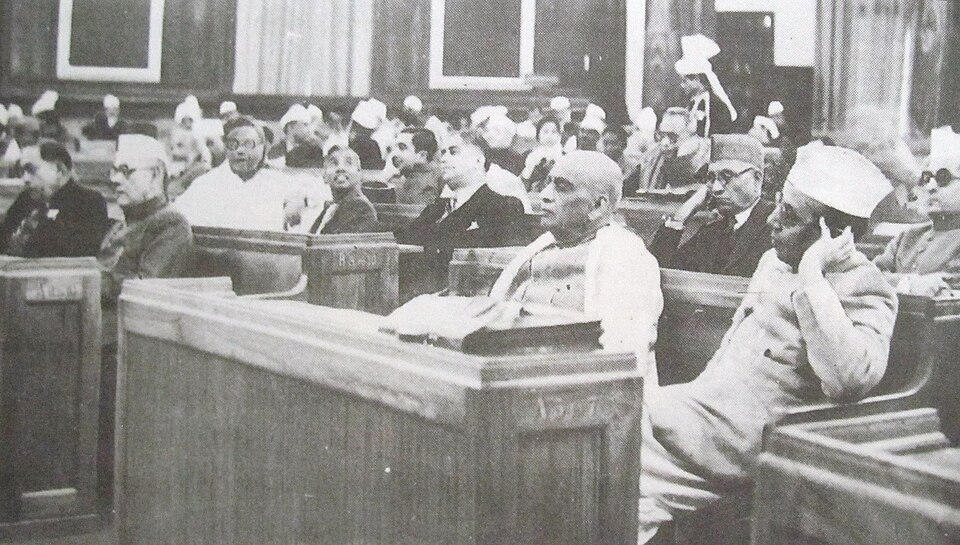
The first sitting. The Constituent Assembly met for the first time on 9 December 1946 in the Constitution Hall. Sachchidananda Sinha presided over the first sitting. The Objectives Resolution, which set out the ideals of the future Constitution, was moved in 1946.
After independence. With independence, the Constituent Assembly became a fully sovereign body, free of British control. The old Central Legislative Assembly ceased to exist on 14 August 1947. After Partition, the Assembly had 299 members as on 31 December 1947, of whom 229 had been elected by the provincial assemblies.
A voice of protest. Not everyone accepted Partition quietly. Leela Roy, a freedom fighter who had been jailed for civil disobedience, quit the Constituent Assembly in protest against the partition of the country. Her decision is a reminder of how painful the division was even for those who had fought for freedom.
Where the story continues. The making of the Constitution is explained in the Polity chapter on the making of the Constitution. The integration of the princely states into the new nation is told in the first chapter on India after independence.
The Mountbatten plan, independence and Partition
The Mountbatten plan. As tension grew and the Congress and the League could not agree, the British moved to a quick settlement. The Mountbatten plan of June 1947 provided for the transfer of power and the partition of the country. It was followed by the Indian Independence Act 1947, passed by the British Parliament.
Why did the Congress accept Partition? Congress leaders had opposed division for decades. By 1947, many of them concluded that continued violence and deadlock were worse than a divided freedom, and that a strong central government was impossible with the League inside it. Accepting Partition was a painful choice made to end the bloodshed and secure power quickly.
Freedom at midnight. The Indian Independence Act 1947 ended British rule. India became free at midnight between 14 and 15 August 1947, and the country was partitioned into India and Pakistan. The national movement had won its goal, but at a heavy price.
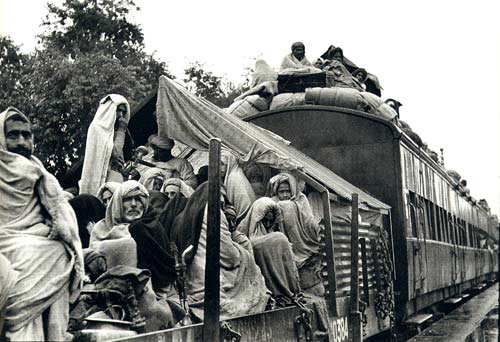
The human cost. Partition caused one of the largest migrations in human history, affecting about 20 million people. Millions of people were displaced from their homes, and many lost their lives in the violence. Since 2021, 14 August has been observed every year as Partition Horrors Remembrance Day (Vibhajan Vibhishika Smriti Diwas) in memory of their suffering.
How British offers changed, 1940–1947
From promises to departure. One useful way to understand the end of British rule is to compare what Britain offered at each stage. In 1940 it rejected even a provisional national government at the Centre. In 1942 the Cripps Mission offered Dominion Status, but only after the war.
The final years. By 1946 the Cabinet Mission was planning a Constituent Assembly, and by June 1947 the Mountbatten plan was arranging the actual transfer of power. Each new offer went further than the last, but each also came later than Indians wanted. The table below sets the four stages side by side.
| Year | British position | Indian response |
|---|---|---|
| 1940 | Proposal for a provisional national government rejected by the Viceroy | Individual satyagraha from October 1940 |
| 1942 | Cripps: Dominion Status after the war | Rejected by Congress and League; Quit India |
| 1946 | Cabinet Mission: Constituent Assembly and a plan for a united India | Congress takes part; League rejects the plan |
| 1947 | Mountbatten plan: transfer of power with Partition | Accepted; independence on 15 August 1947 |
What the table shows. In seven years, Britain moved from refusing a national government to handing over full power. The pressure of the national movement, the war and the post-war situation together forced this shift. At the same time, the growing divide between the Congress and the League meant that the final settlement came with Partition.
Exam use. Prelims questions often test the order of these offers and who rejected what. Mains questions ask why each offer failed or succeeded. Learning them as one sequence, rather than as separate facts, makes both easier.
Quick revision
- Two-nation theory late 1930s; 1940: League under Jinnah takes up the Pakistan demand.
- Naval Uprising: HMIS Talwar, Bombay, 18 February 1946; Karachi to Calcutta; 20,000+ sailors; 78 ships and shore establishments.
- Cabinet Mission 1946; Constituent Assembly formed under its scheme; members elected indirectly by provincial assemblies; Congress 199, League 73.
- League rejects the plan; Direct Action Day 16 August 1946.
- Interim government: September 1946, formed by the Congress; League at first refuses.
- Constituent Assembly first meets 9 December 1946; Sachchidananda Sinha presides; Objectives Resolution 1946.
- Mountbatten plan, June 1947; Indian Independence Act 1947; freedom at midnight 14–15 August 1947.
- After Partition: 299 members (31 December 1947), 229 elected; Central Legislative Assembly ended 14 August 1947.
- Partition: about 20 million affected; 14 August = Partition Horrors Remembrance Day (since 2021); Leela Roy quit the Assembly in protest.