

BPSC TRE 4.0 · Module 3 · standard depth · 20 min
Mauryan administration, economy and decline
What BPSC TRE 4.0 asks from this chapter
Syllabus lines this chapter covers:
- Class 9 to 10 teacher · Part III subject: Social Science (history or geography, then geography, economics or political science).
- Class 11 to 12 teacher · Part III subject: History, Political Science, Geography, Economics, Sociology, Psychology or Philosophy.
BPSC TRE 4.0 questions from this module are being sorted into our bank.
Cut to standard depth for BPSC TRE 4.0. 10 deeper paragraphs are in the full chapter.
Start from zero: how do you run a subcontinent?
In an earlier chapter we saw Chandragupta build the Mauryan empire by conquest, and in the last chapter we met Asoka and his Dhamma. Conquering land is one task; holding it is another. The Mauryas ruled from Afghanistan to Karnataka, with no railways, no telegraph and no printed paper.
So how did they collect taxes, keep order, pay soldiers and settle disputes? Where did the money come from, and what did the state control? And why did such a large empire fall apart within about fifty years of Asoka's death?
Think of the empire as a huge household. The king is the head, officials are the managers, the farmers produce the grain, the traders move goods, and the treasury is the family purse. When the head is strong and the managers are loyal, the house runs well. When the head is weak and the managers serve only themselves, the house begins to split.
Why study this? The Mauryan state is the first large administrative system in Indian history that we can describe in detail. Exams ask about officials, taxes, Megasthenes' committees and the causes of decline. Mains asks how centralised the empire really was and why it collapsed.
The Mauryan state at a glance
| Theme | Key facts |
|---|---|
| Theory of the state | Saptanga: swami, amatya, janapada, durga, kosa, danda, mitra |
| Council | Mantriparishad, advisory; Rock Edicts III and VI |
| Treasury and revenue | Sannidhata (treasury), samaharta (revenue assessment) |
| Provinces | Taxila, Ujjain, Tosali, Suvarnagiri under kumaras |
| Local officers | Pradeshika, rajuka, yukta; gramika in the village |
| Capital city | Pataliputra: 30 officials in 6 committees of 5 (Megasthenes) |
| Land tax | Bhaga: one-sixth in texts, one-fourth per Greek writers; Lumbini cut to one-eighth |
| End | Brihadratha killed by Pushyamitra Sunga, about half a century after Asoka |
The key idea. Our picture of Mauryan government comes from three kinds of sources: the Arthasastra (a manual of how a state should be run), Megasthenes (a foreign visitor's description) and Asoka's edicts (the state's own voice). They do not always agree, so a good answer says which source a fact comes from.
The king, his council and the centre
The seven limbs of the state. The Arthasastra describes the state as a body with seven limbs (saptanga). These are the swami (king), amatya (officials), janapada (territory with its people, farms, mines and forests), durga (the fortified capital), kosa (treasury), danda (force) and mitra (ally). The idea is that a state is healthy only when all seven are strong, just as a body needs all its limbs.
Why the king was at the top. The word swami itself means master, and the Arthasastra says that when sources of law conflict, the king's law prevails. The Mauryas did not claim to be gods.
Yet titles like Devanampiya, 'beloved of the gods', linked the king with divine power. Asoka added a fatherly tone, declaring at Dhauli that 'All men are my children'.
The council. The king was not expected to rule alone. A council of ministers, the mantriparishad, advised him, and Rock Edicts III and VI refer to this body.
Its role was advisory, so the final word stayed with the king. A smaller inner group of mantrins handled the most important matters.
The great officers. The Arthasastra lists eighteen high officers (tirthas). Two of them matter most for exams. The samaharta was the chief officer for assessing land revenue, and the sannidhata was the keeper of the treasury, who also stored revenue paid in grain.
The army. Megasthenes says the army had six branches: infantry, cavalry, elephants, chariots, transport and the fleet. Each was run by a board of five members. The Arthasastra speaks of the traditional four arms (chaturangabala) and an officer in charge of the armoury.
Paid in cash. A striking feature is that officials and soldiers drew cash salaries. The Arthasastra's scale runs from 48,000 panas a year for the highest officers, such as the senapati, down to 60 panas for the lowest. Paying salaries in cash needed a large supply of coins and a treasury that never ran dry.
The eyes and ears of the king. A vast network of spies kept the king informed. They worked in disguise, for example as ascetics or students. Their reports covered officials as well as ordinary subjects, which helped the king check corruption.
Justice. The Arthasastra mentions two kinds of courts. Dharmasthiya courts settled personal disputes between individuals. Kantakasodhana courts, literally 'removal of thorns', dealt with matters between the state and individuals.
Four sources of law. The text names dharma (sacred law), vyavahara (evidence and usage), charitra (custom) and rajasasana (the king's order). Punishments were not equal for all; they varied by varna. In the village, the gramika also had judicial power.
Provinces, districts, villages and the capital
Why provinces were needed. No king in Pataliputra could watch Taxila or Karnataka directly. So the empire was divided into provinces, each headed by a prince (kumara) with senior officials (mahamatyas) and a council. The edicts point to provincial capitals at Tosali in the east, Ujjain in the west, Suvarnagiri in the south and Taxila in the north-west.
Princes and governors. Using princes kept power in the family, and it trained future kings, as Asoka himself had served at Taxila and Ujjain. Not every governor was a prince, though.
The Junagadh inscription of the later Saka ruler Rudradaman says that Pushyagupta, a vaisya, governed Saurashtra for Chandragupta. The same record says that a Yavana (Greek) named Tushaspa held the post under Asoka.
When officials went too far. Distance gave provincial officials room to misuse power. Taxila revolted against oppressive amatyas under Bindusara and again under Asoka. Asoka's edicts to the officials at Dhauli and Jaugada warn them to be just and avoid cruelty, which shows the king knew of the problem.
The district. Asoka's edicts mention three key local officers. The pradeshika headed the district, and the rajuka and yukta worked under and beside him. Pillar Edict IV gives the rajukas independent authority to reward and punish, so that they could act with confidence.
The village. At the base was the village, headed by the gramika. Between the village and the district stood two intermediate officials, the gopa and the sthanika. Villages enjoyed a good deal of local autonomy in daily matters.
Running a great city. Megasthenes, who lived at Pataliputra, says the city was run by thirty officials in six committees of five. One committee looked after industrial arts, a second after foreigners, and a third registered births and deaths. The fourth dealt with trade, weights and measures, the fifth with the sale of manufactured goods, and the sixth collected the tax on sales.
Why so much care for towns? Four of the six committees dealt with the economy. Towns were rich sources of tax, and crowded places needed order. The Arthasastra puts a city head, the nagaraka, in charge, with rules on sanitation, fire, adulteration and a night curfew.
A word of caution. Megasthenes saw the capital, not the whole empire. His six committees may describe Pataliputra and perhaps other big cities, but we do not know how small towns, ports or pilgrimage centres were run.
Farms and taxes: the base of the empire
Why agriculture came first. Most people were farmers, and land tax was the backbone of the treasury. Without a steady surplus of grain, the state could not pay its army or its officials. So the Mauryas took a close interest in farming, settlement and revenue.
Iron and rice. Iron tools such as socketed axes and sickles have been found at excavated sites. They helped clear the thick forests of the eastern Ganga plains and work its heavy, loamy soil. Magadha lay close to the iron ores of south Bihar, and paddy cultivation, which needs many hands at transplanting and harvest, had spread widely.
Settling new land. The Arthasastra describes janapadanivesa, the planned settlement of new villages. Settlers were often sudras, people moved from crowded areas, or deportees from conquered lands, possibly including the 150,000 people taken from Kalinga. The state gave them cattle, seed, tools and tax concessions so that they could farm virgin land.
Crown land and private land. Some land was sita, crown land farmed under state supervision by an officer called the sitadhyaksa. The rest, in the janapada, was largely cultivated privately. Rich landholders (gahapatis) employed hired labourers, and the Arthasastra even has rules on the sale of land, so private ownership of small plots existed.
Water for the fields. Megasthenes says officers measured the land and inspected the sluices that fed water into channels. The Arthasastra mentions an irrigation cess of one-fifth to one-third of the produce on irrigated land. In Saurashtra, Chandragupta's governor Pushyagupta built a dam that created the Sudarshana lake near Girnar, a reservoir whose history can be traced for about eight centuries.
What did the farmer pay? The main tax was bhaga, the king's share of the crop. The texts set it at one-sixth, but Greek writers say peasants paid one-fourth, which suggests the real burden may have been higher. On state land worked by sharecroppers, who were given seed and oxen, the state may have taken half.
The Lumbini clue. When Asoka visited Lumbini, the Buddha's birthplace, he exempted the village from bali and cut its bhaga to one-eighth. Even his deep respect for the Buddha did not lead to a full exemption. This tells us how central land revenue was to the state.
Other dues. Farmers also paid bali, an old levy from Vedic times, kara, pindakara (assessed on groups of villages) and hiranya, probably a tax paid in cash. They owed vishti, forced labour, and had to supply provisions to passing armies. In emergencies the Arthasastra suggests pranaya, a 'gift of affection' of one-third or one-fourth, and forcing farmers to raise a second crop.
Implications. This system gave the Mauryas a steady income and pushed farming into new areas. But it also placed a heavy load on the peasant, and it depended on good harvests. In years of famine, revenue fell while the demand for relief rose.
Trade, crafts, towns and coins
Roads radiating from the capital. Mauryan peace let internal trade grow. Pataliputra was linked by river and road in all four directions.
A northern route ran through Vaisali, Sravasti and Kapilavastu towards Kalsi and on to Taxila and Peshawar. Eastwards, the Ganga carried goods to Tamralipti in the delta, the exit to the sea.
South and west. A south-eastern route went to Kalinga and then on to Andhra and Karnataka. From Kausambi a western route led to Ujjain, and from there either to the Gujarat coast or south across the Narmada along the dakshinapatha. Friendly ties with the Greek kings under Bindusara and Asoka also helped foreign trade through the north-west.
Guilds. Artisans and merchants were organised in guilds (sreni). Members lived in particular quarters of a town, and crafts usually passed from father to son. Guilds helped small producers by sharing costs, and they helped the state by making tax collection easier.
How far did the state reach? The Mauryan state did not abolish the guilds, but it watched trade closely. The Arthasastra names a panyadhyaksa for commerce and prices, a samsthadhyaksa for markets, a pautavadhyaksa for weights and measures, a navadhyaksa for boats and ferries, and a sulkadhyaksa who collected tolls of one-fifth to one-twenty-fifth of the value of goods.
The state as producer. The state also made and sold its own goods, called rajapanya. It employed armourers, shipbuilders and stone workers directly; these were exempt from tax because they gave compulsory service.
It kept a monopoly over mines under the akaradhyaksa and over salt, and an officer looked after iron. Metals mattered for coins, weapons and farm tools alike.
A careful conclusion. Even so, commerce itself was not a state monopoly. Most artisans still worked on their own or within guilds, and private traders sometimes sold state goods because their networks were wider. A good answer avoids calling the Mauryan economy fully 'state-run'.
What the ground tells us. Archaeology shows burnt bricks, ring-wells for water, and the glossy Northern Black Polished Ware across the Ganga valley. At Kumrahar in Patna, remains of a pillared hall have been linked to a Mauryan palace, and Megasthenes describes wooden structures at the capital. These finds suggest that towns grew in number and size.
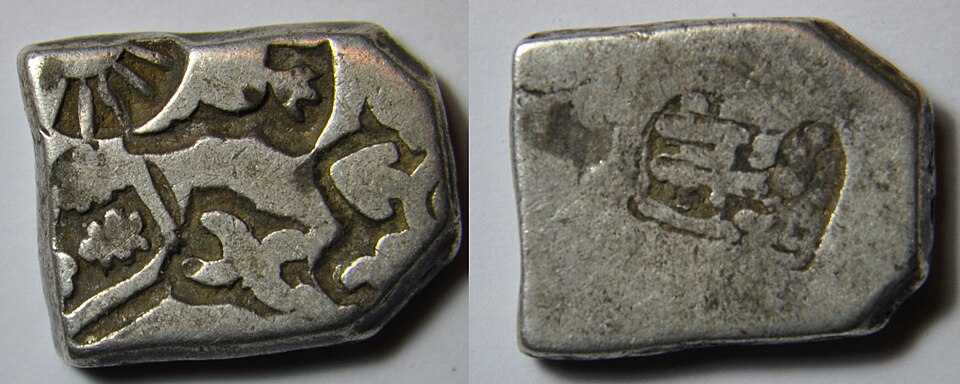
Coins and cash. The use of money spread widely. Large numbers of mostly silver punch-marked coins belong to this period, most of them from Uttar Pradesh and Bihar, the core of the empire. Cash salaries, sales taxes and tolls all assumed a working money economy.
Why did the empire fall?
What happened. Asoka died around 232 BC. Mauryan kings ruled for about half a century more, but the Puranas, Buddhist and Jain texts give different lists and orders of his successors.
Names include Kunala, Dasharatha, Samprati, Salishuka, Devavarman, Satadhanvan and Brihadratha. The empire seems to have been divided among Asoka's sons, and rulers followed one another quickly.
The end. The last Mauryan king, Brihadratha, was killed by his own general, Pushyamitra Sunga, who founded the Sunga dynasty. The Sungas held only part of the old empire. Elsewhere, Greeks pressed in from the north-west and new kingdoms rose in the Deccan and Kalinga.
Theory 1: a Brahmanical reaction. Some scholars argued that Asoka's pro-Buddhist policies, his ban on animal sacrifice and the powerful Dhamma-mahamattas angered the brahmanas. In this view, Pushyamitra, a brahmana general, led their revolt.
But the edicts ask the Dhamma-mahamattas to respect brahmanas and sramanas alike, and if Asoka's policy had been so harmful, a revolt should have come soon after his death, not fifty years later. Pushyamitra's act looks more like a palace coup by a general who saw a weak king.
Theory 2: too much non-violence. Another view blames Asoka's pacifism for weakening the army. Yet Asoka kept Kalinga after conquering it, did not abolish the death penalty, warned the forest tribes, and gave no order to disband the army.
Pushyamitra himself was a Mauryan general who is said to have held back the Greeks long after Asoka. Thapar argues that one generation of peace cannot by itself destroy an empire.
Theory 3: economic strain. D.D. Kosambi pointed to financial pressure. The Arthasastra suggests taxing almost everything, even actors, and later punch-marked coins show less silver, which suggests debasement. The state may have lost its hold over metals as it searched for iron in the Deccan, and deforestation may have brought floods and famine; there is evidence of a big famine in north Bengal.
Thapar's reply on the economy. Romila Thapar doubts an economic collapse. Material remains across much of the subcontinent show improvement, not decline. Debasement, if it happened, may reflect political confusion and hoarding by merchants rather than poverty.
The deeper cause: the system itself. The Mauryan state was highly centralised around the king. Officials were chosen by him and loyal to him personally, not to the state.
When weak kings ruled for short spells, each brought new loyal men, and the spy system that had kept officials honest broke down. Once the centre weakened, the provinces drifted away.
Uneven growth. The core of the empire in the Ganga valley was far more developed than the outer regions. Contact with Magadha spread towns, coins and writing to Kalinga, the Deccan and Bengal, and these regions soon produced their own rulers. The crisis was one of organisation and control of resources, not a lack of them.
Quick revision
- Saptanga: swami, amatya, janapada, durga, kosa, danda, mitra; king's law prevails; Dhauli: 'All men are my children'.
- Mantriparishad advisory (RE III, VI); 18 tirthas; samaharta = revenue assessment; sannidhata = treasury.
- Army: 6 branches, boards of 5 (Megasthenes); salaries 48,000 to 60 panas; spies in disguise.
- Courts: dharmasthiya (private disputes), kantakasodhana (state cases); law: dharma, vyavahara, charitra, rajasasana.
- Provinces: Taxila, Ujjain, Tosali, Suvarnagiri under kumaras; Pushyagupta (Chandragupta) and Tushaspa (Asoka) in Saurashtra; Taxila revolts.
- Local: pradeshika, rajuka (PE IV), yukta; gramika, gopa, sthanika. City: 30 officials, 6 committees of 5; nagaraka.
- Farming: iron tools, paddy; janapadanivesa, sudra settlers; sita lands, sitadhyaksa; irrigation cess 1/5 to 1/3; Sudarshana lake.
- Taxes: bhaga 1/6 (texts) or 1/4 (Greeks); Lumbini: bali exempt, bhaga 1/8; pindakara, hiranya, vishti; pranaya in emergency.
- Trade: Pataliputra hub, Tamralipti, dakshinapatha; sreni; panyadhyaksa, sulkadhyaksa (1/5 to 1/25); rajapanya; mines and salt monopoly; silver punch-marked coins, NBPW.
- Decline: Asoka d. c. 232 BC; successors to Brihadratha, killed by Pushyamitra Sunga; theories: Brahmanical reaction, pacifism, economy (Kosambi); Thapar: personal loyalty, weak centre, uneven growth.