

HPSC HCS · Module 18 · Mains depth · 20 min
Classical dances I: Bharatanatyam, Kathak, Kathakali, Kuchipudi
What HPSC HCS asks from this chapter
Syllabus lines this chapter covers:
- Prelims Paper I: General Studies · Indian culture, polity and economy
- Mains · GS I: culture, modern and world history, society, geography, Haryana issues
HPSC HCS questions from this module are being sorted into our bank.
Read at full depth: basics, the standard layer and the Mains analysis.
Start from zero: four dances, four worlds
You learnt the shared grammar of Indian dance in the foundations chapter: nritta, nritya, abhinaya and rasa. Now see how four regions turned that grammar into four very different dances.
In Tamil Nadu, temple dancers created Bharatanatyam, with its geometric lines and half-seated stance. In the courts of north India, storytellers became Kathak dancers, famous for spins and fast footwork. In Kerala, actors in giant crowns and painted faces made Kathakali, a night-long dance-drama. In Andhra Pradesh, a village gave its name to Kuchipudi, where dancers also speak.
For each dance, ask four questions: where it grew, who kept it alive, how it looks, and why it took that shape. Exams test all four.
At the end of the chapter, a comparison table puts the four side by side. Use it for quick revision and for Mains answers.
Bharatanatyam: from temple to world stage
Where it began. Bharatanatyam grew in the temples of Tamil Nadu. It was the dance of the devadasis, women dedicated to temple service, and was once known as dasiattam or sadir. In villages such as Melattur, men kept a related tradition alive in the Bhagavata Mela dance-dramas.
Why it is called old. Bharatanatyam is often called the oldest of today's classical forms. The claim rests not on its name, which links it to Bharata, but on rich literary, sculptural and historical evidence. South Indian temples, as you saw in the Chola temples chapter, are full of dancing figures.
The 19th-century shaping. The present solo form crystallised in the 19th century. Four brothers from Thanjavur, the Tanjore Quartet (Chinnaiah, Ponnaiah, Vadivelu and Sivanandam), gave it the structure that dancers still follow.
Decline. Under colonial rule, temple dancers were stigmatised. In 1910 the Madras Presidency banned temple dancing, and the art was in danger of disappearing.
Revival. In the 1920s and 1930s, the lawyer E. Krishna Iyer campaigned for the dance. Rukmini Devi, who learnt from Meenakshisundaram Pillai and Mylapore Gauri Amma, gave her first performance in 1936 and founded Kalakshetra in Chennai. Balasaraswati, from a hereditary family, performed in public outside the traditional setting in 1935 at Varanasi.
After Independence. The years after 1947 were an era of revival and reconstruction. Institutions, recitals and disciples such as Shanta Rao spread the dance across India and the world.
How Bharatanatyam looks and is performed
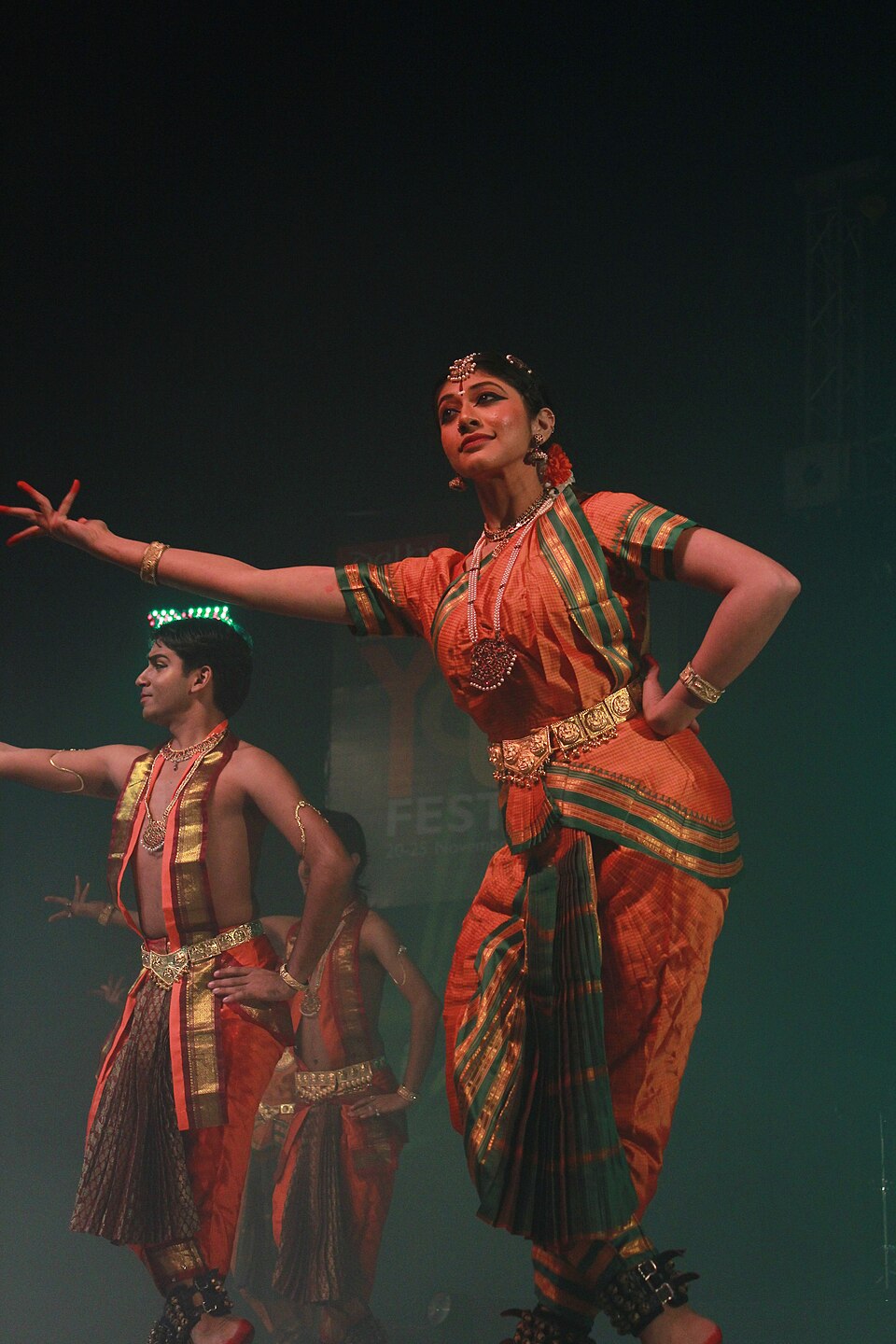
The basic stance. Bharatanatyam is built on aramandi (also called ayatamandala), a half-seated position with knees turned out, shaped like a diamond. From this stance come geometric lines, strong footwork, clear hand gestures and rich facial expressions.
The building blocks. The basic units of movement are adavus, set patterns of steps and arm positions. They are combined like words in a sentence, within a tala cycle.
The recital, step by step. A traditional recital follows a fixed order, from pure dance to expressive dance and back.
| Item | What happens | Type |
|---|---|---|
| Alarippu | Invocation from perfect stillness; neck, shoulders and arms open up; obeisance to the god of dance | Nritta |
| Jatiswaram | The full range of adavus woven on a musical composition | Nritta |
| Shabdam | A song with simple mime; a bridge to the main piece | Nritya |
| Varnam | The longest, most complex item, mixing pure dance and abhinaya; full scope to improvise | Both |
| Padam and others | Slow, expressive songs that explore a mood | Nritya |
| Tillana | A lively, fast finale on rhythmic syllables | Mostly nritta |
Music. The music is Carnatic. The singer leads, and the mridangam drum, the flute and the veena accompany. The singer sets the pattern, and the dancer's abhinaya makes the poetry visible.
Costume. Dancers wear colourful silk sarees stitched with front pleats that open like a fan when the knees bend. They wear temple jewellery. Well-known styles, called banis, include Thanjavur, Pandanallur, Vazhuvoor and Mysuru.
Kathak: the storyteller's dance
The name. Kathak means storytelling. Old Sanskrit word-lists mention kathakas, a community of storytellers who acted out stories as they told them. Jain texts mention entertainers called kahag. The dancer was at once a teller, a singer and a mime.
Temple themes. Kathak's early themes were religious: Krishna and his leela, and stories of Shiva. Even today, the gat and abhinaya portions often show Krishna's childhood and his play with Radha and the gopis.
Into the courts. In medieval times, Kathak was performed in royal courts. It was danced in the courts of most Mughal rulers, except Aurangzeb. Court patronage brought new moods: romantic gestures set to thumri and ghazal, and costumes that show Mughal and Rajput influence.
The Awadh flowering. Kathak took its present form at the court of the Nawabs of Awadh in Lucknow. Wajid Ali Shah, a poet, singer and dancer himself, was its great patron. Sensuous elements and the music of thumri and tappa grew strong there.
Gharanas. Kathak is taught through gharanas, family schools of style. The main ones are Lucknow, Jaipur and Banaras, and Raigarh is also named. The Lucknow gharana traces back to Thakur Prasad, dance teacher of Wajid Ali Shah; his sons Kalka Prasad and Bindadin spread it, and Kalka Prasad's sons Lachhu Maharaj and Shambhu Maharaj became masters.
From court to institution. When princely patronage ended after 1947, gurus began teaching privately and in schools. Kathak Kendra in Delhi began in 1955 as a wing of the Shriram Bharatiya Kala Kendra, with Shambhu Maharaj at its head, and became a unit of the Sangeet Natak Akademi in 1964. His nephew Birju Maharaj later led it and took Kathak to the modern stage with group ballets.
Other masters. Sitara Devi, Gopi Krishna, Damayanti Joshi and Kumudini Lakhia are among the famous names. Exams sometimes pair masters with gharanas, so link Birju Maharaj firmly to Lucknow.
How Kathak looks and is performed
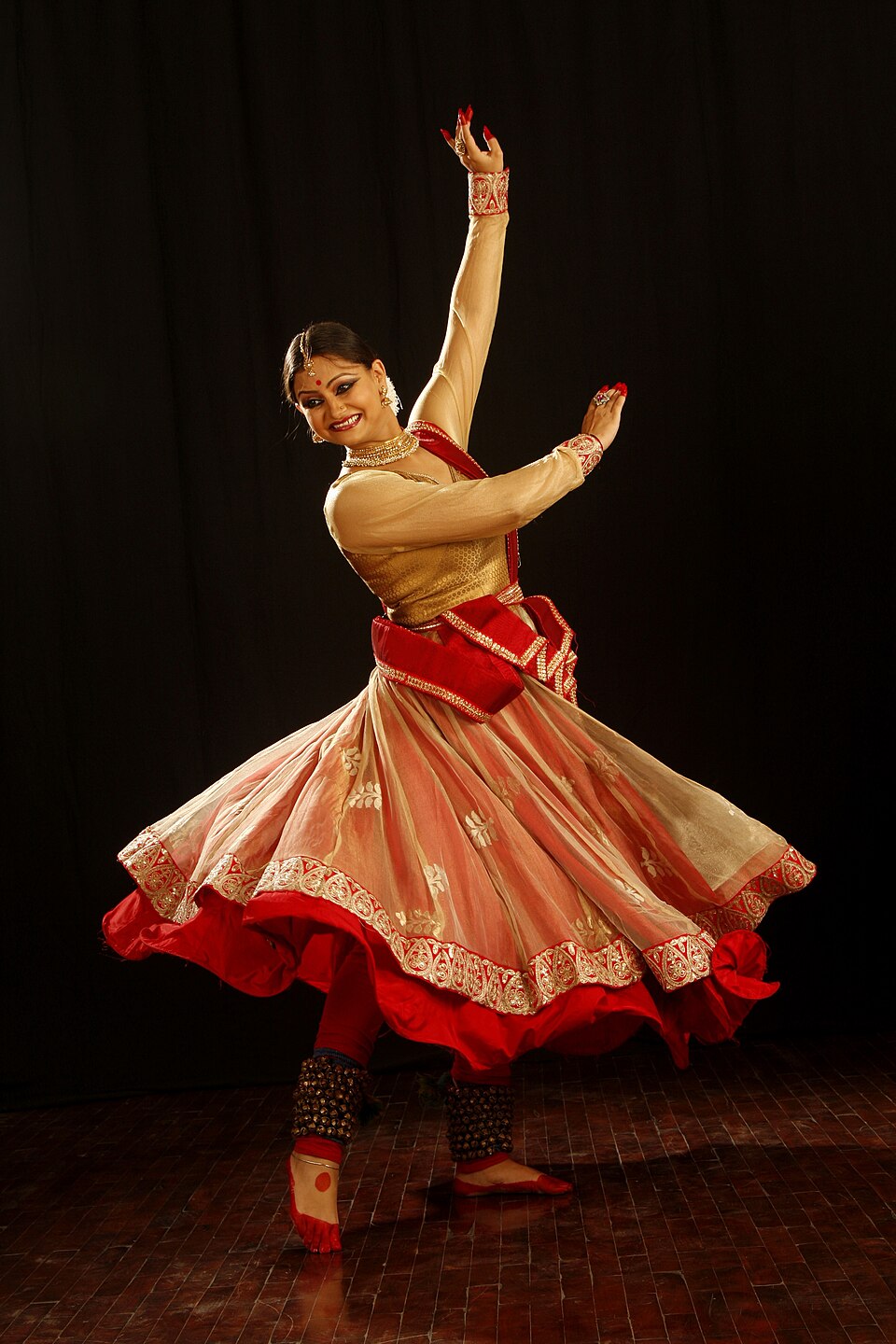
A straight stance. Unlike the bent-knee dances of the south, Kathak stands tall, in sama sthana: feet together or in a slight V. This upright posture allows its two signatures: very fast footwork and many spins.
Feet as drums. Dancers wear hundreds of small ankle bells (ghungroo). The feet strike the floor in complex rhythms, answering the tabla or pakhawaj. The audience can hear the dance as well as see it.
Three parts of a performance. A Kathak performance has three main parts. The pure dance portion is a rhythmic play of the body. Gat is graceful movement that suggests a scene, often from Krishna's life, through the face, hands and arms. Abhinaya is the climax, where the dancer enacts the story, sometimes singing as well.
The arc of a recital. The dance usually begins in a slow tempo, with delicate movements of the eyes, eyebrows, neck and wrists. It builds steadily and ends with a brilliant finale of fast footwork, sudden pauses and spins.
Music. Kathak uses Hindustani music. The sarangi or harmonium carries the melody, and the singer may sing thumri or tarana. Kathak and thumri grew up together: the word thumri may come from thumak, a graceful movement of the foot.
Costume. Women wear long flowing dresses such as anarkalis or lehengas with a dupatta. Men's costume, such as the angarakha and churidar, shows Mughal and Rajput influence. The flared skirt makes the spins spectacular.
Kathakali: Kerala's night-long dance-drama
The name and the idea. The word Kathakali joins katha (story) and kali (play). It is a dance-drama: actors present whole episodes from the Ramayana and Mahabharata through dance, gesture and expression.
Where it came from. Kerala had a tradition of Rama and Krishna plays. A popular legend says that a prince of Kottarakkara, refused a troupe of the Krishna play, created a Rama play of his own, and from such plays Kathakali grew. Its lyrics also show the influence of Jayadeva's Gita Govinda.
An older theatre carried forward. Kathakali keeps alive the much older theatre of Kerala, especially Chakyar Koothu and Kutiyattam, the Sanskrit theatre now on UNESCO's heritage list. You will meet Kutiyattam in the classical theatre chapter.
Men only. Kathakali is traditionally performed only by men, who play the female roles too. Its accent is on tandava, the forceful aspect of dance. Since the later 20th century, some women have also taken it up.
Revival. In the early 20th century, the great poet Vallathol worked tirelessly to adapt Kathakali to changing times. He founded the Kerala Kalamandalam, which has trained generations of artists. Famous masters include Guru Gopinath and Kalamandalam Gopi.
How Kathakali looks and is performed
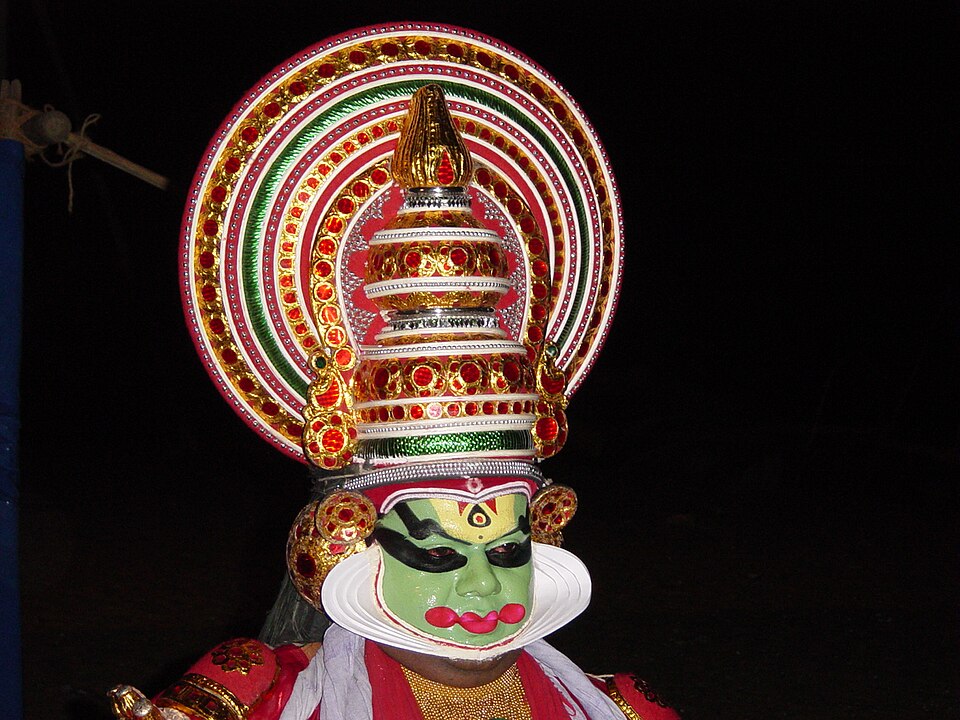
Make-up that speaks. Kathakali is the best example of aharya abhinaya. Faces are painted in colours that match the character: green for heroes and red for villains, for example. White lines called chutti frame the face, and the huge headdress also marks the rank of each character.
Silent actors, singing narrators. The actors do not speak or sing. A group of singers keeps reciting the poetry, and the actors express every word through hand gestures, eye movements and body postures. These postures are more complex than those of Bharatanatyam.
The eyes. Every part of the face conveys emotion, and the eyes most of all. Actors train for years to control the eyeballs, eyebrows and cheeks. Kathakali is one of the few Indian dances that also uses leaps.
Stance and styles. The basic stance is atimandala: a deep posture with knees bent outward and weight on the outer edges of the feet. Two main styles are named, vadakkan (northern) and thekkan (southern).
The night performance. Kathakali is performed through the night on a simple stage, lit by a large brass lamp. The chenda and maddalam drums give a thunderous rhythm. A performance can stretch over a whole night, and sometimes longer.
Why the drama is so stylised. Kathakali follows natyadharmi, the stylised stage way. Gods, demons and heroes are larger than life, so make-up, crowns and gestures are larger than life too. This is aharya and angika abhinaya at their fullest.
Kuchipudi: the dance that speaks
A village name. Kuchipudi of Andhra Pradesh and Telangana takes its name from the village of Kuchipudi, in Krishna district. The village is still home to traditional dance families such as the Vempati, Vedantam and Bhagavatula families.
A dance-drama tradition. Kuchipudi began as a dance-drama, and it stands out for adding the spoken word (vachika abhinaya) to dance. Performers act, sing and speak as well as dance. It was traditionally performed only by men, who played both male and female roles.
The founding figure. Siddhendra Yogi, in the 17th century, is credited with shaping the tradition. His famous dance-drama Bhama Kalapam tells the story of Satyabhama, Krishna's proud queen. Playing Satyabhama became a test of a Kuchipudi artist's skill.
Revival and reshaping. In the 20th century, Vedantam Lakshminarayana Sastri worked to save and revive the art and taught it to women too. A 1958 national dance seminar of the Sangeet Natak Akademi brought Kuchipudi onto the national stage. Vempati Chinna Satyam later built a polished solo repertoire that spread worldwide.
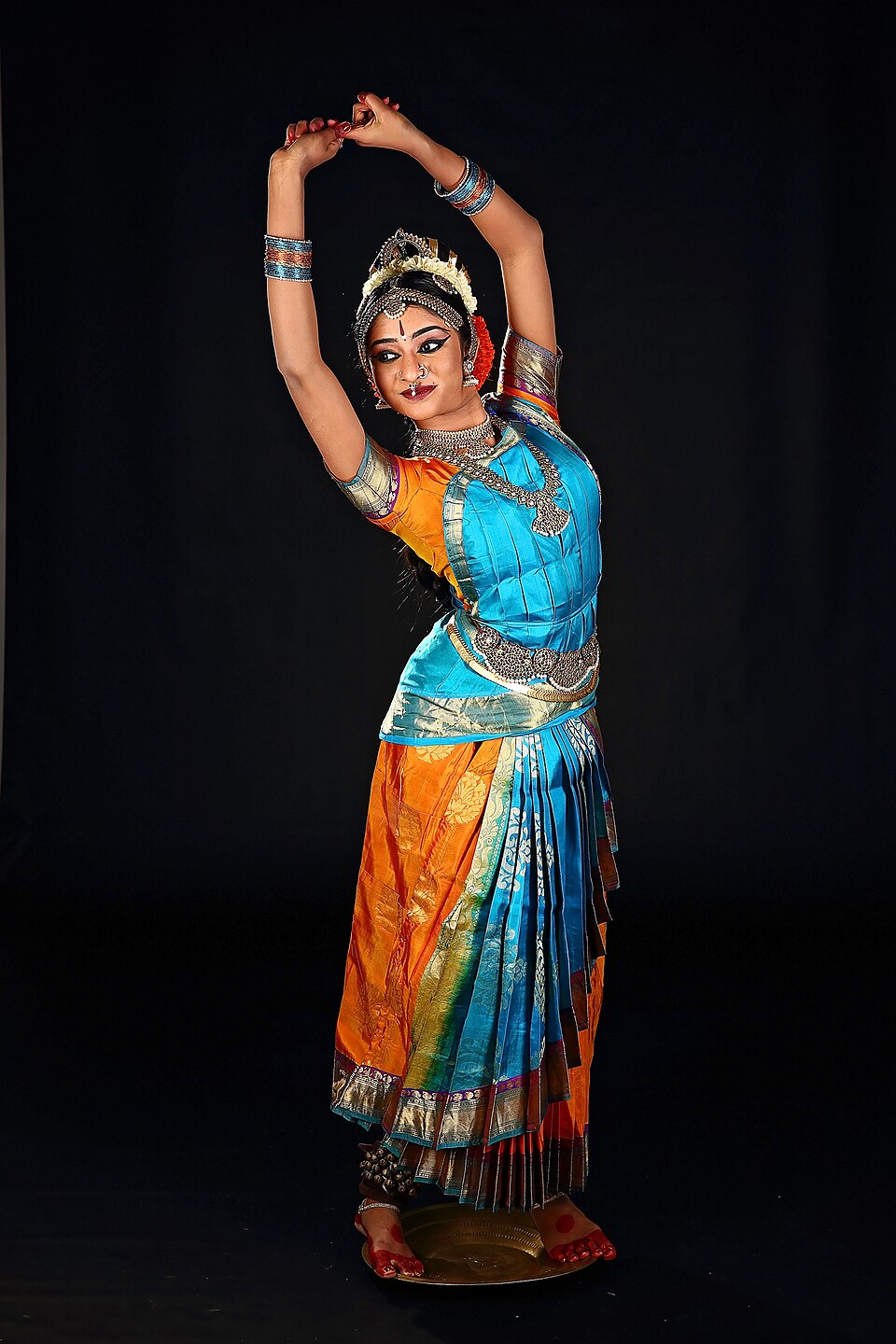
How it looks. The stance is like Bharatanatyam's aramandi but less deep. Kuchipudi is known for quick footwork, hip movements, leaps, sculpturesque poses and speed. Sometimes dancers perform intricate steps on the rim of a brass plate, showing balance and control.
Music and costume. The music is Carnatic and the songs are in Telugu, with mridangam, cymbals, veena and flute. The costume is stitched silk with a special drape called gochi kattu, and dancers wear temple jewellery.
The four side by side
One table, four dances. Use this table to fix the identity of each dance. Most exam traps mix up exactly these features.
| Feature | Bharatanatyam | Kathak | Kathakali | Kuchipudi |
|---|---|---|---|---|
| State | Tamil Nadu | North India (UP, Rajasthan) | Kerala | Andhra Pradesh, Telangana |
| Roots | Temple dance of devadasis | Storytellers; Mughal and Awadh courts | Rama and Krishna plays; Kutiyattam | Village dance-drama of Brahmin men |
| Stance | Aramandi (half-seated) | Sama sthana (straight) | Atimandala (deep, outer edge of feet) | Lighter aramandi |
| Signature | Geometric lines, varnam | Spins, fast footwork, ghungroo | Painted faces, crowns, silent actors | Speech in dance, brass plate |
| Music | Carnatic; mridangam | Hindustani; tabla, pakhawaj | Kerala; chenda, maddalam | Carnatic, Telugu songs |
| Revivers and masters | Krishna Iyer, Rukmini Devi, Balasaraswati | Shambhu, Lachhu, Birju Maharaj | Vallathol, Kalamandalam Gopi | Vedantam Lakshminarayana Sastri, Vempati Chinna Satyam |
A pattern to notice. Three of the four began in temples or religious drama, and all four were reshaped in the 20th century for the public stage. This shared journey, from sacred space to proscenium, is a strong theme for Mains.
Another pattern. Two of the four, Kathakali and Kuchipudi, were traditionally male dance-dramas. Bharatanatyam was carried mainly by women. Kathak was danced by both. Questions on gender and dance often draw on this contrast.
Mains lens: debates and practice
Debate 1: revival or reinvention? The 20th-century revivers saved these dances, but they also changed them. Bharatanatyam moved from temple dancers to middle-class students; Kuchipudi moved from men's dance-drama to women's solo. A balanced answer sees both rescue and reinvention.
Debate 2: court culture and syncretism. Kathak grew in Hindu temple storytelling and in Mughal and Awadh courts. Its themes, music and costume blend these worlds. It is a living example of India's composite culture, a value named in the Constitution's Fundamental Duties.
Debate 3: gender on stage. Male dance-dramas (Kathakali, early Kuchipudi) and female temple dance (sadir) reflect old social rules. Today women dance Kathakali and men dance Bharatanatyam. Mains answers can use this to show how art responds to social change.
These are practice questions written by us, not past papers. Past questions from your exam appear in the PYQ panel.
| Angle | Question | Key points to cover |
|---|---|---|
| Comparison | Compare Bharatanatyam and Kathak in their origins, technique and music. | Temple vs court; aramandi vs straight stance; varnam vs spins; Carnatic vs Hindustani. |
| Society | How did colonial attitudes and the 20th-century revival change Bharatanatyam? | Devadasi stigma, 1910 ban, Krishna Iyer, Rukmini Devi, Balasaraswati, Kalakshetra, gains and costs. |
| Theatre | Kathakali has been called a total theatre. Explain with reference to its abhinaya. | Four abhinayas, make-up and chutti, silent actors and singers, drums, night performance, Kutiyattam link. |
| Culture | Kathak reflects India's composite culture. Discuss. | Kathakas, Krishna themes, Mughal and Awadh courts, thumri and ghazal, costume, gharanas. |
Answer plan for the Kathak question. Open with one line: Kathak's journey from temple to court made it a meeting point of traditions. In the body, cover its Hindu storytelling roots, its Mughal and Awadh patronage, and the blend in music, themes and costume. Conclude that Kathak shows how Indian art absorbs and unites rather than excludes.
Quick revision
- Bharatanatyam (Tamil Nadu): devadasi temple dance (dasiattam, sadir); oldest claim; Tanjore Quartet (19th c); 1910 temple-dance ban; revival by E. Krishna Iyer, Rukmini Devi (1936, Kalakshetra), Balasaraswati (1935).
- Recital: alarippu, jatiswaram, shabdam, varnam, padam, tillana; stance aramandi; Carnatic music; banis Thanjavur, Pandanallur, Vazhuvoor, Mysuru.
- Kathak (north India): kathakas; temple -> Mughal (not Aurangzeb) -> Awadh (Wajid Ali Shah); gharanas Lucknow, Jaipur, Banaras, Raigarh; Kathak Kendra 1955/1964.
- Kathak technique: sama sthana, ghungroo footwork, spins; pure dance + gat + abhinaya; tabla, pakhawaj, sarangi; thumri, tarana.
- Kathakali (Kerala): dance-drama, men only; Rama/Krishna plays; continues Kutiyattam; Vallathol and Kerala Kalamandalam.
- Kathakali technique: coloured make-up (green hero, red villain), chutti, crowns, silent actors with singers, chenda, maddalam, atimandala, all-night.
- Kuchipudi (AP, Telangana): village name; dance-drama with speech; men only originally; Siddhendra Yogi, Bhama Kalapam; Vedantam Lakshminarayana Sastri, Vempati Chinna Satyam; brass plate; Telugu songs.