

HPSC ADA & legal · Module 5 · standard depth · 15 min
The Mamluks and the Khaljis
What HPSC ADA & legal asks from this chapter
Syllabus lines this chapter covers:
- Screening test (general) · General studies (as for HPSC screening tests)
HPSC ADA & legal questions from this module are being sorted into our bank.
Cut to standard depth for HPSC ADA & legal. 9 deeper paragraphs are in the full chapter.
Start from zero: slaves who became sultans
In the last chapter we saw Muhammad Ghori conquer north India and his slave general Qutbuddin Aibak become sultan in 1206. The new state was fragile. Conquered Rajput chiefs stopped paying tribute, rival generals wanted the throne, and the Mongols soon appeared on the frontier.
For the next century two groups of rulers held Delhi. The first are often called the Mamluks (from the Arabic word for a slave) or the 'Slave dynasty', because Aibak, Iltutmish and Balban had all begun as Turkish slaves. The second were the Khaljis, who seized power in 1290.
The Mamluks spent their energy holding on to what had been won. The Khaljis, above all Alauddin Khalji, expanded the Sultanate far into the Deccan and tried bold experiments in taxation and market control.
Why study this? Exams ask about Iltutmish, the 'Forty', Balban, the Mongol threat, Alauddin's conquests, Malik Kafur and the market regulations. Mains asks why Alauddin controlled prices and how the Sultanate survived its first century.
The Mamluks and Khaljis at a glance
| Ruler | Key facts |
|---|---|
| Iltutmish (1210-1236) | Capital back to Delhi; beat Yalduz (1215) and Qubacha; Mongols at the Indus (1221) |
| 1236-1265 | Four descendants rule; the 'Forty' dominate |
| Balban (1265-) | Court ceremonial, Sassanian traditions; resistance to the Mongols |
| Jalaluddin Khalji (1290) | Khalji take-over; ruling class opens up |
| Alauddin Khalji (1296-1316) | Gujarat to Malwa annexed; Malik Kafur in the south; market control; agrarian measures |
| Mubarak Khalji | Annexes Devagiri (1317) |
The key idea. The Mamluks built a strong crown and defended the frontier; the Khaljis used that crown to expand and extract on a scale never seen before.
The Mamluks: holding the Sultanate together
Iltutmish takes over. Aibak died in 1210 and his son-in-law Iltutmish became sultan. He brought the capital back to Delhi. Much of the conquered land had slipped away, and many Rajput chiefs had withheld tribute, so his reign of a quarter century (1210-1236) was a drive to win it back.
Defeating rivals. In 1215 Iltutmish defeated Yalduz at Tarain, and in 1217 he took Lahore from Qubacha. About 1228 he attacked Multan and Uchh; defeated, Qubacha drowned himself in the Indus. For the first time Delhi controlled the whole north-west.
More recoveries. In Rajputana the Turks regained Ranthambhor, Mandor, Jalor and Bayana. In the east, however, Bengal and Bihar kept slipping out of Delhi's control. A modern historian sums up: 'Aibak outlined the Delhi Sultanate and its sovereign status; Iltutmish was unquestionably its first king', who gave it the first outline of its administrative system.
The Mongols appear. In 1221 the Mongols under Chengiz Khan reached the Indus, chasing Jalaluddin Mangbarni, the prince of the Khwarizm empire they had destroyed. Mangbarni took refuge in Punjab. Iltutmish feared that Mangbarni might ally with Qubacha and the Khokhars, and also that he might provoke the Mongols against Delhi.
The policy of aloofness. So Iltutmish kept away from both. He refused Mangbarni asylum, saying the climate would not suit him, and avoided any alliance; Mangbarni left India in 1224. Historian K. A. Nizami divides Delhi's Mongol policy into three phases: aloofness (Iltutmish), appeasement (his successors, including Raziya) and resistance (from Balban).
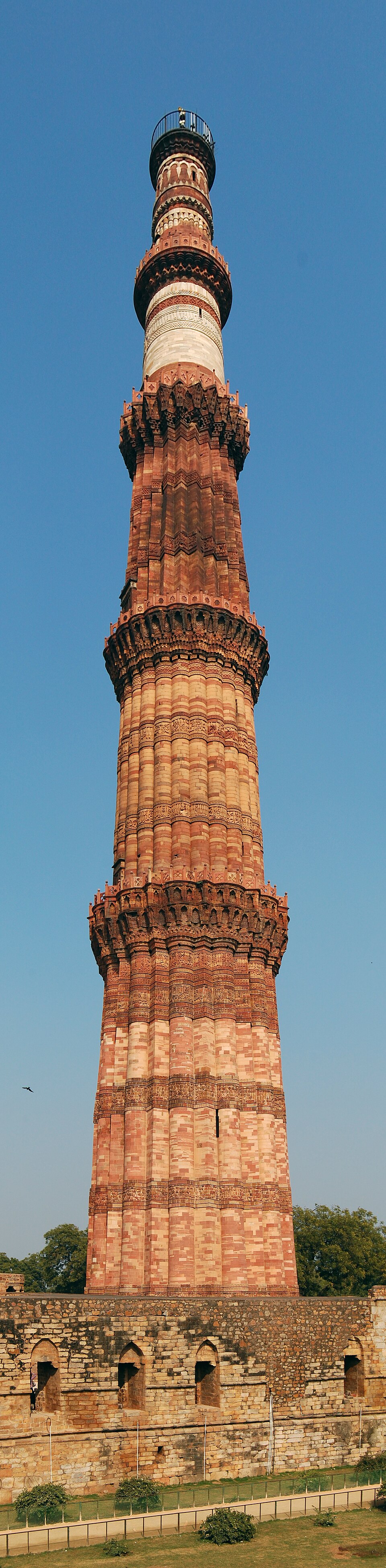
The 'Forty' take over. After Iltutmish died in 1236, four of his descendants occupied the throne in about thirty years. Iltutmish had even named his daughter Raziya as successor, but many nobles opposed her because she built up non-Turkish groups (Abyssinians and Indians) as a counterweight to the 'Forty' (Turkan-i Chihalgani), Iltutmish's Turkish slave officers. The historian Ziauddin Barani wrote that they destroyed the nobles of high birth, and from 1235 to 1265 politics revolved round a conflict between the crown and this military aristocracy.
Danger on all sides. Rajput chiefs and local leaders rebelled, and the Mongols were active in and around Punjab. In 1241 a Mongol force destroyed Lahore, and more invasions followed. The very survival of the Sultanate was in doubt.
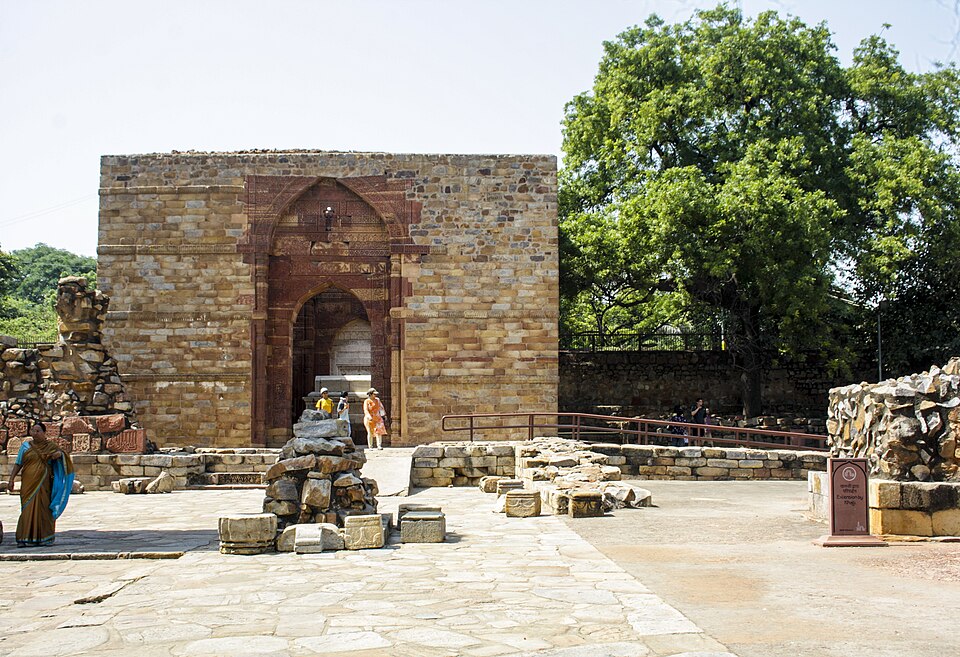
Balban's answer. The accession of Balban in 1265 gave the Sultanate an iron-willed ruler. He had two aims: to raise the prestige of the crown through elaborate court ceremonial and Sassanian (old Persian) traditions that set the ruler apart as a figure of awe, and to consolidate Turkish power by crushing rebellions and streamlining administration.
Resistance to the Mongols. Balban stayed mostly in Delhi and concentrated on keeping the Mongols back, at least beyond the Beas. When nobles urged him to conquer Malwa and Gujarat, he refused, saying it was better to make his own kingdom secure. He strengthened the forts of Bhatinda, Sunam and Samana, and his son Prince Muhammad died defending Multan in 1285.
Why no expansion? For about half a century after Iltutmish, the Sultans focused on consolidation rather than new conquest. The early surge of conquest had ended. The next phase of expansion began only with the Khaljis.
The Khaljis: expansion on a new scale
The Khalji take-over. After Balban's death his nominee was set aside and court intrigue followed for more than two years. In 1290 Jalaluddin Khalji, a prominent noble, captured the throne. Many resented this because the Khaljis were thought not to be Turks, though Khaljis had long held high posts; Bakhtiyar Khalji had been muqti of Bengal and Jalaluddin himself muqti of Sunam.
Why it mattered. Under the Khaljis the exclusive racial character of the ruling class was diluted. More groups now took part in running the Sultanate, and this wider base made large-scale expansion possible. Neighbouring kingdoms had also grown strong, so expansion seemed a political necessity.
Alauddin seizes power. Jalaluddin had neither the will nor the resources for big conquests, and his six-year reign was spent balancing his own policies against his supporters' interests. In 1296 his nephew Alauddin Khalji killed him and took the throne. Alauddin had a very different, imperial design.
Gujarat and Rajasthan. Alauddin's first project of expansion was Gujarat in 1299, perhaps drawn by its trade wealth. His generals Ulugh Khan and Nusrat Khan plundered the province and sacked the capital Anhilwara, and Alp Khan became governor. In Ranthambhor, ruled by Hamir Dev, a siege of more than six months ended with the women performing jauhar and Hamir dying in battle.
Chittor, Malwa, Siwana, Jalor. Chittor was attacked in 1303 and surrendered; it was later given to Maldeo, who stayed loyal to Delhi. Malwa fell in 1305 and was given to Ainul Mulk, who soon brought Ujjain, Dhar and Chanderi under control.
Siwana and Jalor fell in 1309. Within a decade, the Sultanate covered almost all of north, west and central India.
The Deccan. Alauddin had already plundered Devagiri in 1296 while governor of Kara. In 1306-07 he sent Malik Kafur against Ramachandra Dev of Devagiri, who had delayed tribute. The Rai surrendered and was restored with honour, in return for prompt annual tribute; Devagiri was kept as a protectorate, not annexed.
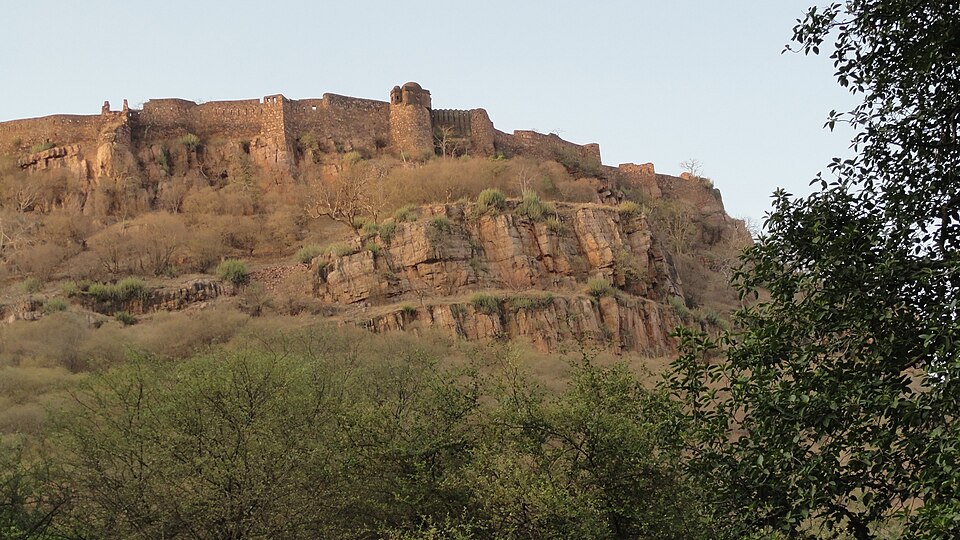
Malik Kafur in the south. In 1309-10 Kafur marched on Warangal, where Rudra Dev surrendered his treasures and promised tribute; the booty included 20,000 horses and 100 elephants. In 1311 Ballala Dev of Dwarasamudra sued for peace, and Kafur pushed on to Madurai in Ma'bar, the Pandya capital, capturing elephants and treasure. Amir Khusrau's Khazain-ul Futuh describes these campaigns.
Alauddin's southern policy. These expeditions had two aims: formal recognition of Delhi's authority, and the maximum wealth at minimum loss of life. Distant kingdoms were made tributary protectorates, not provinces, which shows political realism. Only when Devagiri rebelled after Ramachandra's death did policy change, and Mubarak Khalji finally annexed Devagiri in 1317.
The Mongols at Delhi. Under Alauddin the Mongols for the first time tried to ravage Delhi itself, under Qutlugh Khwaja in 1299 and again in 1303, when they besieged the city while Alauddin was at Chittor. Alauddin answered by recruiting a huge standing army and strengthening the frontier forts. The Mongols were repulsed in 1306 and 1308, and civil war among them weakened them further.
An unexpected gain. The Mongol destruction of Central and West Asia had another effect. Scholars, mystics and artisans fled to Delhi, turning it into a great centre of Islamic culture. The Sultanate survived the Mongols and grew stronger.
Alauddin's revenue and market reforms
The problem. A huge standing army against the Mongols was very costly. If thousands of extra cavalrymen were paid at the old salaries, the treasury would be exhausted. Alauddin's solution was to raise revenue from the land and lower prices in the market, so that soldiers could live on lower cash salaries.
Taxing the land. Alauddin tried to increase revenue by raising the demand, up to 50 per cent of the produce, assessing it by measurement, collecting it directly and cutting out the leakages to intermediaries. He brought the doab into the khalisa (land whose revenue went straight to the treasury) and paid soldiers cash salaries from its tax. The demand was fixed in kind, but it was mostly realised in cash.
Levelling the village chiefs. Before him, the rural aristocracy of khots, muqaddams and chaudhuris held revenue-free lands and lived well. Alauddin imposed full land revenue on them, withdrew their exemption from house and grazing tax and barred them from levying cesses of their own. Barani notes, with some glee, that they were reduced to the level of ordinary peasants.
Grants cancelled. Revenue grants to religious persons and institutions, called milk, idrar and inam, were usually left alone. Alauddin is reputed to have cancelled almost all of them. All this pushed more of the surplus into the Sultan's hands.
The seven market regulations. Barani is the only writer who gives Alauddin's market rules in detail. The Sultan fixed the prices of all goods, from grain to cloth, slaves and cattle. A market controller, the shahna-i mandi, was appointed along with intelligence officers (barids) and secret spies (munhiyan), and the Sultan received daily reports from all three separately.
Supply, not just prices. Fixed prices work only if grain keeps arriving. So tax grain from the doab khalisa was stored in state granaries in Delhi and Chhain.
Grain merchants were placed under the shahna and had to give sureties, regrating (ihtikar, buying to resell at a higher price) was banned, and peasants were made to sell grain to the merchants at the side of the field. Multani cloth merchants received an advance of 20 lakh tankas to bring cloth to market.
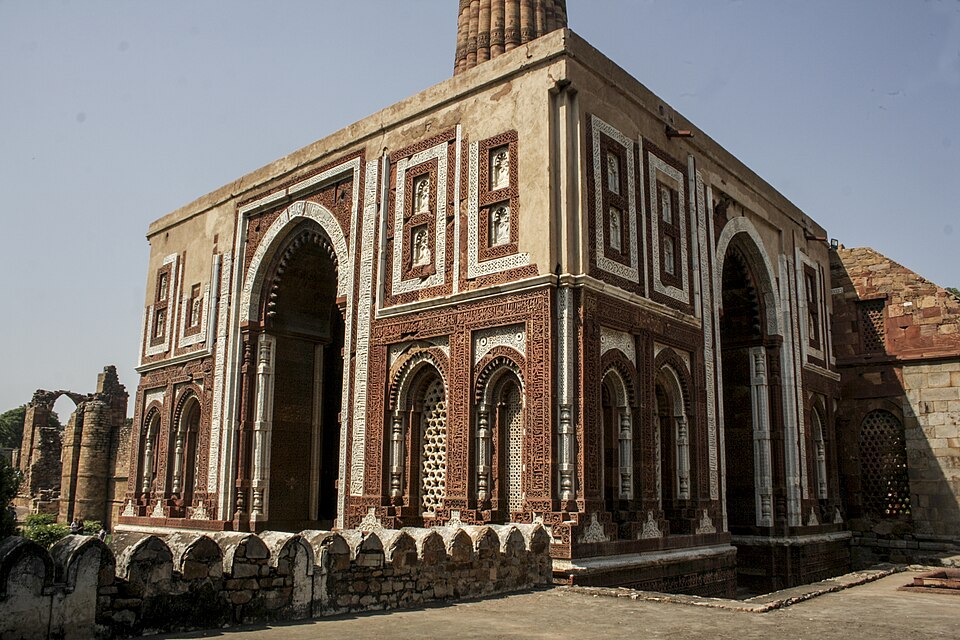
Why did he do it? The poet Amir Khusrau and the Chishti saint Nasiruddin Chiragh-i Delhi saw the measure as generosity for the good of all. Barani gave a harder reason: the Sultan needed a large army against the Mongols and could pay it less only if prices stayed low. Historians find Barani's reasoning more convincing.
Where and how long? Since the main army camp was at Delhi, price control centred on Delhi and the nearby doab. All sources agree that prices stayed low and supplies ample. But the system did not survive Alauddin.
Why it ended. One reason may be that later rulers lacked the efficient administration it needed. Irfan Habib offers another: low prices also meant lower revenue, so control paid only while spending was concentrated in Delhi. Once the Mongol threat passed, the army and spending spread out, and low prices no longer served the state.
Quick revision
- Iltutmish (1210-1236): capital back to Delhi; Yalduz beaten at Tarain (1215); Lahore from Qubacha (1217); Multan, Uchh c. 1228; 'first king' of the Sultanate.
- Mongols at the Indus 1221 (Chengiz Khan chasing Mangbarni); Iltutmish's aloofness; Nizami's phases: aloofness, appeasement, resistance.
- 1236-1265: four descendants of Iltutmish; the 'Forty' (Turkan-i Chihalgani); crown vs nobles (Barani); Lahore destroyed 1241.
- Balban (1265-): court ceremonial, Sassanian traditions; stays in Delhi; forts Bhatinda, Sunam, Samana; Prince Muhammad dies at Multan 1285.
- Jalaluddin Khalji 1290: Khaljis 'not Turks'; ruling class widened; Alauddin kills him 1296.
- Alauddin north and west: Gujarat 1299 (Anhilwara, Alp Khan), Ranthambhor (Hamir Dev, jauhar), Chittor 1303, Malwa 1305, Siwana, Jalor 1309.
- South: Malik Kafur: Devagiri (1306-07), Warangal 1310, Dwarasamudra 1311, Madurai; tributary protectorates; Khazain-ul Futuh; Mubarak annexes Devagiri 1317.
- Mongols: Qutlugh Khwaja 1299, 1303; standing army; repulsed 1306, 1308.
- Market: 7 regulations; shahna-i mandi, barids, munhiyan; granaries Delhi, Chhain; no regrating; sale at field; Multanis 20 lakh tankas; Barani's army reason; ends with Alauddin.
- Agrarian: higher demand, measurement, direct collection; doab in khalisa; cash salaries; khots, muqaddams levelled; grants cancelled.