Part B: General Studies · History and culture of India.
TNPSC Group 4 questions from this module are being sorted into our bank.
Cut to basic depth for TNPSC Group 4. 54 deeper paragraphs are in the full chapter.
Where the story stands: May 1857
By May 1857 the dry wood had been piling up for years. Rulers had lost their kingdoms, peasants and craftsmen had lost their livelihoods, and sepoys feared for their faith. Then the greased cartridges became the spark. The full build-up is told in The Revolt of 1857: causes and outbreak.
On 10 May 1857 the sepoys at Meerut rose, marched to Delhi and proclaimed Bahadur Shah II Emperor. So a mutiny in one cantonment now had a symbolic head. This chapter follows what happened next: how far the Revolt spread, who led it, why it failed and how it changed India.
The Revolt spreads: centres and leaders
From Delhi the Revolt spread across the Gangetic plain and central India: to Lucknow, Kanpur, Allahabad, Benaras, Rohilkhand, Bundelkhand, Gwalior, Jhansi and Bihar. In Awadh the sepoys proclaimed that "sepoy Raj" had arrived.
Centres of the Revolt and their leaders
What makes 1857 special is that it was not only soldiers. In each centre, local leaders, many of them rulers and landholders who had lost their thrones or rights to the British, took charge. Learn them as place + person + reason:
Why the Company was caught short
Centre
Leader
Who they were and what they did
Delhi
Bahadur Shah II; Bakht Khan
The emperor was the symbolic head, and Bakht Khan was commander-in-chief of the rebel armies.
Kanpur
Nana Saheb; Tatya Tope
Nana Saheb declared himself Peshwa under the Mughal emperor, and Tatya Tope was another leading rebel commander.
Lucknow (Awadh)
Begum Hazrat Mahal
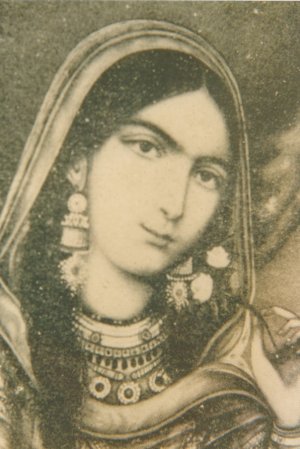
She led the rebels of the annexed kingdom, and Lucknow held out for eight months.
Awadh (Lucknow, Faizabad)
Birjis Qadr; Maulvi Ahmadullah
The minor Birjis Qadr was crowned after the rebel victory at Chinhat, and Maulvi Ahmadullah fought on around the Awadh-Rohilkhand border until his death in June 1858.
| Jhansi | Rani Lakshmibai | Her state was taken under the doctrine of lapse, and she died fighting. |
| Bihar (Arrah, Jagdishpur) | Kunwar Singh | He came from Jagdishpur in Bhojpur and led the fight at about 80 years of age. |
The rebels also governed
Why the Company was caught short. In 1857 there were about 45,000 European and 2,32,000 regular Indian troops in India. Most European units sat in newly conquered Punjab, so between Calcutta and Delhi there were only five European regiments. The mutinies travelled down the Ganga and the Grand Trunk Road between Delhi and Patna, reaching Bihar stations such as Danapur, Hazaribagh, Ranchi and Bhagalpur, but by October it was clear the Revolt would not cross the Narmada.
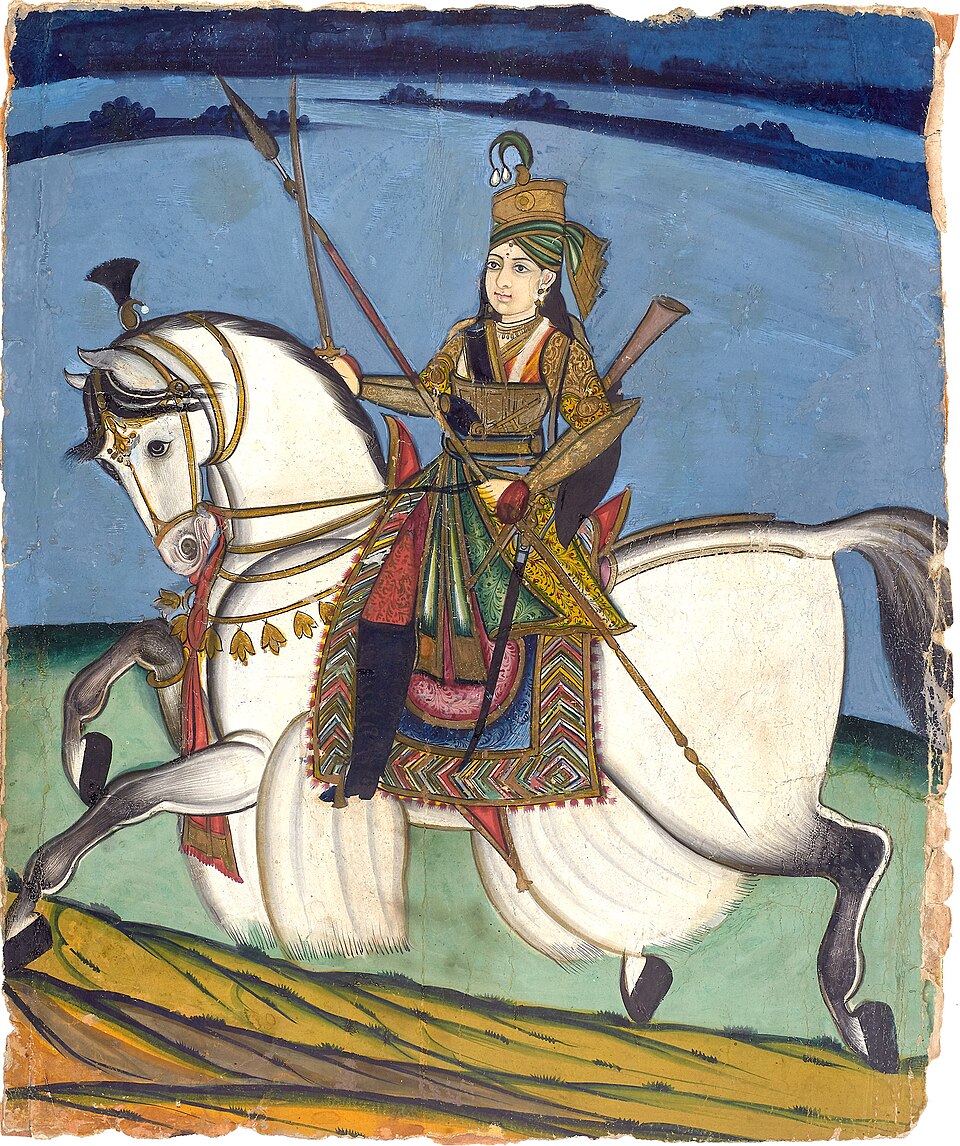
Rani Lakshmibai of JhansiPhoto: Unknown artist, Public domain, via Wikimedia Commons
The people rise. In the winter of 1856-57 chapatis passed from village to village, a sign read by many as a message of coming upheaval. Once the sepoys rose, people from 30 to 60 villages at a time attacked district headquarters, settled scores with tax collectors, court officials, police and banias, looted treasuries and opened the jails. The British were struck by the rebels' solidarity: rewards rarely bought betrayal, and attempts to set Hindus against Muslims failed.
A rebel government. The rebels did more than destroy. In Delhi they set up a court of administration of ten members, six from the army and four civilians, which decided by majority vote, and wrote to the rulers of Rajasthan for support. In Awadh, after the British defeat at Chinhat on 30 June 1857, the minor Birjis Qadr was crowned, the army chose the wazir, and in July 1857 no taluqdar sat in any important decision-making body.
A few points to understand, not just memorise:
The emperor's name united them. At Kanpur, Nana Saheb declared himself Peshwa (the title of the old Maratha chief minister), but under Mughal authority: coins were struck and orders issued in the name of the Delhi Badshah. A Maratha title under a Mughal crown shows how the rebels tried to bring old powers together against a common enemy.
Women led from the front.Rani Lakshmibai of Jhansi is remembered as the most outstanding leader of the Revolt. Under Begum Hazrat Mahal, the rebels of Lucknow, including many women, held the Company's forces at bay for eight months.
Age was no bar.Kunwar Singh of Jagdishpur in Bihar's Bhojpur district, born on 13 November 1777, took up arms at about eighty. For students of Bihar, he is the central figure of 1857 in the state.
Peasants were not just followers. In Awadh, taluqdars and peasants fought side by side, and many peasants kept fighting even after their taluqdars made peace with the British. This shows that for ordinary people the Revolt was about their own grievances, not only their lords' orders.
Why the Revolt failed
Go back to the school story. Suppose all the angry groups rise together, but the teachers in one building do not know what the parents in another building are planning, nobody has agreed who will speak for everyone, and nobody has said what the school should look like afterwards. The manager, meanwhile, has money, a phone line and friends on the school board. Who is likely to win?
Why the Revolt failed
The real reasons for the failure of 1857 fit this picture closely:
Limited arms and ammunition. The rebels had far fewer modern weapons and supplies.
Poor communication and no centralised leadership. Each centre fought largely on its own. Delhi, Kanpur, Lucknow, Jhansi and Bihar did not act under one plan or one command.
Superior British resources. The British had more resources and better arms, and could bring in more troops over time.
No clear political programme. The rebels were united in distrust of foreign rule, but they did not put forward a clear picture of the new order they wanted to build.
Many Indians stayed away or sided with the British.Merchants, the educated class (intelligentsia) and many local princes did not join, and several princes actively supported the British.
Notice that points 2, 4 and 5 are about unity and ideas, not only guns. This is a lesson that later Indian nationalists took seriously. When the national movement grew later in the century, its leaders worked hard to build an all-India organisation, a clear programme, and support among the educated and the merchants, exactly the things that 1857 lacked.
Quick revision
The main leaders were Bahadur Shah II and Bakht Khan at Delhi, Nana Saheb and Tatya Tope at Kanpur, Begum Hazrat Mahal at Lucknow, Rani Lakshmibai at Jhansi and Kunwar Singh of Jagdishpur in Bihar.
The Revolt failed because the rebels had few arms, no central leadership and no programme, while many princes, merchants and educated Indians stayed away.
As a result, the Royal Proclamation of 1858 and the Government of India Act 1858 brought Crown rule. Annexations stopped, loyal princes were rewarded, and the army was recruited on divide-and-rule lines.
Exam-style questions on this chapter. Pick an answer to see the explanation. 0 of 15 answered
Match the centre of the Revolt with its leader:
A. Kanpur B. Lucknow C. Jhansi D. Jagdishpur (Bihar)
1. Begum Hazrat Mahal 2. Kunwar Singh 3. Nana Saheb 4. Rani Lakshmibai
Who was the commander-in-chief of the rebel armies at Delhi in 1857?
Assertion (A): Nana Saheb declared himself Peshwa at Kanpur.
Reason (R): Nana Saheb rejected the authority of the Mughal emperor and struck coins in his own name.
Kunwar Singh, who led the Revolt in Bihar at about 80 years of age, belonged to:
Consider the following statements about the Revolt in Awadh:
1. The sepoys proclaimed that 'sepoy Raj' had come.
2. Taluqdars and peasants fought together.
3. Peasants stopped fighting as soon as the taluqdars made peace.
Which of the statements given above is/are correct?
Dastanbu, a diary that records rebel control of Delhi from 11 May to 14 September 1857, was written by:
Which of the following were reasons for the failure of the Revolt of 1857?
1. No centralised leadership
2. No clear political programme
3. Full support of merchants and the educated class
4. Limited arms and ammunition
Select the correct answer using the code below.
After 1858 the British recruited the army along caste, community, tribal and regional lines. The main aim was to:
Assertion (A): After 1858 the British stopped annexing Indian states.
Reason (R): The Royal Proclamation of 1858 and the Government of India Act 1858 placed India directly under the British Crown.
The view that 1857 was 'not revolution but just a restoration' means that the rebels mainly wanted to:
Birjis Qadr was crowned by the rebels of Awadh after:
Consider the following statements about British policy towards the princes after 1857:
1. Canning dropped the doctrine of lapse and allowed rulers to adopt heirs.
2. The British gave up all right to intervene in princely states.
3. The Order of the Star of India was created in 1861.
Which of the statements given above is/are correct?
Which leader of the Revolt of 1857 was captured and put to death in 1859?
Assertion (A): After 1857 recruitment from Awadh, Bihar and central India was cut sharply.
Reason (R): The British wanted regiments so different from one another that they would not unite, and favoured groups such as Sikhs, Gurkhas and Pathans.
The description of 1857 as 'not one movement but many' comes from historians who:
Mains answer practice
Write your answer first, then open the points a good answer should cover.
"The Revolt of 1857 failed, yet it changed the course of Indian history." Elaborate. (250 words)
Show answer points
Reasons for failure: no central leadership, no programme, limited arms, many groups stayed away
Crown rule: Royal Proclamation and Government of India Act 1858
Policy shift: no more annexations, princes as allies, divide-and-rule army
First coming-together of different groups; heroes for later nationalists
Balance: it did not by itself create all-India national unity
Previous year questions
Previous year questions for UPSC CSE will appear here once each one is checked word for word against the official question paper.
Frequently asked questions
Who called 1857 the first war of Indian independence?
V.D. Savarkar, in his book The Indian War of Independence, 1857, published in 1909.
Who called it 'neither first, nor national, nor a war of independence'?
The historian R.C. Majumdar.
What happened to Bahadur Shah Zafar?
He was tried and exiled to Rangoon in Burma, where he died in 1862.
How did the army change after 1857?
The share of European troops rose, artillery was kept in British hands, and recruitment shifted to so-called 'martial races' while regiments were mixed to prevent unity.