

TNPSC Group 4 · Module 8 · basic depth · 19 min
India under the Crown after 1858
What TNPSC Group 4 asks from this chapter
Syllabus lines this chapter covers:
- Part B: General Studies · History and culture of India.
TNPSC Group 4 questions from this module are being sorted into our bank.
Cut to basic depth for TNPSC Group 4. 9 deeper paragraphs are in the full chapter.
Start from zero: can a company rule a country?
Imagine a trading company today that collects taxes, keeps an army, runs courts and makes treaties with kings. It sounds strange, yet this is how much of India was governed for about a hundred years. The East India Company began as traders, became rulers, and kept ruling while Parliament in London watched over it.
The Revolt of 1857 shook this arrangement to its roots. The British crushed the rebels, but they also saw how deep the anger against Company rule ran. The question now was whether a trading company should go on governing millions of people.
The answer came in 1858. The British Crown took over India directly, and Queen Victoria issued a proclamation full of promises to princes and people. The army, the princely states and British attitudes to Indian society were all reshaped.
This chapter explains what changed, why it changed, and what it meant. Keep one question in mind as you read. Did the Crown's takeover in 1858 mark a real change for Indians, or only a change of masters?
Key changes at a glance
This table lists the main changes that followed the Revolt. Each one is explained in this chapter.
| When | Change | What it meant |
|---|---|---|
| 2 August 1858 | Government of India Act 1858 | The Crown took over from the Company. |
| 1858 | Secretary of State and a Council of India (15 members) in London | Control of India moved to a British minister. |
| 1 November 1858 | Queen's Proclamation published at Allahabad | Promises to princes and people; Canning became first Viceroy. |
| After 1858 | Army reorganised | More European troops, artillery in British hands. |
| 1861 | Indian Civil Service Act; Indian Councils Act | Exam held in London; a humble start to representative bodies. |
| 1877 | Queen Victoria proclaimed Empress of India | The Crown's rule was given an imperial title. |
Notice the pattern. The British gave reassurance to princes and to religious feeling, but they tightened control over the army and the top posts. Keep both halves in mind, because exam questions often ask you to weigh them.
The Government of India Act 1858
Why a new law? The Revolt showed the British how deep the people's resentment ran. It forced them to re-examine their whole policy towards India and to look for ways to prevent another revolt. Ending the rule of a trading company was the first and most visible step.
What the Act did. The Act was titled 'An Act for the better Government of India' and received royal assent on 2 August 1858. It took the Company's territories, powers and property and vested them in the Crown. From now on, said the Act, India 'shall be governed by and in the Name of Her Majesty'.
The Secretary of State. All the powers once held by the Company, its Court of Directors and the Board of Control passed to a Secretary of State, who was a minister of the British government. The Court of Directors and the Board of Control were abolished. The old system of double government, in which the Company and a Parliament-appointed board shared control, came to an end.
The Council of India. The Act set up a Council of India of fifteen members in London to advise the Secretary of State, who presided over it. In the first council, seven members were elected by the old Court of Directors and eight were appointed by the Crown. At least nine members had to have served or lived in India for ten years, so that experience of India would guide decisions.
In India. The Governor-General and the governors of the presidencies were now appointed by the Crown. The council in India came to be called the Council of the Governor-General of India. Day-to-day government in India carried on with many of the same officials, but the final authority now sat in a ministry in London.
London tightens its grip. In practice the Council of India was soon reduced to advisory functions, and the Secretary of State came to be called the 'Grand Mughal'. When Lord Mayo tried to assert his council's authority, he was told that final control rested with the Home Government in London. The Royal Titles Act of 1877 again showed that the Viceroy was subordinate to the Secretary of State.
Why London could do this. Faster communication made close control possible. A direct cable line between England and India was laid in 1870, the Suez Canal opened and steamships shortened the voyage. Orders could now travel in days, not months.
Why does this matter? The Act settled who ruled India until the next big reforms. It also made India's government directly answerable to the British government. The constitutional side of these Acts is traced in the Polity chapter on British-era Acts.
The Queen's Proclamation of 1858
When and where. On 1 November 1858, the Governor-General published Queen Victoria's Proclamation at Allahabad. It was addressed to the 'Princes, Chiefs, and People of India'. It announced that the Queen had taken the government of India upon herself.
The first Viceroy. The Proclamation appointed Viscount Canning as the Queen's 'first Viceroy and Governor-General'. He was to govern in her name, under orders sent through a Secretary of State. All Company officials, civil and military, were confirmed in their posts.
Religious toleration. The Proclamation promised that no one would be favoured or disturbed because of their religious faith. All would enjoy the equal protection of the law. Officials were strictly told to abstain from all interference with anyone's religious belief or worship.
Equal access to offices. Subjects 'of whatever Race or Creed' were to be 'freely and impartially admitted' to offices in the Queen's service. The test was to be education, ability and integrity. On paper, this opened every post to qualified Indians.
Land and custom. The Queen promised to protect rights connected with land, subject to the fair demands of the State. Laws were to pay due regard to India's ancient rights, usages and customs. These lines spoke directly to two of the deepest fears behind 1857: loss of land and interference with tradition.
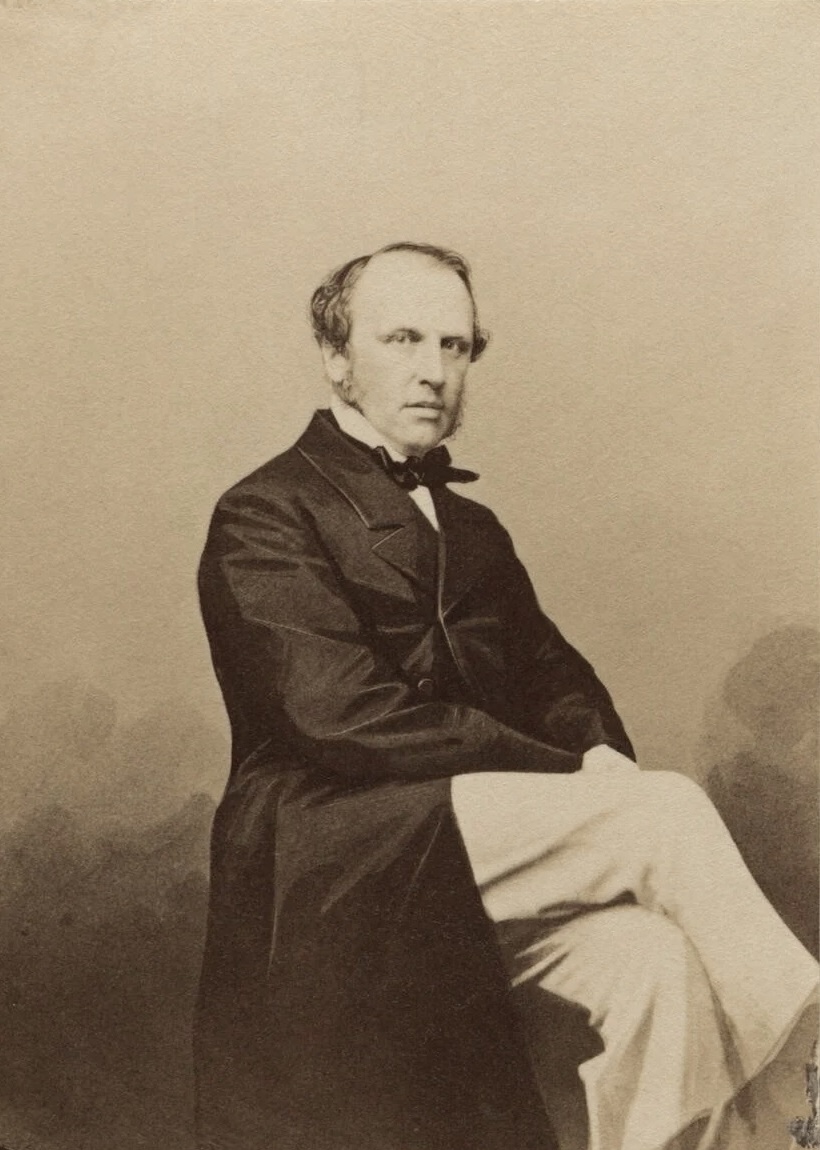
Amnesty. Rebels who returned to their homes before 1 January were offered pardon. Those convicted of directly taking part in the murder of British subjects were excluded from mercy. Leaders, instigators and those who had sheltered murderers were promised only their lives.
Prosperity. Once peace returned, the Crown promised to stimulate peaceful industry and build works of public utility. The Proclamation closed with a famous line: 'In their Prosperity will be Our Strength; in their Contentment Our Security; and in their Gratitude Our best Reward.'
Why does this matter? The Proclamation was a statement of intent, not an Act of Parliament. Even so, Indians took its words seriously. Addresses sent to the Queen from India in 1859 quoted its promises back to the rulers, and later generations would ask why those promises were not kept.
The princes: from annexation to alliance
A complete U-turn. Before 1857, Lord Dalhousie had annexed state after state, and the annexation of Awadh had caused widespread anger. After 1857 the British reversed course. The Proclamation declared: 'We desire no extension of Our present territorial Possessions.'
Treaties honoured. All treaties and agreements the Company had made with Indian rulers were accepted and would be scrupulously maintained. The Crown promised to respect the rights, dignity and honour of native princes as if they were its own. In return, it expected the princes to keep their side of these treaties.
Adoption allowed. Indian rulers were assured of their right to succession through adoption. This was the very issue on which states such as Jhansi had been taken over before 1857. Removing this fear brought many rulers closer to the British.
Loyalty rewarded. Princes who had stayed loyal during the Revolt were given special rewards. The aim was to win back the confidence of the princes. Many rulers had sided with the British in 1857, and the British now wanted them as firm allies.
The other side of the alliance. Through paramountcy the British kept a close check on the states. Rulers could deal with other countries only through the British, Residents interfered in day-to-day government, and the British kept the right to recognise successors. Rulers who did not fall in line were replaced, as at Baroda in 1873 and Manipur in 1891.
Why does this matter? The princes changed from targets of annexation into pillars of British rule. A ruler who felt secure on his throne had little reason to join a popular revolt. This was the logic behind the new policy towards the princes.
Rebuilding the army
The lesson the British drew. The Revolt had begun in the army, among the Company's own Indian soldiers. So the army was the first place where the British made sure such a revolt could never happen again. Their changes followed one idea: keep real military power in British hands.
More Europeans, fewer Indians. The number of European troops in India was increased, and the number of Indian troops was reduced from the pre-1857 level. The balance inside the army shifted towards British soldiers. This made it much harder for Indian regiments to overpower British ones.
Guns in British hands. All Indian artillery units, except a few mountain batteries, were disbanded. The artillery was kept with British soldiers. Without big guns, any future rising by Indian soldiers would be at a huge disadvantage.
Top posts reserved. All the big posts in the army and the artillery were reserved for Europeans. Indians could serve as soldiers, but they could not command. Control of the army stayed firmly at the top, in British hands.
Divided regiments. Recruitment now encouraged loyalties of community, caste, tribe and region. The aim was to break the solidarity of soldiers that had made 1857 possible. If soldiers saw themselves first as members of separate groups, they were less likely to unite against their officers.
'Martial' and 'non-martial'. In the reorganisation of 1861 the Company's army was merged with the Crown's troops. The British drew a line between 'martial' and 'non-martial' races: soldiers of Bihar, Awadh, Bengal and south India, who had joined the revolt, were called non-martial, while Sikhs, Gurkhas and Pathans, who had backed the British, were called martial and recruited in large numbers. Soldiers of different castes and regions were placed in separate companies, and Indian soldiers were sent to fight Britain's wars outside India.
Why does this matter? These measures were meant to make the Indian army a reliable tool of British power. They also show the logic of British policy after 1857: reassure the powerful, divide the many and guard the key levers of force.
Divide and rule, and promises on paper
Divide and rule. In 1857, Hindus and Muslims had fought side by side. The British now became distrustful of Hindu-Muslim unity and adopted a policy of divide and rule. They used differences of caste, religion and region to keep Indians apart.
Caution about society. The Proclamation promised no interference with religious belief and due regard for ancient customs. Before 1857, laws such as the abolition of sati and the Widow Remarriage Act had been resented as interference. After 1857, the Proclamation's words pointed towards caution rather than reform.
Offices: the promise and the gap. The Proclamation promised offices to all, 'of whatever Race or Creed'. Yet the British kept tight control over key positions in civil and military government. Under the Indian Civil Service Act of 1861, the competitive examination for the top service was held in London, which made it hard for most Indians to compete.
Why so few Indians got in. Indians rarely passed the civil service examination. It was held in London, leaned heavily on Latin, Greek and English, and its maximum age was gradually cut from 23 in 1859 to 19 in 1878. Superior posts in the police, public works, forests, posts and telegraphs and health services were also kept for Europeans.
A small door to law-making. The Indian Councils Act of 1861 is seen as a humble beginning towards representative institutions in India. It did not give Indians real power. Still, it started a long process in which Indians slowly entered the councils that made laws.
From 1861 to 1892. The 1861 Act enlarged the Governor-General's council for making laws, and in that role it was called the Imperial Legislative Council, with room for a few Indians. After Congress demands, the Act of 1892 let the councils discuss the annual budget, though not vote on it item by item. Indians could now criticise policy in the council, but not change it.
Power to the provinces and towns. The 1861 Act gave Bombay and Madras legislative powers, and in 1870 Lord Mayo first gave provinces fixed sums for police, jails, education and medical services. Lytton transferred more heads in 1877, and by 1882 fixed grants gave way to a division of revenue sources between centre and provinces. Municipalities and district boards grew from 1864, and from 1882 they were to have elected majorities with officials limited to one-third, though in most places they still worked like government departments.
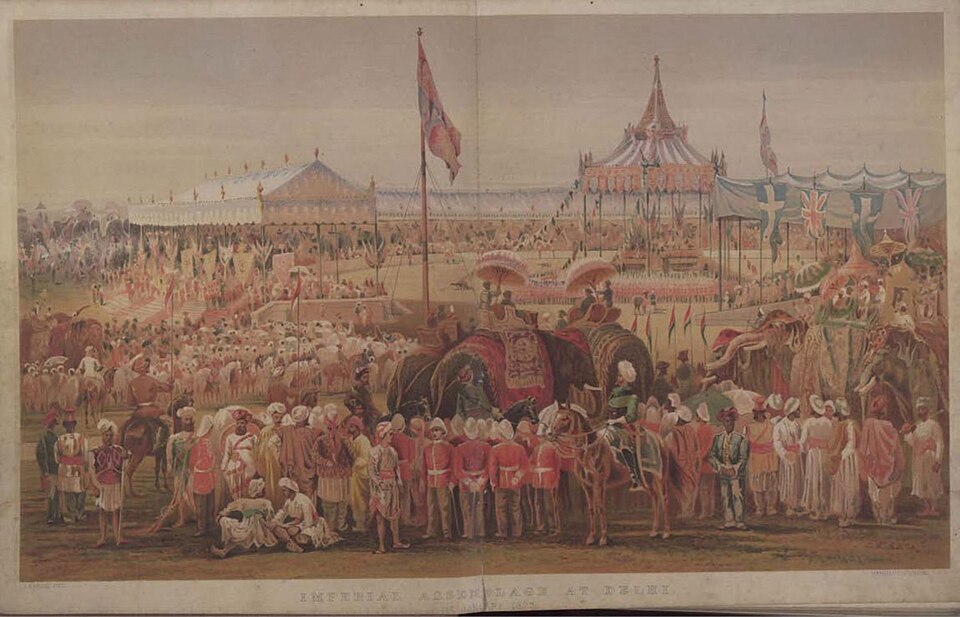
Empress of India. In 1877 Queen Victoria was proclaimed Empress of India. The title gave British rule an imperial grandeur and placed the princes under a single crown. It also announced that the Crown meant to stay.
Divide and rule, in their own words. Self-government was set aside after 1857. Secretary of State Charles Wood held representative bodies impractical and wrote to Lord Elgin: "we have maintained our power by playing off one part against the other and we must continue to do so." W.W. Hunter's Indian Musalmans (1870) stressed Muslim separateness, and in 1888 Dufferin called the Muslims "a nation of 50 million".
A warning from within. Yet officials knew how thin their hold was. In 1872 A.O. Hume warned Lord Northbrook that "we have now between us and destruction nothing but the bayonets". The 1870s brought severe famines and growing unrest, as the chapter on colonialism, famine and poverty shows.
Why does this matter? The gap between the words of 1858 and the practice that followed became a lasting grievance. Indians could hold their rulers to the Proclamation's own promises of equality, in jobs and in the law.
Quick revision
- Government of India Act 1858 (royal assent 2 August 1858): India governed by and in the name of the Crown.
- A Secretary of State took the powers of the Company, the Court of Directors and the Board of Control, which were abolished.
- Council of India: 15 members in London, advising the Secretary of State; at least 9 with 10 years in India.
- Queen's Proclamation: 1 November 1858, published at Allahabad; Canning became first Viceroy and Governor-General.
- Promises: no further annexation, treaties honoured, religious non-interference, offices for all 'of whatever Race or Creed', regard for custom, amnesty (except murderers of British subjects).
- Princes: adoption allowed, loyal princes rewarded.
- Army: more European troops, Indian artillery disbanded (except a few mountain batteries), top posts for Europeans, recruitment by community and region.
- 1861: ICS exam in London; Indian Councils Act a humble start to representative bodies.
- 1877: Queen Victoria proclaimed Empress of India.
- Secretary of State = 'Grand Mughal'; Council of India advisory; direct cable 1870.
- 'Martial' races (Sikhs, Gurkhas, Pathans) vs 'non-martial' (Bihar, Awadh, Bengal, south India); army reorganised 1861.
- ICS maximum age: 23 (1859) → 19 (1878); exam in London, Latin and Greek.
- 1892 Act: councils could discuss the budget, not vote on it. Decentralisation: Mayo 1870, Lytton 1877, 1882; local bodies from 1864.
- Rulers removed: Baroda 1873, Manipur 1891. Charles Wood: "playing off one part against the other".