

UKPSC PCS (Upper) · Module 12 · Mains depth · 15 min
Nation-building in the Nehru years: planning and non-alignment
What UKPSC PCS (Upper) asks from this chapter
Syllabus lines this chapter covers:
- Prelims Paper I: General Studies · First War of Independence (1857), tribal, caste and peasant movements, growth of nationalism and the Indian National Movement up to the Indian Independence Act (1947), Partition and India after Independence.
- Mains Paper 3: General Studies I (heritage, culture, history, geography, society) · Post – independence consolidation and reorganization within the country.
1 UKPSC PCS (Upper) questions in our bank come from this module (India after independence (1947–1977)).
Read at full depth: basics, the standard layer and the Mains analysis.
Start from zero: building a house while living in it
Imagine a family that has just got its land back after a long dispute. The house is old, the fields are tired, and there is little money. The family must decide what to fix first, how to pay for it, and how to deal with powerful neighbours who want it on their side. All this must be done while the family lives in the house and eats every day.
India after 1947 was in this position. It had won freedom, absorbed the princely states and begun to redraw its internal map, as you saw in the previous chapter. But it was poor, its farms produced too little, and its industries were small. The world outside was splitting into two camps led by the United States and the Soviet Union.
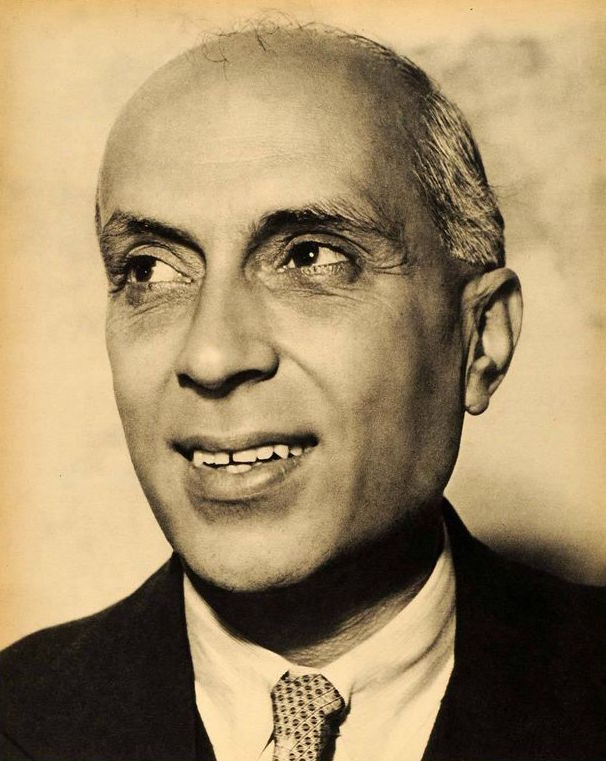
Jawaharlal Nehru, the first Prime Minister, gave two broad answers. At home, the answer was planning, so that scarce resources could be used for long-term growth. Abroad, the answer was non-alignment, so that India could keep its freedom of action. This chapter explains both, and what they achieved.
Keep one question in mind as you read. How did India try to build a modern economy and an independent foreign policy at the same time, and where did these efforts fall short?
Key events at a glance
This table lists the main steps from 1950 to 1963. Each is explained in the sections below.
| When | What happened | Why it matters |
|---|---|---|
| March 1950 | Planning Commission set up, PM as chair | Growth is to be planned, not left to chance. |
| 1 April 1950 | Diplomatic relations with the People's Republic of China | India reaches out to its large neighbour. |
| 29 April 1954 | Panchsheel set out in the India–China agreement on Tibet region | Five principles of peaceful relations. |
| April 1955 | Bandung conference builds Panchsheel into its Ten Principles | Asian and African nations share the idea. |
| 1955 | Avadi session: socialistic pattern of society | A social goal for the Second Plan. |
| 1957 | Balwant Rai Mehta Committee recommends three-tier panchayats | Development reaches the village. |
| 1961 | Belgrade conference of non-aligned nations | Non-alignment becomes a movement. |
| 1963 | Partial Test Ban Treaty, with a role for India | India speaks for a safer world. |
Notice that the economic and the foreign-policy steps ran side by side. Both came from the same idea, that a newly free nation should decide its own path.
Why India chose to plan
At independence India's needs were huge and its savings were small. Roads, dams, power stations, steel and schools all had to be built, but private investors alone could not raise that much capital or wait that long for profits. Planning meant that the state would set priorities, collect resources and direct them where they were most needed. It was a way of making every rupee count.
There was also a political reason. The national movement had blamed colonial rule for India's poverty, so free India was expected to show quick and fair progress. A plan made goals public, gave every region a share and allowed people to judge the government's work. In that sense planning was both an economic tool and a promise.
Why the public sector: The first and second Plans raised public resources for the public sector. The idea was that the state would build the basic industries and infrastructure on which private business could later grow. This choice shaped the Indian economy for four decades. You will study its economic side in detail in the economy course.
The machinery of planning
The Planning Commission: It was set up in March 1950 by a resolution of the Government of India. The Prime Minister was its chairperson, which showed how central planning was to the government's work. Note that it was created by a government resolution, not by the Constitution or by a law of Parliament.
Five Year Plans: The Commission drew up Five Year Plans, and twelve such Plans were run between 1950 and 2014. Each Plan set targets for investment and growth for five years. In 2015 the Planning Commission was replaced by NITI Aayog, which closed this chapter of Indian history.
The National Development Council: India is a union of States, and many development subjects belong to the States. A plan made only in Delhi would fail without them. Nehru instituted the National Development Council, which brought the Union and the States together on the Plans.
The Avadi goal: In 1955 the Congress, meeting at Avadi, adopted the goal of a socialistic pattern of society. This coincided with the Second Five Year Plan. The phrase meant growth with a fairer share for the poor, achieved through democratic means rather than through revolution.
Taking development to the village
Most Indians in the 1950s lived in villages, so a plan that stayed in cities would miss most of the nation. Under the First Five Year Plan, the Community Development Programme tried to involve villagers in their own development. Panchayats were taken up as part of this effort. The idea was that people would help plan and run local works such as wells, roads and schools.
The 1957 report: The early programme depended too much on officials and too little on people. In 1957 the Balwant Rai Mehta Committee recommended a three-tier system of Panchayati Raj. This gave democratic shape to rural development. The full story of local government is in the polity course, so here remember the year and the three tiers.
Democracy under strain: Nation-building also meant keeping democratic government running in the States. The Constitution allows President's Rule when a State cannot be governed according to the Constitution. It was first used in Punjab in 1951 and in Kerala in 1959. These early cases showed both the strength of the Centre and the questions it would later raise.
Non-alignment: what it meant
After the Second World War the world split into two blocs. One was led by the United States and the other by the Soviet Union, and each wanted newly free countries on its side. Joining a bloc could bring aid and protection, but it would also mean taking orders on big questions. India chose another path.
Nehru held charge of foreign affairs for seventeen years, so his ideas shaped India's early foreign policy. For him non-alignment did not mean equidistance or isolationism. It meant independence of judgment and action. India would decide each issue on its merits, not because a bloc leader asked it to.
Non-alignment in action: India declined Marshall Plan aid, choosing not to tie itself to either bloc. On 1 April 1950 it became the first non-socialist bloc country to establish diplomatic relations with the People's Republic of China. It sent peacekeepers to Gaza and the Congo, and it played a role in the Partial Test Ban Treaty of 1963. These steps show an active country, not a neutral bystander.
A voice for the colonised: India also used the United Nations to speak for peoples still under colonial or racial rule. In 1946 it became the first country to raise apartheid at the UN. It co-sponsored the 1960 Declaration on granting independence to colonial countries and was the first chair of the Decolonization Committee. A fuller account of foreign policy is in the international relations course.
Panchsheel, Bandung and Belgrade
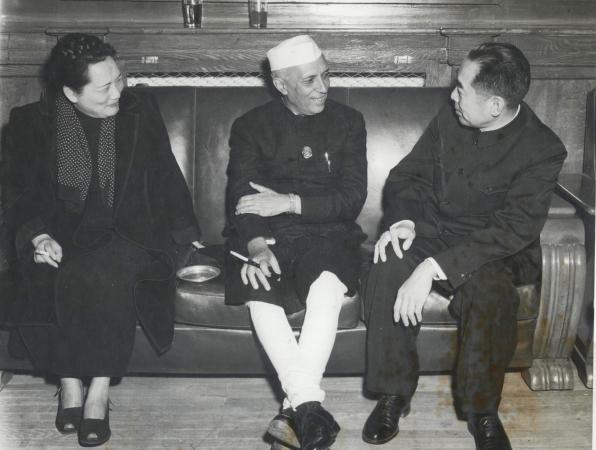
Panchsheel, 1954: Panchsheel means "five principles". They were first set out in the Agreement on Trade and Intercourse between the Tibet region of China and India, signed on 29 April 1954. On 28 June 1954 Nehru and Zhou Enlai issued a joint statement on them. So Panchsheel began in a bilateral agreement with China, not at an international conference.
The five principles: The first is mutual respect for each other's territorial integrity and sovereignty. The second is mutual non-aggression, and the third is mutual non-interference in each other's internal affairs. The fourth is equality and mutual benefit, and the fifth is peaceful co-existence. Learn them in this order, because exams often list them.
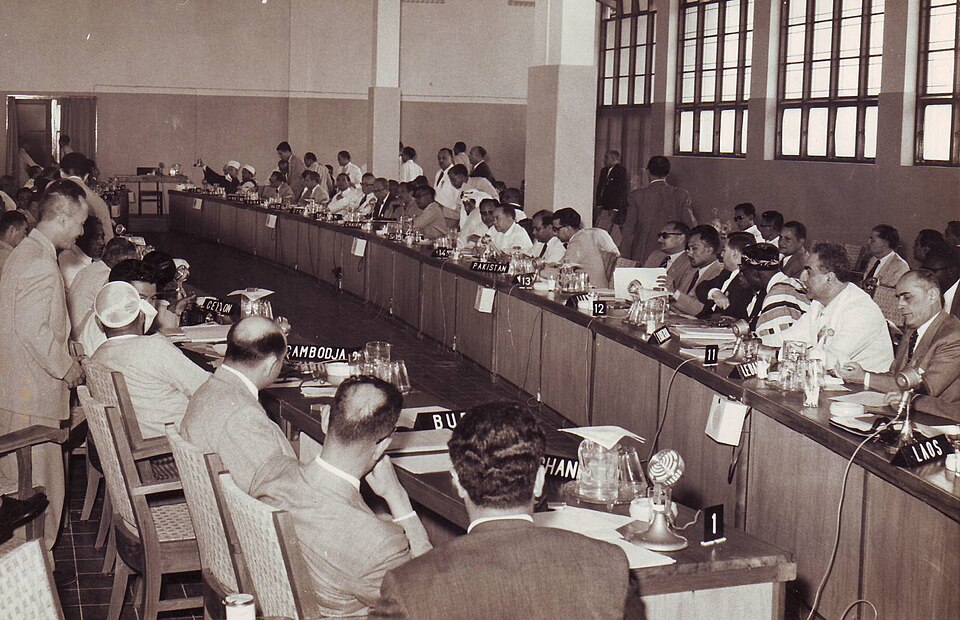
From two countries to many: The idea spread quickly. The Bandung conference of April 1955 built Panchsheel into its Ten Principles. On 11 December 1957 the UN General Assembly adopted a resolution on peaceful co-existence presented by India, Yugoslavia and Sweden.
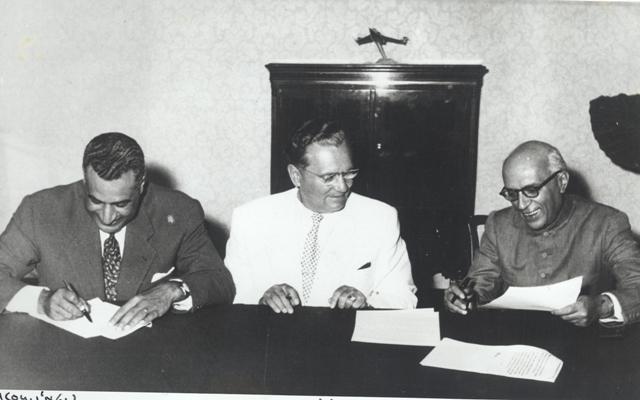
The Non-Aligned Movement: In 1961 the Conference of Non-Aligned Nations met in Belgrade and accepted Panchsheel as the principled core of the movement. India is a founding member of the Non-Aligned Movement. In this way an idea born in an agreement on Tibet became the creed of a worldwide grouping.
Mains lens: achievements and limits of the Nehru years
What was achieved: In the first fifteen years after independence India's GDP grew at about 4 per cent a year. Institutions for planning, the public sector and rural development were built. Abroad, India gained a voice far larger than its economic weight, through non-alignment, Panchsheel and its work at the UN.
Where it fell short: Agriculture grew at only 2.6 per cent a year between 1950 and 1965. With a growing population, this left the country short of food, and the problem became serious in the 1960s. The heavy reliance on the state also meant that private enterprise and exports received less attention. A balanced answer notes that these limits shaped the next stage of policy.
The test of 1962: Panchsheel rested on trust between India and China. The border conflict of 1962 was a setback to India–China ties and a shock to the assumptions of the Nehru years. It showed that principles of peace needed to be backed by defence preparedness. This story continues in the next chapter.
A fair conclusion: Nehru's choices were shaped by the conditions of his time: poverty, a divided world and the memory of colonial rule. Planning and non-alignment gave India a base and an identity. Their weaknesses, seen in food shortages and in 1962, led later governments to adjust course rather than to abandon the base entirely.
Mains practice: the Nehru years
| Angle | Question | Key points to cover |
|---|---|---|
| Economy | Why did independent India adopt planned development? Assess its record up to the mid-1960s. | Scarce capital; public sector; Planning Commission 1950; NDC; Avadi 1955; GDP about 4%; agriculture 2.6%; food shortages. |
| Foreign policy | "Non-alignment was not neutrality." Explain with examples from India's foreign policy in the 1950s. | Independence of judgment and action; Marshall Plan; China ties 1950; Panchsheel 1954; Bandung 1955; Belgrade 1961; peacekeeping; apartheid and decolonisation at UN. |
| Assessment | "Panchsheel was a noble idea undone by the events of 1962." Critically evaluate. | Origin 29 April 1954; five principles; spread through Bandung, UN 1957, Belgrade 1961; 1962 setback; lasting value in NAM; need for defence preparedness. |
These are practice questions written by us, not past papers. Past questions from your exam appear in the PYQ panel.
How to use this table: each answer should explain the what, then the why, and end with what it led to.
Quick revision
- Planning Commission: March 1950, government resolution, PM as chair; 12 Plans (1950–2014); NITI Aayog 2015.
- First and second Plans: public resources for the public sector; NDC instituted by Nehru.
- Avadi 1955: socialistic pattern of society, with the Second Plan.
- Growth: GDP about 4% a year (first 15 years); agriculture 2.6% (1950–65).
- Community Development Programme (First Plan); Balwant Rai Mehta Committee 1957: three-tier Panchayati Raj.
- President's Rule first: Punjab 1951, Kerala 1959.
- Non-alignment: independence of judgment and action, not equidistance; Nehru held foreign affairs 17 years.
- Declined Marshall Plan aid; peacekeepers to Gaza and Congo; role in PTBT 1963.
- China ties 1 April 1950 (first non-socialist bloc country).
- Panchsheel: 29 April 1954 (Tibet region agreement); joint statement 28 June 1954; Bandung April 1955; UNGA 11 December 1957.
- Belgrade 1961: NAM accepts Panchsheel as its core; India a founding member.
- UN: apartheid raised 1946; 1960 decolonisation Declaration; first chair of the Decolonization Committee.