

UKPSC RO / ARO · Module 8 · standard depth · 18 min
Guarding the Raj: frontiers and foreign policy
What UKPSC RO / ARO asks from this chapter
Syllabus lines this chapter covers:
- Prelims: General Studies (100) and General Aptitude Test (50) · History of India and Indian National Movement
- Mains Paper 1: General Studies (objective, 200 questions) · History and culture of India and Uttarakhand
2 UKPSC RO / ARO questions in our bank come from this module (Resistance to Company rule).
Cut to standard depth for UKPSC RO / ARO. 7 deeper paragraphs are in the full chapter.
Start from zero: why did a ruler of India worry about Russia?
Imagine you own a large house you have just taken over. You have put your own guards inside, but the walls are long, some neighbours are weak, and a powerful rival is buying land closer and closer to your gate. You would want to strengthen the walls, make friends with the neighbours and keep the rival as far away as possible.
That was Britain's position in India after 1818. Having conquered almost the whole subcontinent, the British turned to two tasks: building an administration, as told in the chapter on India under the Crown, and making the frontiers safe. The second task is called frontier and foreign policy.
The rival was Russia, expanding across Central Asia towards Afghanistan. The walls were the North-West Frontier, held by fiercely independent tribes, and the Himalayas, with Tibet, Nepal, Sikkim and Bhutan beyond them. The sea route ran through Persia and the Persian Gulf.
As you read, keep one question in mind. Was this India's foreign policy, or Britain's foreign policy paid for by India?
Frontier milestones at a glance
| When | What happened | Why it matters |
|---|---|---|
| 1861 | Sikkim declared a British protectorate | Opened a route towards Tibet; China accepted it in 1890. |
| 1864-1873 | Gorchakov's memorandum; Samarkand (1868) and Khiva (1873) fall to Russia | Russia closes in on Afghanistan. |
| 1874 onwards | Disraeli's Forward Policy; Second Afghan War | Costly war paid from Indian revenues. |
| 1877 | Sandeman becomes agent in Baluchistan | Conciliation works with Baluch chiefs. |
| 12 November 1893 | Durand agreement with the Amir of Kabul | Divides the tribal belt; the Durand Line. |
| 1902 | Curzon's Lahore darbar of frontier chiefs | Levies replace regular troops; NWFP formed. |
| 1904 | Younghusband reaches Lhasa | Tibet made virtually a British protectorate. |
| 1913-14 | Shimla conference; McMahon Line | Boundary between Tibet and British India. |
Notice the pattern. The British acted on the frontier mainly when they feared Russia, and they used India's money and soldiers to do it.
Can a colony have a foreign policy?
Arguments for 'yes'. Some historians argue that British India had a foreign policy of its own. British rule ended the long run of invasions from Afghanistan and Persia and the raids of frontier tribes. India, as a large part of the Empire, carried weight in London, and the distance from England gave the Government of India some freedom to act.
Shared interests. In some matters, such as relations with Russia, Persia and China, British imperial interests and India's security overlapped. This overlap helped a distinct Indian foreign policy to take shape. The transfer of 1858-59 from the Company to the Crown gave it an independent character in form.
But India was a colony. The decisions served the larger interests of British imperialism, and India paid for them. So India's foreign policy before 1947 was independent in form, but not in reality. That is the key point for any exam answer.
Where it began. The Company first conducted 'foreign policy' with Indian states, which had to surrender their foreign relations to the paramount power. Real external policy began when Napoleon's plans alarmed the British after 1807. Lord Minto sent four missions: Malcolm to Tehran, Elphinstone to Kabul, Seton to Sindh and Charles Metcalfe to Lahore, which won friendly treaties.
The Russian peril and the Afghan question
A fear becomes real. The idea of a 'Russian peril' was spread by Palmerston, the British Foreign Secretary, in the mid-nineteenth century. After the Crimean War (1854-56) Russia advanced swiftly in Central Asia. In his memorandum of 1864, Prince Gorchakov said Russia was driven by the same law that had carried British armies across the plains of India until they reached the mountains.
Step by step towards India. Russia formed the province of Russian Turkestan in 1867 and reduced Bukhara to a vassal. Samarkand fell in 1868 and Khiva in 1873, and by 1893 Russia had reached the Pamir plateau, which bordered Kashmir. The Russians argued that a strong position in Central Asia would let them check Britain by threatening India.
Two British answers. The 'Forward Policy', generally held by the Conservatives, wanted to occupy advanced posts and gain commanding influence in Afghanistan, meeting Russia beyond the frontier. 'Masterly Inactivity', generally backed by the Liberals and followed in 1863-75, sought an understanding with Russia and watchful non-intervention. Its supporters argued that Russia's bases were far away, so it was safer to meet any attack on India's own frontier.
The Second Afghan War. Earlier, as told in the chapter on wars beyond the frontiers, the First Afghan War had been a disaster. When Disraeli's Conservatives came to power in 1874, the Forward Policy returned and pushed the Government of India into the Second Afghan War. This costly expedition was launched under Lytton, paid from Indian revenues and brought to an end under Ripon, and its results were not very different from those of the first war.
How the Great Game cooled. By 1890 European alliances were shifting. Germany drifted away from Russia, and Britain's old rivals, France and Russia, drew closer to it. This led to the Triple Entente of 1907, in which the powers settled many of their colonial quarrels.
The North-West Frontier: closed, open and 'butcher and bolt'
A new neighbour. The annexation of Sindh (1843) and Punjab (1849) brought the British face to face with the hill tribes. Beyond an undefined border lived Pathans in the north and Baluchis in the south, owing only nominal allegiance to the Amir of Kabul. Living on meagre resources but skilled in war, they often raided the plains.
Two systems. The Pathan border was run from Punjab and the Baluch border from Bombay, so two methods grew up. The Sindh frontier was a 'closed frontier': it was patrolled, and no tribesman could enter without a pass. The Punjab frontier was an 'open frontier', guarded by forts at the passes but open to tribal trade, in the hope that trade would wean the tribes from plunder.
Fines, blockades and expeditions. In the early phase Dalhousie's method ruled: fines for plunder and murder, blockades to contain a crisis, and punitive expeditions against tribes that raided in strength. Critics called the expeditions 'butcher and bolt', a barbarous style of reprisal. Between 1849 and 1893 there were forty-two such expeditions, with about 2,173 British casualties.
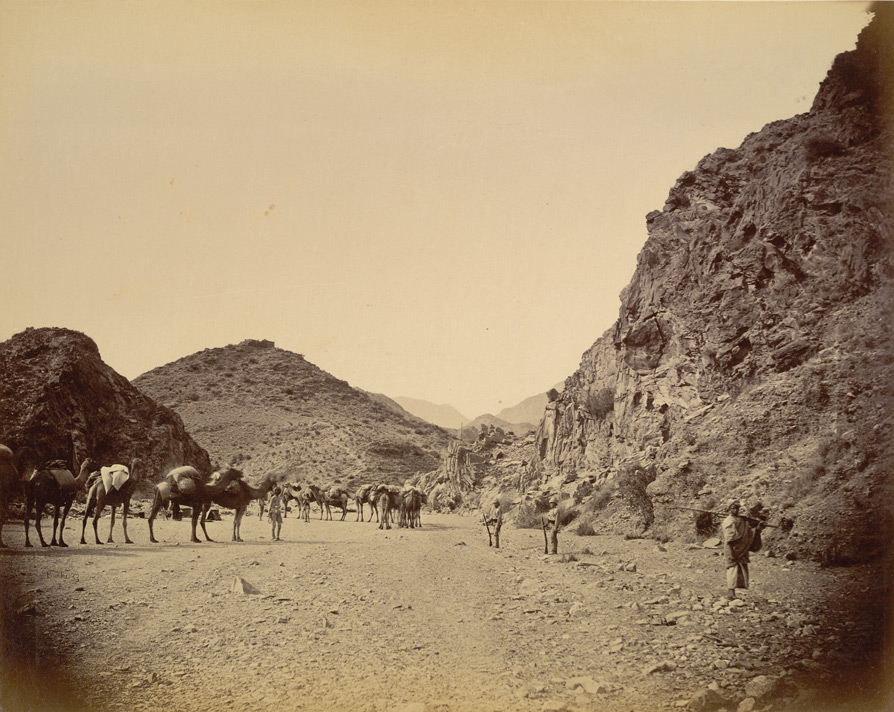
Softer tools too. The government also held fairs to promote trade, opened dispensaries and hospitals, recruited tribesmen into military and para-military forces and built roads and railways. It organised the frontier districts of Hazara, Peshawar, Kohat, Bannu, Dera Ismail Khan and Dera Ghazi Khan. These steps made the frontier India's first line of defence.
Why Sindh did better. The Sindh system worked better until about 1890, mainly because of geography: its valleys were broader and farmland lay farther from tribal land. The Baluch also had only a few powerful leaders, while the Pathan jirga (tribal council) took in almost the whole tribe. Major Sandeman, made agent in Baluchistan in February 1877, succeeded with friendly and conciliatory intervention, but his methods failed among the Pathans.
The Durand Line and Curzon's settlement
Why a line was needed. Peace on the frontier was hard because the Amir of Kabul often intrigued with the tribes. At Lord Lansdowne's insistence, Sir Mortimer Durand was sent to negotiate a boundary with the Amir. The aim was to fix, once and for all, who was responsible for which tribes.
The agreement of 12 November 1893. The Amir kept Wakhan, Asmar, Kafiristan, Mohmand and part of Waziristan. The British kept areas such as Swat, Bajaur and the Kurram valley, along with the tribal areas of the Gomal Pass. A commission then surveyed and marked the border, a task that took two years because suspicious tribesmen obstructed it.
What the line did. The Durand Line gave the British a legal right to enforce control over tribes such as the Waziris, Afridis and Bajauris. It helped them build communications, collect taxes such as the salt tax and interfere in tribal customs. But the immediate result was frequent tribal revolts, which the British used to justify more campaigns, and the Amir resented losing his rights over the tribes.
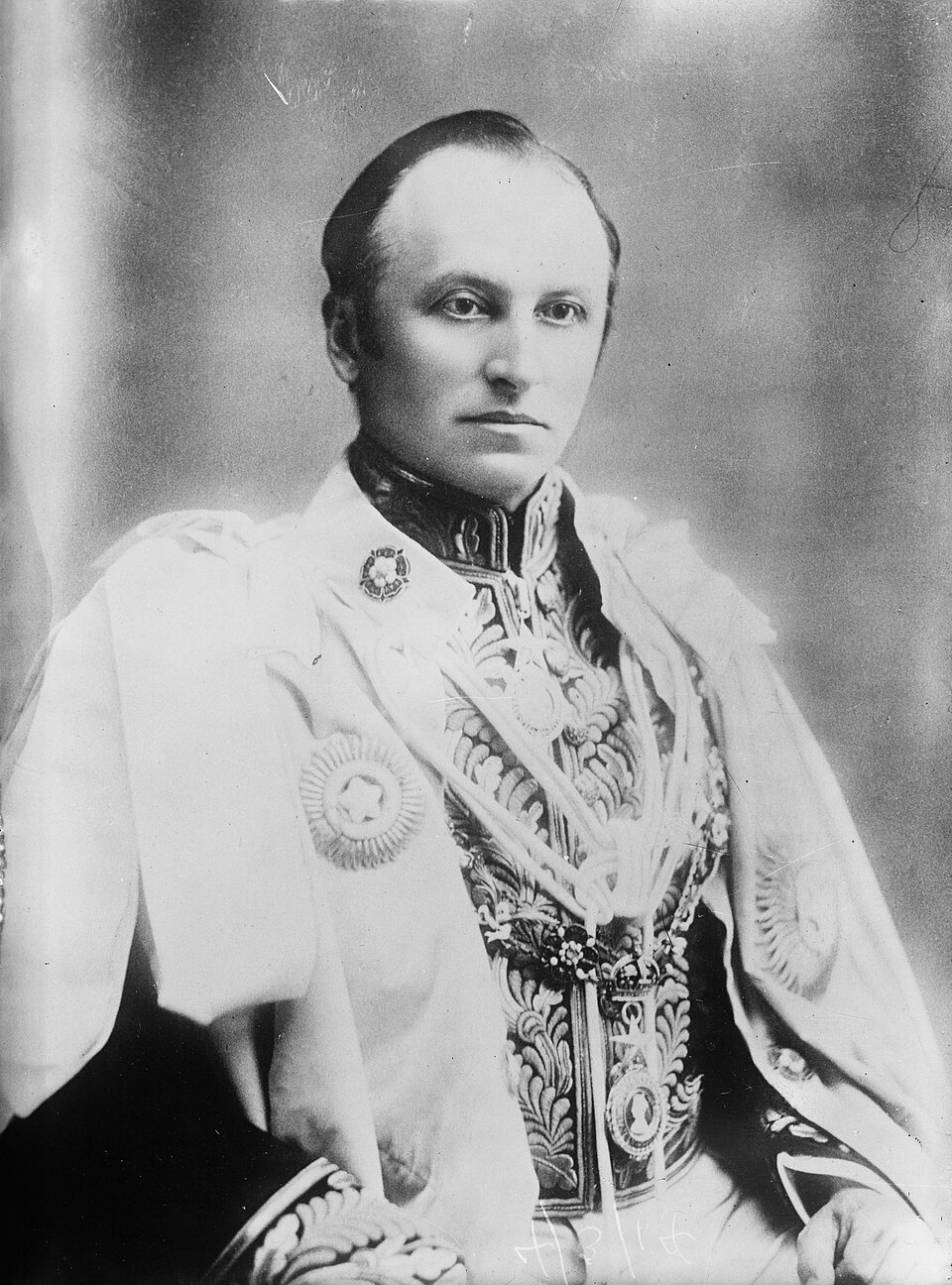
Curzon's approach. Lord Curzon (1899-1905), who knew the region well, withdrew regular troops and replaced them with tribal levies, which was cheaper and gave the tribes local responsibility. He held a darbar at Lahore on 26 April 1902 to win over the frontier chiefs. For tighter control he carved out a new North-Western Frontier Province, and the frontier saw a long spell of peace.
Persia and the Persian Gulf: guarding the routes to India
Why the Gulf mattered. Persia, the Arabian Sea coast and the Persian Gulf held the land and sea approaches to India. On land the British first checked the French, then the Russians, and foiled Persia's attempt to take Herat. By the treaty of 1907, Persia was divided into British and Russian zones.
Control of the sea route. Around the Gulf the British took control of strategic coasts and islands, either by annexation or by treaties. Places such as Mauritius, Zanzibar, Muscat, Bahrain, Kuwait and Oman came under British power or protection. After the Suez Canal opened, this route became a lifeline of British trade.
Viceroys in the Gulf. Lord Lansdowne (1884-94) was the first Viceroy to visit the Persian Gulf. In 1903 Lord Curzon assembled the Gulf sheikhs aboard his flagship and proclaimed British supremacy over the region. States such as Oman and Kuwait were made to refuse facilities to Britain's European rivals, such as France and Germany, and when oil was found the British were the first to control its industry and trade.
Tibet: Younghusband and the McMahon Line
The 'Hermit Kingdom'. Tibet, a landlocked plateau ringed by high mountains, loved its isolation and had accepted Chinese protection in 1728 to ward off outsiders, though in practice Chinese control was nominal. At first British interest was purely commercial. Warren Hastings sent missions in 1774 and 1783, but the Tibetan rulers refused to open trade.
Why interest grew. Four things raised Tibet's importance. China was declining while foreign powers scrambled for influence; British control of Nepal, Bhutan and Sikkim brought the borders close; Russia's advance to the Pamirs threatened India from the north; and traders pressed for the tea and shawl wool trade.
The Younghusband expedition. Rumours spread that a Russian subject had won the Dalai Lama's confidence and was carrying messages between Lhasa and St Petersburg. Curzon, fearing Russia and drawn by trade, won reluctant permission from London to send Colonel Francis Younghusband. Marching through Sikkim, he reached Lhasa in August 1904 after about 700 Tibetans were killed, and imposed a treaty that made Tibet virtually a British protectorate with commercial concessions.
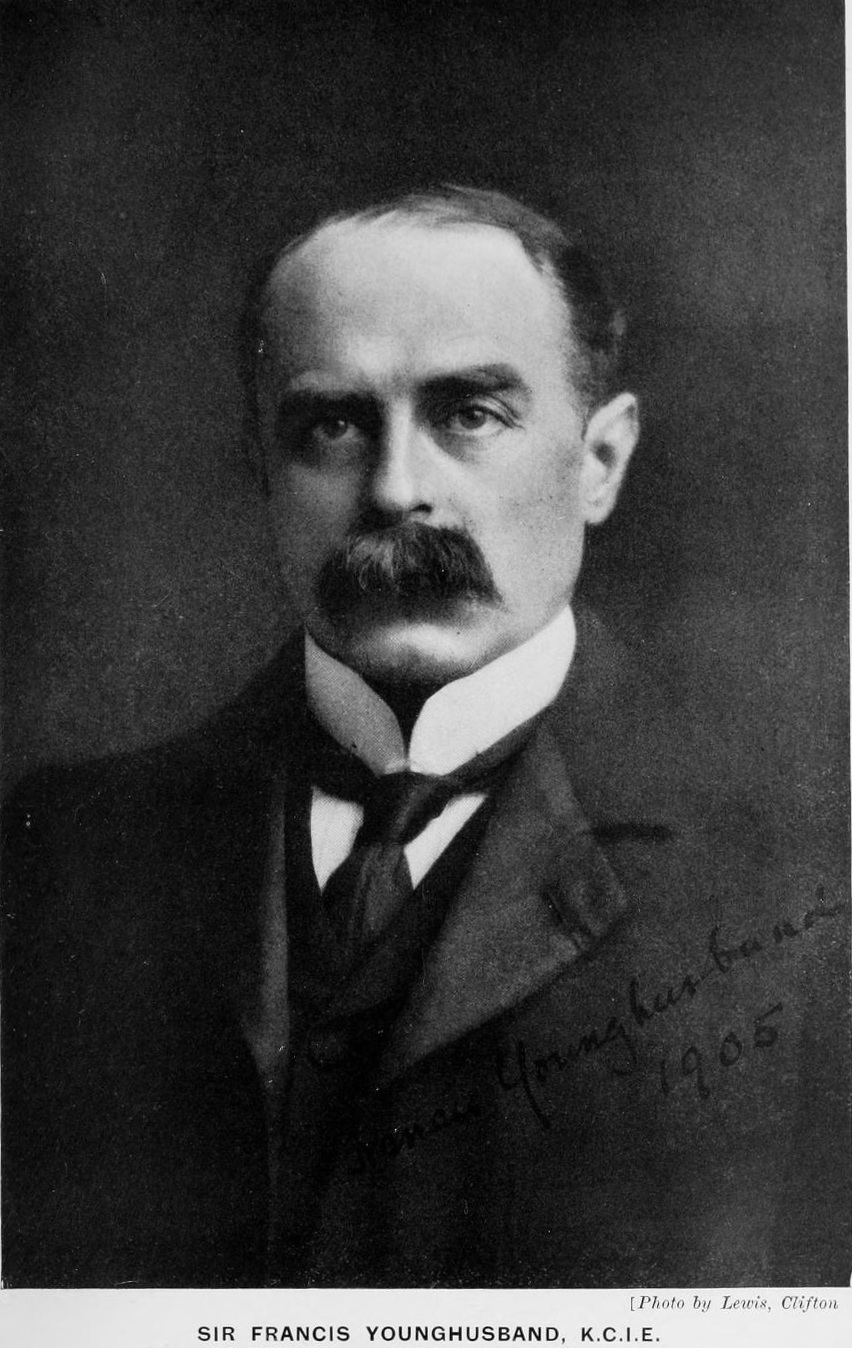
An empty fear. The Russian danger soon proved hollow. By the treaty of 1907, Russia acknowledged British predominance over Tibet, and it was in any case busy in East Asia. Historians therefore see the expedition as driven by imperialist designs more than real danger.
The Shimla conference and the McMahon Line. After China's 1911 revolution, the Dalai Lama declared independence, but China's new government was determined to keep Tibet. The British called a tripartite conference of Britain, China and Tibet at Shimla in 1913-14. It accepted Chinese suzerainty over an inner zone, made the outer zone autonomous, and drew a boundary between Tibet and British India named after the British delegate Henry McMahon.
Nepal, Sikkim, Bhutan and the north-east
Nepal: a trusted buffer. After the Gorkha war and the Treaty of Sagauli (1816), the British handled Nepal with tact, treating its ruler as sovereign and addressing him as 'Your Majesty'. They valued Nepal as a stable buffer between India and Tibet or China. Nepal stayed neutral in 1857, let the British recruit Gorkhas in large numbers and allowed no diplomatic mission other than the British into the country.
Sikkim: the road to Tibet. Small Sikkim mattered because two passes ran through it into Tibet. The British restored its independence from the Gorkhas, declared it a British protectorate in 1861 against the Dalai Lama's wishes, and China recognised British rights there in 1890. Younghusband later marched to Lhasa through Sikkim.
Bhutan: from raids to a treaty. Poor and given to raiding the plains, the Bhutanese once kidnapped the Raja of Cooch Behar, a British protectorate, and Warren Hastings attacked and took a strip of land. After years of repression and reprisal, Bhutan gave full support to the Younghusband expedition. By the Treaty of Punakha, negotiated by Sir Charles Bell, Bhutan kept its sovereignty in internal matters but placed its foreign relations under British control.
The north-east hills. The hill tribes between Bhutan and Burma raided the plains, especially after Assam was incorporated in 1826. The British pacified them with gifts and guaranteed protection, set up a chain of posts up to the watershed, and made Tibet recognise the McMahon Line. The Nagas were largely converted by Baptist missionaries, and Manipur became a protectorate after a chain of killings of British officials that followed a succession dispute after 1886.
Quick revision
- Foreign policy: independent in form after 1858-59, not in reality. Minto's four missions after 1807: Malcolm (Tehran), Elphinstone (Kabul), Seton (Sindh), Metcalfe (Lahore).
- 'Russian peril': Palmerston; Gorchakov memo 1864; Russian Turkestan 1867; Samarkand 1868; Khiva 1873; Pamirs 1893.
- Masterly Inactivity (Liberals, 1863-75) vs Forward Policy (Conservatives; Disraeli 1874 → Second Afghan War, under Lytton, ended under Ripon).
- NW Frontier: closed (Sindh, Baluch) vs open (Punjab, Pathan); Dalhousie's fines, blockades, expeditions = 'butcher and bolt'; 42 expeditions 1849-93.
- Sandeman, Baluchistan, Feb 1877. Durand Line: 12 Nov 1893, Lansdowne.
- Curzon: tribal levies; Lahore darbar 26 April 1902; NWFP; Gulf sheikhs 1903.
- Persia split into British and Russian zones, 1907; Lansdowne first Viceroy to visit the Gulf.
- Tibet: Chinese protection 1728; Hastings's missions 1774, 1783; Younghusband, Lhasa Aug 1904; Russia accepts British predominance 1907.
- Shimla conference 1913-14 → McMahon Line.
- Nepal: Sagauli 1816, 'Your Majesty', neutral 1857. Sikkim protectorate 1861 (China accepts 1890). Bhutan: Treaty of Punakha (Charles Bell). Assam 1826; Nagas and Baptist missions; Manipur protectorate after 1886.