

UKPSC RO / ARO · Module 44 · standard depth · 12 min
Biotechnology in India: institutions, BioE3 and the bioeconomy
What UKPSC RO / ARO asks from this chapter
Syllabus lines this chapter covers:
- Prelims: General Studies (100) and General Aptitude Test (50) · General Science and knowledge of computer operation, as expected of an educated person
- Mains Paper 1: General Studies (objective, 200 questions) · General science and technology: discoveries, IT, biotechnology, solar and space technology, AI, health technology, environmental awareness, cyber crime
1 UKPSC RO / ARO questions in our bank come from this module (Genetics and biotechnology).
Cut to standard depth for UKPSC RO / ARO. 8 deeper paragraphs are in the full chapter.
Start from zero: making things with living cells
For centuries, people have used living things to make products, such as yeast for bread or bacteria for curd. Modern biotechnology does the same thing with far more control. Scientists can now design microbes and cells to make medicines, fuels, enzymes, food proteins and even plastics.
This matters for a country like India in three ways. Biotech can create new industries and jobs, it can replace polluting chemical processes with cleaner biological ones, and it can make medicines and vaccines cheaper at home. The government calls this the bioeconomy, meaning all the economic activity built on biological resources and processes.
In the earlier chapters, we saw the science: genes, genetic engineering, GM crops and medical biotechnology. This chapter looks at the system that turns that science into products in India. It covers the main institutions, the growth of the bioeconomy, the BioE3 policy and the schemes that fund the sector.
The institutions: DBT and BIRAC
Why a separate department. By the 1980s, it was clear that biotechnology would become a major field. India wanted one body to plan research, train scientists and build institutes in it. So the Department of Biotechnology (DBT) was set up under the Ministry of Science and Technology in 1986.
What DBT does. DBT funds research in universities and its own autonomous institutes, sets policy for the sector, and runs national missions. It also hosts the Review Committee on Genetic Manipulation (RCGM), which reviews GM research, and it led big projects like GenomeIndia. In 2026, DBT completed 40 years.
Why BIRAC was needed. Research labs produce ideas, but turning an idea into a product needs money, testing and business skills. Many young scientists had no way to start companies. To fill this gap, DBT set up the Biotechnology Industry Research Assistance Council (BIRAC) in 2012 as a public sector enterprise.
What BIRAC does. BIRAC gives early grants and seed funds to start-ups, supports partnerships between research and industry, and backs a network of 95 bio-incubation centres. It has supported products such as the CAR-T cell therapies and COVID-19 vaccines described in the previous chapter. It also implements the National Biopharma Mission.
The bioeconomy: how big and how fast
From small to large. India's bioeconomy was worth about $10 billion in 2014. By 2024, it had grown to about $165.7 billion, roughly sixteen times larger in ten years. It now makes up about 4.25% of India's GDP.
What it includes. The bioeconomy covers biopharma (medicines and vaccines), bio-agriculture (seeds and biofertilisers), bio-industry (enzymes, biofuels and bio-based chemicals) and bio-services such as research and clinical trials. India is one of the world's leading vaccine makers, which was seen clearly during the COVID-19 pandemic.
The start-up boom. In 2014, India had fewer than 100 biotech start-ups. The number has now crossed 11,000. Incubators, early grants and a growing pool of trained scientists drove this rise.
The targets. The government aims for a $300 billion bioeconomy by 2030 and a $1 trillion bioeconomy by 2047. Reaching these needs much more manufacturing at home, not only research and services.
BioE3: biotechnology for economy, environment and employment
The problem. India has strong biotech research, but much of the actual manufacturing of biological products happens abroad. Many enzymes, specialty chemicals and biologics are imported. At the same time, chemical factories that use oil and high heat add to pollution and emissions.
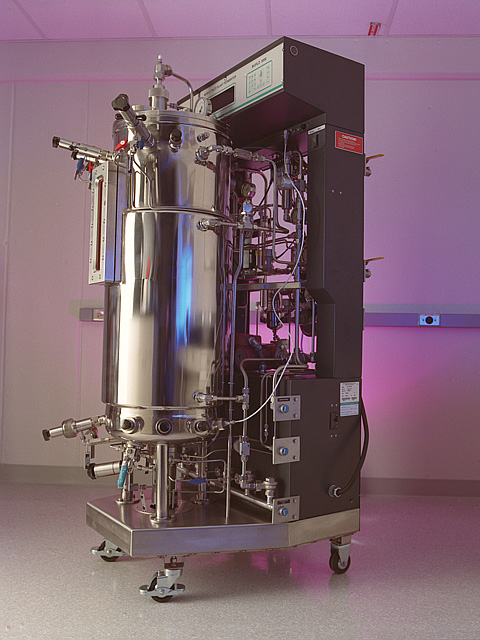
The policy. The BioE3 Policy, short for Biotechnology for Economy, Environment and Employment, was approved by the Union Cabinet on 24 August 2024. Its main aim is high-performance biomanufacturing, which means making products at large scale using engineered microbes and cells. It plans biomanufacturing hubs, Bio-AI hubs that use artificial intelligence for biology, and biofoundries.
The six focus sectors.
- Bio-based chemicals, polymers and enzymes, such as bioplastics that can replace oil-based plastics.
- Smart proteins and functional foods, such as proteins made by fermentation.
- Precision biotherapeutics, such as gene and cell therapies.
- Climate-resilient agriculture, such as crops that tolerate drought or heat.
- Carbon capture and utilisation, using microbes to turn carbon dioxide into useful products.
- Marine and space research, such as products from ocean organisms and biology for space missions.
Why "E3". The three Es show what the policy hopes to achieve together. Biomanufacturing can grow the economy, help the environment by replacing polluting processes, and create employment, especially in smaller cities where new hubs can be built.
Biofoundries and the Bio-RIDE scheme
What a biofoundry is. A biofoundry is a highly automated lab where robots and computers help scientists design, build and test engineered microbes or cells very quickly. It works in a loop of design, build, test and learn, improving each round. This shortens the time from an idea to a working biological "factory" that can make a product.
India's network. India has set up a National Biofoundry Network of six specialised biofoundries and 21 bio-enabler facilities. One of them is at the International Centre for Genetic Engineering and Biotechnology (ICGEB), New Delhi. These shared facilities let start-ups and researchers use costly equipment they could not buy on their own.
The Bio-RIDE scheme. In September 2024, the Cabinet merged DBT's two umbrella schemes into one scheme called Bio-RIDE, short for Biotechnology Research Innovation and Entrepreneurship Development. It has an outlay of ₹9,197 crore for 2021-22 to 2025-26. It has three parts: biotech research and development, industrial and entrepreneurship development, and a new part for biomanufacturing and biofoundry.
Why merging helps. Earlier, research and industry support ran through separate schemes. Putting them together lets money follow an idea from the lab to the start-up to the factory. The new biomanufacturing part directly supports BioE3's goals.
Biopharma: missions for medicines and vaccines
Biologics and biosimilars. Biologics are medicines made from living cells, such as insulin, vaccines and antibodies used in cancer care. A biosimilar is a close copy of a biologic whose patent has expired, much as a generic is a copy of an ordinary chemical drug. Biosimilars can make costly treatments for cancer, diabetes and arthritis much cheaper.
National Biopharma Mission. Launched in May 2017, this mission is led by DBT and implemented by BIRAC. It has a budget of $250 million, half of it from the World Bank. It supports projects on vaccines, biosimilars, medical devices and diagnostics, along with shared facilities for testing and trials.
Mission COVID Suraksha. During the pandemic, DBT ran Mission COVID Suraksha at a total cost of ₹900 crore. It produced four new vaccines on different platforms, including the world's first DNA vaccine for COVID-19 and India's first mRNA vaccine, as explained in the previous chapter.
Biopharma SHAKTI. Announced with the Union Budget 2026-27, Biopharma SHAKTI is a national initiative with an outlay of ₹10,000 crore over five years. It aims to build India's capacity in biologics and biosimilars, so that India can capture a larger share of the global biopharma market.
Challenges and implications
India's biotech story is one of fast growth, but several gaps could slow it down. Recognising these gaps is the key to a good Mains answer. Each gap also points to a solution.
1. Research spending. Biotech research takes many years and often fails before it succeeds. It therefore needs steady public funding and much more private investment.
2. From lab to market. Many ideas stay in labs because testing, scale-up and manufacturing are costly. Biofoundries, incubators and Bio-RIDE's biomanufacturing part aim to close this gap.
3. Regulation. Biotech products pass through several regulators, such as RCGM, GEAC and CDSCO. Clear, fast and science-based approvals help innovators, while strong safety checks protect the public.
4. Skills and data. The sector needs scientists, engineers and technicians trained in both biology and computing. Shared data resources, like the genome data stored at the Indian Biological Data Centre, must be used fairly while protecting privacy.
5. The wider gains. If these gaps are closed, biotech can lower medicine costs, help farmers face climate change, cut pollution and create jobs. That is why BioE3 links the economy, the environment and employment in one policy.
Previous years' questions
This section shows the real past questions on this chapter for the exam you have chosen. Each question is copied word for word from the official paper, with the year and paper, so that you can see how the topic is actually asked.
Questions are being collected from the official UPSC and BPSC papers. They will appear here once each one is checked against the original paper.
Quick revision
- DBT was set up in 1986 (Ministry of S&T). BIRAC was set up in 2012 and backs 95 bio-incubators.
- The bioeconomy grew from $10 bn (2014) to $165.7 bn (2024), about 4.25% of GDP. The targets are $300 bn by 2030 and $1 tn by 2047.
- Biotech start-ups grew from under 100 (2014) to over 11,000.
- BioE3 (Economy, Environment, Employment) was approved on 24 Aug 2024. It covers six sectors, biomanufacturing, Bio-AI hubs and biofoundries.
- The National Biofoundry Network has six biofoundries and 21 bio-enablers. Bio-RIDE has ₹9,197 crore for 2021-22 to 2025-26.
- The National Biopharma Mission (2017) has $250 m, half from the World Bank. Biopharma SHAKTI has ₹10,000 crore over five years.