

UPPSC PCS · Module 40 · Mains depth · 23 min
The Constitution, the courts and the environment: how judges turned principles into law
What UPPSC PCS asks from this chapter
Syllabus lines this chapter covers:
- Prelims: General Studies I · Environment and ecology
UPPSC PCS questions from this module are being sorted into our bank.
Read at full depth: basics, the standard layer and the Mains analysis.
Start from zero: a Constitution that was silent about nature
When India's Constitution came into force in 1950, it said almost nothing about the environment. That was normal for the time. The big worries were poverty, food and building a new nation, and pollution looked like a problem of rich, industrial countries.
That changed in the 1970s. The Stockholm Conference of 1972 put the environment on every country's agenda, and India's own rivers and forests were showing visible damage. Parliament responded by writing the environment into the Constitution itself.
Yet the biggest change came from an unexpected place: the courts. Starting in the 1980s, judges read the right to life broadly, accepted cases filed by public-spirited citizens, and imported global principles such as polluter pays into Indian law. Much of India's environmental law today is judge-made.
This chapter explains the constitutional provisions, the key principles the Supreme Court adopted and the cases that made them law. It also shows why courts stepped in, and the debate about whether they have gone too far.
What the Constitution says: 48A, 51A(g) and the Concurrent List
The 42nd Amendment, 1976. Four years after Stockholm, the 42nd Amendment wrote the environment into the Constitution in three ways. It gave a duty to the State, a duty to the citizen, and a new share of power to the Centre.
Article 48A: the State's duty. Article 48A sits among the Directive Principles of State Policy. It says: "The State shall endeavour to protect and improve the environment and to safeguard the forests and wild life of the country." Directive Principles cannot be enforced in a court by themselves, but courts use them to interpret laws and rights.
Article 51A(g): the citizen's duty. Article 51A lists the Fundamental Duties of citizens. Clause (g) makes it a duty "to protect and improve the natural environment including forests, lakes, rivers and wild life, and to have compassion for living creatures." Duties are also not directly enforceable, but they express the values the Constitution expects of every citizen. A fuller account of the duties is in the chapter on Fundamental Duties.
The Concurrent List: who makes the laws. Before 1976, forests were a State subject. The amendment moved "Forests" (entry 17A) and "Protection of wild animals and birds" (entry 17B) to the Concurrent List, so both Parliament and State legislatures can now make laws on them. Where the two conflict, the central law generally prevails.
Why the shift to the Concurrent List mattered. Forests and wildlife cross state borders, and states under pressure for revenue were clearing forests fast. Concurrent status allowed Parliament to pass national laws, such as the Forest (Conservation) Act of 1980, which made central approval necessary for using forest land for other purposes.
Article 21: the right to life becomes a right to a healthy environment
The problem with duties. Articles 48A and 51A(g) tell the State and citizens what they should do. But a person whose well is poisoned by a factory cannot go to court on a Directive Principle alone. Citizens needed an enforceable right.
How courts found it. Article 21 says that no person shall be deprived of life or personal liberty except according to procedure established by law. From the late 1970s, the Supreme Court began to read "life" as a life with dignity, not mere survival. Life with dignity needs clean air, clean water and a safe environment, so the courts treated environmental harm as a threat to the right to life.
This reading had a powerful effect. Because Article 21 is a Fundamental Right, a citizen can go directly to the Supreme Court under Article 32, or to a High Court under Article 226. Environmental protection moved from a hope to an enforceable claim.

The newest step: a climate right. In M.K. Ranjitsinh v. Union of India (21 March 2024), the case was about protecting the critically endangered Great Indian Bustard from overhead power lines in Rajasthan and Gujarat. The Court had to balance the bird's survival against India's need for solar power. It recognised that "there is a right to be free from the adverse effects of climate change."
Why that judgment matters. It treats climate change not as a distant global issue but as something that affects the rights of each Indian. It also shows the difficulty of green-versus-green choices, where clean energy and wildlife protection pull in different directions.
Polluter pays and precaution become Indian law
The case. In the 1990s, hundreds of tanneries in Tamil Nadu were discharging untreated effluent into the Palar river and onto farmland. Wells turned undrinkable and fields were ruined. A citizens' group, the Vellore Citizens Welfare Forum, went to the Supreme Court.
What the Court decided. In its judgment of 28 August 1996, the Court held that "the precautionary principle and the polluter pays principle have been accepted as part of the law of the land." These principles had appeared in the Rio Declaration of 1992, explained in the chapter on Stockholm, Rio and the SDGs. The Court said they were also part of Indian law, drawing on the Constitution and India's environmental statutes.
What the two principles mean. The polluter pays principle means that the one who causes pollution must bear the cost, not only of compensating victims but also of restoring the damaged environment. The precautionary principle means that the State must anticipate and prevent harm, and lack of full scientific certainty is no excuse for delay.
The burden of proof flips. The most practical consequence is about who must prove what. Under the precautionary principle, it is for the industry or developer to show that its activity is environmentally benign, rather than for the affected villagers to prove harm. This makes it far easier for ordinary people to win environmental cases.
Implications. Industries now plan pollution-control costs into their business, because courts can order them to pay for clean-up. The principles also guide the National Green Tribunal, which is required by its law to apply them.
The public trust doctrine: nature is not for sale
The case. A private company built a motel on the bank of the Beas river near Manali, in Himachal Pradesh. To protect the motel from floods, it changed the course of the river and occupied forest land. The matter reached the Supreme Court as M.C. Mehta v. Kamal Nath.
What the Court decided. In its judgment of 13 December 1996, the Court held that "the public trust doctrine ... is a part of the law of the land." The idea is old, going back to Roman law. Certain resources, such as rivers, the seashore, forests and the air, are so important to everyone that they cannot be owned privately.
What it means. The State is a trustee, and the public is the beneficiary. Like any trustee, the State must protect the property for the beneficiaries. It cannot transfer such resources to private owners for commercial use in a way that harms public use.
Implications. The doctrine gives courts a strong tool against decisions that hand over lakes, beaches or forests to private projects. It also places a positive duty on governments to protect common resources for future generations. Critics say it can make courts, rather than elected governments, the final judges of land use.
Public interest litigation: forests and the Taj
What PIL changed. Normally only a person directly harmed can go to court. From the 1980s, the Supreme Court relaxed this rule. Any public-spirited person could now file a public interest litigation (PIL) on behalf of those who could not, and environmental cases became some of the most important PILs.
The forest case: what counts as a forest? In T.N. Godavarman Thirumulkpad v. Union of India, the Court on 12 December 1996 took up the question of what land the Forest (Conservation) Act protects. It held that "forest" must be understood according to its dictionary meaning, irrespective of the ownership or classification of the land. So any land that is a forest in fact, even if privately owned or not recorded as forest, needs central approval before it is cleared.
The case also became famous for its method. The Court kept it open for years, passing orders on forest matters across the country as a form of continuing supervision. Supporters saw this as the only way to stop illegal felling, while critics said the Court was running forest policy.
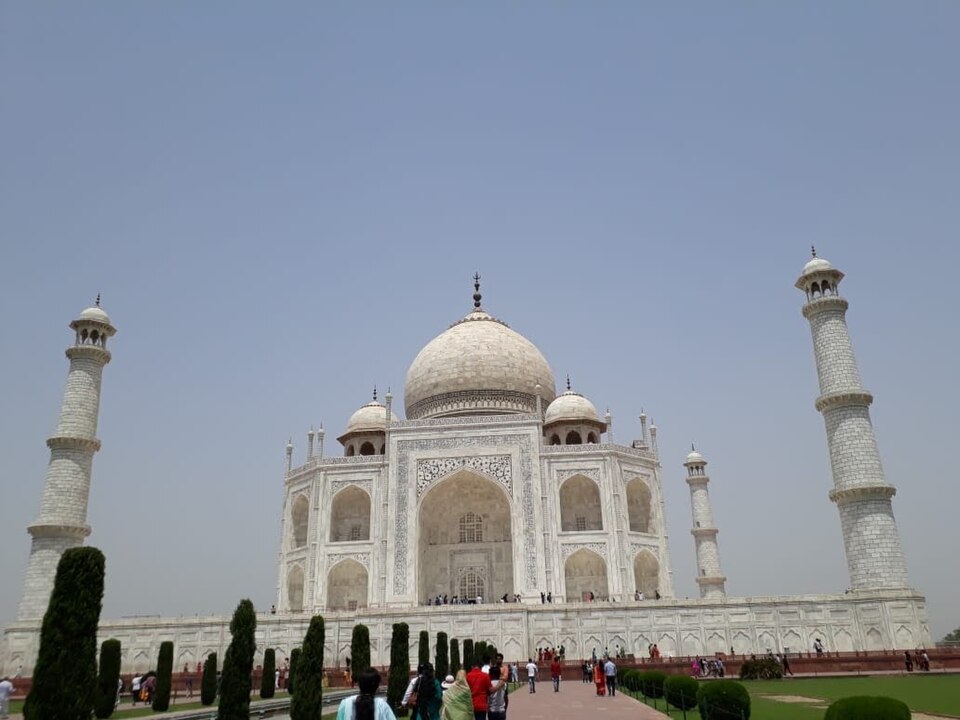
The Taj case. The marble of the Taj Mahal was turning yellow from sulphur dioxide released by foundries, a refinery, glass factories and brick kilns in the surrounding Taj Trapezium Zone. Lawyer M.C. Mehta filed a PIL in 1984. In its judgment of 30 December 1996, the Supreme Court ordered coal-based industries in the zone to switch to natural gas or relocate.
The case showed both the power and the limits of courts. Some orders were resisted by industries and workers who feared job losses, and enforcement took years. Mehta, who also fought cases on the Ganga and on vehicle pollution in Delhi, received the Ramon Magsaysay Award in 1997.
The government side: the ministry and the limits of enforcement
Building a ministry. India's environmental administration grew step by step. A Department of Environment was created on 1 November 1980. In 1985 it became part of a new Ministry of Environment and Forests, renamed the Ministry of Environment, Forest and Climate Change (MoEFCC) in 2014.
The ministry is the nodal body for environmental laws and policies, forests and wildlife, and India's role in international environmental agreements. It works with bodies such as the Central Pollution Control Board and the Forest Survey of India.
Why courts became so active. Laws existed, but enforcement was weak. Many laws act only after damage is done, so they are more punitive than preventive. Different agencies overlap, so a factory refused a pollution permit may still get a municipal licence. Local people have little formal say, and pollution boards often lack money and staff.
The debate about judicial activism. Supporters say that when the executive fails, courts must protect citizens' right to life. Critics reply that judges lack technical expertise, cannot easily weigh economic costs, and may overstep the separation of powers. The creation of the National Green Tribunal in 2010, with expert members, was partly an answer to this debate; it is explained in the chapter on biodiversity law and the green tribunal.
Mains lens: three live debates on courts and the environment
1. Are judges running environmental policy? Much of India's environmental law was made in courtrooms. The Supreme Court read a healthy environment into the right to life, made polluter pays and precaution part of the law of the land in 1996, and ordered industries near the Taj Mahal to switch fuel or move. In the forest case of the same year, it kept monitoring forest matters for years through continuing orders.
Supporters say that courts stepped in because agencies failed to act, and that ordinary people found a quick remedy through public interest litigation. Critics say that judges lack scientific staff and cannot supervise factories and forests forever, and that some orders hurt workers or local people without hearing them. A balanced answer calls judicial activism a necessary corrective, and argues that the lasting fix is stronger regulators, so that courts can return to reviewing rather than managing.
2. Duty of the State or right of the citizen? Article 48A, a Directive Principle, asks the State to protect the environment, and Article 51A(g) makes it a duty of every citizen. Neither can be enforced directly in court. It was Article 21, read widely by judges, that turned these aims into something a citizen could claim.
Some argue that rights are stronger than duties, because a right lets you sue. Others argue that environmental care needs both, because no court can watch every river and forest. In Mains, show the three layers: the State's directive, the citizen's duty and the court-made right, and explain that they work best together.
3. A right against climate change: what will it change? In 2024, in a case about protecting the Great Indian Bustard from power lines, the Supreme Court recognised a right to be free from the adverse effects of climate change. This links climate harm to the right to life and equality. It also creates a tension, because the power lines in that case carried solar electricity, which itself fights climate change.
One view says that this right will push governments to plan for heat, floods and climate refugees. Another view says that it is still vague, and that courts will need to balance it against other green goals, like clean energy. A balanced answer welcomes the right as a new lens for policy, and notes that its real content will grow case by case.
Why it matters: Indian environmental law is unusual because judges shaped so much of it. Mains often asks you to judge that role, so give credit, name the limits and suggest a better division of work between courts and agencies.
Mains lens: two kinds of questions and how to answer them
Type 1: "Discuss the provisions and how courts made them work." Example: "Discuss the constitutional provisions for environmental protection in India. How have courts made them enforceable?"
- Intro: Note that the original Constitution was silent on the environment, and that the 42nd Amendment of 1976 added the key provisions after the Stockholm Conference.
- Body, the text: Explain Article 48A for the State, Article 51A(g) for citizens, and the move of forests and wildlife to the Concurrent List.
- Body, the courts: Show how Article 21 was read to include a healthy environment, and how polluter pays, precaution and public trust became law through cases in 1996.
- Body, the newest step: Add the 2024 recognition of a right against the adverse effects of climate change.
- Conclusion: Conclude that courts turned soft promises into hard rights, and that strong institutions must now carry the load.
Type 2: "Explain the principle with case law." Example: "What is the public trust doctrine? How relevant is it for protecting lakes, rivers and coasts in urban India?"
- Intro: Define the doctrine as the idea that the State holds natural resources in trust for the public and cannot hand them over for private use.
- Body, the case: Explain that the Supreme Court applied it in 1996 when a resort diverted the course of the Beas river.
- Body, the urban link: Show how cities lose lakes, wetlands, floodplains and beaches to buildings, which raises flood risk and destroys public spaces.
- Body, the use: Suggest that the doctrine can guide planning decisions, land-use changes and courts reviewing such projects.
- Conclusion: Conclude that public trust reminds governments that they are guardians of nature, not its owners.
Linking across papers. This chapter feeds GS-II (Constitution, judiciary and federalism), GS-III (environment) and GS-IV (duties and public trust as values). Judicial activism is also a common Essay theme.
Mains practice: six questions, six angles
These are practice questions we have written, not past papers. Past questions for each exam are in this module's PYQ panel.
| Angle | Question | How to approach |
|---|---|---|
| Constitution | Discuss the constitutional provisions for environmental protection in India. How have courts made them enforceable? | Explain 48A, 51A(g) and the Concurrent List entries from 1976. Then show how Article 21 was read to include a healthy environment. |
| Principles | Explain the polluter pays and precautionary principles with reference to Indian case law. | Use Vellore (1996), restoration costs and the shifted burden of proof. Add the NGT's duty to apply them and a current example. |
| Commons | What is the public trust doctrine? How relevant is it for protecting lakes, rivers and coasts in urban India? | Define it through Kamal Nath (1996), with the State as trustee. Apply it to encroached lakes and beaches, and discuss limits. |
| Judiciary | "Judicial activism has been the backbone of environmental governance in India." Critically examine. | Give gains: Godavarman, the Taj, Vellore. Then weigh expertise, enforcement and separation-of-powers concerns, ending with the NGT as a middle path. |
| Climate | Examine the significance of the Supreme Court's recognition of a right against the adverse effects of climate change (2024). | Explain the Great Indian Bustard case and the green-versus-green dilemma. Discuss what the right means for policy and litigation. |
| Federalism | Why were forests and wildlife moved to the Concurrent List? Assess the effect on centre-state relations. | Give the 1976 shift and the reasons. Use the 1980 forest law's central approval as an example, and weigh conservation gains against state autonomy. |
How to use this table: each answer should first explain the what, then give the why from this chapter, and end with a way forward.
Quick revision
- Original Constitution: no direct environment provision; 42nd Amendment (1976) after Stockholm.
- Article 48A (Directive Principle, State): protect and improve environment, safeguard forests and wildlife.
- Article 51A(g) (Fundamental Duty, citizen): protect and improve natural environment incl. forests, lakes, rivers, wildlife; compassion for living creatures.
- Concurrent List: 17A Forests, 17B Protection of wild animals and birds (moved from State List in 1976).
- Article 21 read by courts to include a healthy environment; Ranjitsinh (21 Mar 2024): right to be free from adverse effects of climate change (Great Indian Bustard case).
- Vellore (28 Aug 1996): precautionary + polluter pays part of the law of the land; burden of proof on the developer.
- Kamal Nath (13 Dec 1996): public trust doctrine; State as trustee (Beas river motel).
- Godavarman (12 Dec 1996): "forest" = dictionary meaning, regardless of ownership.
- Taj Trapezium (30 Dec 1996): PIL by M.C. Mehta (filed 1984); coal industries to switch to gas or relocate; Mehta Magsaysay 1997.
- Department of Environment 1980 → MoEF 1985 → MoEFCC 2014.