

UPPSC PCS · Module 40 · Mains depth · 19 min
The Wild Life (Protection) Act and its guardians: schedules, protected areas, the tiger authority and the crime bureau
What UPPSC PCS asks from this chapter
Syllabus lines this chapter covers:
- Prelims: General Studies I · Environment and ecology
UPPSC PCS questions from this module are being sorted into our bank.
Read at full depth: basics, the standard layer and the Mains analysis.
Start from zero: why wildlife needed a national law
In the 1960s, India's wildlife was disappearing fast. Tigers were shot for sport and their skins sold, and deer, birds and reptiles were hunted for meat, feathers and skins. Each state had its own rules, many of them weak, and hunting licences were easy to get.
The cheetah had already vanished from India, and the tiger looked likely to follow. Experts warned that without a single strong law, more species would be lost. In 1972, Parliament passed the Wild Life (Protection) Act, which remains the backbone of wildlife protection in India.
Over the years the Act has been amended many times. New bodies were created under it, such as the National Tiger Conservation Authority and the Wildlife Crime Control Bureau. In 2022 it was reshaped to match India's duties under CITES, the treaty on wildlife trade.
This chapter explains what the Act does, how its schedules work, what kinds of protected areas it creates, and why its special bodies were set up. It complements the chapter on protected areas and in-situ conservation, which covers the reserves themselves.
What the 1972 Act does
A national framework. The Act gave India, for the first time, a single law for wildlife across the country. Wildlife was then a state subject, so the law needed the support of the states. In 1976, as explained in the chapter on the Constitution and the courts, wildlife protection moved to the Concurrent List.
Its main parts. The Act provides for wildlife advisory boards, regulation of hunting of wild animals and birds, and the setting up of sanctuaries and national parks. It regulates trade in wild animals, animal products and trophies. It also lays down penalties for breaking the law.
Who enforces it. The Act is administered by Chief Wildlife Wardens, wildlife wardens and their staff in each state. Courts impose the penalties, and later amendments created special national bodies for tigers and for wildlife crime.
How it grew. An early amendment in 1982 allowed the capture and transport of wild animals for the scientific management of their populations. Later amendments added new kinds of protected areas, the tiger authority, the crime bureau and, in 2022, a full chapter on CITES.
Schedules: how the law ranks species, and the 2022 reform
What a schedule is. The Act protects species by listing them in schedules. The higher the level of protection, the stricter the rules and penalties. A species in the top schedule cannot be hunted at all, while others had lighter protection.
The old system. Before 2022, there were six schedules: four for specially protected animals at different levels, one for specially protected plants, and one for vermin. Vermin were species considered pests, such as some rats and crows, which could be hunted. Over the years, the many schedules had become confusing and hard to apply.
What the 2022 amendment did. The Act was amended in December 2022. The amendment reduced the schedules from six to four. It removed the schedule for vermin species, and it inserted a new schedule for specimens listed in the CITES appendices.
Why the CITES link matters. India joined CITES decades ago, but the Act had no full set of rules to carry it out. The amendment added provisions to regulate trade in CITES-listed species, and rules were framed under Section 49M of the amended Act. Owners of exotic animals listed in Schedule IV, such as foreign parrots or reptiles kept as pets, had to declare them, which helps stop illegal trade.
Implications. A simpler list makes enforcement easier for officers and courts. Removing the vermin category means a species can no longer be declared open for hunting through a schedule. At the same time, critics worried about the power to declare species as vermin for limited areas and periods, which remains with the government.
Four kinds of protected areas
Why different kinds. A single type of protected area does not fit every place. Some forests must be kept free of human use, while in others, people live and depend on the land. The Act therefore offers four kinds, with different levels of restriction.
National parks and sanctuaries. National parks have the strictest protection, and the rights of people inside are not allowed to continue. Wildlife sanctuaries also protect wildlife, but some activities and rights can be permitted. These are the oldest and most common types.
Conservation reserves and community reserves. These newer categories involve people. A conservation reserve is usually declared on government land next to existing protected areas, to act as a buffer or corridor. A community reserve is declared on community or private land where the local people volunteer to conserve wildlife.
How many. On 27 November 2023, India had 115 conservation reserves and 220 community reserves, alongside its national parks and sanctuaries. The full numbers and the core-buffer idea are in the chapter on protected areas.
The National Tiger Conservation Authority
Why a tiger authority. Project Tiger began in 1973 as a central scheme. But in the early 2000s, tigers disappeared entirely from some reserves because of poaching, and it became clear that a scheme alone lacked legal teeth. Parliament amended the Act in 2006 to create a statutory authority for tigers.
What it is. The National Tiger Conservation Authority (NTCA) is constituted under Section 38L(1) of the Wild Life (Protection) Act, as amended in 2006. Its chairperson is the Union Minister in charge of environment and forests. Being statutory, its directions have the force of law.
What it does. The NTCA approves the tiger conservation plans of states and guides the management of tiger reserves, which have an undisturbed core and a multiple-use buffer. It runs the national tiger count every four years and links tiger protection with the welfare of local people. India had 58 tiger reserves by July 2026.

The 2022 tiger count. The All India Tiger Estimation of 2022 counted a minimum of 3,167 tigers in the areas covered by camera traps. Using statistical methods for the rest, it estimated an average of 3,682, with an upper limit of 3,925. India is home to most of the world's wild tigers, which makes its tiger law globally important.
The Wildlife Crime Control Bureau
Why a crime bureau. Poaching today is not just a villager setting a trap. Tiger bones, pangolin scales, rhino horn and turtle shells are moved by organised networks across states and borders. State forest staff alone cannot track such gangs.
What it is. The Wildlife Crime Control Bureau (WCCB) was constituted on 6 June 2007 by an amendment to the Wild Life (Protection) Act, under Section 38Y. It is a statutory body under the environment ministry. It brings together officers from the police, forest, customs and other enforcement agencies.
What it does. The bureau collects intelligence on organised wildlife crime and shares it with state and central agencies. It helps coordinate raids, builds a database of wildlife criminals and trains enforcement staff. It also assists customs in checking illegal wildlife trade at ports and borders, linking with India's CITES duties.
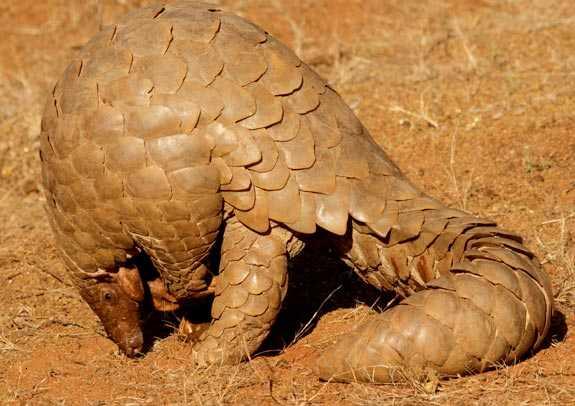
Implications. Treating wildlife crime like other organised crime, with intelligence and coordination, has helped in major seizures. Yet the demand for wildlife products abroad and on online markets keeps the trade alive, so enforcement must be matched by awareness and international cooperation.
Mains lens: three live debates on wildlife law
1. Fortress or partnership? The 1972 Act was built on a simple idea: protect wildlife by keeping people out of parks and sanctuaries and punishing hunting and trade. This worked for many species, and the tiger count of 2022, with a minimum of 3,167 animals counted on camera, is often cited as proof. But it also meant that villagers living inside or next to protected areas lost access to grazing, firewood and forest produce.
Critics call this fortress conservation, and say that people who see a park only as a loss will not help protect it. Supporters reply that some core areas must stay free of human pressure, or the animals will not survive. The law itself has moved towards a middle path by adding conservation reserves and community reserves, where people and the government manage land together.
2. More animals, more conflict: how to share space? Rising tiger and elephant numbers are a conservation success. Yet animals do not stay inside park borders, and they raid crops, kill cattle and sometimes kill people. Each such event can turn a village against conservation.
One side calls for capturing or culling animals that repeatedly cause harm. The other side argues for corridors, early-warning systems, quick and fair compensation, crop insurance and fencing that guides animals rather than traps them. A balanced Mains answer combines prevention, fast compensation and community involvement, and treats conflict as a land-use problem rather than only a wildlife problem.
3. Is a stronger law enough to stop wildlife crime? Poaching for skins, bones, ivory and live pets is often run by organised networks that cross state and national borders. India created a central Wildlife Crime Control Bureau in 2007, and the 2022 amendment brought CITES-listed species, including declared exotic pets, under the Act. Penalties have also been raised over the years.
Critics say that conviction rates stay low because forest staff lack training in investigation and cases take years in court. Supporters say that the new structure finally treats wildlife crime as organised crime, with intelligence sharing and border cooperation. A balanced view says that law, intelligence, trained staff, fast courts and cooperation with customs and other countries must work together.
Why it matters: Wildlife law is a story of moving from punishment alone to partnership plus punishment. Mains rewards answers that see both the animal and the person living beside it.
Mains lens: two kinds of questions and how to answer them
Type 1: "Examine the changes and their significance" (law reform). Example: "Examine the key changes made by the 2022 amendment to the Wild Life (Protection) Act and their significance."
- Intro: Note that the 1972 Act is India's main wildlife law, and that it was amended in December 2022.
- Body, the changes: Explain that the schedules were cut from six to four, that the vermin schedule was removed and that a new schedule now covers CITES-listed specimens.
- Body, why they matter: Show that fewer schedules make the law simpler, and that bringing CITES into the Act lets India enforce the treaty directly at home.
- Body, the concerns: Point out that removing the vermin schedule raises the question of how the government will handle animals that damage crops.
- Conclusion: Conclude that the amendment modernises the law, and that its success will be judged by enforcement and by how conflict is managed.
Type 2: "Why was a new institution needed?" Example: "Why did India need a statutory tiger authority when Project Tiger already existed?"
- Intro: Explain that Project Tiger was an administrative scheme, while the NTCA was created by law through the 2006 amendment to the Act.
- Body, the reason: Show that a scheme can be changed by an order, while a statutory body has legal powers, a fixed structure and a duty to report.
- Body, what it does: Describe how it guides tiger reserves, approves plans and runs the national tiger estimation.
- Body, the record: Add that India had 58 tiger reserves by July 2026, and that the 2022 estimate put the average count at 3,682.
- Conclusion: Conclude that a law-backed body gave tiger conservation stability, and that the next challenge is corridors and conflict outside reserves.
Linking across papers. This chapter feeds GS-III (conservation and internal security through organised crime) and GS-II (statutory bodies and tribal welfare). Human-wildlife conflict also fits GS-I questions on land use.
Mains practice: six questions, six angles
These are practice questions we have written, not past papers. Past questions for each exam are in this module's PYQ panel.
| Angle | Question | How to approach |
|---|---|---|
| Law reform | Examine the key changes made by the 2022 amendment to the Wild Life (Protection) Act and their significance. | Explain six to four schedules, removal of vermin and the CITES schedule. Discuss exotic pet declarations and remaining concerns. |
| Institutions | Why did India need a statutory tiger authority when Project Tiger already existed? | Contrast a scheme with a statutory body, citing tiger losses in the early 2000s. Use the 2022 count and reserve numbers to assess results. |
| Crime | Wildlife crime is organised crime. How has India responded, and what more is needed? | Explain the WCCB's intelligence role and links with customs. Add demand reduction, online trade and international cooperation. |
| People | How do conservation and community reserves change the relationship between people and protected areas? | Contrast national parks with community reserves on private or community land. Use the 2023 numbers and argue for participation. |
| Conflict | Growing tiger and elephant numbers bring rising human-wildlife conflict. Suggest a balanced policy. | Explain causes such as habitat loss and corridors. Suggest compensation, early warning, corridors and community involvement. |
| Trade | How does the Wild Life (Protection) Act now give effect to CITES in India? | Explain the CITES schedule, Section 49M rules and declarations of exotic species. Link to the WCCB and customs checks. |
How to use this table: each answer should first explain the what, then give the why from this chapter, and end with a way forward.
Quick revision
- Wild Life (Protection) Act 1972: advisory boards, hunting rules, sanctuaries and national parks, trade control, penalties; wardens enforce; 1982 amendment allowed capture for scientific management.
- 2022 amendment (Dec 2022): schedules 6 → 4; vermin schedule removed; CITES schedule added; Section 49M rules; Schedule IV exotic animals declared.
- Protected areas: national park (no rights), sanctuary (some rights), conservation reserve (115), community reserve (220) as of 27 Nov 2023.
- NTCA: statutory, Section 38L(1), 2006 amendment; chaired by Union Environment Minister; 58 tiger reserves (July 2026).
- Tiger count 2022: minimum 3,167, average 3,682, upper 3,925.
- WCCB: 6 June 2007, Section 38Y; organised wildlife crime, intelligence, customs.