

UPSC IFoS · Module 16 · standard depth · 14 min
Instruments, folk and devotional music, and the modern music scene
What UPSC IFoS asks from this chapter
Syllabus lines this chapter covers:
- Prelims Paper I: General Studies · History of India and Indian National Movement.
UPSC IFoS questions from this module are being sorted into our bank.
Cut to standard depth for UPSC IFoS. 5 deeper paragraphs are in the full chapter.
Start from zero: music beyond the concert hall
In the last three chapters, you met classical music: its grammar in the foundations chapter, and its two systems in the Hindustani chapter and the Carnatic chapter. But most Indians first meet music somewhere else. It may be a wedding song, a bhajan in a temple, a boatman's song on a river or a drum at a harvest festival.
Five streams. Indian music is usually divided into five streams: classical, tribal, folk, devotional and popular. These are not sealed boxes. A tune can begin as a village song, enter a temple as a bhajan and end up on a classical stage as a raga.
Why this chapter matters. Exams ask about instruments, folk forms of particular states, devotional traditions and the bodies that promote music. These questions test whether you see music as part of people's lives, not just as an art of experts. This chapter gives you that full picture.
What this chapter covers. We begin with the instruments and how they are grouped. Then come folk music by region, devotional music, mourning songs and music on the UNESCO list. We end with how music reached the modern public through schools, institutions and recordings.
The instruments: three families
A very old story. Instruments are as old as Indian music itself. Vedic texts already mention the veena, flutes, drums and cymbals. Samudragupta's coins show the king playing the veena, which tells us how much music was honoured, as you saw in the foundations chapter.
Stringed instruments. In stringed instruments, a vibrating string makes the sound. The sitar, sarod, santoor and sarangi belong to Hindustani music, while the veena is the classic instrument of Carnatic music. The sitar and sarod are plucked, the sarangi is bowed and the santoor is struck with small hammers.
Wind instruments. In wind instruments, the player's breath sets air vibrating inside a tube. The flute (bansuri) is found in both systems. The shehnai of the north and the nadaswaram of the south are double-reed pipes, long linked with weddings and temple rituals.
Percussion: the tala-givers. Drums and cymbals keep the tala. The pakhawaj and tabla belong to Hindustani music, and the mridangam and ghatam to Carnatic music. Metal instruments such as the jhanjh and manjira also keep time, especially in devotional and folk music.
One language of rhythm. Drummers speak syllables called bols, such as theka, tihai and palta. Interestingly, tabla players of the north and mridang players of the south use the same vocabulary. This shows again how the two systems share one grammar.
| Family | How sound is made | Hindustani examples | Carnatic examples |
|---|---|---|---|
| Stringed | Vibrating string, plucked, bowed or struck | Sitar, sarod, santoor, sarangi | Veena; violin adopted |
| Wind | Breath vibrates air in a tube | Bansuri, shehnai | Flute, nadaswaram; clarinet adopted |
| Percussion | Struck skin, clay or metal | Tabla, pakhawaj, manjira | Mridangam, ghatam, morsing |
Masters of the instruments
From accompaniment to solo. For a long time, instruments mainly accompanied singers. In the 20th century, great instrumentalists made solo recitals as popular as vocal concerts. Some of them also carried Indian music to audiences around the world.
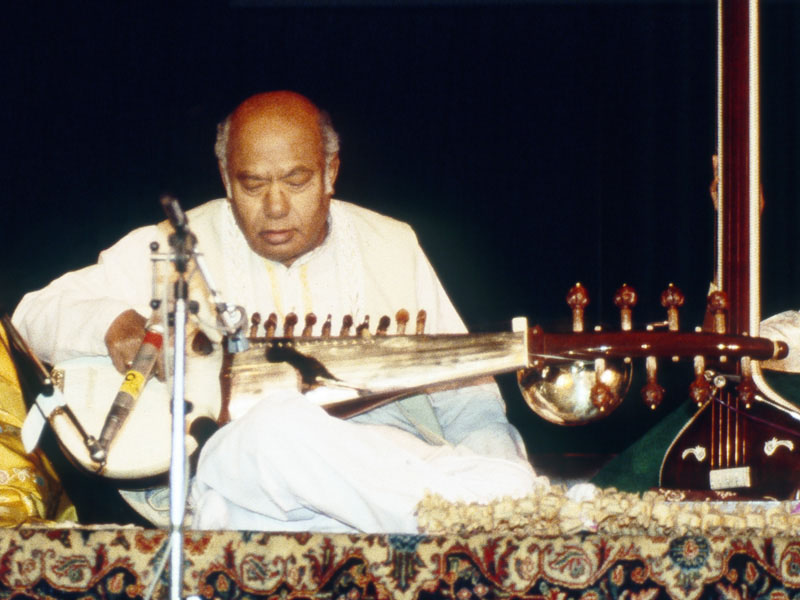
The Maihar tradition. Ustad Alauddin Khan of Maihar trained a remarkable group of students, as you read in the Hindustani chapter. Ravi Shankar became the world's best-known sitar player. Ali Akbar Khan, his son, made the sarod famous, and both set up teaching institutions abroad.
Other masters. Amjad Ali Khan is a celebrated sarod player.
Carnatic masters. In the Carnatic world, T. R. Mahalingam was a master of the flute and S. Balachander of the veena.
Western instruments, Indian voice. Under British rule, Indian musicians adapted some Western instruments to their own music. The violin became central to Carnatic concerts, and the clarinet too was played in Carnatic style. This shows that Indian music has absorbed new tools without losing its grammar.
Folk music: songs of work, seasons and stories
What makes music folk. Folk music is made by ordinary people for their own lives. It has no written rulebook; it passes from mouth to ear, from parents to children. Its songs follow the work, the seasons and the festivals of a region.
Songs of the land and river. Mand is a well-known folk style of Rajasthan. Bhatiali is the song of the boatmen of Bengal, slow and longing like the river itself. Ragini is a folk form of Haryana, and Kashmir has its own folk songs on old tales.
Pandavani. Pandavani of Chhattisgarh is narrative singing of the Mahabharata. A lead singer, holding an ektara or tambura, tells and acts out the story of the Pandavas while a chorus supports. You met it as a folk performance in the folk dances chapter.
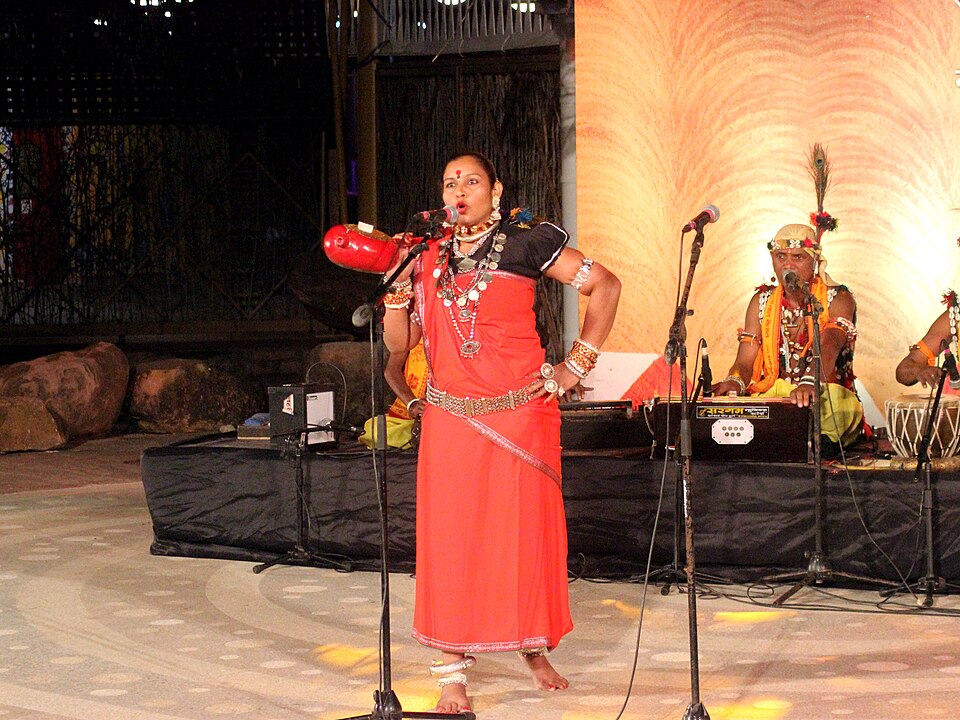
Seasons and festivals. Many folk songs belong to a season. Songs such as chaiti, kajri and rasiya belong to the seasons and festivals of north India. Harvest festivals such as Bihu and Lohri bring their own songs and drums.
Folk into classical. Folk music is not a "lower" form; it is a source. Ragas such as Khamaj, Kafi, Piloo, Maand and Sarang came from popular music. Today classical singers also sing chaiti, kajri and rasiya, and thumri itself grew from the folk songs of eastern Uttar Pradesh and Bihar.
| Folk form | Region | What it is |
|---|---|---|
| Mand | Rajasthan | Folk song style; also became a raga (Maand) |
| Bhatiali | Bengal | Boatmen's songs |
| Ragini | Haryana | Folk song form |
| Pandavani | Chhattisgarh | Mahabharata narrative singing |
| Chaiti, Kajri, Rasiya | North India | Seasonal and festival songs, now also on classical stage |
| Kalbelia songs | Rajasthan | Songs and dance of a former snake-handling community |
Devotional music: singing to God
Why devotion needed song. In Indian traditions, music was seen as a way of communicating with God. The Bhakti and Sufi saints taught that God could be reached through love rather than ritual. Song was the easiest way for ordinary people to share in that love, whatever their caste or language.
Bhajan and kirtan. Bhajans and kirtans spread with the Bhakti saints. Kabir, Mirabai, Surdas, Tulsidas, Chandidas and Vidyapati gave the people songs that are still sung. Their songs also enriched Hindustani music, as you will read in the medieval literature chapter.
Regional devotional forms. Each region has its own form. The abhang is the devotional song of the saints of Maharashtra, the shabad is sung in the Sikh tradition, and the borgeet belongs to the Vaishnava tradition of Assam. In most such songs, the saint-poet's name appears in the last line, like a signature.
Shabad and the Adi Granth. The hymns of the Adi Granth, the Sikh scripture, are arranged under ragas. This means that a scripture itself is organised by music. It shows how deeply music and devotion are woven together in India.
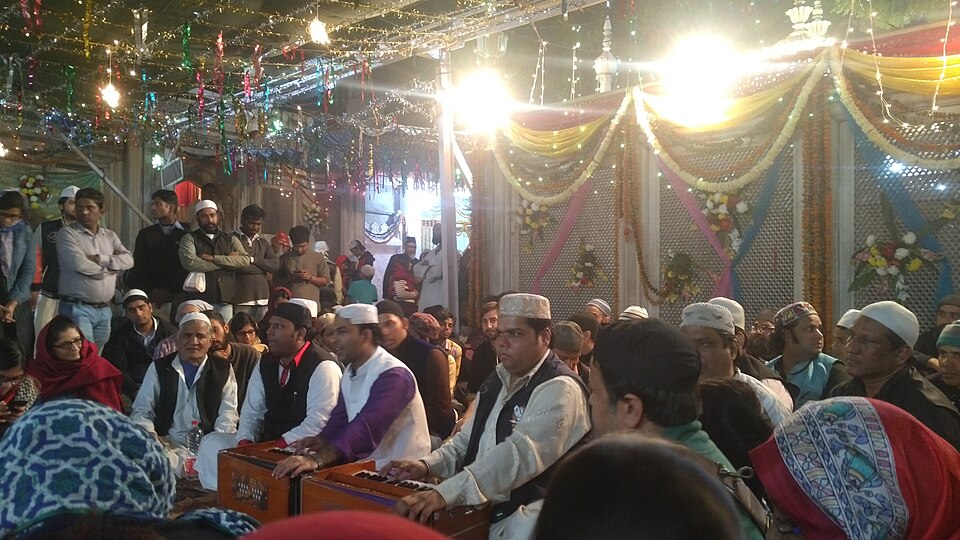
Qawwali and Sufi music. In the khanqahs (hospices) of the Sufis, qawwalis were sung to bring listeners closer to God. Tradition links Amir Khusrau, a disciple of Nizamuddin Auliya, with the qawwali. Sufi and Bhakti music crossed religious lines and became a shared heritage, as you will see in the religious traditions chapter.
Songs of mourning and music on the world list
Mourning as performance. Not all music is joyful. In many communities, grief is expressed through song. These performances help a community remember and share its sorrow together.
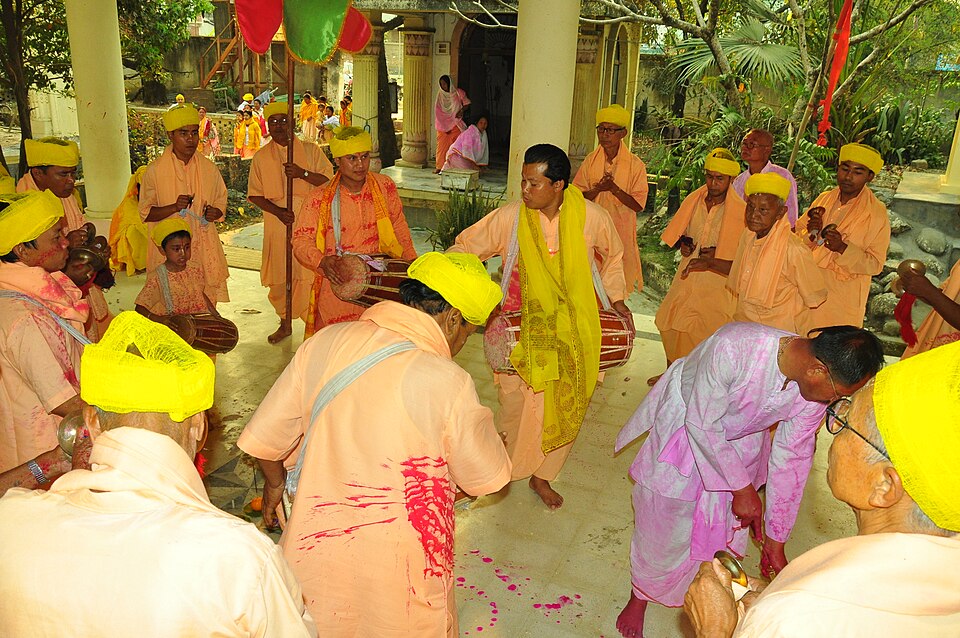
Marsiya and soz-khwani. The marsiya is an elegy on the martyrdom of Imam Husain at Karbala. In India, it first developed in the Deccan and later spread north. Soz-khwani refers to the mournful songs sung during Muharram, and singing in the majlis (mourning gathering) is a special devotional practice.
Jari songs. In Assam and Bengal, Jari songs are sung to mourn the tragedy of Karbala. They show how a story from West Asia entered the folk music of eastern India. This is one of many examples of cultural blending in Indian music.
Music on UNESCO's list. Several Indian music traditions are on UNESCO's list of Intangible Cultural Heritage. These include the Tradition of Vedic chanting (2008), Kalbelia folk songs and dances of Rajasthan (2010), Buddhist chanting of Ladakh (2012) and Sankirtana of Manipur (2013). You will read the full list in the intangible heritage chapter.
Why the listing matters. For Vedic chanting, only a handful of the old recitation branches survive, and some schools are under threat. Listing such traditions brings attention and support for passing them on. It reminds us that music lives only as long as people keep performing and teaching it.
From guru's courtyard to public stage: music today
The old way. For centuries, music was learnt in the guru-shishya way, by living with a teacher for years. Concerts were held in temples, courts and the homes of patrons, before a small, privileged audience. This kept traditions pure but also kept them closed.
Music schools. Around 1900, Vishnu Digambar Paluskar opened the Gandharva Mahavidyalaya and taught music to the public, as you read in the Hindustani chapter. The Prayag Sangeet Samiti has trained students for decades. Indira Kala Sangeet Vishwavidyalaya at Khairagarh in Chhattisgarh is a university devoted to music and the arts.
The Sangeet Natak Akademi. After Independence, the government set up the Sangeet Natak Akademi in 1953 as India's apex body for music, dance and drama. It is an autonomous body under the Ministry of Culture. Its awards are the highest national honour for practising artists, as you will see in the institutions chapter.
Taking music to the young. SPIC MACAY brings classical concerts to schools and colleges, so that students hear great artists live. The Indian Council for Cultural Relations (ICCR) sends Indian artists abroad. Together they widen the audience far beyond the old circle of connoisseurs.
New technology. Recordings and later cassettes replaced purely oral learning, so a student could listen to a master again and again. Stage orchestras and public concerts became common. Today a performance once heard by a few can be watched across the country.
Mains lens: tradition and change. A good answer notes both sides. Institutions and recordings made music democratic and open to all, but they also weakened the long, intimate guru-shishya bond. The challenge is to keep the depth of the old training while welcoming the wider public.
Quick revision
- Five streams: classical, tribal, folk, devotional, popular; constant borrowing.
- Instruments: stringed (sitar, sarod, santoor, sarangi, veena), wind (flute, shehnai, nadaswaram), percussion (tabla, pakhawaj, mridangam, ghatam; jhanjh, manjira). Same bols for tabla and mridang.
- Masters: Ravi Shankar (sitar), Ali Akbar Khan and Amjad Ali Khan (sarod), T.R. Mahalingam (flute), S. Balachander (veena). Violin and clarinet adopted.
- Folk: Mand (Rajasthan), Bhatiali (Bengal boatmen), Ragini (Haryana), Pandavani (Chhattisgarh, Mahabharata), chaiti, kajri, rasiya (north India). Ragas from folk: Khamaj, Kafi, Piloo, Maand, Sarang.
- Devotional: bhajan, kirtan, abhang (Maharashtra), shabad (Sikh; Adi Granth in ragas), borgeet (Assam); saint's name in last line; qawwali in Sufi khanqahs.
- Mourning: marsiya (Karbala; Deccan first), soz-khwani (Muharram), Jari (Assam, Bengal).
- UNESCO ICH: Vedic chanting 2008, Kalbelia 2010, Buddhist chanting of Ladakh 2012, Sankirtana 2013.
- Institutions: Sangeet Natak Akademi (1953, Ministry of Culture), Gandharva Mahavidyalaya, Prayag Sangeet Samiti, Indira Kala Sangeet Vishwavidyalaya Khairagarh, SPIC MACAY, ICCR.