Prelims Paper I: General Studies · History of India and Indian National Movement.
Main: General Knowledge · The paper will also include questions on Indian Polity including the political system and the Constitution of India, History of India and Geography of a nature which the candidate should be able to answer without special study.
UPSC IFoS questions from this module are being sorted into our bank.
Cut to standard depth for UPSC IFoS. 12 deeper paragraphs are in the full chapter.
Start from zero: why new faiths in the sixth century BC?
Imagine living in Rajagriha or Sravasti around 550 BC. The city is new and noisy, merchants grow rich, kings fight wars, and beggars sleep at the gates. Yet the religion you inherited asks for long, costly sacrifices that only the rich can pay for, run by priests who claim to be the highest by birth.
Many people felt that this old religion no longer answered their questions. Why is there suffering? Does a sacrifice really wash away sin?
Can a merchant or a farmer find salvation without a priest? In the chapter on Mahajanapadas we met the world that raised these questions.
Out of this unease came dozens of new teachers and sects. Two of them, led by Gautama Buddha and Vardhamana Mahavira, grew into lasting religions. This chapter tells why the new faiths arose and follows Buddhism; the next chapter covers Jainism and the other sects.
Why study this? Buddhism shaped Indian art, kingship, education and ideas of equality, and it spread across Asia. Exams test its teachings, councils and schools in detail, and Mains asks why it rose and why it attracted so many.
Buddhism at a glance
Theme
Key facts
Founder
Siddhartha Gautama of the Sakya clan; c. 566-486 BC (disputed)
Four places
Lumbini (birth), Bodh Gaya (enlightenment), Sarnath (first sermon), Kusinagara (death)
Core teaching
Four Noble Truths; Eightfold Path; Middle Path
Goal
Nirvana: end of desire and of rebirth
Canon
Tripitaka: Sutta, Vinaya, Abhidhamma; in Pali
Order
Sangha of monks and nuns, open to all castes
Councils
Rajagriha, Vaisali, Pataliputra, Kashmir
Schools
Sthaviravada and Mahasanghika; later Hinayana and Mahayana
Remember the pattern. Buddhism grew from a person (the Buddha) to a community (the sangha) to a canon (the Pitakas) and then to schools that disagreed. Most exam questions sit at one of these four steps.
The ferment: why people questioned the old order
Ritual had become a burden. Vedic sacrifices had grown long, elaborate and expensive, affordable only to the high and rich. As communities broke up, fewer people took part, and for many the rites became empty ceremonies. Gods born of a pastoral and farming world, like the rain god and the fire god, meant less to people living in towns.
Why people questioned the old order
Priests at the top. The growing weight of sacrifice made the brahmanas dominant. As both priests and teachers, with a monopoly over sacred rites, they claimed the highest place in a society divided into four varnas. Others were placed below them by birth alone.
New power, old rank. Meanwhile kshatriyas in monarchies and ganasanghas held more political power than ever, and merchants and rich gahapatis held new wealth. These groups disliked a rank fixed by heredity. Teachings that did not tie status to birth naturally attracted them, which is why both the Buddha and Mahavira, themselves kshatriyas, drew kings, merchants and householders.
A divided brahmanism. Even inside brahmanism there was a split. The Upanishads replaced ritual with knowledge, devotion and moral conduct, and turned towards asceticism. So the questioning was not only from outside.
The sramanas. Parallel to this ran a much older ascetic tradition. In the sixth century BC it took the shape of organised groups of sramanas or parivrajakas, men who left society, lived on alms, practised penance and wandered. They rejected the Vedas and the authority of brahmanas, and mocked complex rituals as a way for priests to earn fees.
What the sramanas believed. Most saw the universe as a natural thing, uncreated and run by natural laws, not by gods. Most believed in rebirth and thought life was largely suffering, so the aim was not a better rebirth but no rebirth at all. The way out lay in moral conduct and personal effort, not in rituals run by priests.
A crowded field of ideas. Debate and teaching were central, and audiences gathered in halls called kutuhala-salas, 'places that arouse curiosity'. Pali texts refer to 62 doctrinal views before the Buddha, and Jaina texts to 363 sects. Teachers like Makkhali Gosala and Ajita Kesakambalin had already attacked Vedic religion before the Buddha and Mahavira.
Why the Buddha and Mahavira lasted. Many teachers criticised the old religion. The Buddha and Mahavira went further by building an alternative religious order, with rules, communities and a lay following. That organisation is why their faiths outlived most rivals.
The life of the Buddha
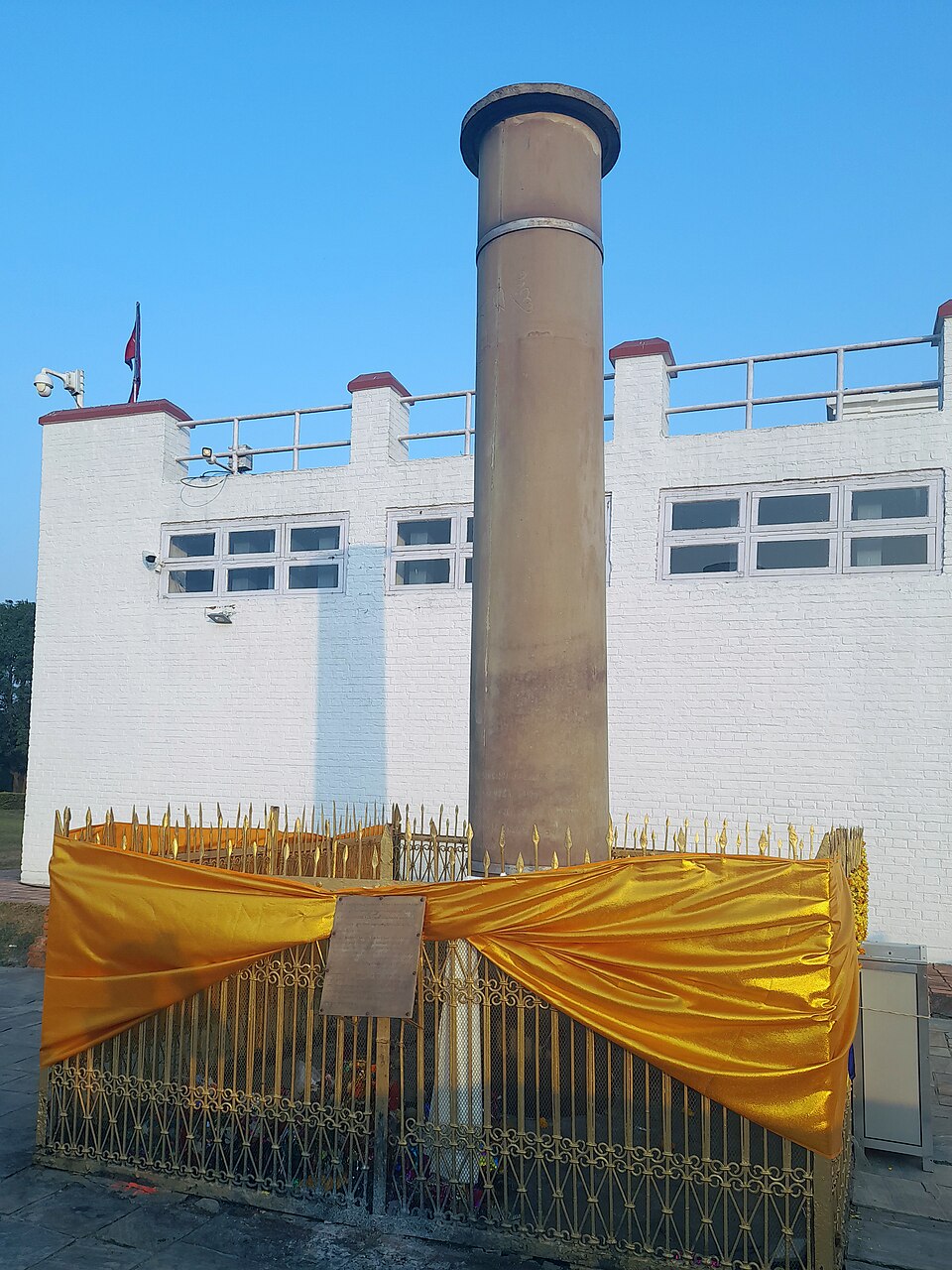
Birth and family. Buddhism was founded by Gautama Buddha, named Siddhartha by his parents. His father Suddhodana was chief of the Sakya clan, a ganasangha, and his mother Maya was a princess of the Koliya clan. He was born in the Lumbini grove (modern Rummindei) in the Nepal Tarai, a fact known from an inscribed pillar of Ashoka.
The Buddha's life on the map
When did he live? The Buddha's dates are disputed. Most scholars place his birth around 566 BC and his death around 486 BC, at the age of eighty. Treat these as approximate.
The life of the Buddha
The four sights. Tradition says the young prince was deeply moved by four sights: an old man, a sick man, a dead body and an ascetic. The misery of human life weighed on him. At 29 he left home, wife and child to seek an answer.
Six years of searching. As a wanderer he learnt meditation and Upanishadic teaching from the sage Alara Kalama, but it did not bring final release. He then tried severe austerities and self-torture with a group of ascetics. In the end he gave these up as well.
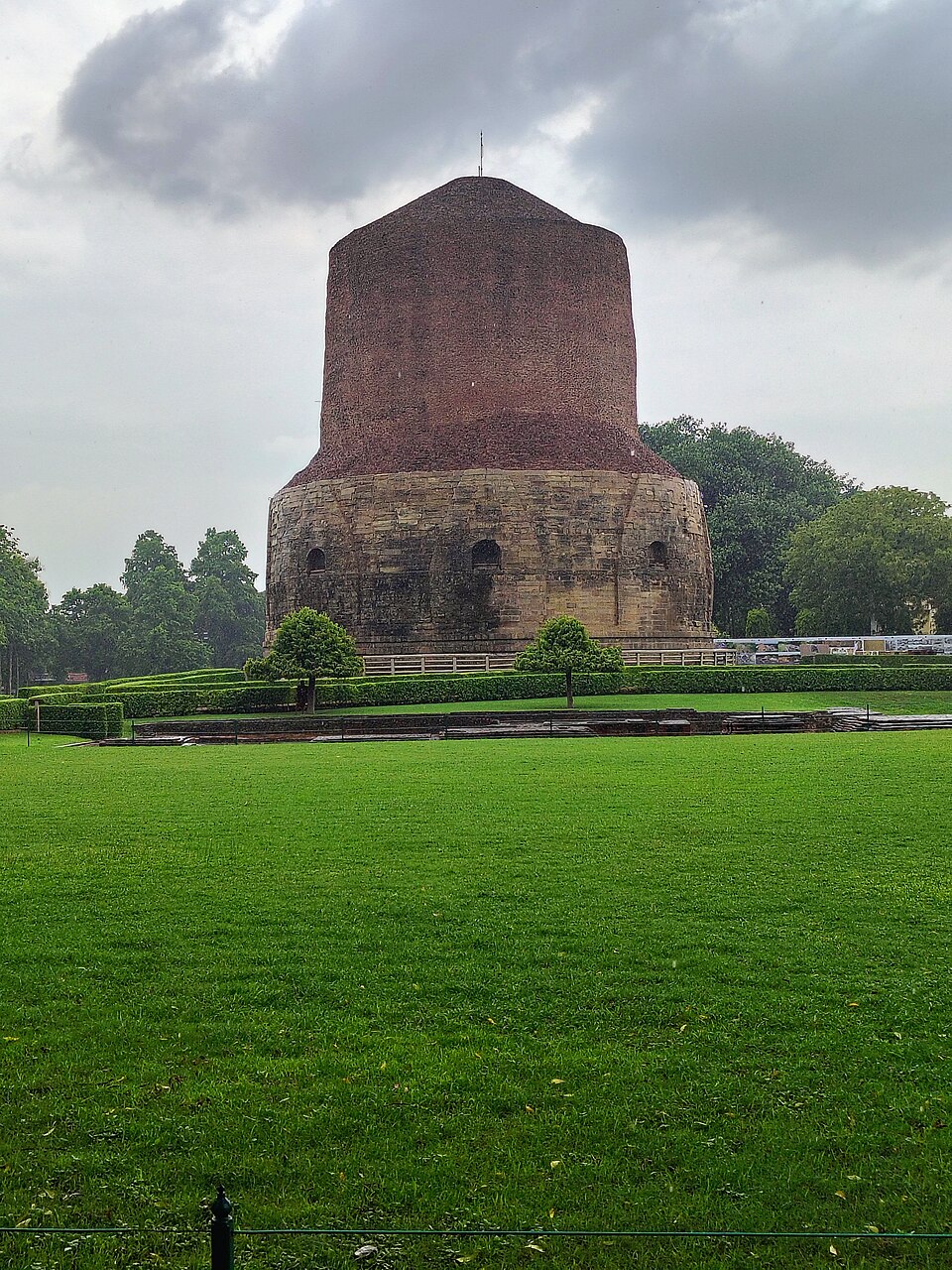
Dhamek stupa, SarnathPhoto: Hardy Explorer, CC0, via Wikimedia Commons
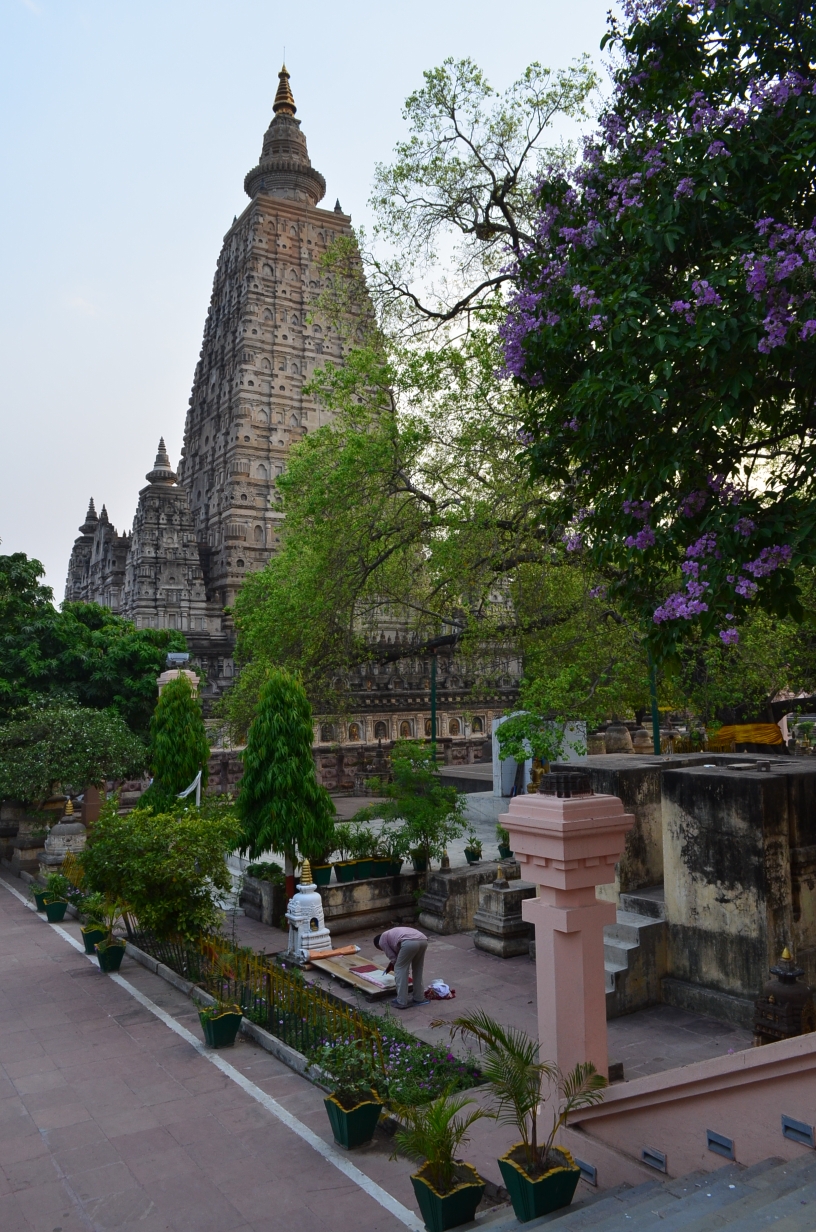
Enlightenment. He went to Uruvela, near modern Bodh Gaya on the Niranjana river, and sat in meditation under a pipal tree, later called the Bodhi tree. There he attained enlightenment and became the Buddha, 'the enlightened one'. He was about 35 years old.
The first sermon. From Bodh Gaya he went to the deer park at Sarnath near Varanasi and gave his first sermon. It is called Dharmachakra Pravartana, 'setting in motion the wheel of Dharma'. Here he gathered his first five disciples and laid the foundation of the sangha.
Forty-five years of teaching. For about 45 years he wandered, mostly in the Bihar region, teaching in the local language. He preached most often at Sravasti, where the rich merchant Anathapindika became a follower and gave the Jetavana monastery. He also visited Rajagriha, Gaya, Mathura and his home town Kapilavastu, where his foster mother and son Rahula joined the faith.
Royal followers. Kings Bimbisara and Ajatasatru of Magadha, Prasenajit of Kosala and Udayana of Kausambi accepted his teaching. The republics of the Sakyas, Vajjis and Mallas followed too. This royal and urban support helped Buddhism grow fast.
Death. At 80 the Buddha died at Kusinagara, the capital of the Mallas, in today's Deoria district of Uttar Pradesh. The Mallas performed his last rites, as we saw in the previous chapter.
What the Buddha taught
A doctor's method. The Buddha's core teaching is often compared to a doctor's approach: name the illness, find its cause, say that a cure exists, and give the medicine. This is the structure of the Four Noble Truths. Learn them in this order and they will never mix up.
Four truths, eight steps
The Four Noble Truths. First, the world is full of suffering. Second, suffering has a cause: desire, ignorance and attachment.
Third, suffering can be ended by destroying its cause. Fourth, to end it one must follow the right path, the Eightfold Path (Ashtangika Marga).
The Eightfold Path, part one.Right view means understanding that sorrow comes from desire. Right aim means avoiding sensual luxury and working for others' happiness. Right speech means always speaking the truth, and right action means unselfish action.
The Four Noble Truths: a doctor's method
The Eightfold Path, part two.Right livelihood means living by honest means. Right effort means controlling the senses to prevent bad thoughts. Right mindfulness means remembering that the body is impermanent, and right concentration means meditation that leads to peace and truth.
Karma and rebirth. The Buddha stressed the law of karma: what we are now is shaped by past actions, and our future by present actions. We are born again and again to reap the fruits of karma. Each person is the maker of his own destiny, not the victim of a god or a priest.
Nirvana. The final goal is nirvana, the shedding of all desire and the end of suffering, which brings freedom from rebirth. Prayers and sacrifices cannot end desire. Only a moral life and mental discipline can.
The Middle Path
The Middle Path. Having tried both a prince's luxury and an ascetic's self-torture, the Buddha rejected both. He taught a Middle Path between self-indulgence and harsh austerity. This is a key point of contrast with Jainism, which valued severe austerity.
God and soul. The Buddha neither affirmed nor denied the existence of God; he was concerned with human action. He also did not believe in a permanent soul, though he accepted rebirth. In his view the new life arises as part of a chain of events that includes the old one, like a flame lit from another flame.
Ahimsa. The Buddha valued love for all beings, expressed through ahimsa or non-killing. It was an important principle, but it was not stressed as strictly as in Jainism. Buddhists also urged that cattle be protected, since they were a source of grain and strength.
The Buddha's challenge to brahmanism
A challenge to brahmanism. The Buddha rejected the authority of the Vedas, condemned animal sacrifice and called complex rituals meaningless. He said no sacrifice could wash away sin and no priest's prayer could help a sinner. Since salvation came from one's own deeds, there was no need for a priest as a middleman.
Equality in practice. His attack on caste and on brahmana supremacy appealed to the lower orders. People were admitted to the order irrespective of caste, and later of sex. This open door was as important as any doctrine in winning followers.
The sangha, the canon and the councils
Who could join. The sangha was the Buddhist religious order. Membership was open to anyone above fifteen, irrespective of caste. Criminals, lepers and people with infectious diseases were not admitted.
The Tripitaka: three baskets
Women in the sangha. At first the Buddha was not in favour of admitting women. He agreed after repeated requests from his chief disciple Ananda and his foster mother Mahapajapati Gotami. An order of nuns was set up, though nuns were treated as inferior to monks.
The four Buddhist councils
Daily life of a monk. New monks shaved their heads and wore yellow or saffron robes. Each day they went out to preach and beg for alms. During the four months of the rains they stayed in one place to meditate, a retreat called vasa.
How one order became many schools
A democratic order. The sangha was run on democratic lines, modelled on the ganasangha of the Buddha's own clan. It had a code of conduct and could punish members who broke it. Monasteries also became centres of education, open to people whom brahmanical learning had shut out.
Life in the sangha
The Tripitaka. The Buddhist canon is called the Tripitaka, 'three baskets'. The Sutta Pitaka holds the Buddha's discourses in five nikayas; the fifth includes the Jataka tales of his past lives. The Vinaya Pitaka holds the rules of monastic discipline, and the Abhidhamma Pitaka holds philosophy in question-and-answer form.
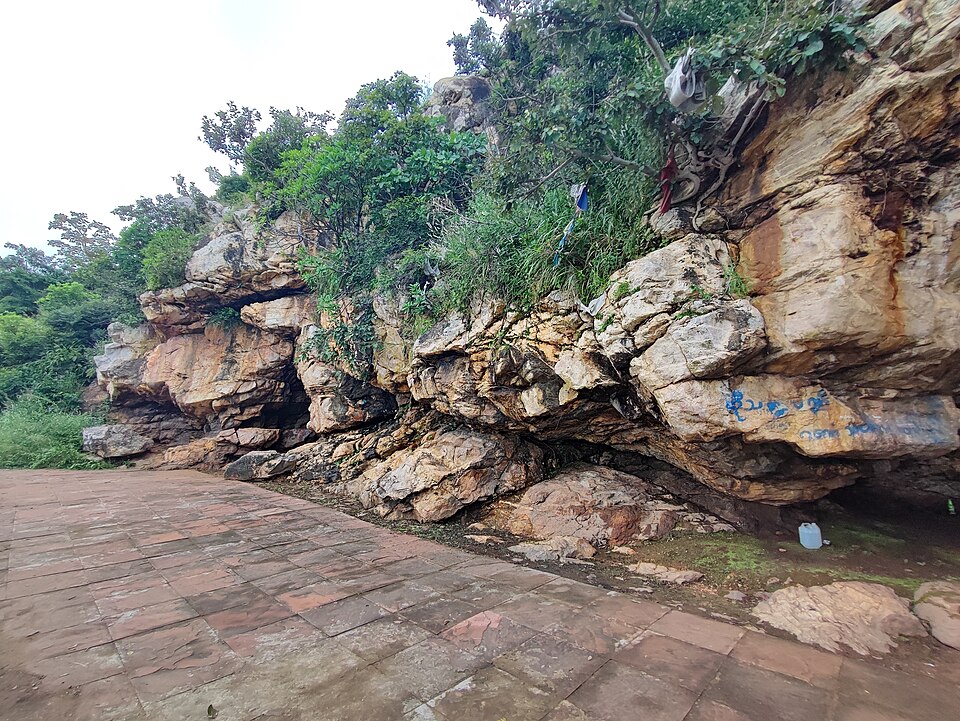
The first council. Soon after the Buddha's death, traditionally in 483 BC, a council met in the Saptaparni cave near Rajagriha, presided over by Mahakassapa. The Vinaya was settled under Upali and the Sutta under Ananda. This fixed the teachings before memories faded.
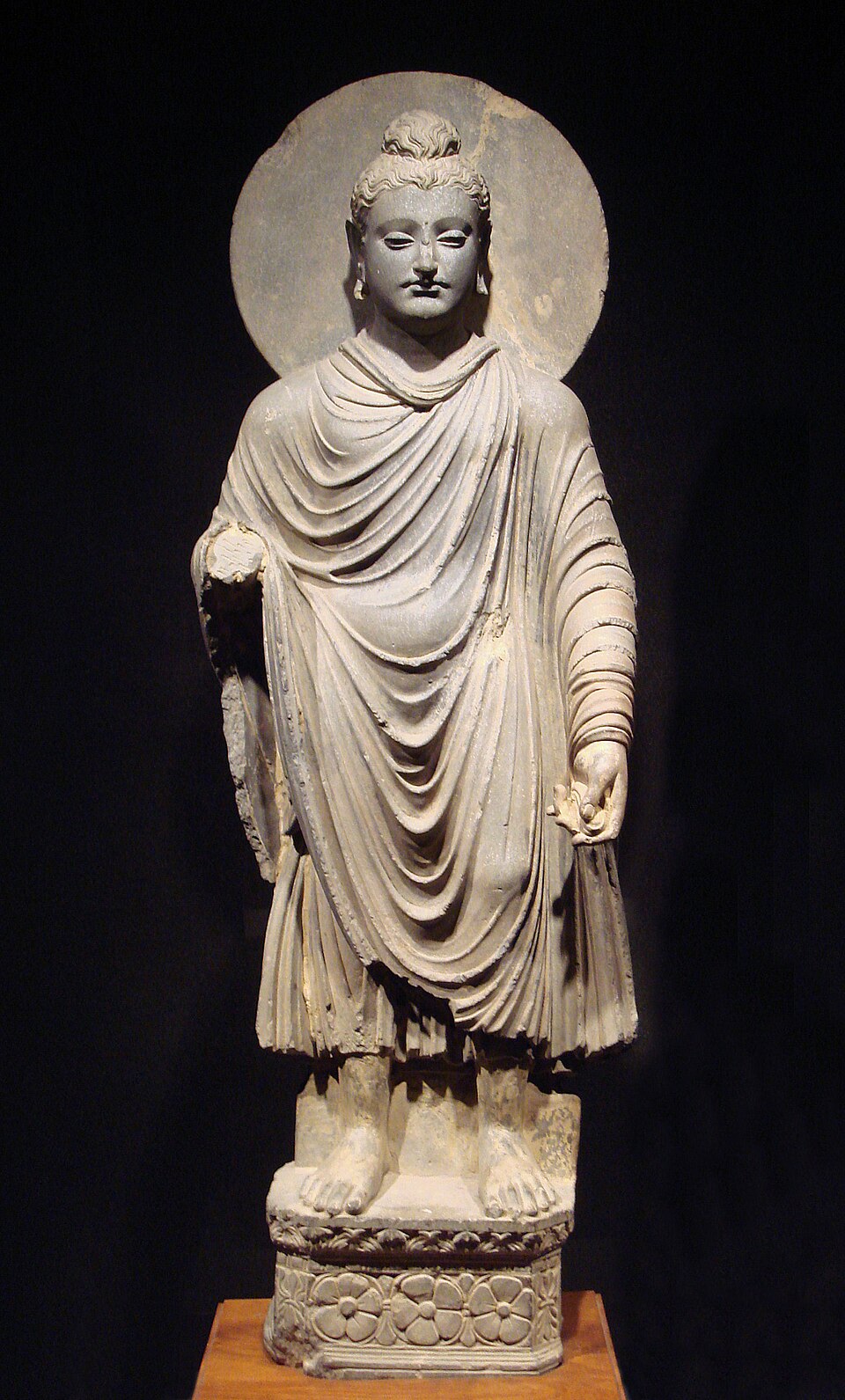
A Gandhara image of the BuddhaPhoto: World Imaging, Public domain, via Wikimedia Commons
The second council. About a century later, traditionally in 383 BC, a council met at Vaisali. Monks of Vaisali and Pataliputra had accepted relaxed rules that monks of Kausambi and Avanti called wrong. No compromise was found, and the order split permanently into the Sthaviravadins (elders, keeping the strict rules) and the Mahasanghikas (the 'great community', favouring relaxed rules).
The third council. The third council met at Pataliputra under Ashoka, with Moggaliputta Tissa in the chair. The philosophical teachings were compiled into the third basket, the Abhidhamma Pitaka. Dissenting monks were expelled and the canon was fixed to stop further splits.
The fourth council. The fourth council met in Kashmir in the reign of Kanishka. It was a gathering of northern monks of the older school. It compiled commentaries called vibhashas on the three Pitakas and settled disputes among Sarvastivada teachers of Kashmir and Gandhara.
Hinayana and Mahayana. After this, a new school called Mahayana, 'the great vehicle', developed. Its followers made images of the Buddha and worshipped him as a god. Those who kept to the older teaching came to be called Hinayana, 'the lesser vehicle'.
Quick revision
Causes: costly ritual, brahmana monopoly, new kshatriya and merchant power, town life, sramana ferment.
Exam-style questions on this chapter. Pick an answer to see the explanation. 0 of 11 answered
The Buddha delivered his first sermon, the Dharmachakra Pravartana, at:
The Buddha's birthplace at Lumbini is confirmed by:
Consider the following statements about the Buddha's teaching:
1. The second Noble Truth says that suffering has a cause in desire, ignorance and attachment.
2. Right livelihood is a part of the Eightfold Path.
3. The Buddha recommended severe austerity as the surest way to nirvana.
Which of the statements given above is/are correct?
Which of the following were part of the Buddha's teaching?
1. Belief in karma and rebirth.
2. Belief in a permanent, unchanging soul.
3. Rejection of the authority of the Vedas.
Which of the statements given above is/are correct?
Which Buddhist text contains the rules of monastic discipline?
The Buddhist order split into Sthaviravadins and Mahasanghikas at the council held at:
Who presided over the third Buddhist council at Pataliputra?
Consider the following statements about the Buddhist sangha:
1. It admitted people of all castes above the age of fifteen.
2. Women were admitted after requests by Ananda and Mahapajapati Gotami.
3. Monks spent the rainy season in retreat, called vasa.
Which of the statements given above is/are correct?
In early Buddhist and Jaina texts, the halls where wandering teachers debated before audiences were called:
Which Buddhist school made images of the Buddha and worshipped him as a god?
Assertion (A): Buddhism spread quickly among ordinary people.
Reason (R): The Buddha preached in Pali, a popular language, rather than Sanskrit.
Mains answer practice
Write your answer first, then open the points a good answer should cover.
"Buddhism was both a product of and a response to the changes of the sixth century BC." Discuss. (250 words)
Show answer points
Costly Vedic ritual; brahmana monopoly and varna rank by birth
New power of kshatriyas, merchants and gahapatis; urban life and new poor
Sramana ferment: 62 views, kutuhala-salas, rebirth and release
Buddha's answer: Four Noble Truths, Eightfold Path, Middle Path, karma, nirvana
No priest, no sacrifice, no caste bar; Pali; open sangha
Conclusion: a reform movement that reshaped values
Previous year questions
Previous year questions for UPSC CSE will appear here once each one is checked word for word against the official question paper.
Frequently asked questions
Where were the four Buddhist councils held?
At Rajagriha under Ajatashatru, Vaishali under Kalashoka, Pataliputra under Asoka, and in Kashmir under Kanishka.
What are the Tripitakas?
The 'three baskets' of the Buddhist canon: the Vinaya Pitaka (monastic rules), the Sutta Pitaka (teachings) and the Abhidhamma Pitaka (philosophy).
What is the dharmachakrapravartana?
It is the Buddha's first sermon at the Deer Park in Sarnath, 'turning the wheel of law'.
How did Mahayana differ from Hinayana?
Mahayana treated the Buddha as a god, worshipped images and the ideal of the bodhisattva, and used Sanskrit; Hinayana kept to the original teachings in Pali.