

Module 5 · 16 min read · Free chapter
ಕೊರತೆ ಮತ್ತು ಸಾಲ: fiscal, revenue ಮತ್ತು primary deficit, ಹಾಗೂ FRBM Act.
Fiscal deficit is how much the government must borrow: total spending minus all receipts other than borrowing. Revenue deficit is day-to-day spending above revenue income, and primary deficit is fiscal deficit minus interest. Budget 2026-27 puts the fiscal deficit at 4.3% of GDP. The FRBM Act, 2003 sets the rules for cutting deficits and debt.
Start from zero: two kinds of borrowing
Imagine two neighbours who both borrow ₹1 lakh. Ramesh borrows to pay his monthly grocery and electricity bills, because his income falls short. Shyam borrows to open a small shop.
After five years, Ramesh still owes the money and has nothing to show for it. He may have to borrow again just to pay the interest. Shyam's shop earns enough to repay the loan and still leaves him a profit.
Both borrowed the same amount, but the use of the money made all the difference. Governments face the same question. When spending is more than income, the gap is a deficit, and it is filled by borrowing.
This chapter explains the different deficits in India's budget, what each one tells us, how they add up to public debt, and the law that tries to keep them in check, the FRBM Act.
The four deficits, one by one
The official definitions come from Budget at a Glance and the Key to the Budget Documents.
1. Fiscal deficit (FD). It is the difference between total expenditure and total receipts excluding debt capital receipts. In simple words, it is how much the government must borrow in the year. It is the most important deficit.
2. Revenue deficit (RD). It is the excess of revenue expenditure over revenue receipts. It shows how much the government borrows just to meet day-to-day spending, like Ramesh in the story.
3. Effective revenue deficit (ERD). It is the revenue deficit minus grants-in-aid for creation of capital assets. Some grants counted as revenue spending actually help states build assets. ERD removes them, to show the "true" consumption deficit.
4. Primary deficit (PD). It is the fiscal deficit minus interest payments. It shows how much the government is borrowing for this year's needs, leaving aside the cost of past debt. A primary deficit close to zero means new borrowing is mostly paying interest on old debt.
| Deficit | Formula | What it tells us |
|---|---|---|
| Fiscal | Total expenditure − non-debt receipts | Total borrowing need |
| Revenue | Revenue expenditure − revenue receipts | Borrowing for consumption |
| Effective revenue | Revenue deficit − grants for capital assets | True consumption gap |
| Primary | Fiscal deficit − interest payments | Borrowing for current needs |
Latest numbers: deficits in Budget 2026-27
| Deficit | RE 2025-26 (% of GDP) | BE 2026-27 (% of GDP) | BE 2026-27 (₹ crore) |
|---|---|---|---|
| Fiscal deficit | 4.4 | 4.3 | 16,95,768 |
| Revenue deficit | 1.5 | 1.5 | 5,92,344 |
| Effective revenue deficit | 0.6 | 0.3 | 99,642 |
| Primary deficit | 0.8 | 0.7 | 2,91,796 |
Reading the table.
- The fiscal deficit falls slightly, from 4.4% to 4.3% of GDP.
- The primary deficit of 0.7% is small, so most of the fiscal deficit (about 3.6% of GDP) goes to interest on past debt.
- The effective revenue deficit of just 0.3% means that most borrowing is going into asset creation, directly or through grants to states.
The FRBM Act: a law to discipline borrowing
Why a law? Governments are tempted to spend more before elections and leave the bill to the future. To build discipline, Parliament passed the Fiscal Responsibility and Budget Management (FRBM) Act, 2003. It came into force, with its Rules, on 5 July 2004.
What it asks. As described in the 2026 fiscal policy statements, Section 4 of the Act set targets:
- fiscal deficit of 3% of GDP by 31 March 2021;
- Central Government debt of not more than 40% of GDP by the end of 2024-25.
What happened. Both targets were missed. The fiscal deficit is still 4.3% of GDP in BE 2026-27, and Central Government debt is 55.6% of GDP, well above 40%.
The documents it requires. Under the FRBM Act, the government presents Statements of Fiscal Policy with each budget. They explain the fiscal strategy and the targets, and they make the government accountable to Parliament.
The new anchor: debt, not just deficit
The shift. For years, the main target was the yearly fiscal deficit. The 2026 fiscal policy statement now sets a debt anchor: the medium-term aim is to bring Central Government debt to 50±1% of GDP by 2030-31.
How it will work. The fiscal deficit remains the operational target. The government says it will keep the fiscal deficit each year at a level that keeps Central Government debt on a declining path from 2026-27 to 2030-31. The statement does not give rolling year-by-year deficit targets.
Where we stand. Central Government debt was 56.1% of GDP in RE 2025-26 and is estimated at 55.6% in BE 2026-27.
Why debt is a better anchor: a deficit of 4% means different things in a fast-growing and a slow-growing economy. The debt ratio captures the combined effect of deficits, growth and interest rates, so it shows whether debt is truly sustainable.
Paying for the gap: borrowing, printing money and crowding out
Start with a simple question. If the government spends ₹100 but collects only ₹95, where does the missing ₹5 come from? There are only two broad answers. It can borrow the ₹5 from people, banks and other savers, or it can ask the central bank to create new money for it.
Printing money: why India stopped. Until 1997, the Centre could cover part of its gap by issuing ad hoc Treasury bills that the RBI simply bought, which created new money automatically. When more money chases the same goods, prices rise, so this habit fed inflation and left the RBI with little control over money supply. From 1 April 1997, these bills were replaced by Ways and Means Advances, which are short-term loans to tide over temporary mismatches, and the automatic monetisation of the deficit ended.
Borrowing: the crowding-out worry. Today the Centre fills most of its gap by selling government securities in the market. But the pool of savings in a country is limited at any moment. If the government takes a large share of it, less is left for companies, and interest rates may rise, which can push out private investment. Economists call this crowding out.
When is crowding out a smaller worry? It matters less when the economy is weak and private firms are not borrowing much anyway, such as in a recession. It matters less also when the government borrows to build roads, ports and power lines, which raise the returns on private investment later. This is why the quality of the deficit, revenue or capital, matters as much as its size.
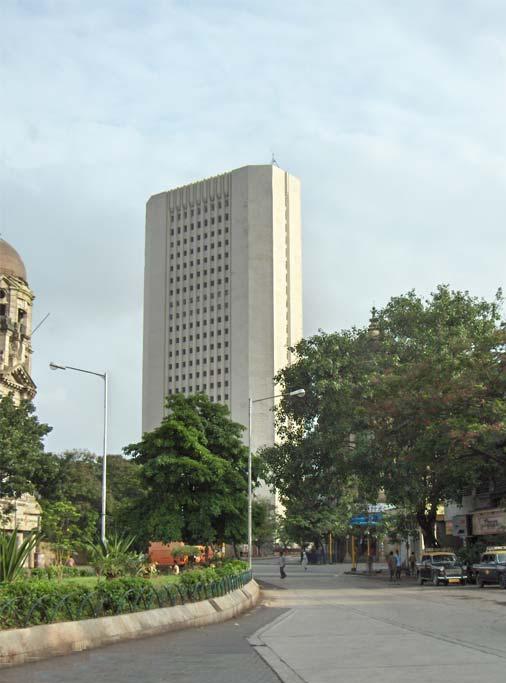
When is debt safe? Interest rate versus growth. Think of a family whose income grows by 10% a year while its loan grows at 7% interest. Even if it keeps borrowing a little, its debt shrinks as a share of income over time. The same rule applies to a country: if the economy's nominal growth rate (g) stays above the interest rate on its debt (r), the debt-to-GDP ratio can stay stable even with a modest primary deficit, but if r rises above g, the debt can snowball.
Why it matters. This is the logic behind India's move to a debt anchor of about 50±1% of GDP by 2030-31: the level of debt, and the gap between interest and growth, decide whether borrowing is safe. A good Mains answer explains that a deficit is not good or bad by itself. What matters is how it is financed, what it is spent on, and whether growth stays ahead of interest.
Rules under stress: the escape clause and the COVID shock
Why a rule needs a safety valve. A fiscal rule that can never bend breaks in a crisis. If a pandemic or a war cuts revenue sharply, forcing the government to slash spending at that moment would make the slump deeper. So the FRBM Act includes a safety valve under Section 4(2), which allows a deviation from the target in special circumstances.
The valve in normal times (2020). In the Budget of February 2020, the government used this valve for a reason the Act lists, structural reforms in the economy with unanticipated fiscal implications. It took a deviation of 0.5% of GDP under Section 4(3), putting the fiscal deficit at 3.8% in 2019-20 (revised) and 3.5% for 2020-21 (budgeted). The 2019 corporate tax cut, which reduced revenue, was the background to this.
Then came the pandemic. Within weeks, COVID-19 shut down large parts of the economy, tax revenue fell and spending on food, health and relief rose. The fiscal deficit for 2020-21 was raised from 3.5% of GDP in the Budget estimate to 9.5% in the revised estimate. No fiscal rule could have held in such a year, and the government chose to spend rather than cut.
The way back. In February 2021 the government set a new glide path to bring the fiscal deficit below 4.5% of GDP by 2025-26, with a fairly steady decline. Budget 2026-27 puts it at 4.3%, and the anchor has now moved from a deficit target to a debt target. The lesson is that fiscal rules need flexibility for shocks but also a credible path back, or the exception becomes the habit.
Why it matters. This episode shows the classic trade-off of fiscal policy: spending in a crisis protects lives and jobs, but every extra rupee of debt must be serviced later. A good Mains answer praises the counter-cyclical response and then asks how fast and how fairly the deficit should come down.
Why India wrote fiscal rules into law: when, where and why
The problem: borrowing is tempting. Every government wants to spend more today and leave the bill for later. If it borrows year after year, interest payments eat up a growing share of revenue, leaving less for schools, health and roads. Large deficits can also push up interest rates for everyone else and feed inflation (see Inflation: meaning, causes and types).
The answer: rules set by law (2003). Parliament passed the Fiscal Responsibility and Budget Management (FRBM) Act, 2003, which came into force on 5 July 2004. A rule in a law is harder to break quietly than a promise in a speech, just like the inflation target (see Inflation: meaning, causes and types). As now cited, the Act aims at a fiscal deficit of 3% of GDP and Central Government debt of no more than 40% of GDP.
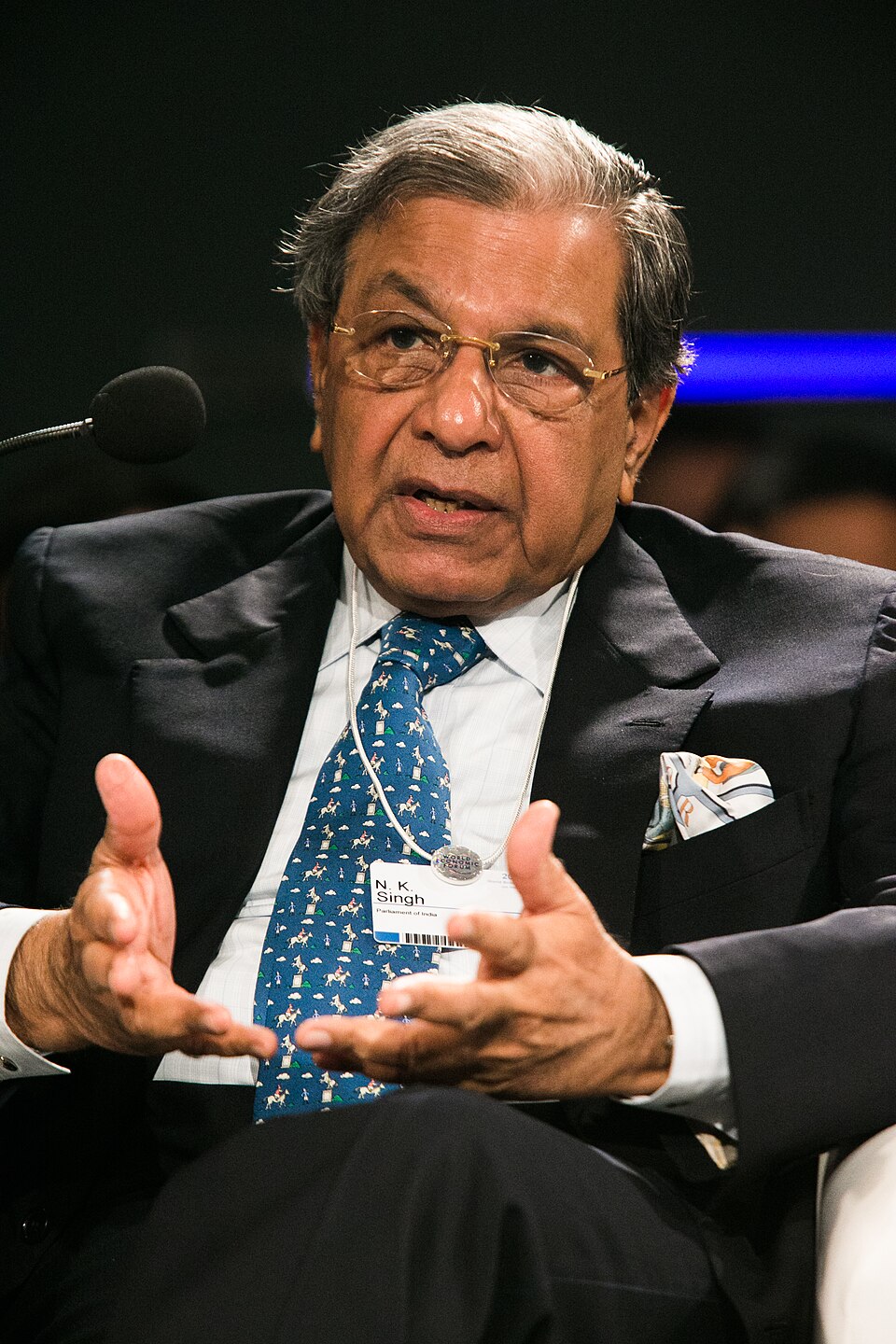
Why the rules were reviewed (2016-17). A fixed rule written in 2003 had to work in a very different economy a decade later, and shocks can force extra spending. In May 2016 the government set up a committee under N.K. Singh to review the Act, and it reported on 23 January 2017. The broader question it took up is still debated: should the anchor be the yearly deficit or the stock of debt?
Where India stands now. Budget 2026-27 puts the fiscal deficit at 4.3% of GDP, and the medium-term aim is a Central debt-to-GDP ratio of 50±1% by 2030-31, with the fiscal deficit as the operational target. So the anchor has shifted towards debt, while the yearly deficit is the steering wheel.
Implications. Lower deficits leave more savings for private investment and reduce the interest burden. But cutting too fast in a slowdown can hurt growth, so rules need an escape route for shocks and a credible path back. A good Mains answer balances discipline with flexibility.
Mains lens: is a deficit always bad?
1. When deficits help. In a slowdown, government spending can support demand and jobs when private spending falls. Borrowing for roads, power and railways can raise future growth enough to repay the debt, like Shyam's shop.
2. When deficits hurt.
- Crowding out: heavy government borrowing can push up interest rates and leave less money for private investment.
- Interest burden: interest takes 20 paise of every rupee the Centre spends (see The Union Budget: where the government's money comes from and where it goes), squeezing room for health and education.
- Inflation risk: if deficits are financed in ways that expand money too fast, prices can rise (see Inflation: meaning, causes and types).
- Borrowing for consumption: a high revenue deficit means borrowing for today, with the bill passed to future generations.
3. The balance. The quality of the deficit matters as much as its size. A small revenue deficit and a deficit used for capital spending are healthier than a large revenue deficit.
A good conclusion: fiscal prudence does not mean zero deficit. It means borrowing for growth-raising assets, protecting the poor in bad times, and keeping debt on a steady downward path.
Mains ಅಭ್ಯಾಸ: ಐದು ಪ್ರಶ್ನೆಗಳು, ಐದು ದೃಷ್ಟಿಕೋನಗಳು
ಇವು ನಾವು ಬರೆದ practice questions, past papers ಅಲ್ಲ. ಪ್ರತಿ exam ನ ಹಿಂದಿನ ಪ್ರಶ್ನೆಗಳು ಈ module ನ PYQ panel ನಲ್ಲಿವೆ.
| Angle | Question | Key points to cover |
|---|---|---|
| Concept | Distinguish between fiscal, revenue and primary deficits. Which matters most, and why? | Define each deficit and use 4.3%, 1.5% and 0.7% from the 2026-27 Budget. Then explain why borrowing for consumption is worse than borrowing for assets. |
| Why (origin) | Why was the FRBM Act enacted, and why was it reviewed? | Start with the temptation to borrow, then the 2003 Act that came into force in 2004. Then explain that targets were missed and the N.K. Singh committee reviewed the Act in 2016-17. |
| Debate | Should debt or the fiscal deficit be the main anchor of fiscal policy? | Contrast debt as a stock with the deficit as a flow, and use the aim of 50±1% by 2030-31. Then discuss transparency and the gap between growth and interest rates. |
| Trade-off | "Fiscal consolidation should not come at the cost of capital expenditure." Discuss. | Explain the higher multiplier of capex and the need to improve the quality of revenue spending. Then use the effective revenue deficit of 0.3% as evidence. |
| Way forward | Suggest measures to make India's fiscal rules more credible. | Suggest a clear escape clause and discuss the idea of an independent fiscal council. Then add full disclosure of off-budget borrowing and rules for the states. |
ಈ ಕೋಷ್ಟಕವನ್ನು ಹೇಗೆ ಬಳಸಬೇಕು: ಪ್ರತಿ ಉತ್ತರವು ಏನು ಎಂದು ವಿವರಿಸಬೇಕು, ನಂತರ ಮೇಲಿನ ವಿಭಾಗದಿಂದ ಏಕೆ ಎಂದು ವಿವರಿಸಬೇಕು ಮತ್ತು ಮುಂದಿನ ದಾರಿ ಎಂಬುದರೊಂದಿಗೆ ಮುಗಿಸಬೇಕು.
Quick revision
- The fiscal deficit is total spending minus total receipts other than borrowing, so it shows how much the government must borrow.
- The revenue deficit is revenue spending minus revenue receipts, so it shows borrowing used for day-to-day costs.
- The effective revenue deficit subtracts from the revenue deficit the grants given for creating capital assets.
- The primary deficit is the fiscal deficit minus interest payments, so it shows the gap caused by this year's choices alone.
- In the 2026-27 Budget, the fiscal deficit is 4.3% of GDP (₹16.96 lakh crore), the revenue deficit 1.5%, the effective revenue deficit 0.3% and the primary deficit 0.7%.
- That fiscal deficit is a step down from 4.4% in the revised estimate for 2025-26.
- The new anchor is Central debt of 50±1% of GDP by 2030-31, with the fiscal deficit as the operational target, and debt stands at 55.6% in 2026-27.
- The FRBM Act, 2003 came into force on 5 July 2004, and its original targets were a fiscal deficit of 3% by 31 March 2021 and debt of 40% by the end of 2024-25.
- Since 1 April 1997, Ways and Means Advances replaced ad hoc Treasury bills, ending the automatic monetisation of the deficit, and heavy public borrowing can crowd out private investment.
- Debt stays stable as a share of GDP when growth (g) stays above the interest rate (r), which is the logic behind the 50±1% debt anchor.
- The FRBM escape clause (Section 4(2)) allowed a 0.5% deviation in February 2020, and COVID pushed the 2020-21 fiscal deficit from 3.5% (BE) to 9.5% (RE), with a path to below 4.5% by 2025-26.
Common confusions and exam traps:
- Borrowing equals the fiscal deficit, not the revenue deficit.
- Primary deficit removes interest, not grants.
- Effective revenue deficit removes grants for capital assets, not interest.