

Module 5 · 15 min read · Free chapter
ಕೇಂದ್ರ ಬಜೆಟ್ (Union Budget): ಸರ್ಕಾರದ ಹಣ ಎಲ್ಲಿಂದ ಬರುತ್ತದೆ ಮತ್ತು ಎಲ್ಲಿಗೆ ಖರ್ಚಾಗುತ್ತದೆ.
The Union Budget is the government's yearly statement of expected receipts and spending, called the Annual Financial Statement under Article 112. It has a revenue part for day-to-day spending and a capital part for assets and loans. Budget 2026-27 plans total spending of ₹53.47 lakh crore, of which ₹12.22 lakh crore is capital expenditure.
Start from zero: a family's monthly budget
Think of the Verma family. Every month, Mr Verma earns a salary and Mrs Verma earns from tuition classes. They also receive a little rent from a room they let out. This is their income.
They spend on food, rent, school fees and electricity, and these expenses come back every month. This year they also want to buy a sewing machine that will earn money for years. For that, they may take a small loan.
So the family has two kinds of spending. Day-to-day spending keeps life going but leaves nothing lasting behind. Spending on assets, like the sewing machine, builds something that lasts. When income is not enough, the family borrows.
A government works the same way, only on a giant scale. Its yearly plan of income and spending is the budget. This chapter explains how India's Union Budget is organised, where the money comes from and where it goes.
The Constitution and the budget
The word "budget" does not appear in the Constitution. The Key to the Budget Documents explains that the core document, the Annual Financial Statement (AFS), is mandated under Article 112. The AFS shows the government's estimated receipts and spending for the coming year.
The Key also lists documents mandated by Articles 112, 113 and 110(1)(a). These are the Annual Financial Statement, the Demands for Grants, on which the Lok Sabha votes, and the Finance Bill, which carries the tax proposals.
The government's three accounts:
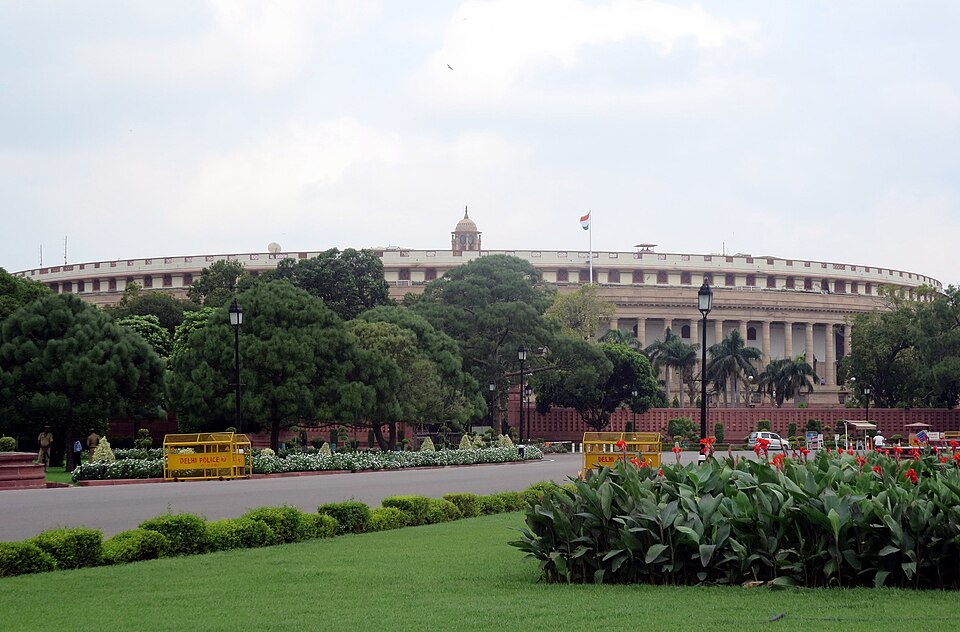
- Consolidated Fund of India (Article 266). Almost all government receipts, such as taxes and loans raised, go into this fund. No money can come out of it without Parliament's approval.
- Contingency Fund of India (Article 267). This is a reserve for urgent, unforeseen spending, which is later approved by Parliament. Its corpus is ₹30,000 crore.
- Public Account (Article 266(2)). This holds money that the government keeps on behalf of others, as a kind of banker, so it must be returned.
Why this matters: Parliament's control over the Consolidated Fund is the core of democratic control over money. The government can neither tax nor spend without the people's representatives agreeing.
Revenue and capital: two halves of the budget
The Key to the Budget Documents divides the budget into a revenue part and a capital part. Together they make the Union Budget.
Revenue budget. This has the government's revenue receipts, which are taxes and non-tax income such as dividends, fees and interest. It also has the spending met from them. Revenue expenditure is spending that broadly does not create assets, such as salaries, pensions, interest payments and subsidies.
Capital budget. This has capital receipts and payments. Capital receipts include borrowings, recovery of loans and money from selling government stakes (disinvestment). Capital expenditure creates assets, such as roads, railways and equipment, or gives loans to states and others.
A simple test:
| Item | Revenue or capital? | Why |
|---|---|---|
| Salary of a teacher | Revenue expenditure | No lasting asset |
| Building a highway | Capital expenditure | Creates an asset |
| Income tax collected | Revenue receipt | No liability to repay |
| Money borrowed through bonds | Capital receipt | Must be repaid |
Effective capital expenditure. Some central grants help states build assets, though the grants themselves are counted as revenue spending. Adding these grants-in-aid for creation of capital assets to capital expenditure gives effective capital expenditure. It is ₹17.15 lakh crore (4.4% of GDP) in 2026-27.
Where each rupee comes from and goes
Budget at a Glance shows the budget as one rupee: where each paisa comes from and where it goes. These are the shares for 2026-27 (Budget Estimates).
| The rupee comes from | Paise |
|---|---|
| Borrowings and other liabilities | 24 |
| Income tax (including securities transaction tax) | 21 |
| Corporation tax | 18 |
| GST and other taxes | 15 |
| Non-tax revenue | 10 |
| Union excise duties | 6 |
| Customs | 4 |
| Non-debt capital receipts | 2 |
| The rupee goes to | Paise |
|---|---|
| States' share of taxes | 22 |
| Interest payments | 20 |
| Central sector schemes | 17 |
| Defence | 11 |
| Centrally sponsored schemes | 8 |
| Finance Commission and other transfers | 7 |
| Other expenditure | 7 |
| Major subsidies | 6 |
| Civil pensions | 2 |
Reading the rupee. Nearly a quarter of what the government spends comes from borrowing. Interest on past borrowing takes 20 paise of every rupee, almost as much as the states' share of taxes. Direct taxes, income tax and corporation tax together, bring in 39 paise.
Latest numbers: Budget 2026-27
| Item (Budget Estimates 2026-27) | ₹ lakh crore | % of GDP |
|---|---|---|
| Total expenditure | 53.47 | 13.6 |
| Capital expenditure | 12.22 | 3.1 |
| Effective capital expenditure | 17.15 | 4.4 |
| Interest payments | 14.04 | – |
| Gross tax revenue | 44.04 | 11.2 |
| Non-debt receipts | about 36.5 | – |
How to read this. Total spending of ₹53.47 lakh crore is about ₹17 lakh crore more than non-debt receipts. That gap is the fiscal deficit, which the next chapter explains (see Deficits and debt: fiscal, revenue and primary deficit, and the FRBM Act).
Two signals in the numbers. Capital expenditure has risen from ₹10.96 lakh crore (Revised Estimates 2025-26) to ₹12.22 lakh crore, showing the push for infrastructure. Interest payments of ₹14.04 lakh crore are now larger than capital spending, which shows the cost of past borrowing.
From Budget speech to law: how Parliament passes the Budget
Start with a promise. When the Finance Minister reads the Budget speech, nothing in it can yet be spent or collected. The speech is only a proposal, because under the Constitution the government can neither tax nor withdraw money from the Consolidated Fund without Parliament's approval. Turning the proposal into law takes several weeks and several steps.
Step 1: presentation. The Budget is presented in Parliament at the start of the Budget Session, for example on 1 February in 2026. The Annual Financial Statement, the Demands for Grants and the Finance Bill are laid before the House on that day.
Step 2: scrutiny by committees. Parliament then adjourns for a few weeks so that the Department-related Standing Committees can examine and report on the Demands for Grants of each ministry. These small, cross-party committees can study the numbers in detail in a way the full House cannot. This step was added because a full House, with hundreds of members and limited time, could never examine every ministry's spending properly.
Step 3: voting on the Demands. When Parliament meets again, the Lok Sabha discusses and votes on the Demands for Grants, ministry by ministry. Only the Lok Sabha votes on them, because it is the House directly elected by the people. After the Demands are voted, an Appropriation Bill gives legal authority to withdraw the money from the Consolidated Fund.
Step 4: the Finance Bill. The tax proposals travel separately in the Finance Bill. In 2026, the Lok Sabha passed the Finance Bill on 25 March, before the new financial year began on 1 April. Without it, the new tax rates announced in the speech could not be collected.
What if time runs out? Sometimes, for example in an election year, the full Budget cannot be passed before 1 April. Then Parliament passes at least a Vote on Account, which allows the government to spend enough to carry on the administration until the full Budget is passed. This is why an interim Budget is usually followed by a full Budget from the new government.
Why it matters. Each step is a check on the executive: the people's representatives first examine, then approve, and only then can money be spent or taxes collected. A good Mains answer also notes the weakness, which is that time is short and many Demands are passed with little debate, so the committee stage carries much of the real scrutiny.
Beyond the totals: gender budgeting
Start with a question. A Budget may spend lakhs of crores, but how much of it reaches women and girls? A road or a hospital serves everyone, yet women may use them differently, and some schemes are meant mainly for them. Without a separate count, nobody can say whether public money is closing or widening the gap between men and women.
What India did. India adopted gender budgeting as a tool in 2004-05, and a Gender Budget Statement became part of the Union Budget in 2005-06. The statement lists how much each ministry spends on schemes meant wholly or partly for women. According to the government, these allocations rose from ₹14,378.68 crore in 2005-06 to ₹90,624.76 crore in 2016-17.
Why it was introduced. Women's lower access to education, health, credit and jobs holds back growth as well as fairness. Putting the numbers in the Budget makes ministries think about women when they design schemes, and it lets Parliament and the public track whether promises are being met. In short, it turns a goal into a line that can be counted.
Why it matters, and the limits. A rising allocation shows intent, but it does not prove results, because money can be spent without changing lives. Critics also point out that a scheme can be counted as "for women" without being designed around their needs. A good Mains answer welcomes gender budgeting and then argues for measuring outcomes, such as school completion or maternal health, rather than only money spent.
Why the Budget looks the way it does: when, where and why
Why a Budget at all? In a democracy the government cannot tax or spend without the people's permission. The Constitution therefore requires an Annual Financial Statement (Article 112), and no money can leave the Consolidated Fund (Article 266) without a law passed by Parliament. The Budget is how Parliament gives that permission every year.
Three changes of 2016-17, and why. On 21 September 2016 the Cabinet approved three reforms from Budget 2017-18:
| Change | Before | Reason given |
|---|---|---|
| Budget presented earlier | Last day of February | Ministries can plan and spend from 1 April; no 'Vote on Account' needed |
| Rail Budget merged | Separate since 1924, by convention | A holistic picture of government finances; fewer procedures |
| Plan/Non-Plan ended | Spending split into Plan and Non-Plan | The split fragmented allocation and neglected maintenance of assets |
Why the Plan/Non-Plan split mattered. Under the old system, new "Plan" projects looked attractive, while money to maintain existing roads, canals and buildings was "Non-Plan" and easy to cut. The result was new assets built and old ones left to decay. The revenue-capital split now does the job of telling us what creates assets.
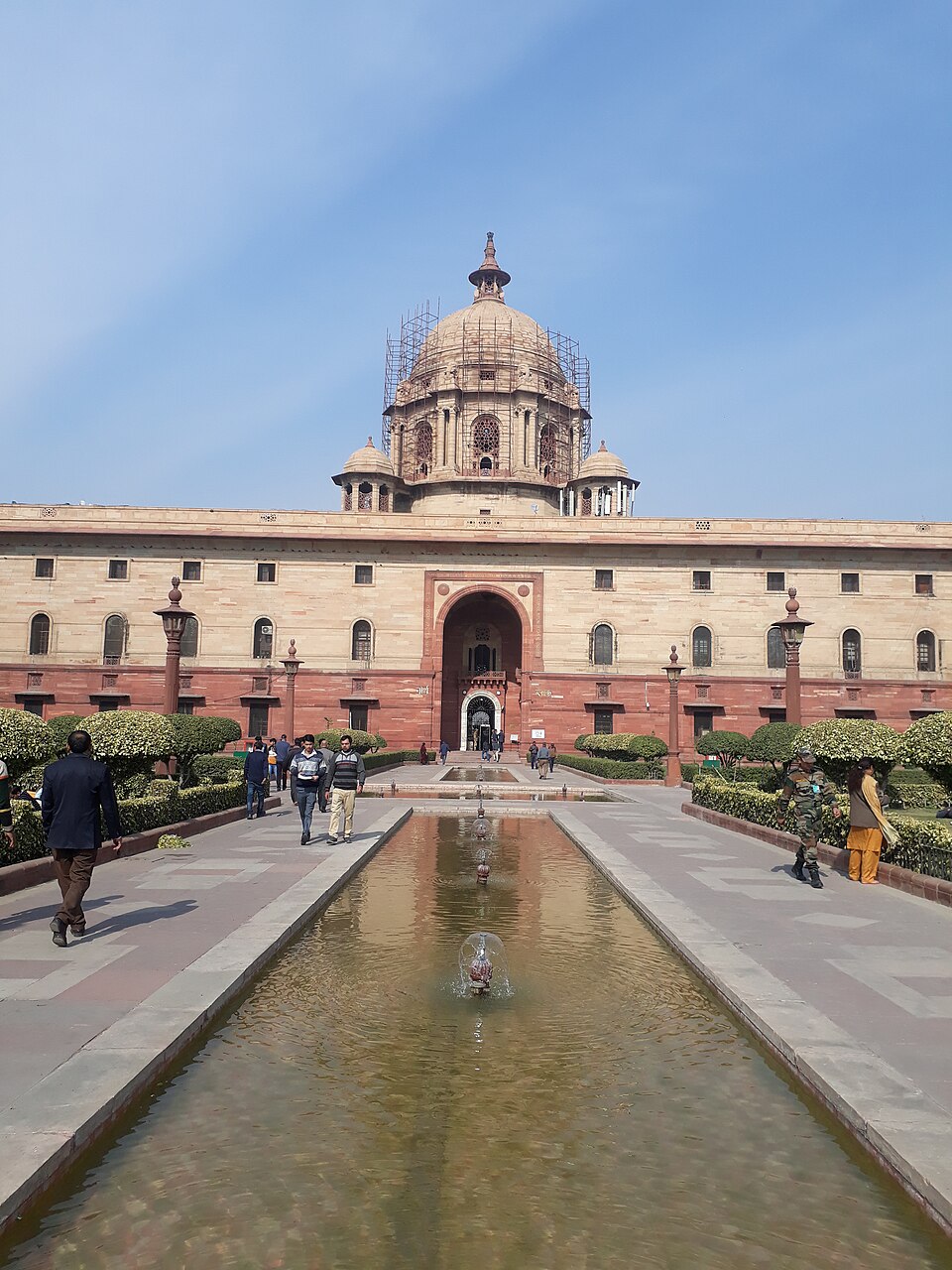
Implications. An earlier Budget means funds reach schemes in the first quarter, not after months of delay. A single Budget lets Parliament see railway finances alongside the rest. Students should note that these were procedural reforms, but they changed how well money is actually spent.
Mains lens: the quality of spending
1. Why the mix matters. Two budgets of the same size can have very different effects. Spending on roads, railways and power creates assets that raise future growth. Spending on interest and routine items keeps the government running but adds little capacity.
2. India's shift. In recent budgets, the government has raised capital expenditure as a share of GDP. This is meant to "crowd in" private investment: better infrastructure makes private projects more profitable.
3. The pressures. Interest payments take a fifth of every rupee spent, which limits room for health, education and capital spending. Subsidies, pensions and transfers to states are also large and hard to cut.
A good conclusion: a good budget is judged not just by its size or deficit, but by the quality of spending. Shifting money from consumption to productive assets, while keeping welfare, is the core challenge.
Mains ಅಭ್ಯಾಸ: ಐದು ಪ್ರಶ್ನೆಗಳು, ಐದು ದೃಷ್ಟಿಕೋನಗಳು
ಇವು ನಾವು ಬರೆದ practice questions, past papers ಅಲ್ಲ. ಪ್ರತಿ exam ನ ಹಿಂದಿನ ಪ್ರಶ್ನೆಗಳು ಈ module ನ PYQ panel ನಲ್ಲಿವೆ.
| Angle | Question | Key points to cover |
|---|---|---|
| Why (reform) | Discuss the significance of the budgetary reforms introduced from 2017-18. | Explain the earlier Budget date, the merger of the Rail Budget and the end of the Plan and Non-Plan split. Then give the reasons for each and their effect on spending. |
| Concept | Distinguish between revenue and capital expenditure. Why does the quality of spending matter? | Contrast spending that creates assets with spending on running costs. Then use effective capex of 4.4% of GDP and explain its higher growth multiplier. |
| Constitution | Explain the constitutional provisions governing the Union Budget. | Explain Article 112 for the Budget and Article 266 for the Consolidated Fund. Then add the Contingency Fund under Article 267 and the rule that no money is spent without a law. |
| Analysis | What does the "rupee comes from, rupee goes to" picture of Budget 2026-27 tell us? | Use the 24 paise from borrowing and the shares of different taxes. Then show the burden of interest and the size of transfers to states. |
| Way forward | Suggest ways to improve the outcomes of public spending in India. | Suggest outcome budgets, funds set aside for maintenance and timely release of money. Then add stronger audit and attention to the quality of capex. |
ಈ ಕೋಷ್ಟಕವನ್ನು ಹೇಗೆ ಬಳಸಬೇಕು: ಪ್ರತಿ ಉತ್ತರವು ಏನು ಎಂದು ವಿವರಿಸಬೇಕು, ನಂತರ ಮೇಲಿನ ವಿಭಾಗದಿಂದ ಏಕೆ ಎಂದು ವಿವರಿಸಬೇಕು ಮತ್ತು ಮುಂದಿನ ದಾರಿ ಎಂಬುದರೊಂದಿಗೆ ಮುಗಿಸಬೇಕು.
Quick revision
- The Budget is formally the Annual Financial Statement under Article 112, the spending requests come as Demands for Grants under Article 113, and tax changes come in the Finance Bill under Article 110(1)(a).
- All government receipts and spending go through the Consolidated Fund (Article 266), while the Contingency Fund (Article 267) holds ₹30,000 crore for emergencies and the Public Account (Article 266(2)) holds money the government only keeps in trust.
- Revenue expenditure broadly creates no assets, while capital expenditure creates assets or gives loans.
- Capital receipts either create a liability or reduce assets, as with borrowing, loan recovery and disinvestment.
- Effective capital expenditure adds grants given to states for creating capital assets to the Centre's own capex.
- In the 2026-27 Budget Estimates, total spending is ₹53.47 lakh crore (13.6% of GDP), and capex is ₹12.22 lakh crore (3.1%).
- Effective capex in 2026-27 is ₹17.15 lakh crore (4.4%), while interest payments alone take ₹14.04 lakh crore.
- Of every rupee, 24 paise come from borrowing, 21 from income tax, 18 from corporation tax and 15 from GST and other taxes.
- On the spending side, 22 paise go to states' share of taxes, 20 to interest, 17 to central sector schemes and 11 to defence.
- After the Budget is presented, Department-related Standing Committees examine the Demands for Grants, the Lok Sabha alone votes on them, an Appropriation Bill follows, and the Finance Bill carries the tax changes, with a Vote on Account if time runs out.
- The Gender Budget Statement has been part of the Union Budget since 2005-06, and allocations shown in it rose from ₹14,378.68 crore (2005-06) to ₹90,624.76 crore (2016-17).
Common confusions and exam traps:
- Borrowing is a capital receipt, not revenue.
- Grants to states are revenue expenditure for the Centre, even when states use them to build assets.