

TNPSC Group 1 · Module 6 · Mains depth · 21 min
Mughal decline and the rise of regional states
What TNPSC Group 1 asks from this chapter
Syllabus lines this chapter covers:
- Part A: General Studies · History and culture of India, and the Indian national movement.
TNPSC Group 1 questions from this module are being sorted into our bank.
Read at full depth: basics, the standard layer and the Mains analysis.
Start from zero: what happens when a great empire weakens?
Imagine a large company whose head office in Delhi has grown weak. The branch managers in Hyderabad, Bengal and Lucknow still send greetings and some money, but they now run their branches as their own. Meanwhile, rivals who never liked the company set up shops of their own, and a new foreign firm quietly hires guards and starts collecting rent.
That is roughly what happened in India in the eighteenth century. The Mughal empire declined after Aurangzeb, and three kinds of regional states rose in its place. At the same time, the English East India Company turned from a trader into a ruler, as told in the chapter on traders becoming rulers.
For a long time historians called this century a 'Dark Age' of anarchy. Today most see it differently, as a time of regional growth and transformation, not just collapse.
Keep one question in mind as you read. If the regional states were strong enough to break the Mughals, why could none of them stop the British?
The century at a glance
| When | What happened | Why it matters |
|---|---|---|
| 1707 | Death of Aurangzeb; wars of succession till 1719 | The centre begins to weaken. |
| 1717, 1722, 1724 | Murshid Quli Khan in Bengal; Saadat Khan in Awadh; Nizam-ul-Mulk founds Hyderabad | Successor states take shape. |
| 1739 | Nadir Shah wins at Karnal and sacks Delhi | Peacock Throne and Kohinoor lost; north-west exposed. |
| 1740-61 | Peshwa Balaji Rao; Maratha power at its height | Malwa, Gujarat, Bundelkhand, Orissa (1751). |
| 14 January 1761 | Third Battle of Panipat | Maratha bid for empire checked; the British gain. |
| 1761, 1769 | Haidar Ali takes power in Mysore; defeats the British near Madras | A modernising southern power. |
Look at how quickly things moved. In about fifty years the empire of Aurangzeb shrank to what one historian calls little more than the 'state of Delhi'.
A 'Dark Age'? Rethinking the eighteenth century
The old picture. Until recently the eighteenth century was described as a Dark Age of chaos and anarchy. The Mughal empire collapsed, the regional powers failed to build empires, and stability returned only with British supremacy. This picture suited British writers, because it made British rule look like a blessing by comparison.
Sarkar's famous line. The historian Jadunath Sarkar wrote that on 23 June 1757, the day of Plassey, India's middle ages ended and its modern age began. In his view, the twenty years after Plassey brought the "revivifying touch" of the West. Many Indian writers followed this view.
Why it is doubted now. The Mughal empire's reach was never as wide or deep as assumed; large parts of the north-east and south, and many social groups, lay outside it. So Mughal decline cannot explain everything happening across India. Scholars now argue that the rise of regional polities was the dominant feature of the century.
One century, not two halves. The historian Satish Chandra treats the eighteenth century as a distinct whole, rather than splitting it into a pre-British and a British half. This helps us see continuities, such as the survival of Mughal institutions, as well as real changes.
How the centre gave way
Still standing in 1707. Aurangzeb's policies had weakened the stable Mughal polity, but its two main pillars, the army and the administration, were still upright when he died in 1707. Then came wars of succession and weak rulers from 1707 to 1719. The court became a battlefield for rival factions of nobles.
A wasted reign. Muhammad Shah ruled for nearly thirty years, from 1719 to 1748, long enough for a revival. But his complete incompetence ruled it out. In his reign Nizam-ul-Mulk resigned as wazir and set up an independent Hyderabad in 1724, and Bengal, Awadh and Punjab followed the same path.
Nadir Shah's raid. The Persian ruler Nadir Shah invaded in 1738-39, took Lahore and defeated the Mughal army at Karnal on 13 February 1739. The emperor was captured and Delhi was sacked, a devastation the poets Mir and Sauda lamented. About 70 crore rupees were taken, along with the Peacock Throne and the Kohinoor diamond.
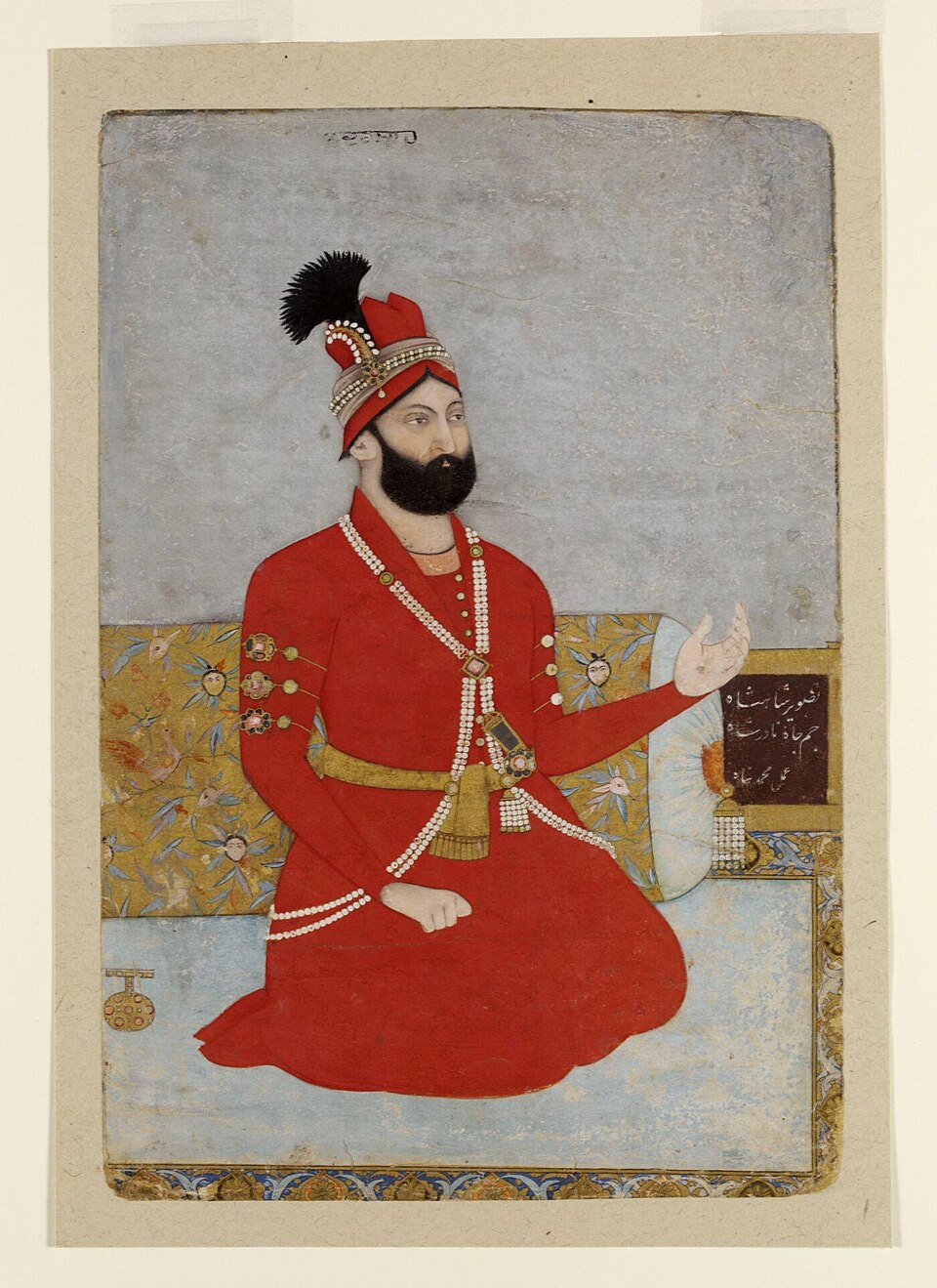
The door to the north-west opens. Nadir Shah also took the strategically crucial Mughal lands west of the Indus, including Kabul, so India was again open to attack from the north-west. His commander Ahmad Shah Abdali later ruled Afghanistan and invaded north India many times between 1748 and 1767. By 1761 it was the Marathas, not the Mughals, who faced Abdali in battle.
The empire died, its traditions did not
An empire only in name. By 1761 the Mughal empire was an empire only in name, better described as the state of Delhi. Yet the emperor's prestige as 'king of kings' remained so great that rulers seeking territory or a throne still sought his sanction. Even rebels sometimes treated him as the source of legitimate authority.
Surprising gestures. The Sikhs made offerings to the Delhi court in 1783, though Mughals had killed their gurus. The Maratha leader Shahu visited Aurangzeb's tomb in 1714. The British and the Marathas competed to control the emperor's person: Shah Alam II became a Company pensioner after Buxar, preferred Maratha protection in Delhi, and came under British protection again when the British took Delhi in 1803.
Mughal methods everywhere. The successor states naturally kept Mughal practice, and even the Marathas, who began as a reaction against the empire, copied Mughal methods of administration. Officers trained in Mughal ways found work in many local kingdoms. Land revenue practice in particular carried on.
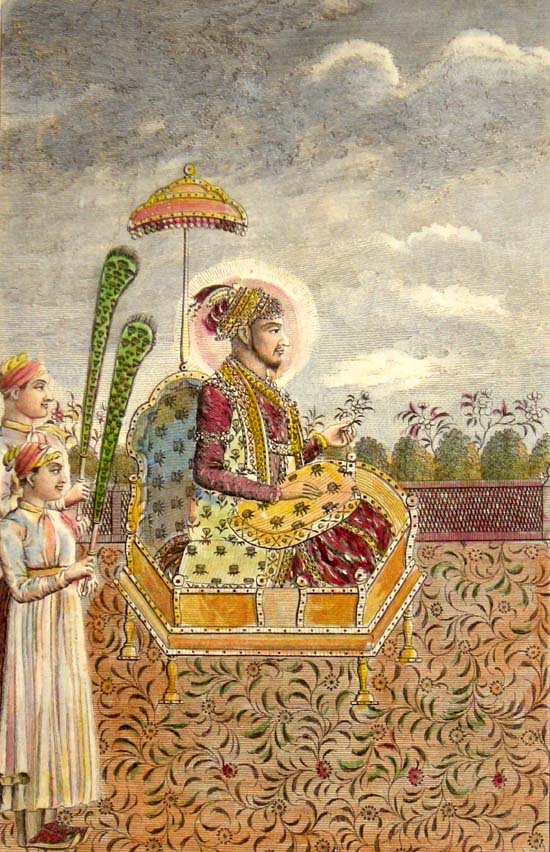
Same form, different function. Continuity of institutions does not mean the Mughal system survived. Under colonial rule the same revenue practices served a different purpose, because the wealth collected was drained from India. Imperialist historians blurred this difference to suggest the British were no different from earlier rulers.
Why did the Mughal empire decline? Four views
The traditional view. Older historians such as Irvine and Jadunath Sarkar blamed the personal failings of emperors and nobles, their immorality and love of luxury. They portrayed Mughal rule as Muslim rule and treated the Maratha, Sikh and Bundela risings as a Hindu reaction to it. This view is now widely rejected as too simple and communal.
The jagirdari crisis. Satish Chandra traced the fall to a crisis in the jagirdari system: there were too few jagirs for too many jagirdars. Nobles who could not get rich assignments fought each other and squeezed the land. The empire's ruling class thus turned on itself.
The agrarian crisis. Irfan Habib showed the agrarian system becoming more exploitative as pressure on limited resources grew. Heavier demands sparked peasant revolts, which destroyed imperial stability. The view that an economic crisis lay behind the decline remains the generally accepted one.
'Success, not failure'. The New Cambridge History of India takes the opposite stand, seeing decline as a result of the Mughal system's success. It argues that the zamindars who rebelled were rich, not poor, and were backed by wealthy merchants. This view has not yet been established with enough evidence.
The successor states: Hyderabad, Bengal and Awadh
Three kinds of states. Regional powers fell into three groups. Successor states (Hyderabad, Bengal, Awadh) were Mughal provinces whose governors broke away. New states were set up by rebels against the Mughals (Marathas, Sikhs, Jats, Afghans), and independent kingdoms (Mysore, the Rajput states, Kerala) had neither broken away nor rebelled, though they have sometimes been wrongly called 'Hindu polities'.
Breaking away in stages. In the successor states the break came gradually: individuals revolted first, then social groups, then whole regions. Zamindari revolts against imperial demands triggered it, and governors, getting no help from Delhi, sought the support of local elites. Yet links with the centre survived; Awadh and Hyderabad even helped the emperor against Nadir Shah, so historian Muzaffar Alam calls the change a 'transformation' rather than a collapse.
Hyderabad. Nizam-ul-Mulk, wazir at Delhi in 1722-24, returned to the Deccan and founded a state that was independent in practice in 1724, while still declaring loyalty to the emperor. He reformed revenue, subdued zamindars and was tolerant towards Hindus, and a regional elite gave his state stability. After his death in 1748, a succession war between Nasir Jang and Muzaffar Jang let the Marathas impose chauth and the French under Dupleix back Muzaffar Jang for rich rewards.
Bengal. Murshid Quli Khan became governor in 1717 and sent only tribute to Delhi. He was followed by Shuja-ud-din (1727-39), Alivardi Khan (from 1739) and his grandson Siraj-ud-daula (1756). The Nawabs gave Hindus high office, refused to let the English and French fortify Calcutta and Chandernagore, and denied them special privileges, but a weak army and underestimation of the Company led to defeat at Plassey, as told in the chapter on Plassey and Buxar.
Awadh. Saadat Khan Burhan-ul-Mulk, governor from 1722, faced zamindars who refused revenue and behaved like autonomous chiefs with forts and armies. He subdued them and introduced a land settlement that protected peasants from zamindars. He gave jagirs and posts to local gentry, creating a 'regional ruling group' of Shaikhzadas, Afghans and sections of Hindus, and Awadh prospered while Punjab suffered.
The Marathas: an empire that almost was
The Peshwa's rise. Under Shahu, Shivaji's grandson, released from Mughal custody in 1707, the loyal official Balaji Vishwanath made the office of Peshwa (chief minister) the fountainhead of Maratha authority. By the time of his son Baji Rao (died 1740), the Marathas were an expansionist empire. But conquests were made by chiefs who received the right to collect chauth and sardeshmukhi and who resisted the Peshwa's control.
The height of power. Baji Rao led campaigns himself, winning Malwa and Gujarat, and twice beat the Nizam. Under Balaji Rao, or Nana Saheb (1740-61), Maratha power reached its peak: Hyderabad gave up a large territory after defeat in 1760, Mysore paid tribute and Orissa was gained in 1751. The long rivalry with the Nizam, instead of an alliance against outsiders, later let the British play one against the other.
The road to Panipat. From 1752 the Marathas dominated the Delhi court through the wazir Imad-ul-Mulk, and then reached for Punjab, held by a tributary of Abdali. This was a grave mistake. They had already alienated the Mughal nobles, Jats, Rajputs and Sikhs, and the Rohilla chief and the Awadh Nawab joined Abdali.
14 January 1761. At the Third Battle of Panipat the Marathas fought alone. About 28,000 Marathas died, including the Peshwa's son Vishwas Rao and his cousin Sadashiv Rao Bhau, and the Peshwa died soon after hearing the news. The defeat checked the Maratha bid to replace the Mughals, and the real beneficiaries were the British, who were then expanding in Bengal.
A brief revival. Peshwa Madhav Rao (from 1761) again subdued the Rohillas, Rajputs and Jats in the north and Mysore and Hyderabad in the south. His death in 1772, at only 28, ended the dream and opened a factional struggle, which exposed the Marathas to British attack, as told in the chapter on building the Company's empire.
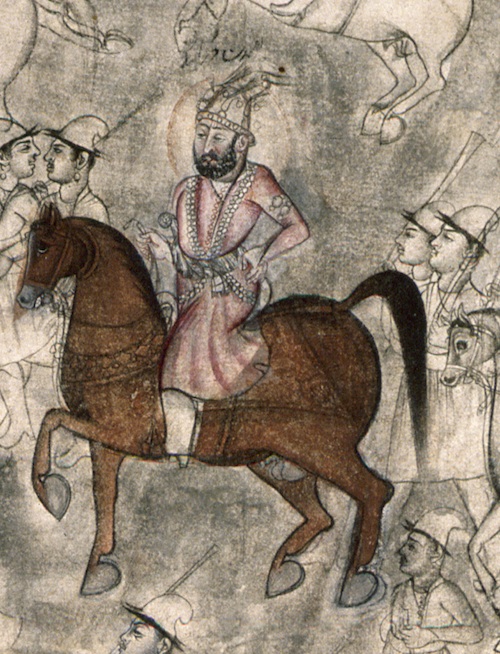
Why the Maratha system fell short. The Maratha rise was both a regional reaction against Mughal centralisation and a sign of the upward mobility of rural gentry and peasant castes. But the system relied on chauth and plunder rather than direct rule, even over rich areas, and lacked a proper administrative hierarchy. It also failed to adopt the new artillery and firearms, such as flintlock guns.
Sikhs, Jats, Afghans and the independent kingdoms
The Sikhs. By the time of Guru Gobind Singh, the Sikhs had become a militant, well-knit community, and Banda Bahadur rebelled against Aurangzeb's successors until he was crushed in 1715. Unlike other rebels, the Sikhs refused any compromise with Delhi. After a quiet quarter century they used the invasions of Nadir Shah and Abdali to take control of Punjab, which was divided among 12 misls (confederacies), and recent scholarship rejects the old view that their polity was theocratic.
The Jats. The Jats, a farming caste of the Delhi-Agra belt, had revolted against the Mughals in the late seventeenth century. Churaman and Badan Singh founded a Jat state at Bharatpur, and Suraj Mal (1756-63) extended it from the Ganga to the Chambal and from Delhi to Agra. Though born of a peasant revolt, the Jat state stayed feudal, with revenue demands under Suraj Mal higher than under the Mughals, and it collapsed after his death in 1763.
The Afghans. Afghan migration created Rohilkhand, founded by Ali Muhammad Khan in the foothills between Kumaon and the Ganga, and a kingdom around Farrukhabad under Muhammad Khan Bangash. Politically their role was negative: they hastened Mughal decline and helped Abdali subdue Awadh, a state that might have checked British expansion.
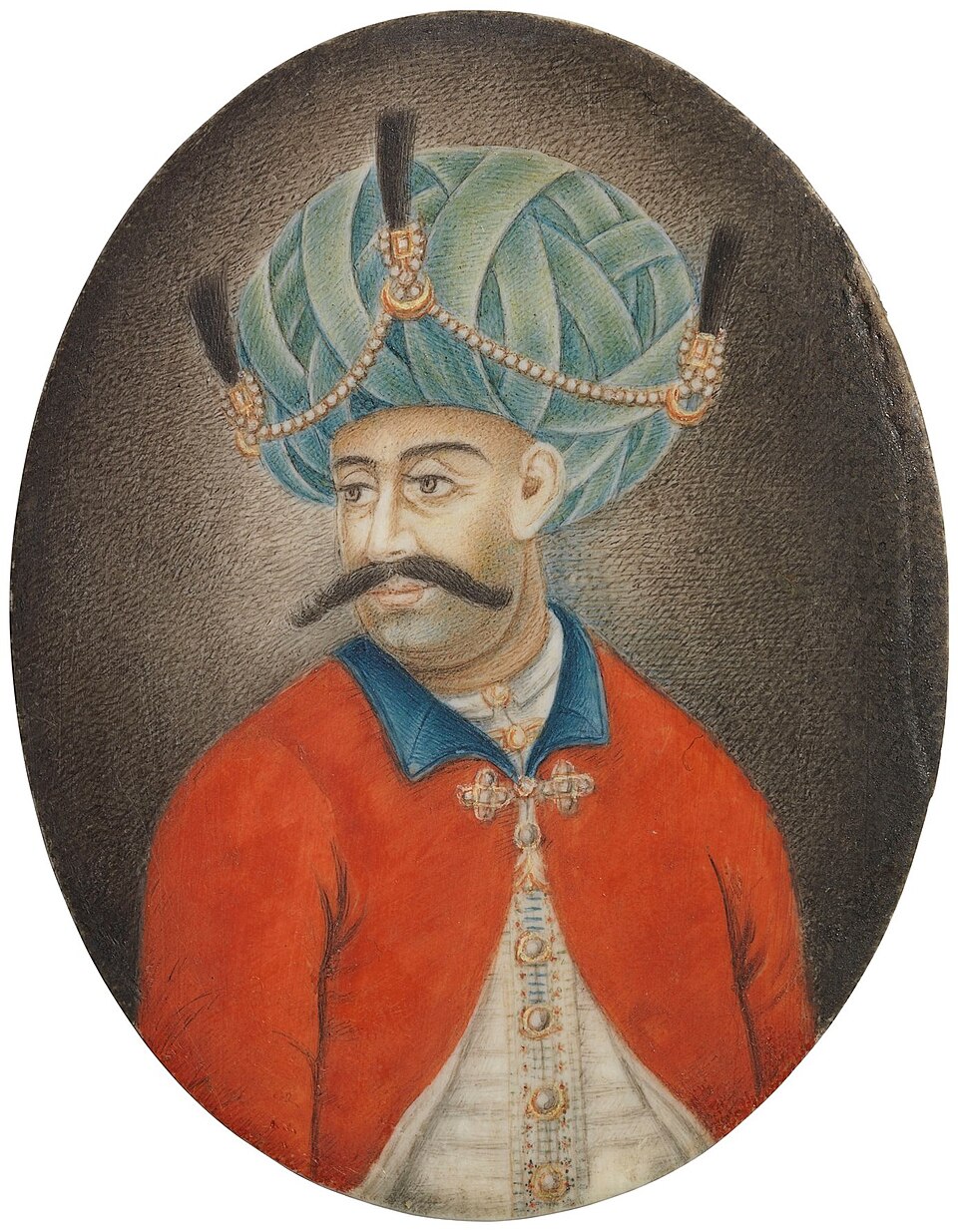
Mysore. Haidar Ali, a junior officer of humble birth, realised that only a modern army could sustain a strong state, and brought in French experts to set up an arsenal and train troops. He overthrew the minister Nanjaraj in 1761, extended Mysore to the rich coasts of Canara and Malabar, inflicted a heavy defeat on the British near Madras in 1769, and died in 1782, leaving the kingdom to Tipu Sultan.
Rajputs and Kerala. The Rajput rulers slowly loosened ties with Delhi and won rich governorships, but none was strong enough to bid for paramount power, and their politics stayed divided; Jai Singh ruled Amber (Jaipur) from 1699 to 1743. In Kerala, Martanda Varma of Travancore expanded his state after 1729 with a Western-trained army, ousted the Dutch and built irrigation and transport, and his successor Rama Varma made Trivandrum a centre of learning; Haidar Ali, however, annexed Malabar and Calicut in 1766.
Mains lens: why could no regional state replace the Mughals?
The weakness view. The regional states were strong enough to destroy Mughal power, but none could build a stable all-India polity. One view blames inherent weaknesses: apart from Mysore, they were backward in science and technology, and they could not reverse the economic stagnation of the Mughal economy. The jagirdari crisis deepened as farm income fell and claimants multiplied.
The resilience view. Recent historians question this. Satish Chandra argues that it is wrong to speak of general economic decline and social stagnation; the economy was resilient even as the polity collapsed, and low castes and 'new men' were rising everywhere. Muzaffar Alam shows a regionally varied picture, with Awadh prospering and Punjab stagnating.
The surplus problem. On this view, polities stayed regional because no state had enough surplus to sustain an all-India system like the Mughal empire. Rivalries among them, such as the Maratha-Nizam contest, let outsiders divide and rule. The British, backed by a growing world economy and a modern army, filled the vacuum.
How to write it. A balanced answer avoids both the 'Dark Age' picture and an over-rosy one. It shows the vitality of regional states and their real limits in military technology, administration and unity. It ends by linking those limits to the British conquest that followed.
Mains practice: the eighteenth century
| Angle | Question | Key points to cover |
|---|---|---|
| Debate | "The eighteenth century was not a Dark Age but an age of regional transformation." Discuss. | Old 'Dark Age' view and Sarkar; limits of Mughal reach; successor states and Muzaffar Alam's 'transformation'; economic variety; continuity of Mughal traditions. |
| Causes | Critically examine the different explanations for the decline of the Mughal empire. | Traditional (personal failings); jagirdari crisis (Satish Chandra); agrarian crisis (Irfan Habib); New Cambridge 'success' view; Nadir Shah and Abdali as external blows. |
| Battle | Why did the Marathas lose the Third Battle of Panipat, and who gained from it? | Overreach into Punjab; alienated allies; Rohilla and Awadh with Abdali; losses; British gain; Madhav Rao's revival and its end in 1772. |
| Evaluation | Why could none of the eighteenth-century regional states build an all-India empire? | Three kinds of states; weakness view vs resilience view; surplus problem; rivalries; military technology; British advantage. |
These are practice questions written by us, not past papers. Past questions from your exam appear in the PYQ panel.
How to use this table: each answer should explain the what, then the why, and end with what it led to.
Quick revision
- 'Dark Age' view; Jadunath Sarkar: modern age began 23 June 1757; Satish Chandra: the century as one whole.
- Decline: weak rulers 1707-19; Muhammad Shah 1719-48; Hyderabad independent 1724.
- Nadir Shah: Karnal, 13 Feb 1739; ~70 crore, Peacock Throne, Kohinoor; lands west of the Indus incl. Kabul. Abdali invasions 1748-67.
- Views on decline: traditional (Irvine, Sarkar); jagirdari crisis (Satish Chandra); agrarian crisis (Irfan Habib); New Cambridge 'success' (unproven).
- Three kinds of states: successor (Hyderabad, Bengal, Awadh), new (Marathas, Sikhs, Jats, Afghans), independent (Mysore, Rajputs, Kerala). Muzaffar Alam: 'transformation'.
- Bengal: Murshid Quli Khan 1717, Shuja-ud-din 1727-39, Alivardi 1739, Siraj 1756. Awadh: Saadat Khan 1722. Hyderabad: Nizam-ul-Mulk 1724, died 1748.
- Marathas: Balaji Vishwanath; Baji Rao (d. 1740); Nana Saheb 1740-61; Orissa 1751; Panipat 14 Jan 1761 (~28,000 dead); Madhav Rao d. 1772.
- Sikhs: Banda crushed 1715; 12 misls. Jats: Bharatpur; Suraj Mal 1756-63. Afghans: Rohilkhand, Farrukhabad.
- Haidar Ali: overthrew Nanjaraj 1761; beat the British near Madras 1769; d. 1782. Martanda Varma (Travancore, from 1729). Jai Singh (Amber, 1699-1743).