

TNPSC Group 1 · Module 6 · Mains depth · 22 min
Shivaji and the rise of the Marathas
What TNPSC Group 1 asks from this chapter
Syllabus lines this chapter covers:
- Part A: General Studies · History and culture of India, and the Indian national movement.
TNPSC Group 1 questions from this module are being sorted into our bank.
Read at full depth: basics, the standard layer and the Mains analysis.
Start from zero: how a jagirdar's son founded a kingdom
In 1627 a boy was born in the hill fort of Shivneri to a Maratha noble serving the Deccan sultans. He inherited no kingdom, only a jagir around Poona. Within fifty years he had crowned himself king, defied the Mughal emperor and founded a state that would outlast the Mughal Empire's power in the Deccan.
That boy was Shivaji. His rise changed Deccan politics, pulled Aurangzeb south for the last quarter-century of his life and created the power that dominated much of India in the eighteenth century. Understanding him is essential for both medieval and modern history.
The land itself helped. Maharashtra has three zones: the narrow Konkan coast, the Ghatmatha on top of the Sahyadri (Western Ghats), and the Des plateau to the east. Its hill forts made it one of the best-defended regions in India, and the poor hill soils bred hardy, determined people.
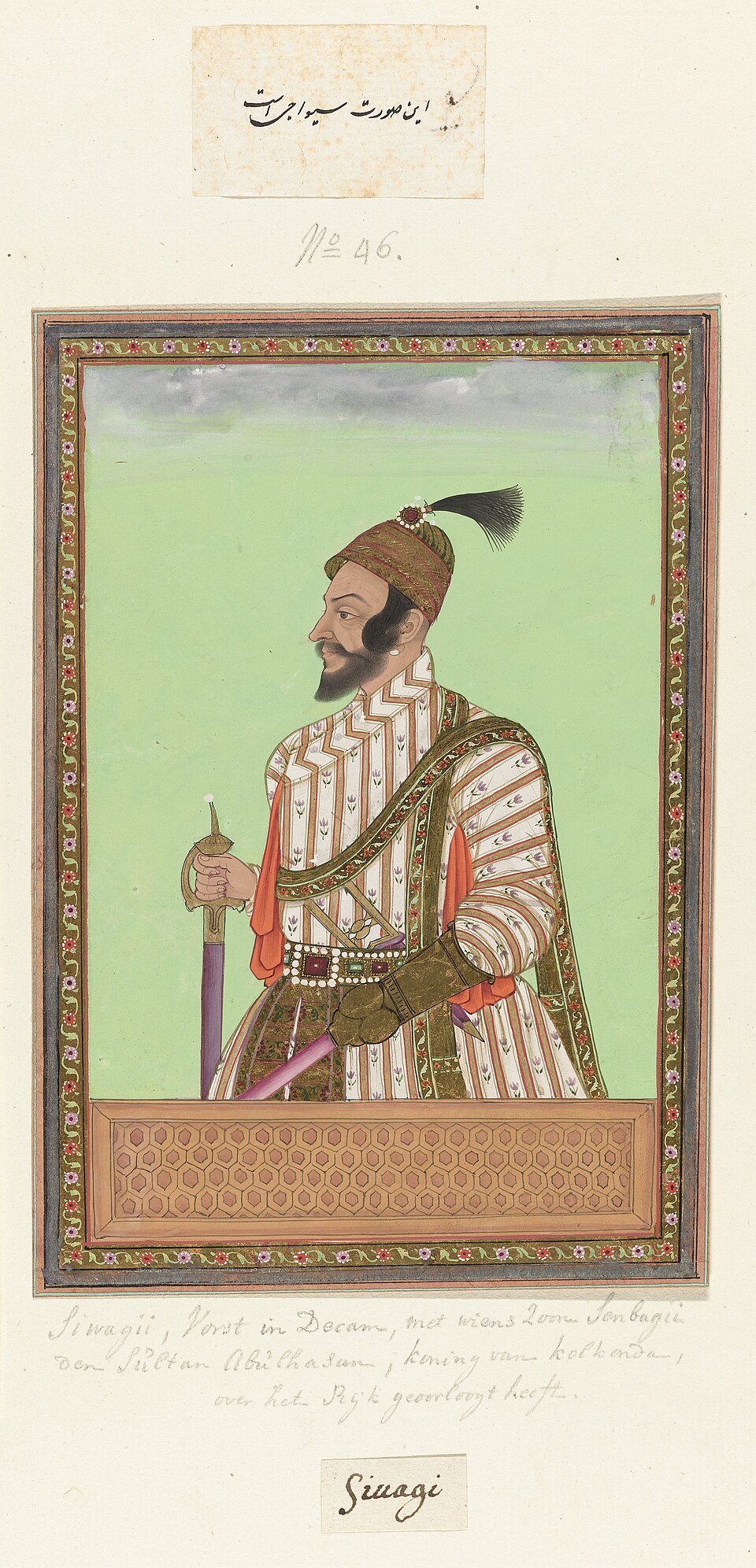
Historians still argue about why the Marathas rose. Was it a Hindu revolt, a national freedom struggle, or something rooted in land, caste and peasant life? Keep that question in mind, because it is the heart of most Mains questions on this topic.
Shivaji's life and the Maratha struggle at a glance
| When | What happened | Why it matters |
|---|---|---|
| 10 April 1627 | Shivaji born at Shivneri | Son of Shahji and Jija Bai. |
| 1636 | Shahji surrenders; moves to Bijapur service | Shivaji grows up in Poona. |
| 1648, 1656 | Purandar fort; Javli taken | Base and capital (Raigarh) secured. |
| 10 Nov 1659 | Afzal Khan killed | Bijapur's challenge broken. |
| 5 April 1663 | Night attack on Shaista Khan at Poona | Blow to Mughal prestige. |
| Jan 1664 | First sack of Surat | Hits the empire's richest port. |
| 1665 | Treaty of Purandar | 23 of 35 forts given up. |
| 1666 | Agra visit, confinement and escape | Jai Singh's plan collapses. |
| 1670 | Forts recovered; second sack of Surat | Maratha revival. |
| 6 June 1674 | Coronation at Raigarh | Equal in status to Deccan rulers. |
| 1677-78 | Karnataka campaign | A second base in the south. |
| 23 March 1680 | Shivaji dies | Aurangzeb moves to the Deccan. |
| 1689 | Sambhaji captured and executed | Marathas regroup under Rajaram. |
Notice the pattern: every Mughal success was followed by a Maratha recovery. That is the clearest sign that this was more than a band of raiders.
Why did the Marathas rise? Five explanations
A sudden blaze? The British historian Grant Duff compared the Maratha rise to a fire that suddenly blazed up in the forests of the Sahyadri. M.G. Ranade rejected this and called it a national struggle against foreign rule. Critics reply that the sultans of Bijapur and Ahmednagar were as 'foreign' as the Mughals, yet the Marathas had served them for decades.
A Hindu reaction? Jadunath Sarkar and G.S. Sardesai saw a Hindu reaction against Aurangzeb's policies. But the Marathas' earliest patrons were Muslim rulers, Shivaji praised Akbar's ideal of sulh-i kul, and there were many Muslims in his navy. He did not fight for Hindus outside Maharashtra or launch social reforms within it, so this view has a weak base.
Pressure from the north. Andre Wink links the rise to growing Mughal pressure on the Deccan sultanates, which broke up their order and opened space for local leaders. Even Grant Duff accepted the Mughal factor. The fall of Ahmednagar created exactly such a vacuum.
Land and local power. Satish Chandra stresses socio-economic roots. Shivaji did not abolish the deshmukh system but curbed the big deshmukhs and their armed retainers, reformed abuses and drew strength from petty landholders, like the Maval chiefs who rallied to him first; Irfan Habib connects the rise with the restless mood of an oppressed peasantry.
Caste and status. Marathas were farmers and fighters, yet were not recognised as kshatriyas. Shivaji married into leading deshmukh families such as the Shirkes and Nimbalkars, and at his coronation (1674) had a kshatriya genealogy prepared with the help of the Banaras scholar Gaga Bhatt. This lifted his family above rival clans and gave him the exclusive right to collect sardeshmukhi.
Maharashtra dharma. The bhakti saints' message of equality gave Maharashtra a shared cultural identity and justified upward social mobility. The saint-poet Ramdas gave 'Maharashtra dharma' a political edge, and the battle-cry 'Har Har Mahadev' stirred the peasantry. Yet chauth and sardeshmukhi were collected from Hindus and Muslims alike, so religion served more as a 'psychological tonic' than a war aim.
The balance. Most scholars now see the Maratha movement as a regional reaction against the centralising Mughal Empire, not a plan for 'Hindu swarajya'. Land, local power, caste mobility and a regional culture all combined. That mix explains both its popular base and its later habit of raiding beyond its borders.
From Shahji to Shivaji: building a base, 1627-1664
Marathas in Deccan service. From the early seventeenth century, Maratha chiefs served the sultans of Ahmednagar, Bijapur and sometimes Golkonda. They held hill forts, commanded cavalry and earned titles such as raja and rao. This service gave them military skill, local power and political experience.
Shahji, the father. The Bhonsle family rose through such service. Shahji Bhonsle joined the Mughals in 1630 with a rank of 6,000 zat, went over to Bijapur in 1632, and by 1634 controlled about a quarter of the Nizam Shahi lands. After the Mughal campaign of 1636, described in the chapter on Akbar's successors, he surrendered his forts and served Bijapur in Karnataka.
A boy in Poona. Shivaji was born at Shivneri on 10 April 1627 to Shahji and Jija Bai. With his father far away, he grew up in Poona under the guardian Dadaji Konddev. After Dadaji's death in 1647, Shivaji took sole charge of the Poona jagir as his father's agent.
The Maval backbone. Shivaji first won over the Maval chiefs west of Poona, such as the Jedhe and Bandal nayaks. These hill men became the backbone of his army. He set out to recover the lands his father had held in 1634, seeing them as his legitimate right.
Forts and Javli. In 1648 he occupied the fort of Purandar, which gave him a strong defence for years to come. In 1656 he took Javli from the Maval chief Chandra Rao More. This opened the way into the Konkan, added More's men to his army, and gave him the hill of Raigarh, his future capital.
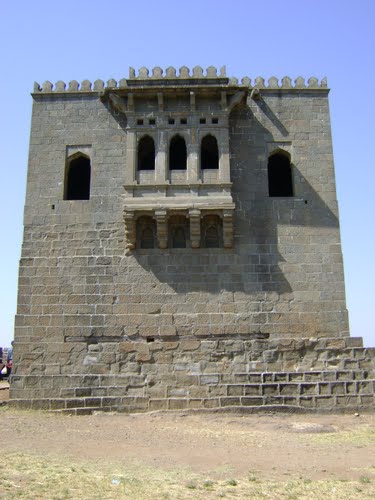
Kalyan and the coast. While the Mughals were busy with the war of succession in 1657-58, Shivaji took Kalyan and Bhivandi and pushed into the Konkan. He built his first naval bases there. Bijapur now saw him as its main enemy.
Afzal Khan. Bijapur sent the general Afzal Khan against him. A meeting was arranged to settle terms, and there Shivaji killed him on 10 November 1659. The Bijapuri army was soon overpowered, though Panhala fort was lost again in 1660.
Shaista Khan and Surat. Aurangzeb sent Shaista Khan as Mughal viceroy, who took Chakan and north Konkan. On 5 April 1663 Shivaji struck his camp at Poona by night and seriously wounded him, a blow to Mughal prestige. In January 1664 he sacked Surat, the empire's richest port, for the first time.
Purandar, Agra and the kingdom, 1665-1680
Jai Singh's master plan. Aurangzeb now sent Mirza Raja Jai Singh of Amber. His plan was bold: make an ally of Shivaji, give him lands at Bijapur's cost and away from the Mughal frontier, conquer Bijapur with Maratha help, and deal with Shivaji afterwards. He besieged Shivaji at Purandar in 1665.
The Treaty of Purandar (1665). Shivaji gave up 23 of his 35 forts, and his son was enrolled as a Mughal mansabdar of 5,000. He was to be compensated with Bijapur lands in the Konkan and Balaghat, which set him against Bijapur. But Aurangzeb saw Bijapur and the Marathas as separate problems and sent no fresh troops.
Agra, 1666. To bind Shivaji closer, Jai Singh arranged his visit to the emperor at Agra. At court Shivaji was placed among nobles of 5,000, which he took as an insult; his angry protest led to his confinement. His escape later in 1666 wrecked Jai Singh's plan, and Jai Singh was soon replaced.
Recovery. After a brief truce, Shivaji struck again. In 1670 he recaptured forts ceded at Purandar, including Kondana, Purandar and Mahuli, and on 30 October 1670 sacked Surat a second time. Mughal commanders quarrelled among themselves, and Maratha raids reached Berar and Baglana.
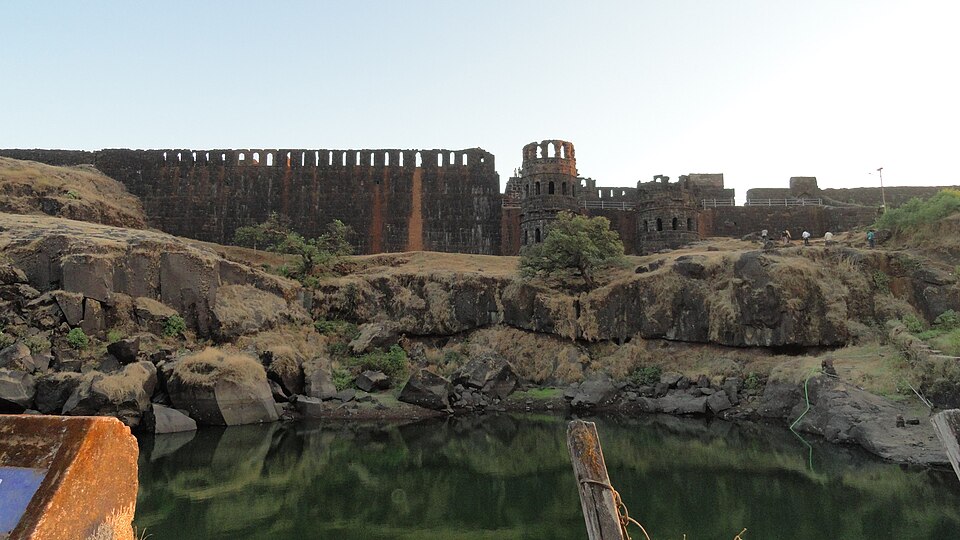
Coronation, 1674. On 6 June 1674 Shivaji was crowned king at Raigarh. The ceremony placed him above other Maratha families and on a par with the Deccan sultans. It turned a rebel jagirdar into a sovereign ruler.
Karnataka and Golkonda. In 1677 Golkonda's minister Madanna allied with Shivaji and agreed to pay him one lakh huns a year for protection against the Mughals. With Golkonda's support Shivaji campaigned in Karnataka (1677-78), winning a second base far to the south. The alliance soured when he did not hand over Jinji as promised.
A troubled succession. Shivaji planned to give the Des and Konkan to his younger son Rajaram and the new Karnataka lands to his elder son Sambhaji. Sambhaji was unhappy and briefly joined the Mughals in 1678. Shivaji died on 23 March 1680, leaving a powerful kingdom with an unsettled succession.
How Shivaji governed
A centralised monarchy. Shivaji's state was a centralised monarchy, with the king's duty defined as the welfare of his subjects. Much of its machinery came from the Deccan sultanates, with some Mughal touches. What Shivaji added was tighter control and constant checks on officials.
The ashtapradhan. A council of eight ministers, the ashtapradhan, advised the king. They were the peshwa (chief minister), mazumdar (accounts), wakins (the king's private affairs), dabir (foreign affairs), surnis (official correspondence), pandit rao (religious affairs), senapati (commander-in-chief) and nyayadhish (chief justice). Several of these offices already existed under the Deccan rulers.
Not hereditary, not binding. Under Shivaji these ministers held office at the king's pleasure, were often transferred and were paid in cash, with no jagirs. All except the pandit rao and nyayadhish could lead military campaigns. Their advice did not bind the king; only later, under the peshwas, did offices become hereditary.
Provinces. The kingdom was divided into mauzas (villages), tarfs under a havaldar, and prants (provinces) under a subedar, with a sarsubedar over several prants. Shivaji reorganised and renamed units that already existed. No officer was permanent, and all could be transferred.
The fort system. Forts were the core of Shivaji's defence, and he built or held about 250. In each fort a havaldar kept the keys, a sabnis kept the muster roll and accounts, and a sarnobat commanded the garrison; a karkhanis managed stores. All were of equal rank, so no single officer could hand the fort to an enemy.
The army. Shivaji relied on light cavalry and light infantry trained for hill and guerrilla warfare. His cavalry had bargirs, who got horses and arms from the state, and siledars, who brought their own. Soldiers were paid in cash, the wounded got allowances, widows got pensions, and women were not allowed in camp.
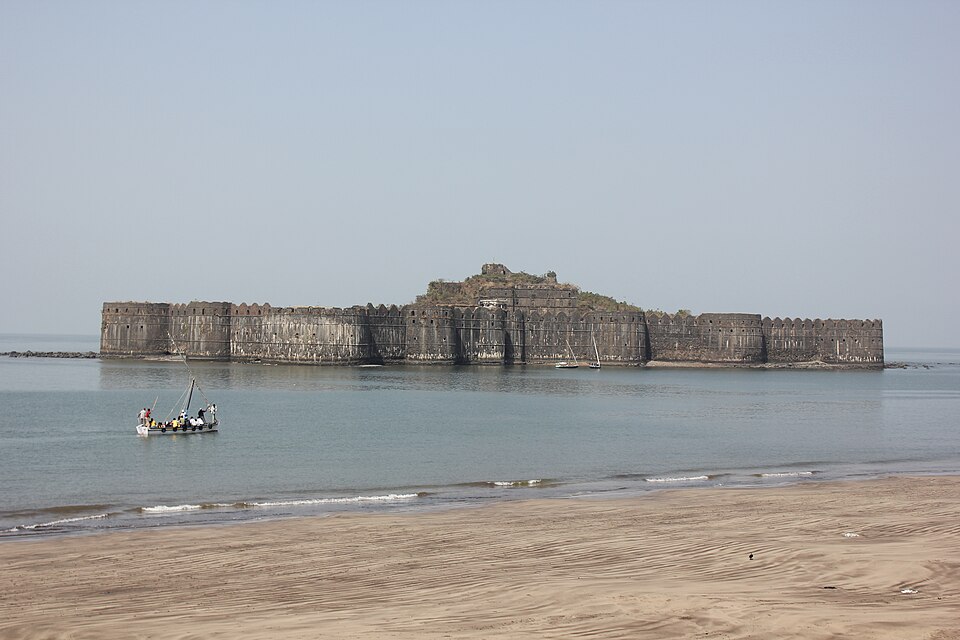
The navy and justice. After conquering the Konkan, Shivaji built a fleet of ghurabs (gunboats) and gallivats (oared galleys), largely manned by Kolis, under admirals such as Darya Sarang and Mai Naik Bhandari. It could harass traders but never broke the Siddis of Janjira. Justice stayed informal: village panchayats heard civil cases, and the patil decided criminal ones.
Chauth and sardeshmukhi. Beyond their own territory, the Marathas collected chauth, one-fourth of the revenue, and sardeshmukhi, a further one-tenth. Critics called these legalised plunder; for the Marathas they were a way to fund their armies and assert claims over neighbouring lands. These levies became central to Maratha expansion in the eighteenth century.
After Shivaji. Under the peshwas, offices became hereditary, the army was paid through saranjam jagirs, and camps grew bloated with luxuries. Discipline and speed, Shivaji's great strengths, declined. The eighteenth-century Maratha story is taken up in the chapter on Mughal decline and regional states.
After Shivaji: the long war, 1680-1707
A disputed throne. At Shivaji's death some ministers proclaimed Rajaram king. Sambhaji acted fast, imprisoned Rajaram and the minister Annaji Datto in 1680, and took the throne. His harsh treatment of his father's loyalists drove some families, such as the Shirkes, to the Mughals.
Aurangzeb comes south. In 1680 Aurangzeb decided to settle the Deccan himself. Sambhaji had sheltered his rebel son, Prince Akbar. After four years of little progress, Aurangzeb turned first on Bijapur (1686) and Golkonda (1687), as told in the chapter on Akbar's successors.
Too late? Jai Singh had proposed dealing with Bijapur first, with Maratha help, back in 1665. By the time Aurangzeb did it, the Marathas had grown stronger and built a second line of defence in Karnataka. They were no longer scattered chiefs but a kingdom equal in status to the Deccan sultanates.
Sambhaji's end. Defections weakened the Maratha camp, and in February 1689 the Mughals captured Sambhaji. He was executed in March 1689. Aurangzeb hoped this would terrify the Marathas, but it hardened them instead.
The war of the people. The Marathas rallied under Rajaram, who withdrew far south to Jinji. The Mughals took Raigarh in 1689 and many forts later, but could not capture Rajaram or crush the movement. Maratha bands recovered lost ground, and the endless campaigns broke the Mughal army's morale.
Why the Mughals failed. Satish Chandra argues that Aurangzeb never grasped the nature of the Maratha movement. He treated Shivaji as a mere local landholder (bhumia), though the Marathas had a popular base and the backing of local landholders (watandars). Imposing Mughal administration on the Deccan displaced local landed groups, angered them, and burdened the peasantry.
The cost to the empire. Mughal jagirdars found it almost impossible to collect revenue from Deccan jagirs. To win support, Aurangzeb enrolled many southerners; Maratha mansabdars above 1,000 zat rose from 13 under Shah Jahan to 96 under him, adding to the jagir crisis described in the chapter on Mughal administration. Aurangzeb finally withdrew towards Ahmednagar and died in 1707, with the Marathas undefeated.
On the coast. At sea, the Siddis of Janjira, Abyssinian lords with a strong fleet, passed into Mughal service in 1671 and remained Shivaji's toughest rivals. The English traded uneasily with him; Henry Oxinden's embassy of 1674 led to the reopening of the Rajapur factory in 1675. The Portuguese avoided open war and signed agreements with Shivaji in 1667 and 1670.
Mains lens: rebel, nation-builder or regional state-maker?
Three images of Shivaji. Mughal chroniclers saw a rebel and raider. Nineteenth-century nationalists like Ranade saw a national hero fighting foreign rule. Modern historians mostly see a builder of a regional state that drew on local land, caste and culture.
Why the label matters. The 'Hindu reaction' view cannot explain why the Marathas served Muslim sultans for decades or why Shivaji admired Akbar's sulh-i kul. The 'national' view cannot explain why Bijapur was no less foreign than the Mughals. The regional view explains both the popular base and the raids beyond Maharashtra.
The genius of the system. Shivaji's real achievement lay in organisation as much as battle. Cash salaries, transferable officers, equal-ranked fort commanders and caste rules for fort posts all stopped any group from capturing power. But such a system needed an able ruler, and it weakened under his successors.
The Mughal side. For the Mughals, the Marathas exposed the limits of their own system. Treating the movement as a law-and-order problem, executing Sambhaji and imposing northern administration on the Deccan only deepened resistance. The resulting strain on jagirs and treasury fed the decline traced in the chapter on Mughal decline.
How to write it. Start with the setting: Deccan service, Ahmednagar's collapse and Mughal pressure. Then weigh the explanations, from Grant Duff and Ranade to Satish Chandra, and support the regional view with evidence on deshmukhs, caste status and Maharashtra dharma. Conclude with Shivaji's administration and why the Mughals failed to crush a movement with a popular base.
Mains practice: Shivaji and the Marathas
| Angle | Question | Key points to cover |
|---|---|---|
| Debate | "The rise of the Marathas was neither a Hindu reaction nor a national war of independence." Discuss. | Grant Duff; Ranade; Sarkar and Sardesai; Wink; Satish Chandra on deshmukhs; Irfan Habib on peasants; caste status and coronation; Maharashtra dharma; regional reaction. |
| Administration | Examine the main features of Shivaji's administration. How far was it original? | Ashtapradhan and Deccani roots; cash pay; no hereditary office; prants and tarfs; forts with equal officers; bargirs and siledars; navy; weak judiciary; chauth and sardeshmukhi. |
| Mughal policy | "Aurangzeb's failure in the Deccan was his inability to understand the Maratha movement." Examine. | Jai Singh's plan and Purandar 1665; Agra 1666; Bijapur and Golkonda first; Sambhaji's execution 1689; Rajaram at Jinji; bhumia view; watandars; 13 to 96 Maratha mansabdars; jagir crisis. |
These are practice questions written by us, not past papers. Past questions from your exam appear in the PYQ panel.
How to use this table: each answer should explain the what, then the why, and end with what it led to.
Quick revision
- Geography: Konkan, Ghatmatha, Des; hill forts.
- Theories: Grant Duff (sudden blaze); Ranade (national); Sarkar, Sardesai (Hindu reaction); Wink (Mughal pressure); Satish Chandra (curbed big deshmukhs, petty landholders); Irfan Habib (peasant unrest); Ramdas and Maharashtra dharma.
- Shahji: Mughal rank 6,000 zat (1630); Bijapur 1632; surrender 1636.
- Shivaji: born Shivneri, 10 April 1627; Dadaji Konddev; Maval chiefs; Purandar fort 1648; Javli 1656 (Chandra Rao More) → Raigarh.
- Afzal Khan killed 10 Nov 1659; Shaista Khan attacked 5 April 1663; Surat sacked Jan 1664 and 30 Oct 1670.
- Jai Singh; Treaty of Purandar 1665 (23 of 35 forts; son a 5,000 mansabdar); Agra 1666, escape.
- Coronation 6 June 1674 (Raigarh; Gaga Bhatt); Karnataka campaign 1677-78 (Madanna); died 23 March 1680.
- Sambhaji captured Feb, executed March 1689; Rajaram to Jinji; Aurangzeb died 1707.
- Ashtapradhan: peshwa, mazumdar, wakins, dabir, surnis, pandit rao, senapati, nyayadhish; not hereditary; cash pay.
- Provinces: mauza, tarf, prant, sarsubedar. Forts (~250): havaldar, sabnis, sarnobat of equal rank. Cavalry: bargirs vs siledars. Navy: ghurabs, gallivats, Kolis.
- Chauth = 1/4, sardeshmukhi = 1/10. Maratha mansabdars above 1,000: 13 → 96.