

TNPSC Group 1 · Module 6 · Mains depth · 25 min
Jahangir, Shah Jahan and Aurangzeb
What TNPSC Group 1 asks from this chapter
Syllabus lines this chapter covers:
- Part A: General Studies · History and culture of India, and the Indian national movement.
TNPSC Group 1 questions from this module are being sorted into our bank.
Read at full depth: basics, the standard layer and the Mains analysis.
Start from zero: holding what Akbar built
When Akbar died in 1605, he left an empire that stretched from Kabul to Bengal. His son, grandson and great-grandson ruled it for the next hundred years. These were Jahangir, Shah Jahan and Aurangzeb, and their century is often remembered for marble tombs, miniature paintings and the Taj Mahal.
Yet the political story is less about new conquests and more about holding on. Very little territory was added after Akbar. The main new gains came late, in the Deccan and briefly in Assam.
Three pressures shaped the century. The first was the north-west, where Persia and the Uzbeks contested Qandahar and Central Asia. The second was the Deccan, where strong sultanates and later the Marathas resisted. The third was the partnership Akbar had built with Rajputs and other groups, which each emperor handled differently.
This chapter follows each emperor through these three pressures. Keep one question in mind. Did the empire's troubles after 1660 come from one ruler's choices, or from problems that had been building for decades?
The century at a glance
| When | What happened | Why it matters |
|---|---|---|
| 1605 | Jahangir succeeds Akbar | The empire passes intact. |
| 1614-15 | Mewar accepts Mughal suzerainty | Last Rajput holdout settles. |
| 1617 | Deccan settlement; Khurram titled Shah Jahan | Peace, but no new land. |
| 1622 | Persia takes Qandahar | Court politics weakens defence. |
| 1627 | Shah Jahan's accession | A more assertive phase. |
| 1636 | Ahmednagar ended and divided | Bijapur and Golkonda become vassals. |
| 1638-48 | Qandahar won, Balkh taken and lost, Qandahar lost | Costly failure in the north-west. |
| Late 1650s | War of succession; Aurangzeb wins | Father imprisoned, brothers killed. |
| 1661-63 | Mir Jumla's Assam campaign | Short-lived north-east gain. |
| 1679 | Jiziya reimposed | Most debated religious measure. |
| 1686, 1687 | Bijapur and Golkonda annexed | Empire at its largest; Marathas still unbeaten. |
| 1707 | Aurangzeb dies | Decline begins. |
Notice how the action moves from the north-west in the first half of the century to the Deccan in the second. That shift explains much of what follows.
Jahangir, 1605-27: peace with Mewar, trouble at court
A prince who rebelled. Akbar's last years were clouded by the revolt of his son Salim, who kept his own friendly contacts with the Persian Shah. Salim took the throne as Jahangir in 1605. He inherited a settled empire and a habit of court rivalry that would grow during his reign.
Mewar settles. Mewar was the only Rajput state that had not submitted to Akbar. After a long series of campaigns, Rana Amar Singh accepted Mughal suzerainty in 1614-15. Jahangir was generous: the Rana did not have to appear in person, his son Karan Singh paid homage and received a mansab and jagir, and all Mewar's lands, including Chittor, were returned.
Why generous terms worked. No marriage alliance was forced on the Rana, and a son or brother of the Rana would serve the emperor. The one condition was that Chittor would not be rebuilt as a fortress. By respecting Mewar's pride, Jahangir ended a war that force alone had not ended.
The Deccan and Malik Ambar. In the Deccan, the Nizam Shahi minister Malik Ambar rebuilt Ahmednagar's power, made Khirki his new capital and used guerrilla tactics. Mughal generals were divided, some took bribes, and they lost ground. In 1617 Prince Khurram forced Malik Ambar to give back Balaghat and Ahmednagar fort, and Jahangir rewarded him with the title Shah Jahan.
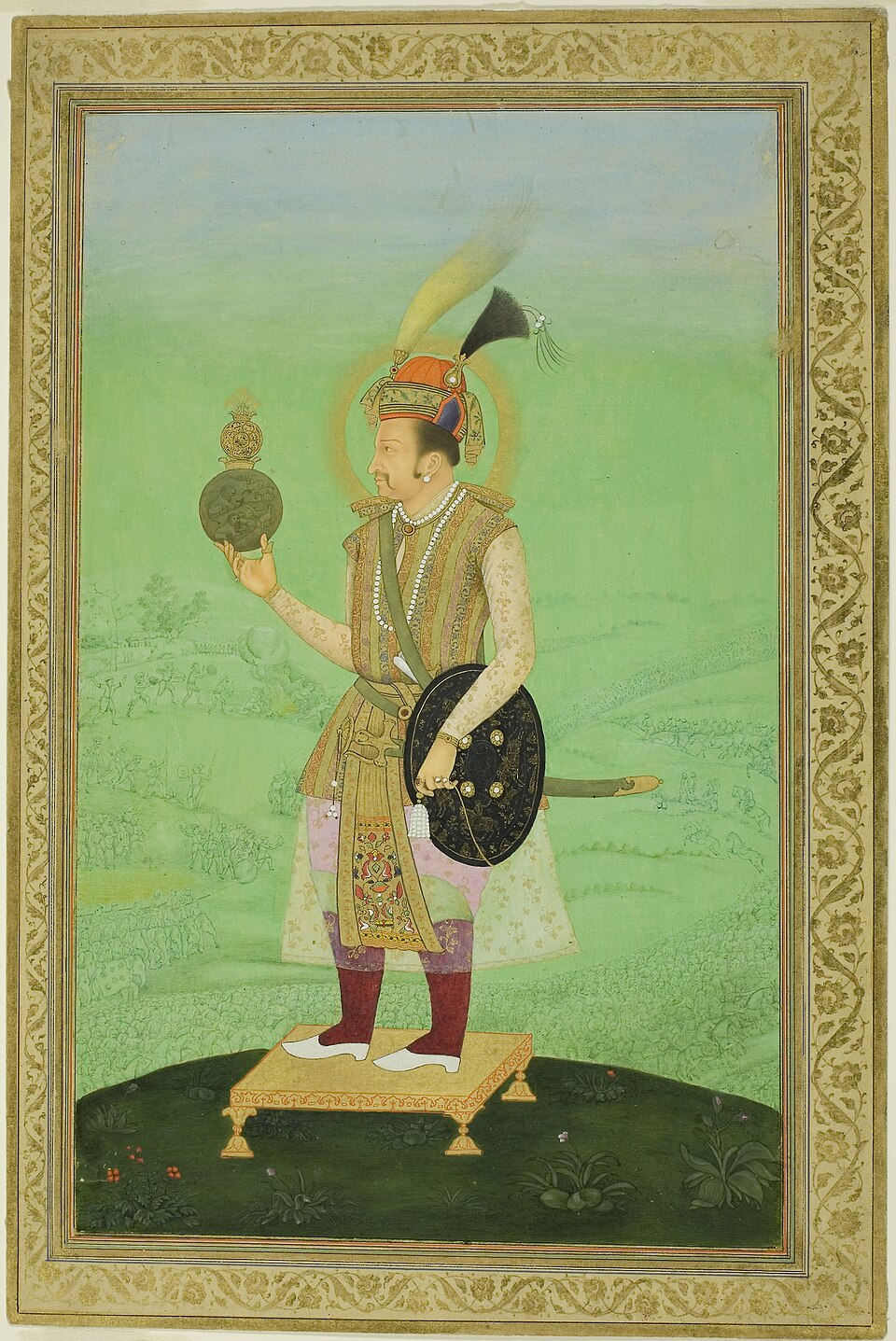
A hollow victory. The success did not last, because Malik Ambar used the peace to build a coalition with Bijapur and Golkonda. Fighting resumed within three years, and Khurram had to return in 1620. In the whole of Jahangir's reign, no new territory was added in the Deccan.
Losing Qandahar. Abul Fazl had called Kabul and Qandahar the twin gates of India. In June 1622 the Persian ruler Shah Abbas I captured Qandahar. Jahangir's failing health and court quarrels helped: Nur Jahan's rift with Khurram, the marriage of her daughter Ladli Begum to Prince Shahryar, and Khurram's rebellion all divided the court at the critical moment.
Religion under Jahangir. Jahangir broadly continued his father's liberal attitude. He did not reimpose jiziya, did not destroy temples as a policy, and the share of Hindu mansabdars did not fall; he even visited the ascetic Jadrup Gosain three times to discuss philosophy. His harsh actions targeted individuals, such as Guru Arjan, and the Sunni leader Shaikh Ahmad Sirhindi, whom he jailed in Gwalior fort for three years for a boastful claim.
Shah Jahan from 1627: the Deccan settlement and court culture
Back to the Deccan. Shah Jahan came to the throne in 1627 and soon turned aggressive in the Deccan. The Mughal governor Khan Jahan Lodi had handed Balaghat to the Nizam Shah, and when recalled he fled to the Deccan and was sheltered there. Shah Jahan crushed his rebellion, recovered Balaghat and Berar, and captured Daulatabad fort.
Shahji's last stand. The Maratha noble Shahji Bhosle, Shivaji's father, tried to save the Nizam Shahi state by crowning a young prince. Shah Jahan came south himself in 1636, defeated Shahji and devastated Bijapur's lands. Bijapur sued for peace.
The settlement of 1636. The Nizam Shahi state came to an end. Its lands were divided along the Bhima river: the north went to the Mughals and the south to Bijapur. Bijapur paid 20 lakh rupees as tribute and accepted fixed borders.
Golkonda bows. The same year Golkonda signed a deed of submission. Its Friday sermon (khutba) would name the four Caliphs and the Mughal emperor instead of the twelve Imams and the Persian Shah, its coins would carry the emperor's name, and it would pay 2 lakh huns a year. For twenty years the Deccan was largely at peace, and both sultanates expanded south into Karnataka.
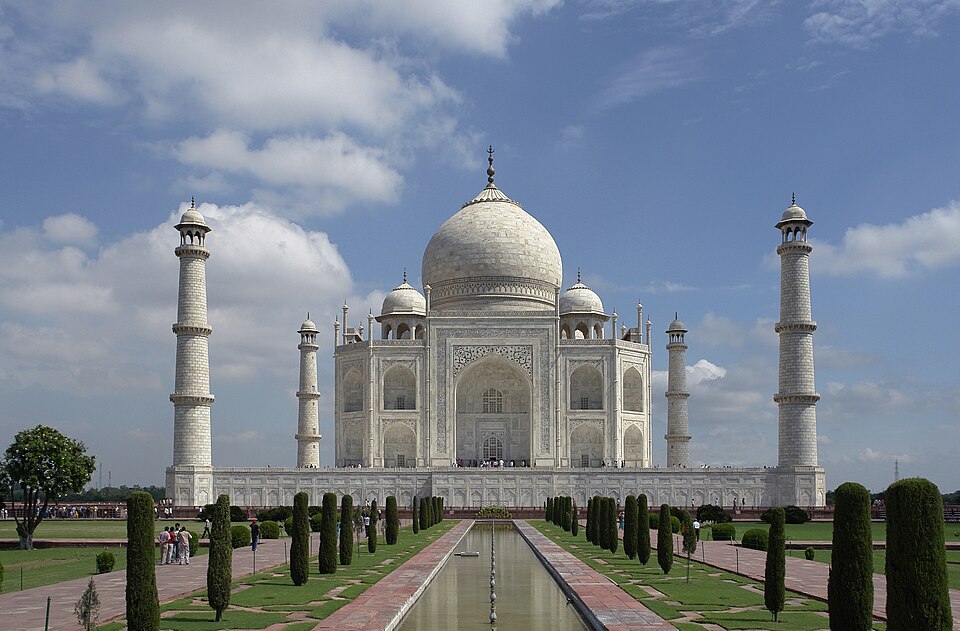
Breaking the deal, 1656-57. After Bijapur's ruler died in 1656, Prince Aurangzeb, viceroy of the Deccan, pressed to attack, and Shah Jahan agreed. Aurangzeb also besieged Golkonda, after its king jailed the son of Mir Jumla, a rich noble who had switched to the Mughals. Some historians link the change to the empire's financial and jagir crisis and interest in Coromandel trade, but on Dara Shukoh's advice Shah Jahan halted both campaigns.
What it left behind. The broken settlement brought no lasting gain. It made the Deccan states deeply suspicious of the Mughals, and the problem passed to Aurangzeb in a worse form.
Religion and culture. Under Shah Jahan, Islamic norms gained some weight. He replaced Akbar's court prostration (sijda), thought fit only for God, with chahar taslim, and had newly built temples in the Banaras region pulled down. Yet he did not impose jiziya, Hindu mansabdars did not decline, and he patronised dhrupad music, honouring the singer Jagannath with the title Maha Kavi Rai, and painting.
The north-west gamble: Qandahar and Balkh
Three powers, one border. To the north-west lay two rival Muslim empires: Safavid Persia, which was Shia, and the Uzbeks of Central Asia, who were Sunni. The Mughals generally kept a working understanding with Persia, while the Uzbeks were closer to the Ottomans. Qandahar, a rich trading town on the route to Persia, was the bone of contention between the Mughals and Persia.
Akbar's caution. Akbar had been careful in the north-west. He took Qandahar in the mid-1590s, agreed with the Uzbek ruler that the Hindukush should be the boundary, and kept his main effort inside India. His successors were more ambitious.
Shah Jahan's three goals. Shah Jahan wanted to recover Qandahar, reconquer the 'ancestral land' of the Timurids in Central Asia, and dominate the Deccan. In February 1638 Qandahar fell into his hands when its Persian governor, Ali Mardan Khan, fearing his own Shah, joined the Mughals.
Balkh, 1646-47. When the Uzbek state fell into civil war, Shah Jahan sent an army that occupied Balkh in 1646. Holding it proved far harder than winning it. Bad communications, a harsh climate, huge costs and a hostile population forced a withdrawal by 1647.
Qandahar lost again. Persia struck back while the Mughal governor was weak and nobles refused to march into the highlands in winter. The Shah took Qandahar in December 1648. Sieges led by Aurangzeb and then by Dara Shukoh failed, and a further expedition was abandoned in 1656.
The bill. A contemporary historian estimated that the Qandahar campaigns cost 3 crore 5 lakh rupees and 30,000-40,000 lives. A trade embargo with Persia added to the losses. Many historians see this as a drain on the treasury and on Mughal prestige.
Aurangzeb's realism. Aurangzeb, who had seen these failures at first hand, never seriously tried to recover Qandahar. Relations with Persia stayed tense, and a Persian invasion was feared until the Shah died in 1666. By the end of his reign the empire stood largely isolated from the powers of West and Central Asia.
Aurangzeb takes the throne and pushes east
A war among brothers. In the late 1650s Shah Jahan fell ill, and his sons fought for the throne. The Persian Shah kept contacts with Prince Murad Bakhsh and urged the Deccan states to exploit the confusion. Aurangzeb won.
A break with tradition. Aurangzeb killed his brothers and imprisoned his father, who lived on as a captive. No Mughal from Babur to Shah Jahan had done this. Taking the throne while the reigning emperor was alive broke the Chaghatai code of the dynasty, and some historians link his later religious zeal to a sense of guilt.
Assam, 1661-63. Aurangzeb's governor of Bengal, Mir Jumla, invaded the Ahom kingdom in 1661 with cavalry, infantry and a fleet of gunboats. He captured the capital, and in early 1663 the Ahom king submitted. Assam was annexed and Mughal officers were posted there.
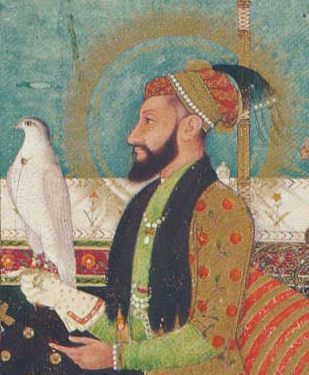
A gain that slipped away. Mir Jumla died in 1663, and in 1664 the new governor Shaista Khan captured Chatgaon (Chittagong). But the Ahoms could not be controlled for long. By 1680 they had recaptured Kamrup and Mughal rule there ended.
Aurangzeb and the Deccan, to 1707
A changed Deccan. When Aurangzeb became emperor, the Deccan was more dangerous than before. The Marathas under Shivaji were rising, and Bijapur and Golkonda distrusted the Mughals after 1656-57. Though Aurangzeb had once urged a forward policy, as emperor he did not at first seek to annex the two kingdoms.
Purandar and after. The Mughal general Jai Singh signed the Treaty of Purandar (1665) with Shivaji, hoping to use the Marathas against Bijapur, but his attacks on Bijapur failed. In the 1670s Mughal governors played on Bijapur's court factions. In 1679 the Bijapur princess was married to Prince Azam, and in 1680 Bijapur read the khutba in Aurangzeb's name.
Why annexation came. The calm broke when Bijapur secretly helped Shivaji's son Sambhaji instead of the Mughals. Golkonda's ministers Madanna and Akanna were believed to work with the Marathas, and its king was funding Sambhaji. The rising Maratha threat, a possible Maratha-Deccan alliance and the empire's internal crisis convinced Aurangzeb that only direct rule would do.
The end of two sultanates. Mughal campaigns opened in 1685, and Sikandar Adil Shah of Bijapur surrendered in 1686. Golkonda's forces were routed, and after an eight-month siege of Golkonda fort, Abdullah Qutb Shah surrendered in 1687. Both kingdoms became part of the empire, which now reached its greatest extent.
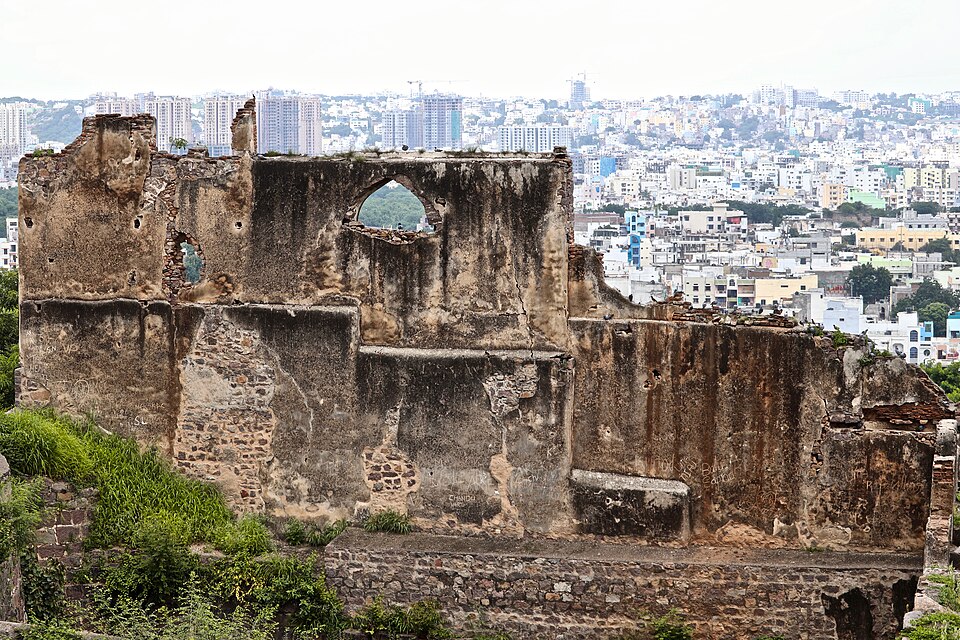
The unfinished war. Annexation did not end the Deccan problem. The Marathas became the main threat, and Aurangzeb spent the last twenty years of his life in the Deccan fighting them. He died there in 1707, and the story of the Maratha struggle and the strains it left are taken up in the chapter on Mughal decline.
Was it a blunder? Some historians call the Deccan policy a fatal mistake. The source used here argues that intervention was close to inevitable, given the Marathas' rise and the distrust among the Deccan states. Each emperor's policy followed the needs of his time, and Mughal failures owed as much to factional and disloyal nobles as to wrong aims.
Aurangzeb and religion: the record and the debate
Small orders first. Many of Aurangzeb's orders reflected personal Islamic piety and a zeal for moral reform. He stopped stamping the kalima on coins, ended Nauroz celebrations, appointed a muhtasib (censor of morals) against drinking and gambling, stopped the ceremony of weighing the emperor in gold, and ended jharokha darshan because people treated the emperor like a living god. He also stopped music at court, though musicians got pensions and the royal band stayed.
Who these hurt. Most of these steps were not aimed at Hindus. The ban on court music mainly hit Muslim musicians, and nobles went on enjoying music. One order of 1665 told the Gujarat governor to keep Diwali and Holi out of Ahmedabad's markets, which Jadunath Sarkar called a police rule for Holi and an act of bigotry for Diwali; but it was local, while a ban on Muharram processions after a deadly clash in 1669 applied to all provinces.
Major measures. Some steps did hit Hindus as state policy. Aurangzeb ordered newly built temples to be demolished across the empire and old ones not to be repaired; a 1670 order for Orissa named temples built in the last ten or twelve years. The Vishwanath temple at Banaras and the Keshav Rai temple at Mathura were among those destroyed.
Jiziya and other taxes. In 1679 he reimposed jiziya, which Akbar had abolished. Hindu merchants were charged a customs duty of 5 per cent, against 2.5 per cent for Muslims, and a 1671 order required khalisa revenue collectors to be Muslims, later relaxed to allow Hindus at half the number of Muslims.
The other side of the record. Aurangzeb did not reduce the share of Hindus in the mansab system; it was actually higher than under his predecessors. Two Hindus became governors, and he issued grants to some temples and priests. He also had Muslim mystics and scholars, such as Sarmad, executed, which shows that his severity was not aimed at one community only.
Three schools. Historians are sharply divided. Jadunath Sarkar and others see religious bigotry; Shibli Nomani and others defend most actions as political necessity; Satish Chandra and M. Athar Ali attempt a neutral analysis. Satish Chandra links jiziya to the Deccan crisis and the need to rally orthodox Muslims, while the idea that it was for money is weak, because jiziya yielded little.
A warning on words. Medieval chroniclers called almost every Mughal army the 'army of Islam', even against Muslim enemies, so their language cannot be read as proof of religious war. Terms like 'secular' and 'fundamentalist' are modern and can distort the past. The best answers judge each act by its scope, its target and its political context.
The Rajput partnership in the seventeenth century
Stronger at first. Under Jahangir and Shah Jahan the alliance Akbar built with the Rajputs held firm. Under Jahangir the rulers of Mewar, Marwar, Amber and Bikaner held mansabs of 5,000 zat or more, higher than under Akbar, though the Kachhawahas lost their earlier dominance. Fewer marriage alliances were needed once Mewar had submitted.
Allies, not administrators. Rajputs were mostly posted as fort commanders (qiladars) and faujdars. Shah Jahan gave them important commands and occasionally governorships, but their role in civil administration stayed small. The alliance was strong in war and weaker in government.
Points of friction. Conflicts arose over who had the final say. The Mughals insisted that no subordinate raja could expand his lands without the emperor's consent. When the Rana of Mewar began rebuilding Chittor, Shah Jahan had the fort destroyed and took over several districts.
The breach under Aurangzeb. In the 1680s Aurangzeb's quarrel with Mewar and Marwar went further. The rulers of both states wanted back territories he had taken, and they backed the rebellion of his son, Prince Akbar, who crowned himself in 1681. Aurangzeb also cooled towards Rajputs in general, gave them fewer high posts and interfered in their marriage arrangements.
Not a full break. Even so, Amber, Bikaner, Bundi and Kota kept their mansabs. Historians argue that the shift was not driven by orthodoxy alone. As the empire turned south, winning over the Marathas and other Deccan elites mattered more, and the Rajputs lost their special place.
The cost. The wars with Mewar and Marwar were a drain, but not a ruinous one, and trade to the western ports went on. The deeper damage was political: the quarrel showed poor judgement, dented imperial prestige and encouraged princes to rebel with Rajput support.
Mains lens: one man's choices or a system under strain?
The popular story. A common view blames Aurangzeb's religious policy for the empire's troubles. It is simple to tell, but it leaves out much of the evidence. A strong answer tests it against what happened before and after Aurangzeb took the throne.
Pressures that came earlier. Shah Jahan's north-west wars drained money and prestige before Aurangzeb ruled. Shah Jahan broke the 1636 Deccan settlement in 1656-57, partly because of a financial and jagir crisis. Court factions had already cost Jahangir Qandahar.
The Deccan dilemma. Annexing Bijapur and Golkonda brought huge new lands but also the full weight of the Maratha war. Some see this as a blunder; others argue it was close to unavoidable once the Marathas rose. Either way, the long war tied the emperor and his nobles to the south for twenty years.
Where religion fits. Aurangzeb's temple orders and jiziya did alienate many, and his breach with Mewar and Marwar fed a princely revolt. Yet he kept a high share of Hindu mansabdars, made Hindu governors and gave some temple grants. Religion was one factor among political, financial and military ones.
How to write it. Start by noting that Akbar's successors added little territory, so holding the empire was the real test. Then show three pressures, the north-west, the Deccan and the partnership with local elites, and how each emperor handled them. Conclude that the strains after 1660 grew from long-running problems, which Aurangzeb's choices then deepened; the full story continues in the chapter on Mughal decline.
Mains practice: Akbar's successors
| Angle | Question | Key points to cover |
|---|---|---|
| Policy | "The Mughal Deccan policy was shaped by the needs of the time rather than by the personal ambitions of the emperors." Examine. | Akbar's aims (Surat hinterland, overlordship); Malik Ambar and Jahangir; 1636 settlement; 1656-57 and the financial crisis; Purandar 1665; Bijapur 1686 and Golkonda 1687; Maratha rise. |
| Foreign policy | Assess Shah Jahan's north-west policy. Was it a costly mistake? | Twin gates idea; Akbar's Hindukush line; three goals; Qandahar 1638 and 1648; Balkh 1646-47; failed sieges; cost and lives; Aurangzeb's realism. |
| Debate | Critically evaluate the view that Aurangzeb's religious policy was the main cause of the empire's crisis. | Minor vs major measures; temples, jiziya 1679, customs; three schools; Satish Chandra on jiziya; high Hindu mansabdar share; Rajput breach; earlier pressures. |
| Partnership | How did Mughal-Rajput relations change in the seventeenth century? | Mewar 1614-15 terms; 5,000 zat ranks; posts as qiladars and faujdars; Chittor dispute under Shah Jahan; Mewar-Marwar breach, Prince Akbar 1681; loyal houses; Marathas' rise. |
These are practice questions written by us, not past papers. Past questions from your exam appear in the PYQ panel.
How to use this table: each answer should explain the what, then the why, and end with what it led to.
Quick revision
- After Akbar, little new land: main gains Bijapur 1686, Golkonda 1687, and Assam 1661-63 (lost by 1680).
- Jahangir (1605-27): Mewar submits 1614-15 (Amar Singh; son Karan Singh; Chittor returned, not to be refortified). Malik Ambar (Khirki, guerrilla war); 1617 Khurram titled Shah Jahan; no new Deccan land.
- Qandahar lost to Shah Abbas I in June 1622 amid court politics (Nur Jahan, Ladli Begum and Shahryar, Khurram's revolt).
- Jahangir and religion: no jiziya; Jadrup Gosain; Guru Arjan; Sirhindi jailed in Gwalior.
- Shah Jahan (from 1627): 1636 Ahmednagar ended (split on the Bhima); Bijapur 20 lakh; Golkonda vassal (khutba, 2 lakh huns). 1656-57 attacks halted on Dara's advice.
- North-west: Qandahar won Feb 1638 (Ali Mardan Khan); Balkh 1646-47; Qandahar lost Dec 1648; cost 3 crore 5 lakh.
- Shah Jahan and religion: sijda → chahar taslim; new temples in Banaras; no jiziya; Jagannath, Maha Kavi Rai.
- Aurangzeb (died 1707): father imprisoned; Purandar 1665; Mir Jumla in Assam; Chatgaon 1664; jiziya 1679; Orissa order 1670; customs 5% vs 2.5%; Prince Akbar 1681; last 20 years in the Deccan.
- Historians on Aurangzeb: Sarkar (bigotry); Shibli Nomani (expediency); Satish Chandra and Athar Ali (neutral; jiziya linked to the Deccan).