

UPSC IES / ISS · Module 43 · standard depth · 14 min
Treaties for poisons, land and the sea: Basel, Rotterdam, Stockholm, Minamata, UNCCD, UNCLOS, BBNJ and plastics
What UPSC IES / ISS asks from this chapter
Syllabus lines this chapter covers:
- IES: General Economics III · Environmental Economics
UPSC IES / ISS questions from this module are being sorted into our bank.
Cut to standard depth for UPSC IES / ISS. 14 deeper paragraphs are in the full chapter.
Start from zero: poisons that travel
Think about a used battery, a box of old pesticide or an old computer. Each contains chemicals that can poison soil, water and people. Getting rid of them safely is expensive, so in the 1980s some companies in rich countries found a cheaper way: they shipped the waste to poorer countries.
Chemicals also travel by themselves. Some pesticides, once sprayed, do not break down for years and are carried by wind and water to places far away, even to the Arctic. Mercury released from a coal plant in one continent can end up in the fish eaten in another. No border can stop them.
So the world built a set of chemical treaties that follow a chemical through its life. Stockholm stops the worst chemicals from being made. Rotterdam makes sure dangerous chemicals are not sold without the buyer's consent. Basel controls what happens when they become waste, and Minamata deals with one metal, mercury, across its whole life.
Two other areas complete the picture: land, through the desertification convention, and the sea, through the law of the sea and its new high seas agreement. This chapter covers all of them, ending with the plastics treaty that the world is still negotiating.
Basel: stopping the export of hazardous waste
What and when. The Basel Convention on the Control of Transboundary Movements of Hazardous Wastes and their Disposal was adopted on 22 March 1989 in Basel, Switzerland, and entered into force in 1992. "Hazardous" here means waste that is toxic, poisonous, explosive, corrosive, flammable, eco-toxic or infectious. India is a Party.
Why it was needed. In the 1980s, tighter laws in developed countries made waste disposal costly at home. Shipping it to countries with weak laws became a business, and those countries had neither the expertise nor the facilities to handle it. Basel was the world's answer to this "toxic trade".
Its three principles. First, transboundary movement of hazardous waste should be reduced to the minimum consistent with its safe management. Second, waste should be treated and disposed of as close as possible to its source. Third, the generation of hazardous waste should be reduced at source itself.
How it was strengthened. Many developing countries felt that "minimise" was not enough. The Ban Amendment, which bars exports of hazardous waste from developed to developing countries, finally entered into force on 5 December 2019. In 2019 the Parties also adopted plastic waste amendments, which bring most contaminated or mixed plastic waste under the convention's controls.
Why it matters to India. India imports large amounts of scrap, from metals to old ships and electronics. Basel's rules shape what can legally come in and how e-waste and ship-breaking are managed.
Rotterdam and Stockholm: consent before trade, bans on the worst chemicals
Rotterdam: the right to say no. Many pesticides banned in rich countries were still sold to poor ones, often with labels the farmers could not read. The Rotterdam Convention, adopted in 1998, created the Prior Informed Consent (PIC) procedure. Certain hazardous chemicals and pesticides can be exported only if the importing country has first given its informed consent.
Rotterdam does not ban these chemicals. It gives importing countries information and a choice, and it helps countries exchange information on safe handling. Think of it as a warning label at the level of nations.
Stockholm: chemicals that do not go away. Persistent organic pollutants (POPs) are chemicals with four dangerous features. They persist in the environment for years, they build up in fatty tissue and grow more concentrated up the food chain, they travel long distances, and they are toxic. This is the problem of biomagnification, explained in the chapter on cycles of matter.
The Stockholm Convention on POPs was adopted on 22 May 2001 and entered into force on 17 May 2004, 90 days after the 50th country ratified it. It began with twelve POPs, including several pesticides and industrial chemicals. It bans or severely restricts their production, use and trade, and deals with their wastes and stockpiles.
The treaty is not frozen. It has a procedure for adding new POPs, and the list has grown over the years. It also balances health needs: DDT is still allowed for disease vector control, because some countries depend on it to fight malaria mosquitoes.
One family. Basel, Rotterdam and Stockholm cover the same chemicals at different stages of life. They are often called the BRS conventions and share a joint secretariat.
Minamata: one metal, one treaty
Why mercury got its own treaty. Mercury is a liquid metal used in thermometers, some batteries and lamps, small-scale gold mining and some industries, and it is released when coal is burnt. In water, microbes turn it into methylmercury, which builds up in fish. People who eat that fish can suffer damage to the brain and nerves, and unborn children are most at risk.
The convention is named after Minamata in Japan, where a factory's mercury waste poisoned people who ate the bay's fish. That disaster became the world's lesson about mercury.
What and when. The Minamata Convention on Mercury was adopted on 10 October 2013 at a diplomatic conference in Kumamoto, Japan, and entered into force on 16 August 2017. It covers mercury across its whole life cycle: mining, use in products and processes, emissions to air and releases to land and water, and waste.
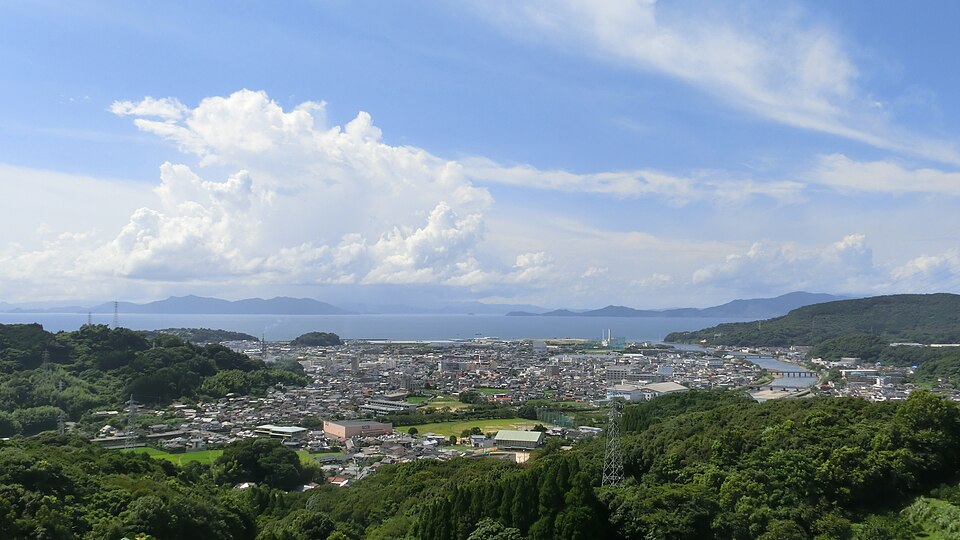
India's position. India is a Party; its ratification brought the number of Parties to 93. For India, the treaty affects coal power plants, dental and medical products and small-scale industries that use mercury.
UNCCD: the land treaty
What desertification means. Desertification does not mean that deserts are spreading like sand dunes. It means land degradation in drylands, where soil loses its fertility because of overgrazing, deforestation, poor irrigation and climate change. Such land can no longer support crops, animals or people well.
Why a treaty. Desertification hits the world's poorest farmers and herders, especially in Africa and Asia. Agenda 21 at Rio in 1992 called for a treaty of its own. The UN Convention to Combat Desertification (UNCCD) was adopted on 17 June 1994, and it is one of the three "Rio conventions" with the climate convention and the CBD.
India and the UNCCD. A large share of India's land is degraded, which makes this convention important at home. India hosted COP14 in 2019 and announced that it will restore 26 million hectares of degraded land by 2030. The more recent COP16 was held in Riyadh, Saudi Arabia, on 2–13 December 2024.
Implications. Restoring land helps on three fronts at once: it raises farm incomes, stores carbon in soil and trees, and protects biodiversity. That is why land restoration links to India's climate pledges in the chapter on India's climate missions.
The law of the sea and the new high seas treaty
UNCLOS: the constitution of the oceans. The UN Convention on the Law of the Sea (1982) gave the world, for the first time, a universal legal framework for managing the sea and its resources. It divides the sea into zones measured from a country's coastline, or baseline. India ratified it on 29 June 1995.
The territorial sea reaches up to 12 nautical miles, and the coastal State has sovereignty there, although foreign ships enjoy innocent passage. The contiguous zone extends to 24 nautical miles for customs and similar controls. The exclusive economic zone (EEZ) reaches up to 200 nautical miles, where the coastal State has sovereign rights over natural resources such as fish, oil and gas.
Beyond the EEZ lie the high seas, which belong to no country. The detailed rules on navigation and security are in the chapter on the law of the sea and maritime security. Here, the key environmental point is that the high seas were long a gap in protection.
BBNJ: closing the gap. Fishing fleets, shipping and companies seeking marine genes could use the high seas with few environmental rules. The Agreement on marine Biological Diversity of areas Beyond National Jurisdiction (BBNJ), often called the high seas treaty, was negotiated under UNCLOS to fix this. It deals with marine protected areas on the high seas, environmental impact assessment, benefit sharing from marine genetic resources and capacity building.
The treaty crossed its ratification threshold in September 2025 and entered into force in January 2026. The Union Cabinet approved India's signing of the agreement.
Pollution from ships and dumping. Two older treaties of the International Maritime Organization (IMO) guard the sea against direct pollution. MARPOL prevents pollution from ships, such as oil, sewage and garbage. The London Convention controls the dumping of wastes at sea.
The plastics treaty: still being negotiated
Why plastics need a treaty. Plastic is cheap, light and lasts for centuries, which is exactly the problem. Much of it is used once and thrown away, and a large share ends up in rivers and oceans. Basel's 2019 amendments deal only with plastic waste in trade, not with how much plastic is produced or how it is designed.
The process so far. In March 2022, the UN Environment Assembly (UNEA-5.2) resolved to negotiate an international legally binding instrument to end plastic pollution, covering the full life cycle of plastic. An intergovernmental negotiating committee (INC) then began meeting.
The talks have been hard. The main split is between countries that want limits on plastic production and countries, many of them oil and petrochemical producers, that want the treaty to focus on waste management and recycling. The session held in Geneva in August 2025 (INC-5.2) adjourned without consensus.
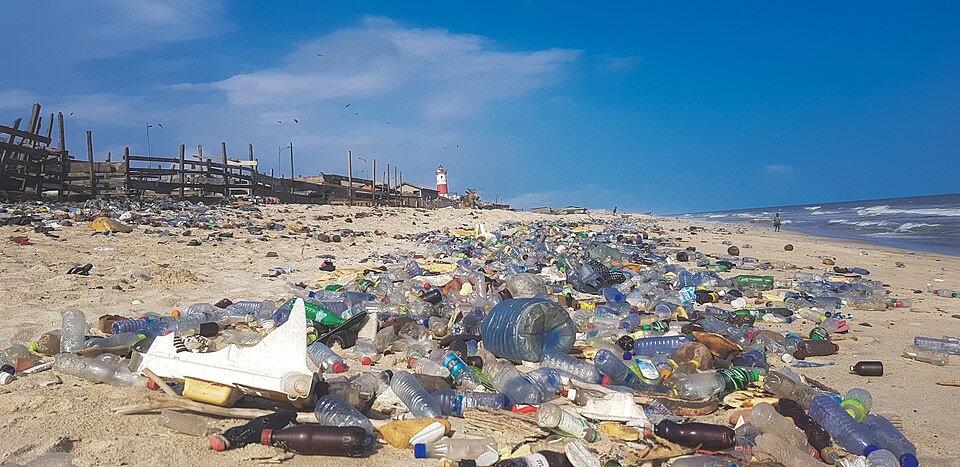
India's angle. India has its own rules on single-use plastics and extended producer responsibility. In the negotiations, developing countries stress that any treaty must come with finance and technology and respect national circumstances.
Quick revision
- Basel: hazardous waste; adopted 22 Mar 1989, in force 1992; 3 principles (minimise movement, dispose near source, reduce at source); Ban Amendment in force 5 Dec 2019; plastic waste amendments 2019.
- Rotterdam (1998): Prior Informed Consent for trade in hazardous chemicals and pesticides; no ban.
- Stockholm (POPs): adopted 22 May 2001, in force 17 May 2004; began with 12 POPs; list can grow; DDT allowed for disease vector control.
- BRS conventions share a joint secretariat.
- Minamata (mercury): adopted 10 Oct 2013, Kumamoto; in force 16 Aug 2017; India's ratification made 93 Parties.
- UNCCD: adopted 17 June 1994; India hosted COP14 (2019); 26 Mha restoration by 2030; COP16 Riyadh, Dec 2024.
- UNCLOS (1982): TS 12 nm, CZ 24 nm, EEZ 200 nm; India ratified 29 June 1995.
- BBNJ (high seas treaty): threshold crossed Sept 2025, in force Jan 2026; Cabinet approved India's signing.
- IMO: MARPOL = pollution from ships; London Convention = dumping.
- Plastics: UNEA-5.2 (Mar 2022) resolution; INC-5.2 Geneva (Aug 2025) ended without consensus.