

UPSC IES / ISS · Module 43 · standard depth · 18 min
Treaties for living things: CBD, its protocols, the 2030 biodiversity framework, CITES, wetlands and heritage
What UPSC IES / ISS asks from this chapter
Syllabus lines this chapter covers:
- IES: General Economics III · Environmental Economics
UPSC IES / ISS questions from this module are being sorted into our bank.
Cut to standard depth for UPSC IES / ISS. 14 deeper paragraphs are in the full chapter.
Start from zero: why living things needed their own treaties
A tiger in a forest does not know which country it is in. A migratory bird that breeds in Siberia and winters in a lake in India crosses many borders every year. A rhino horn poached in one country is sold in another. So no country can protect its wildlife fully on its own.
There is a second reason. Rich countries had the laboratories and companies that turn plants, microbes and animals into medicines and seeds. Poor countries, mostly in the tropics, had most of the living wealth. For a long time those genes were treated as free for anyone to take, and the countries and communities that kept them got nothing back.
The world answered with a set of treaties. Some are old and focused on one problem: wetlands (Ramsar, 1971), heritage sites (1972) and wildlife trade (CITES, 1973). The big umbrella treaty, the Convention on Biological Diversity (CBD), came at Rio in 1992, and its protocols and global targets followed.
This chapter explains each one: what it does, why it was needed, when and where it was agreed, and what it means for India. Learn them as a family, because the exam often mixes their dates, purposes and appendices.
The Convention on Biological Diversity: the umbrella treaty
What it is. The CBD is the first global treaty that covers biodiversity as a whole: genes, species and ecosystems together. It was opened for signature on 5 June 1992 at the Rio Earth Summit and entered into force on 29 December 1993, 90 days after the 30th country ratified it.
Its three objectives are worth learning word by word. The first is the conservation of biological diversity. The second is the sustainable use of its components. The third is the fair and equitable sharing of benefits arising from the use of genetic resources.
Why the third objective matters. Before the CBD, genetic resources were often called the "common heritage of mankind", which in practice meant anyone could collect them freely. The CBD changed this by recognising that countries have sovereign rights over their biological resources. A company that wants to use a plant from India must now take permission and share the benefits.
How it works in practice. The CBD sets broad duties, such as making national strategies, creating protected areas, controlling alien invasive species and respecting traditional knowledge. Each Party prepares a National Biodiversity Strategy and Action Plan (NBSAP). The Parties meet in a Conference of the Parties (COP) every two years or so to take decisions.
Who is in, who is out. The CBD has 196 Parties, almost every country on Earth. The big exception is the United States, which signed in 1993 but never ratified. India signed on 5 June 1992 and ratified on 18 February 1994, and gave effect to it at home through the Biological Diversity Act of 2002, explained in the chapter on India's biodiversity law.
Two protocols: Cartagena for biosafety, Nagoya for benefit sharing
Cartagena: the worry about modified organisms. In the 1990s, genetically modified crops began to spread across the world. Many countries feared that such organisms, if released into nature, could harm native species, or that they would be dumped on countries without the means to test them. The CBD itself asked for an agreement on this.
The answer was the Cartagena Protocol on Biosafety, adopted on 29 January 2000 and in force from 11 September 2003. It covers living modified organisms (LMOs) resulting from modern biotechnology, meaning organisms that can grow or reproduce, such as GM seeds. Its aim is the safe transfer, handling and use of LMOs across borders.
The protocol follows the precautionary approach of the Rio Declaration. An importing country may decide carefully even when the science is not yet complete. A Biosafety Clearing-House lets countries share information on LMOs and their decisions.
Nagoya: turning the third objective into rules. Benefit sharing sounded good in the CBD, but it was vague. Who gives permission, and what counts as a fair share? The Nagoya Protocol on Access and Benefit-sharing (ABS) was adopted on 29 October 2010 in Nagoya, Japan and entered into force on 12 October 2014.
It sets out the basic rule of ABS. A user must take prior informed consent from the country providing a genetic resource and agree mutually agreed terms on sharing benefits. Benefits can be money, such as royalties, or non-money, such as research training or technology.
Why it matters for India. India is rich in plants used in medicine and food, and in traditional knowledge about them. Benefit sharing gives the communities who conserved these resources a legal claim to a share.
From missed Aichi Targets to "30 by 30"
The Aichi Targets and why they failed. At Nagoya in 2010 the CBD Parties also adopted a strategic plan for 2011–2020 with 20 Aichi Biodiversity Targets. They covered habitat loss, protected areas, pollution, invasive species and finance. When the decade ended, Global Biodiversity Outlook 5 (September 2020) found that none of the 20 targets was fully achieved.
Only six were partially achieved: Targets 9, 11, 16, 17, 19 and 20. Target 11, on protected areas, is the best known of these. The lesson was that targets without money, monitoring and national follow-up stay on paper.
The Kunming-Montreal Global Biodiversity Framework (KMGBF). The new plan was adopted at COP15 in Montreal on 19 December 2022. The name joins the two cities linked to the meeting's two parts. It has 4 goals for 2050 and 23 targets for 2030.
Four targets are asked most often. Target 3, called "30 by 30", aims to conserve at least 30% of land and inland waters and 30% of marine and coastal areas by 2030. Target 7 aims to cut the overall risk from pesticides and highly hazardous chemicals by at least half. Target 18 aims to reduce harmful subsidies by at least USD 500 billion a year by 2030.
Target 19 deals with money. It aims to mobilise at least USD 200 billion a year by 2030 from all sources, including USD 30 billion a year in international finance flowing to developing countries. This was a key demand of countries like India.
The Cali Fund: paying for digital genes. Scientists today often do not need the physical plant; they download its genetic sequence from a database. This digital sequence information (DSI) escaped the Nagoya rules. COP16 at Cali, Colombia decided on 2 November 2024 to create the Cali Fund, into which large companies that profit from DSI are expected to pay a share.
The fund was launched on 24 February 2025 in Rome at the resumed COP16. India released its updated NBSAP at COP16, aligning its national targets with the global framework.
CITES: controlling the wildlife trade
Why it was needed. By the 1960s, trade in ivory, furs, skins, live birds and reptiles was emptying forests. Most of this trade crossed borders, so an exporting country's ban alone could not stop it. A treaty was needed that would make the importing country share responsibility.
When and where. The text of the Convention on International Trade in Endangered Species of Wild Fauna and Flora (CITES) was agreed by representatives of 80 countries in Washington, D.C., on 2 March 1973. It was opened for signature on 3 March 1973 and entered into force on 1 July 1975. It now has 185 Parties, and India is one of them.
How it works: the three appendices. CITES does not ban all wildlife trade. It sorts species into three lists according to how much protection they need, and trade happens only with permits.
| Appendix | Who is listed | Trade rule |
|---|---|---|
| I | Species threatened with extinction | Commercial international trade prohibited; non-commercial imports such as research allowed with permits |
| II | Species not necessarily threatened now, but which may become so unless trade is closely controlled | Trade allowed with export permits |
| III | Species listed at the request of a Party that already regulates their trade and needs other countries' cooperation | Trade allowed with permits or certificates |
Implications. CITES is one of the more effective treaties because trade passes through customs, where it can be checked. Its weakness is illegal trade, which avoids the permit system entirely. In India, CITES works alongside the Wild Life (Protection) Act, which lists species in its own schedules.
Migratory animals and farmers' seeds
The Convention on Migratory Species (CMS). Some animals live their lives across many countries: cranes, flamingos, turtles, whales and the great bustards. Protecting them in one country is useless if they are shot in the next. The Convention on the Conservation of Migratory Species of Wild Animals brings together the countries along a migration route, called the range states, to protect such animals and their stopover sites.
Every winter, many such birds fly into India from Central Asia and Siberia. India hosted the 13th Conference of Parties of the CMS at Gandhinagar. For India, CMS links naturally with its wetland and grassland conservation.
The Plant Treaty. Most of the world's food comes from a small number of crops, and no country is self-sufficient in their genes. Wheat, for example, began in West Asia, and rice breeders everywhere use varieties from many countries. If every gene needed a separate bilateral deal, crop breeding would slow down.
The International Treaty on Plant Genetic Resources for Food and Agriculture was adopted in 2001 and entered into force on 29 June 2004. Its Multilateral System puts the genetic material of 64 of the most important food and forage crops into a shared pool with a standard access agreement. It also recognises the huge contribution farmers have made to conserving and developing crop varieties.
Ramsar: the oldest of them all
What and why. Wetlands, such as lakes, marshes, mangroves and floodplains, were long seen as wasteland to be drained. Yet they store floodwater, recharge groundwater, clean water and feed millions of migratory birds. The Convention on Wetlands was the first modern global treaty on any ecosystem.
When and where. It was adopted at Ramsar, Iran, on 2 February 1971 and came into force in 1975. The date of adoption is now celebrated as World Wetlands Day on 2 February. Countries join by designating at least one Wetland of International Importance, commonly called a Ramsar site.
India and Ramsar. Chilika Lake (Odisha) and Keoladeo (Rajasthan) were designated on 1 October 1981 as India's first sites, and India formally became a Party on 1 February 1982. The number has grown fast in recent years. India had 103 Ramsar sites on 15 October 2026.
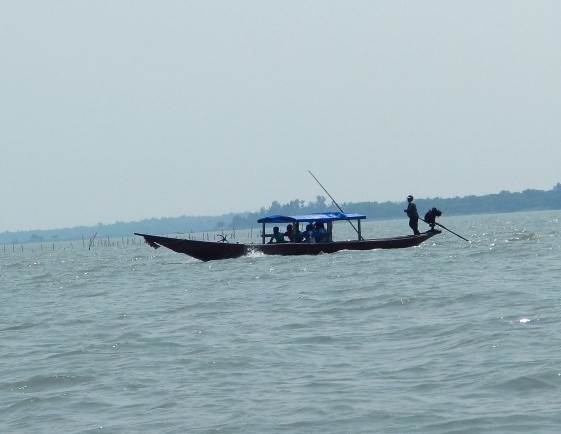
The Montreux Record. Designation is not only an honour; it comes with a duty to keep the site healthy. The Montreux Record is a register of Ramsar sites where changes in ecological character have occurred or are likely, so that they get attention. Chilika was removed from it in 2002 after restoration, a success story often cited.
World Heritage: nature and culture together
What it is. The World Heritage Convention of 1972 is unusual because it protects both cultural and natural sites under one treaty. A site is inscribed if it has outstanding universal value, meaning its loss would be a loss for all humanity. Sites can be cultural, natural or mixed.
Why it matters for environment students. Natural sites include national parks and landscapes such as forests, mountains and wetlands. Inscription brings global attention and pressure to protect a site. Sites under serious threat can be placed on a List of World Heritage in Danger.
India's list keeps growing. The Maratha Military Landscapes of India were inscribed in 2025 as India's 44th World Heritage entry. The Ancient Buddhist Site of Sarnath was inscribed after that, in 2026. Since the count changes almost every year, learn the most recent additions and check the latest total before the exam.
Quick revision
- CBD: signature opened 5 June 1992 (Rio), in force 29 Dec 1993; 3 objectives: conservation, sustainable use, benefit sharing; 196 Parties; USA not a Party; India ratified 18 Feb 1994.
- Cartagena Protocol: biosafety of LMOs; adopted 29 Jan 2000, in force 11 Sept 2003; Biosafety Clearing-House.
- Nagoya Protocol: ABS; adopted 29 Oct 2010, in force 12 Oct 2014; prior informed consent + mutually agreed terms.
- Aichi Targets (20, for 2011–2020): none fully met, six partly (GBO-5, 2020).
- KMGBF (19 Dec 2022, COP15 Montreal): 4 goals, 23 targets; T3 30 by 30, T7 halve pesticide risk, T18 cut harmful subsidies USD 500 bn/yr, T19 USD 200 bn/yr incl. 30 bn international.
- Cali Fund (COP16 Cali, decided 2 Nov 2024, launched 24 Feb 2025, Rome): money from DSI users; India's updated NBSAP at COP16.
- CITES: agreed 2 Mar 1973, signature 3 Mar 1973, in force 1 Jul 1975, 185 Parties; Appendix I no commercial trade, II controlled trade, III one Party's request.
- Plant Treaty: adopted 2001, in force 29 June 2004; Multilateral System, 64 crops; farmers' contribution.
- CMS: migratory animals and range states; India hosted COP13 at Gandhinagar.
- Ramsar: 2 Feb 1971 (World Wetlands Day), in force 1975; India Party 1 Feb 1982; first sites Chilika, Keoladeo (1 Oct 1981); 103 sites (15 Oct 2026); Montreux Record, Chilika removed 2002.
- World Heritage (1972): cultural + natural; Maratha Military Landscapes 44th (2025), Sarnath (2026).